

Imagine waking up to find that the medications keeping you healthy cost 75% less than they did just a few years ago. For millions of seniors, this isn't a dream-it's the reality of the new Medicare Part D is a federal program that subsidizes the costs of prescription drugs for Medicare beneficiaries. After the sweeping changes brought by the Inflation Reduction Act, the way you pay for generic drugs has shifted fundamentally. Whether you're dealing with a chronic condition or just a few monthly pills, knowing how the 2026 rules work can be the difference between a manageable budget and a financial crisis.
The Big Win: The $2,000 Out-of-Pocket Cap
The most significant change for anyone using generics is the new spending limit. In the old days, you could spend thousands of dollars before hitting the "catastrophic coverage" phase. Now, there is a strict out-of-pocket (OOP) cap of $2,000 per year. Once you hit this limit, your copays for the rest of the year drop to zero.
For someone on a high-cost generic regimen, this is a game-changer. Instead of staring down an $8,000 bill, your maximum exposure is capped. But here's the catch: your monthly premiums don't count toward this $2,000 limit. Only your deductibles, copayments, and coinsurance count. If you're seeing a $0 charge at the pharmacy counter in November, it's likely because you've already hit that cap for the year.
Understanding Your Generic Copays and Tiers
Not all generics are priced the same. Most plans use a "tier" system to decide what you pay. Preferred Generics are the gold standard for savings; the median copay for these is usually around $10 for a 30-day supply. If a drug is categorized as a non-preferred generic, you'll likely pay more.
In 2026, the standard benefit design starts with a deductible, currently capped at $590. Until you pay that amount, you're footing the full bill. Once the deductible is met, you typically move into a 25% coinsurance phase for generics. This means if a drug costs $100, you pay $25, and the plan pays the rest, until you hit that $2,000 ceiling.
| Feature | Stand-alone PDPs | Medicare Advantage (MA-PDs) |
|---|---|---|
| Avg. Monthly Premium | ~$39 | ~$7 |
| Median Generic Copay | ~$10 | ~$10 |
| OOP Cap (2026) | $2,000 | $2,000 |
| Deductible Presence | Common (85% of users) | Less Common (60% of users) |
PDP vs. MA-PD: Which One Saves You More?
If you primarily take generics, the choice between a Prescription Drug Plan (PDP) and a Medicare Advantage Plan (MA-PD) usually comes down to the monthly premium rather than the pharmacy counter price. Since the copays for preferred generics are roughly the same ($10) across both types of plans, the MA-PD often looks more attractive because its drug-related premiums are significantly lower-sometimes by as much as five or six times.
However, don't let the low premium fool you. MA-PDs can sometimes have more restrictive formularies. This means they might not cover the specific generic version of a drug your doctor prefers, forcing you to use a "therapeutic alternative." This is where you might find yourself fighting for a prior authorization just to get the medication that actually works for you.
The "Extra Help" Secret for Low-Income Seniors
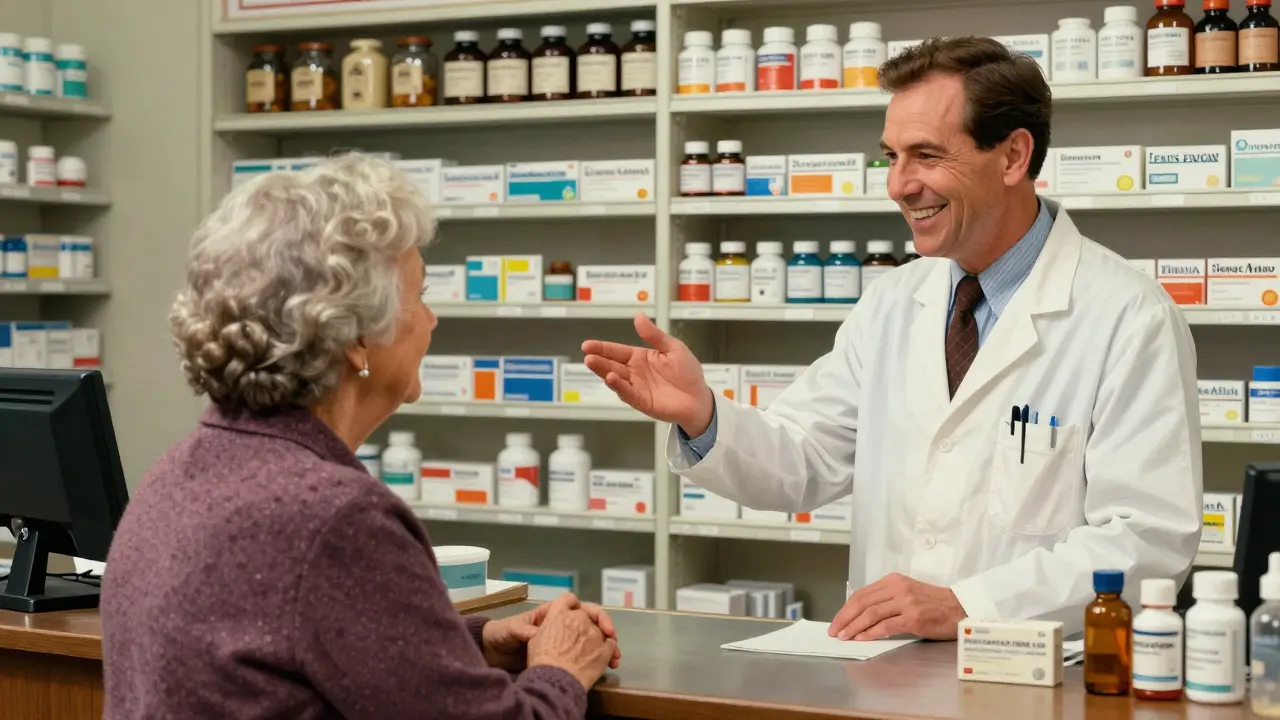
If you're struggling to afford your meds, the Low-Income Subsidy (LIS), often called "Extra Help," is the single best way to slash costs. This program is designed for those with limited income and resources. If you qualify, the financial burden almost disappears.
- Deductibles: Reduced to $0.
- Generic Copays: Dropped to a range of $0 to $4.50.
- Coverage Gap: You completely skip the "donut hole" and other complex phases.
Applying for Extra Help through the Social Security Administration is a high-impact move. It transforms a stressful monthly expense into a negligible cost, allowing you to prioritize your health over your bank balance.
Avoid the Common Pitfalls of Generic Savings
Saving money isn't just about picking the cheapest drug; it's about navigating the system. One of the biggest headaches is "therapeutic substitution." This happens when a plan switches you to a different generic in the same class. While the drug is chemically similar, the copay might actually be higher if the new version is in a different tier.
Another point of confusion is how manufacturer discounts work. Many people are confused about "True Out-of-Pocket" (TrOOP) costs. In the current system, the $2,000 cap is designed to be more transparent, but you should still double-check your annual statement to see how much of your spending was actually applied toward that limit. If you're using a pharmacy that doesn't sync perfectly with your plan's records, you might see a temporary spike in costs.

Pro Tips for Maximizing Your Savings
To really squeeze the most value out of Part D, you need to be proactive. The Medicare Plan Finder tool is your best weapon. Don't just look at the monthly premium; plug in your specific generic drugs. A plan with a $10 premium that puts your main medication in a high-cost tier is actually more expensive than a $20 premium plan that treats your drug as a preferred generic.
Also, keep an eye on biosimilars. If you take expensive biologic drugs, biosimilars are the "generics" of the high-tech medicine world. They are expected to capture a massive chunk of the market by 2028, and switching to a biosimilar can lead to savings similar to the jump from brand-name to generic.
Do I always have to pay the deductible before my generic copays start?
In most cases, yes. For 2026, many beneficiaries face a deductible of up to $590. You'll pay the full cost of your generics until this is met. However, if you have "Extra Help" (LIS), your deductible is waived entirely, and you move straight to low copays.
What happens after I spend $2,000 on my medications?
Once you hit the $2,000 out-of-pocket cap, you enter the catastrophic coverage phase. For the remainder of the calendar year, you pay $0 for all covered Part D drugs, including generics. This is a massive improvement over the previous system where costs remained high even after significant spending.
Can my insurance company force me to use a different generic drug?
Yes, through policies like "step therapy" or "therapeutic alternatives." Plans may require you to try a cheaper, preferred generic before they agree to cover a more expensive one. If your doctor believes the preferred version is medically inappropriate, they can file an exception request on your behalf.
Are generic drugs always cheaper than brand-name drugs in Part D?
Almost always. Generics make up about 84% of all prescriptions filled in Part D but only 27% of the total spending. While there are rare cases where a brand-name drug has a special rebate, generics are designed to be the cost-saving alternative.
How often should I review my Part D plan for generic savings?
You should review your plan every year during the Open Enrollment Period (typically October to December). Plans change their "formularies" (the list of covered drugs) annually, meaning a drug that was a "preferred generic" last year might move to a more expensive tier this year.
What to Do Next
If you're feeling overwhelmed, start with these three steps. First, list every medication you take and note whether it's a brand or a generic. Second, check your current plan's formulary to see which tier your drugs fall into. Finally, use the Medicare Plan Finder to see if a different plan would lower your total annual cost (Premium + Copays). If your income is low, head to the Social Security website and apply for Extra Help immediately; it's the fastest way to bring your generic costs down to nearly nothing.



Comments
Trey Kauffman
10/Apr/2026Oh sure, because we can always trust the government to implement a complex pricing system without some hidden catch that ends up costing us more in the long run. It's practically a miracle that they're giving us a cap, right?
Franklin Anthony
10/Apr/2026friendly reminder that the insurance companies probably already have a way to game this system so they dont lose money lol they probably just raise premiums to cover the loss from the cap it is all a big cycle to keep us paying
Danny Wilks
10/Apr/2026While the implementation of the out-of-pocket maximum is certainly a step toward financial stability for the elderly, I find it quite intriguing that the nuances of the formulary restrictions often remain opaque to the average consumer, which potentially undermines the intended benefit of the lower premiums offered by Medicare Advantage plans. It is a classic trade-off between a lower monthly cost and the risk of having to engage in a tedious administrative battle for a prior authorization just to obtain a medication that has been proven effective for one's specific condition over several years of treatment.
emmanuel okafor
10/Apr/2026health is a gift we must protect and this helps people be at peace
Emily Wheeler
10/Apr/2026I truly believe that when we collectively share information about resources like the Extra Help program, we empower our community to live more dignified lives, and it's just so heartening to think that a simple application to the Social Security Administration can remove the crushing weight of a deductible for someone who is already struggling to make ends meet. I've always felt that the intersection of health care and social equity is where we can make the most profound difference, and by encouraging everyone to look into these subsidies, we are essentially collaborating to ensure that no senior has to choose between their medication and their groceries, which is a fundamental human right that we should all be striving to protect with everything we have.
Peter Meyerssen
10/Apr/2026The systemic paradigm shift here is essentially a redistribution of the risk-adjusted cost burden 🙄 It's basic actuarial science for those who actually understand the fiscal architecture of these PDPs, but I guess the simpletons just like the $2k number. Total paradigm shift in the cost-benefit analysis! 💅
Ryan Hogg
10/Apr/2026I can't even imagine how stressful it is to wake up and not know if you can afford your pills. It's just devastating. Every time I think about the people who didn't have this cap, it honestly makes me feel so heavy and anxious. It's just too much to handle.
danny Gaming
10/Apr/2026US system is a joke compared to how we do things but at least we got these laws now... still probly gonna see errors in the billing bcuz the pharmacy systems are trashh
Victor Parker
10/Apr/2026Don't trust the biosimilars! 💊 They're just pushing these on us to see how we react. It's all a plot to control the population via the pharmacy counter 🙄 Trust me, I've seen the patterns!
kalpana Nepal
10/Apr/2026These rules are okay but the world needs to realize that natural health is better than these corporate pills and their caps