

| Resource | Focus | Timeframe | Best For... |
|---|---|---|---|
| Drug Safety Communications (DSCs) | Drug risks & alerts | 2010-2024 | Chronological safety trends |
| SrLC Database | Labeling changes | Jan 2016-Present | Specific changes to warnings/precautions |
| Medical Device Safety Comms | Device alerts & recalls | Current/Recent | Clinical recommendations & early alerts |
| FDA.gov Archive | Old web pages | Pre-2010 | Recovering deleted or old notifications |
Understanding the Drug Safety Communications (DSCs)
If you're looking for the broad strokes of a drug's safety history, the Drug Safety Communications are your first stop. These are organized by year, spanning from 2010 through 2024. It is helpful to realize that the FDA often updates these; if you see a communication from 2012 that is marked as archived, it usually means the agency issued a newer version with more current data. These communications don't just list side effects. They often take the form of Public Health Advisories for the general public or specialized "Dear Healthcare Provider" letters. This distinction is important because the language used for a doctor is often much more technical than what is shared with the public. If you're researching the FDA Safety Communications Archive, always check if both a public alert and a provider letter were issued, as the provider letter often contains the raw clinical reasoning behind the warning.Deep Diving into the SrLC Database
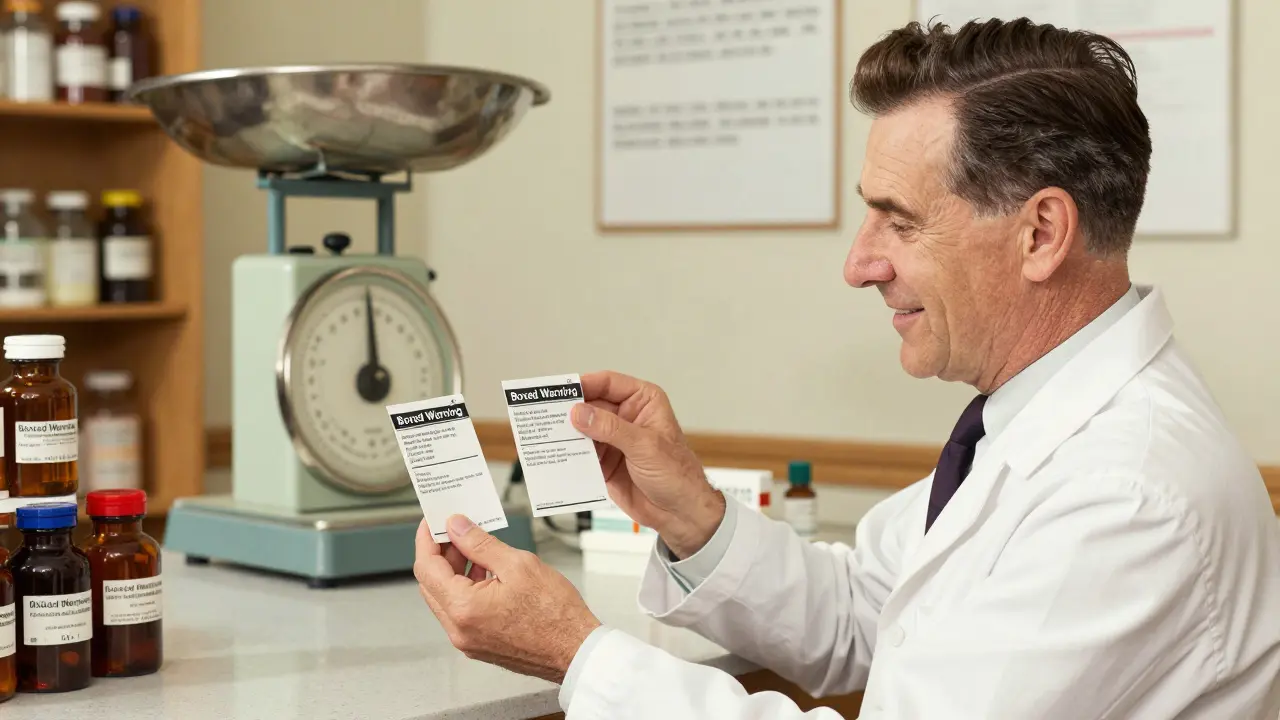
Sometimes a general safety alert isn't enough-you need to know exactly which words changed on the actual product label. This is where the SrLC Database (Safety-related Labeling Changes) comes into play. Launched in January 2016, this database is a goldmine for seeing exactly how the FDA and manufacturers updated safety info. When you browse the SrLC, you'll see changes focused on specific high-impact sections of the drug label:- Boxed Warnings: The most serious warnings that appear in a black box on the label.
- Contraindications: Situations where the drug must not be used.
- Warnings and Precautions: Important safety alerts that don't necessarily prohibit use but require caution.
- Adverse Reactions: Updated lists of side effects found during post-market surveillance.
- Drug Interactions: New findings on how the drug reacts with other medications.
Navigating Medical Device Safety Alerts
Medical devices are handled differently than drugs. The Medical Device Safety Communications system focuses heavily on clinical management and regulatory approaches. A key feature here is the "Early Alert." The FDA uses these for the most serious types of recalls-the ones where the risk to the patient is immediate and severe. As of late 2025, the FDA expanded its communications pilot to include all medical devices, making these alerts more comprehensive than ever. Unlike drug warnings, which might focus on a long-term side effect, device communications often deal with mechanical failures, software bugs, or sterilization issues. If you're researching a specific device, look for these Early Alerts first, as they signal the highest level of urgency.How to Research Warnings Before the Digital Era
What happens if you need to go back further than 2010? The digital archives have limits. For documents that have disappeared from the main site, the FDA.gov Archive allows you to view previous versions of web pages. For those doing serious historical or academic work, you have to leave the website entirely and head to the National Archives. Specifically, Record Group 88 contains FDA records from 1877 to 1978. This is where you'll find the legacy of early consumer protection, such as the work of Dr. Harvey Washington Wiley. Long before digital databases, Wiley's "Poison Squad" experiments in the early 1900s proved that food additives were harming people, which eventually led to the 1906 Pure Food and Drug Act. If your research is about the *origin* of safety warnings, these textual records in Philadelphia are the primary source.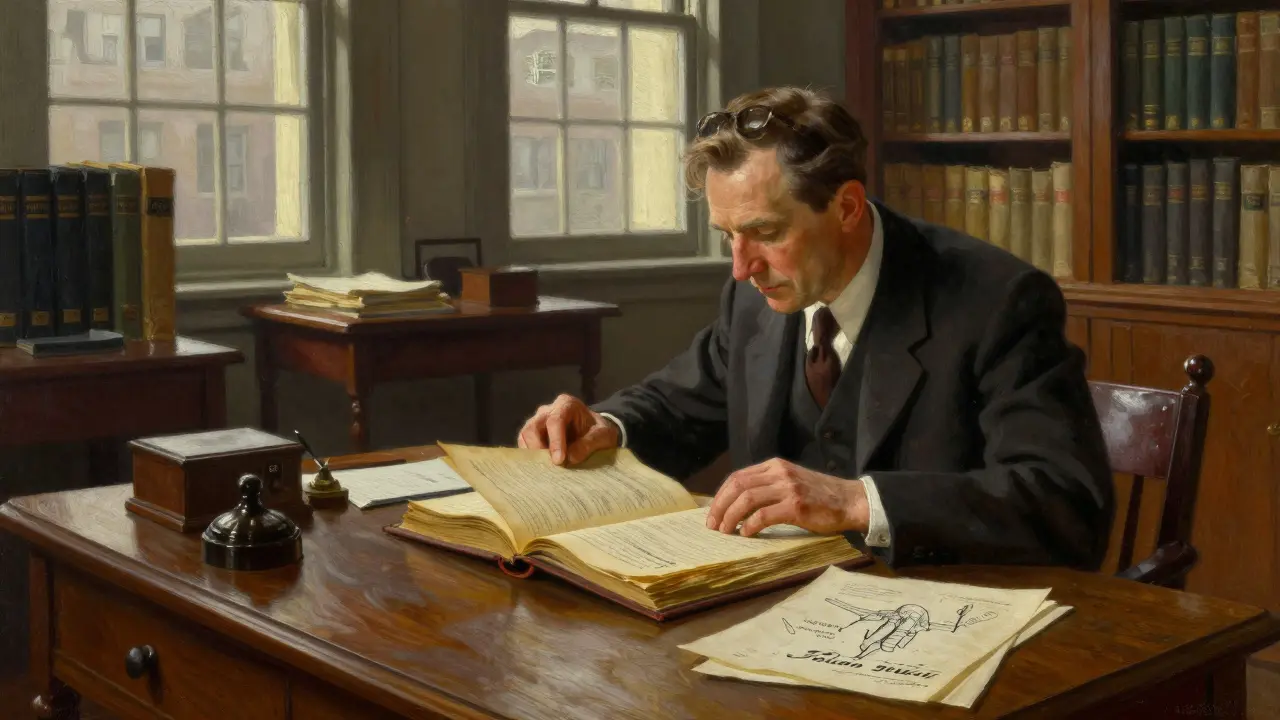
Putting it All Together: A Research Workflow
If you're starting a research project on a specific product, don't just jump in randomly. Use this logical flow to ensure you don't miss anything:- Start with Drugs@FDA: Look up the drug to see its basic approval history and current label.
- Check the DSC Archive: Search by year (2010-2024) to see if any broad public health advisories were issued.
- Consult the SrLC Database: If the drug was approved or updated after 2016, check this for specific wording changes in the "Boxed Warning" or "Precautions" sections.
- Search the FDA.gov Archive: Use this for any gaps between the 1900s and the 2010 digital shift.
- Verify with the National Archives: For deep historical context (pre-1978), look for Record Group 88.
Common Pitfalls in Historical Research
One of the biggest mistakes researchers make is assuming a "Safety Alert" is the only way the FDA communicates risk. Sometimes, the FDA updates a label without issuing a loud public advisory. This is why the SrLC is so critical-it captures the quiet changes that might not make the news but still change how a drug is prescribed. Another hurdle is the "impact gap." Research has shown that not all FDA warnings are treated equally by the medical community. Some alerts cause an immediate drop in prescriptions, while others are ignored for months. When you're analyzing historical warnings, don't just look at *what* the FDA said-look at *when* they said it and whether they followed up with a more urgent "Dear Healthcare Provider" letter to push the message home.Where can I find drug safety warnings from before 2010?
Since the formalized Drug Safety Communications (DSCs) archive typically starts around 2010, for older data you should use the FDA.gov Archive to find old web pages. For records going back to the early 20th century, you will need to access Record Group 88 at the National Archives, which holds textual records from 1877 to 1978.
What is the difference between a DSC and the SrLC database?
A Drug Safety Communication (DSC) is a broad announcement or advisory meant to alert the public and providers about a risk. The SrLC (Safety-related Labeling Changes) database is a technical log of the actual changes made to the drug's official labeling (like adding a Boxed Warning) from January 2016 onward.
Are FDA safety communications free to access?
Yes, all the primary archives, including the DSCs, the SrLC database, and the Medical Device Safety Communications, are freely accessible via the official FDA website.
What are "Early Alerts" in medical device communications?
Early Alerts are a specific type of communication used for medical device recalls that the FDA believes are the most serious. They provide urgent analysis and clinical recommendations for patient management to prevent harm.
How can I contact the FDA for specific safety research questions?
You can reach the Division of Drug Information (CDER) by emailing [email protected] or calling (855) 543-3784 or (301) 796-3400.

Comments
Victor Parker
9/Apr/2026They only show us what they want us to see 🙄
The real files are probably hidden in a bunker somewhere while we click through a few websites. Total joke!
Franklin Anthony
9/Apr/2026its funny how they make this look so easy when we all know the big pharma players just pay to move those dates around and scrub the records if things get too spicy
Sarina Montano
9/Apr/2026This guide is a total lifesaver for anyone diving into the rabbit hole of pharmaceutical history. For those who might be feeling overwhelmed, I've found that crossing the SrLC data with academic papers on PubMed often reveals those "quiet changes" the post mentioned much faster than just browsing the FDA site alone. It's like putting together a puzzle where the FDA provides the pieces but not the picture on the box. Also, for the history buffs, the Poison Squad stories are absolutely wild and show that the fight for transparency isn't even new, it's just evolved into digital archives now.
Thabo Leshoro
9/Apr/2026The pharmacovigilance aspects are so complex!!! Dealing with ADRs (Adverse Drug Reactions) requires such precision... it is heartbreaking when patients suffer because the signals were missed in the early post-market surveillance!!!
Camille Sebello
9/Apr/2026Do you actually use this for your own meds??? I need to know what you're taking!!!
Peter Meyerssen
9/Apr/2026The ontological shift from physical archives to digital repositories is simply a facade for the neoliberal capture of medical epistemology 🙄
Using terms like "roadmap" is just cute for a layman's guide to a broken system. 💅
Ben hogan
9/Apr/2026Imagine thinking a government website is a "goldmine" for truth. Pathetic.
danny Gaming
9/Apr/2026usa fda is better then any other countrys system period. stop tryin to find gaps and just trust the procsess lol
Danny Wilks
9/Apr/2026It is quite fascinating to observe how the transition from the National Archives' physical records to the digital DSCs mirrors the broader societal shift toward instantaneous information, though I suspect many of us lose the nuance of historical context when we rely solely on a filtered search result rather than browsing through the original Record Group 88 documents in person.
Ryan Hogg
9/Apr/2026I spent three hours trying to find a record for my late father's medication and the archive just felt like a void. It's exhausting how these systems are designed to be "accessible" but still make you feel completely alone in your grief and confusion. I just want a straight answer for once without having to be a professional researcher to understand if he was harmed.
Suchita Jain
9/Apr/2026It is imperative that one maintains a strict moral standard when interpreting these documents. One must not allow personal bias to cloud the objective truth of the FDA's regulatory framework, as failure to do so leads to intellectual anarchy.