

After surgery, pain is inevitable-but how you manage it can make all the difference. For years, the default answer was opioids: morphine, oxycodone, hydromorphone. But that approach came with serious risks-addiction, nausea, constipation, even respiratory depression. Today, a smarter, safer method is taking over: multimodal analgesia (MMA). It’s not a single drug. It’s a strategy. And it’s now the standard of care for most surgeries.
What Is Multimodal Analgesia?
Multimodal analgesia means using more than one type of pain reliever at the same time, each targeting a different part of the pain pathway. Think of it like blocking pain at multiple checkpoints instead of relying on one roadblock. This approach lets doctors use lower doses of each medication, which means fewer side effects. The goal isn’t to eliminate opioids completely-it’s to use them only when absolutely necessary.Research shows MMA can cut opioid use by 32% to 57% without making pain worse. In one study of spine surgery patients, average daily opioid use dropped from 45.2 morphine milligram equivalents (MME) to just 18.7 MME-a 61% reduction. Pain scores stayed under 4 out of 10. That’s not luck. It’s science.
The Core Pillars of MMA
MMA isn’t random. It’s built on proven combinations. Here are the most common and effective pieces:- Acetaminophen (Tylenol): Works centrally to reduce pain signals. Given every 6 hours, IV or oral. Safe for most patients.
- NSAIDs like celecoxib or naproxen: Reduce inflammation at the surgical site. Celecoxib is often preferred because it’s gentler on the stomach. Naproxen is avoided if kidney function is low (eGFR under 30).
- Gabapentin or pregabalin: These calm overactive nerves. Especially helpful after nerve-rich surgeries like spine or joint replacements. Dose must be adjusted for kidney issues.
- Ketamine: A low-dose IV infusion that blocks pain signals in the spinal cord. Used in high-risk patients or those with chronic pain. Can cause dizziness, so it’s monitored closely.
- Lidocaine: An IV infusion that acts like a nerve quieting agent. Proven to reduce pain and opioid needs after major surgeries.
- Dexmedetomidine: A sedative that also reduces pain perception. Often used during surgery and in the first hours after.
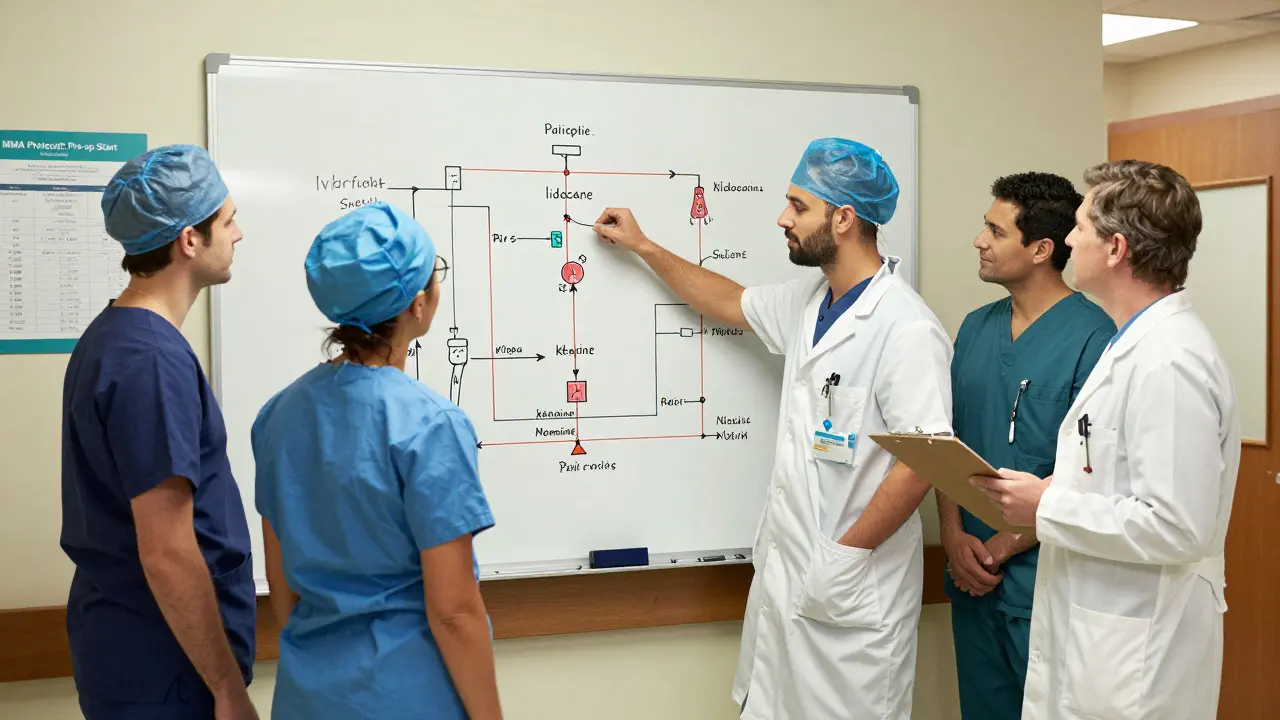
These aren’t used in isolation. They’re stacked. For example, a typical spine surgery protocol might start with pre-op acetaminophen, gabapentin, and celecoxib. During surgery, ketamine and lidocaine infusions are added. After surgery, the non-opioid meds continue on a schedule. Opioids? Only for breakthrough pain-and even then, in tiny doses.
Why This Works Better Than Opioids Alone
Opioids only dull pain signals in the brain. They don’t touch inflammation, nerve damage, or muscle spasms. That’s why patients on opioids alone often still hurt-and need more pills. MMA hits pain from all sides.One 2022 review of orthopedic surgeries found that patients on MMA had:
- 41% less opioid consumption
- 28% fewer cases of nausea and vomiting
- Shorter hospital stays (by nearly 2 days in trauma patients)
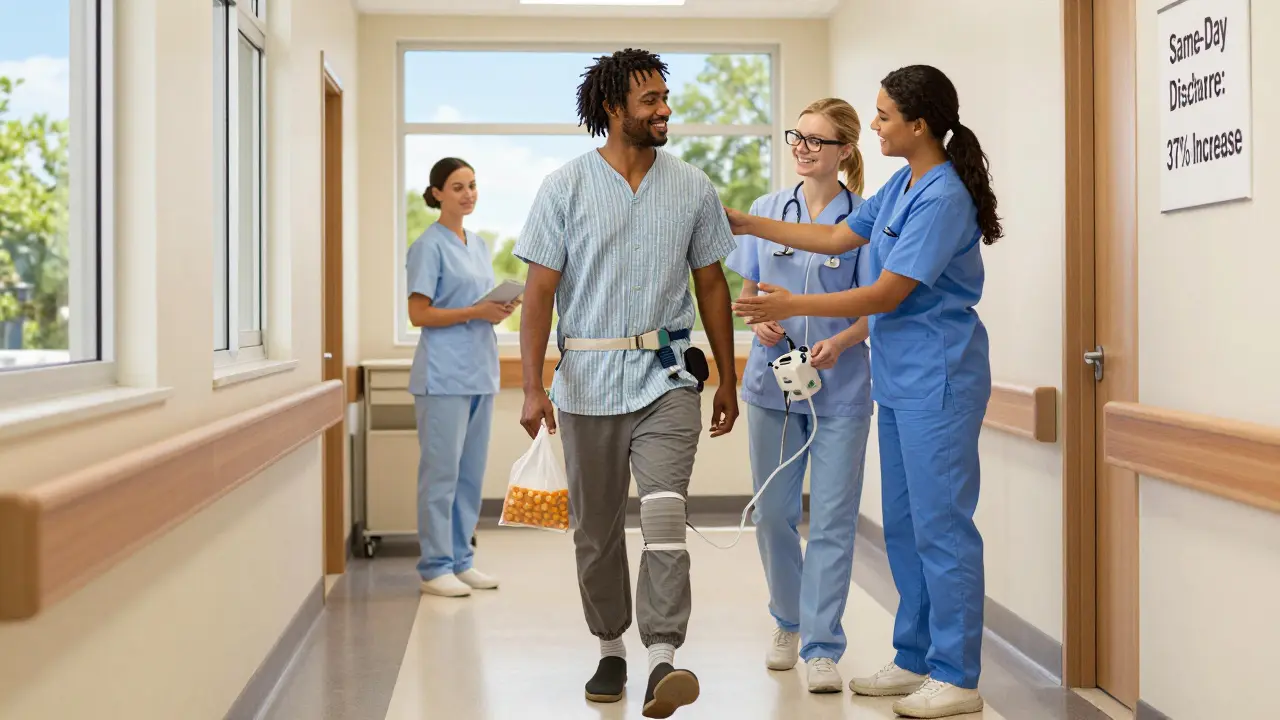
- Higher rates of same-day discharge
And it’s not just about comfort. Reducing opioid exposure lowers the risk of long-term dependence. Studies now show that patients who get MMA are less likely to still be taking opioids 30 days after surgery. That’s huge.
Who Benefits Most?
MMA works best when pain is predictable. That’s why it’s standard for:- Joint replacements (knee, hip)
- Spine surgeries
- Major orthopedic trauma
- Abdominal surgeries with high pain scores
Even minor surgeries like knee arthroscopy benefit. Opioid use drops by 30-40% with MMA. For patients with chronic pain or opioid tolerance, MMA is even more critical. The Compass SHARP Guidelines recommend adding ketamine, lidocaine, or dexmedetomidine for these high-risk cases.
And yes-some patients ask for opioid-free surgery. It’s possible. With regional nerve blocks, continuous wound infusions of local anesthetics, and the right combo of oral and IV meds, many people can get through recovery without a single opioid pill.
It’s Not Just About Pills
MMA isn’t just drugs. It includes non-drug tools too:- Regional anesthesia: Nerve blocks that numb the surgical area. An ultrasound-guided femoral block for knee surgery? That’s MMA.
- Continuous wound infusion: A small catheter left in the wound that slowly delivers numbing medicine for 2-3 days.
- Physical therapy and movement: Getting up and walking early reduces stiffness and pain.
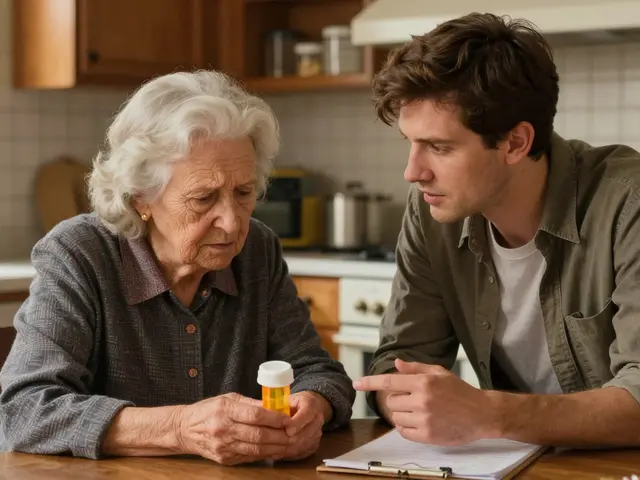
- Patient education: Telling patients what to expect, how to use their meds, and when to call for help.
One hospital saw same-day discharge rates jump from 12% to 37% just by improving how they communicated pain management plans. Patients who understood their treatment were more confident-and less anxious.
Implementation Isn’t Easy
MMA sounds simple. But putting it into practice? That’s where hospitals struggle. It requires coordination between:- Anesthesiologists
- Surgeons
- Pharmacists
- PACU nurses
- Recovery nurses
- Pre-op nurses
Everyone has to be on the same page. A patient might get gabapentin pre-op, but if the floor nurse doesn’t know to keep giving it after surgery, the whole plan falls apart. That’s why protocols like McGovern Medical School’s use specific order sets in the electronic system-no room for error.
Also, not every hospital can do it. You need ultrasound machines for nerve blocks. You need trained staff. You need policies that require pain scores to be checked every two hours in the first 24 hours. Without that structure, MMA doesn’t stick.
Watch Out for These Pitfalls
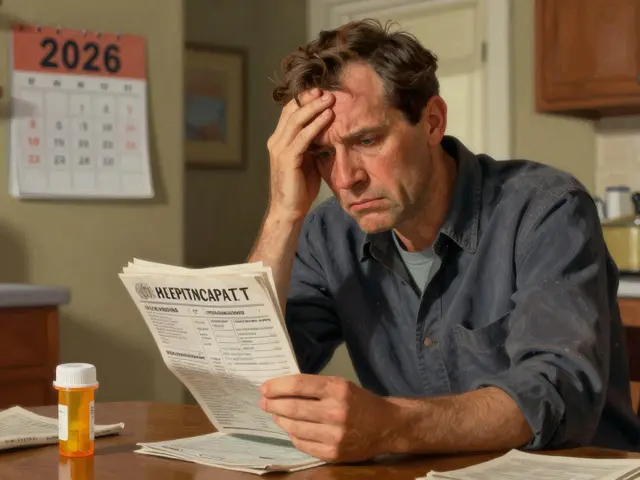
MMA is powerful-but it’s not one-size-fits-all. Mistakes happen:- Ignoring kidney function: Gabapentin and naproxen can build up in patients with poor kidney function. Doses must be lowered.
- Stopping meds too soon: Gabapentin shouldn’t be cut off abruptly. Tapering over 5-10 days after discharge helps prevent rebound pain and nerve sensitivity.
- Not assessing mental health: Patients with anxiety or depression often have higher pain sensitivity. They need more support, not just more drugs.
- Overlooking pre-op prep: Giving meds before surgery is key. Waiting until after means you’re already behind.
One hospital reduced opioid use by 60% simply by starting gabapentin and acetaminophen in the pre-op area-not the recovery room.
The Future Is Here
By 2025, experts predict 85% of major surgeries will use formal MMA protocols. That’s up from 60% in 2022. The American Society of Anesthesiologists has made it clear: opioids should be reserved for patients whose pain doesn’t respond to non-opioid options. Not the other way around.The new standard isn’t just about safety. It’s about better outcomes-faster recovery, fewer complications, less addiction, and more patient control. It’s not magic. It’s methodical. And it works.
What You Should Know
If you’re facing surgery:- Ask if your hospital uses multimodal analgesia.
- Find out what non-opioid options they offer.
- Let your team know if you’ve had chronic pain or opioid use in the past.
- Don’t be afraid to ask for a nerve block-it’s safe and effective.
- Take your scheduled meds on time. Don’t wait until you’re in pain.
Recovery doesn’t have to mean dependence. With the right plan, you can heal without opioids.
Is multimodal analgesia only for major surgeries?
No. While it’s most commonly used in major procedures like joint replacements and spine surgery, MMA also works for minor surgeries like arthroscopy or hernia repair. Even in these cases, opioid use drops by 30-40%. The key is consistency-starting non-opioid meds before pain begins, not after.
Can I avoid opioids completely after surgery?
Yes, for many patients. With a strong multimodal plan-including regional nerve blocks, continuous wound infusions, and scheduled non-opioid medications-many people never need an opioid. This is especially true for patients who request opioid-free recovery. Hospitals with dedicated pain teams can design these plans safely and effectively.
Why is gabapentin used in pain management?
Gabapentin doesn’t treat inflammation. It calms overactive nerves that send pain signals after surgery. It’s especially useful for nerve-related pain, like after spine or limb surgeries. Studies show it reduces both pain intensity and opioid needs. Dosing must be adjusted for kidney function-lower doses are needed if eGFR is under 30.
Do I need to take these meds after I leave the hospital?
Yes, for some. Many protocols now include a 5- to 10-day course of gabapentin or similar drugs after discharge. This helps prevent nerves from becoming hypersensitive and reduces the chance of developing chronic pain. Always follow your care team’s instructions-even if you feel fine.
What if I have kidney problems?
Your medication plan will be adjusted. Naproxen is avoided if kidney function is low (eGFR under 30). Gabapentin doses are cut in half or given once daily. Acetaminophen is safe, but always inform your team about your kidney history so they can choose the right options.
Is MMA more expensive than using opioids alone?
Not in the long run. While some non-opioid drugs cost more upfront, the savings come from shorter hospital stays, fewer complications, less need for readmission, and reduced long-term opioid dependence. One hospital saved nearly $2,000 per patient by cutting length of stay by 1.8 days. The cost of pain management is not just in pills-it’s in recovery time.



Comments
John Cena
19/Feb/2026Been using this approach since my last knee surgery. No opioids, just gabapentin, Tylenol, and a nerve block. Slept through the first night. Zero nausea. My doc said it’s the new normal. Why are we still talking about this like it’s revolutionary?
aine power
19/Feb/2026It’s not revolutionary. It’s basic neuroscience.
Jana Eiffel
19/Feb/2026While the clinical efficacy of multimodal analgesia is well-documented, one must not overlook the epistemological shift it represents: a departure from the pharmacological hegemony of opioid-centric paradigms toward a systems-oriented, neurophysiologically grounded model of pain modulation. This is not merely therapeutic innovation-it is a reclamation of medical epistemic authority from corporate-driven reductionism.
The commodification of postoperative care as a pharmacological transaction has long obscured the inherent complexity of nociceptive pathways. Multimodal strategies restore the dignity of clinical reasoning by acknowledging pain as a multidimensional phenomenon-not a singular signal to be silenced.
Moreover, the cultural inertia surrounding opioid reliance reflects deeper societal anxieties about discomfort, autonomy, and the medicalization of suffering. To embrace MMA is to reject the neoliberal imperative to ‘fix’ pain with chemical override, and instead cultivate patient agency through calibrated, context-sensitive intervention.
One might even argue that the resistance to widespread MMA adoption is less about clinical feasibility and more about institutional inertia rooted in profit-driven care models. The cost savings are not incidental-they are indictments.
Freddy King
19/Feb/2026Let’s be real-this is just fancy branding for ‘we ran out of oxy’ and now we’re throwing gabapentin at everything like it’s a magic bullet. The data looks good on paper, but in the real world? Nurses are overworked, med schedules get missed, and patients don’t take their non-opioids because they’re ‘not hurting yet.’
And don’t get me started on ketamine infusions. You think a 70-year-old with COPD wants a $200 IV drip that makes them feel like they’re tripping on a spaceship? Nah. They want a pill. And if we don’t give it to them, they’ll find it somewhere else.
Also, ‘same-day discharge’? That’s a hospital cost-cutting scheme dressed up as patient empowerment. You want to go home after knee replacement? Cool. But if you’re 82, live alone, and can’t bend over to tie your shoes, you’re not ‘empowered’-you’re a liability.
Don’t get me wrong, I like the science. But medicine isn’t a TED Talk. It’s messy. And people? They’re messy. Stop pretending MMA is some utopian fix.
Tommy Chapman
19/Feb/2026Oh great, another liberal hospital fantasy where we replace real painkillers with hippie meds and call it ‘science.’ You think gabapentin is gonna stop someone from screaming after a spinal fusion? Nah. They’re gonna need real medicine. And if you’re too scared to give it to them, that’s your problem-not theirs.
And don’t even get me started on ‘nerve blocks.’ Sounds like something out of a sci-fi movie. Meanwhile, my cousin had a hernia repair and got three oxycodone pills. He was walking the next day. No drama. No IV drips. Just pills. Real ones.
We’re not in Europe. We don’t need 12 different drugs and a team of specialists to manage pain. Sometimes, a pill works. And if you’re too afraid to use it, you’re not a doctor-you’re a bureaucrat.
Irish Council
19/Feb/2026They're not telling you the whole story
Every single non-opioid drug in that list has been quietly pulled from markets in other countries because of hidden neurotoxicity
Ketamine? Used in vet clinics for sedation not pain control
Lidocaine? Causes arrhythmias if you're dehydrated
Gabapentin? Linked to suicidal ideation in elderly
And the ‘61% reduction’? They’re comparing it to 1990s opioid protocols
Modern opioid dosing is precise now
This is fearmongering dressed as progress
Ask yourself who profits from replacing opioids with 5 different IV infusions
Hospitals bill each drug separately
And who pays? Your insurance
And your premiums
And your taxes
They call it innovation
It’s a revenue stream
Laura B
19/Feb/2026I’m a nurse in a trauma unit and I’ve seen MMA change everything. Patients who used to be groggy and constipated for days? Now they’re sitting up, laughing, texting family by Day 1.
One guy after a hip fracture-no opioids, just acetaminophen, celecoxib, and a femoral block. He asked for a crossword puzzle. That’s not just pain control. That’s dignity.
Yes, it takes coordination. Yes, it’s harder than handing out pills. But when you see someone recover faster, sleep better, and actually enjoy their recovery? It’s worth the extra work.
And to those saying ‘but what about real pain?’-I get it. But pain isn’t just a number on a scale. It’s fear. It’s isolation. It’s helplessness. MMA doesn’t just reduce pain scores. It reduces trauma.
Also, patient education isn’t fluff. When we explain why they’re getting gabapentin *before* surgery, they trust the plan. They take it. They heal better.
It’s not perfect. But it’s better. And we’re getting better at it every day.
Robin bremer
19/Feb/2026bro i had knee surgery last year and they gave me like 2 pills and said ‘just use ice and walk’ and i was like 😱🤯 but i didn’t even need anything 😭
now i’m telling all my friends to ask for the ‘no opioids’ plan 🤙
Jayanta Boruah
19/Feb/2026While the empirical data presented in this exposition is statistically compelling, one must interrogate the ontological presuppositions underlying the purported efficacy of multimodal analgesia. The conflation of opioid-sparing outcomes with therapeutic superiority is a logical fallacy-specifically, a false dichotomy between pharmaceutical intervention and holistic care.
The assertion that MMA reduces long-term dependence presumes that opioid consumption is inherently pathological, thereby pathologizing human physiology’s adaptive response to nociceptive stimuli. This is not medicine-it is moralism masquerading as clinical protocol.
Furthermore, the emphasis on institutional protocolization implies a technocratic governance of pain perception, wherein patient autonomy is subordinated to algorithmic standardization. The very notion of ‘order sets’ and ‘protocols’ erodes the physician-patient relationship, replacing judgment with compliance.
It is also worth noting that the cited reduction in hospital length of stay correlates not with improved outcomes, but with cost containment imperatives driven by insurance reimbursement structures. The patient is not the beneficiary; the balance sheet is.
And while regional anesthesia and nerve blocks are undeniably effective, their accessibility remains contingent upon socioeconomic privilege. To promote MMA as universally applicable is to ignore the structural inequities that render such interventions unattainable for vast swaths of the population.
One must ask: Is this innovation-or is it institutionalized paternalism dressed in the language of evidence-based practice?