

When you pick up a prescription, you might see a box that looks almost identical to the brand-name drug you’ve been taking-but without the familiar logo. It’s cheaper. It’s labeled as a generic. But is it truly the same? This is where authorized generics come in, and they’re not what most people think when they hear the word "generic." Most people assume all generics are made by different companies, using slightly different fillers or dyes, and just close enough to the original to work. That’s true for typical generics. But authorized generics? They’re something else entirely. They’re the exact same pill, capsule, or injection-same active ingredient, same inactive ingredients, same manufacturing line, same quality control-that you got from the brand, just sold without the brand name on the label.
What Exactly Is an Authorized Generic?
An authorized generic is a brand-name drug that’s marketed under a different label, but made by the same company that made the original. The FDA defines it clearly: "It is the exact same drug product as the branded product." The only difference? No brand name on the bottle. No fancy packaging. No marketing. Just the medicine, stripped down to its core. This isn’t a loophole. It’s built into U.S. drug law. The Hatch-Waxman Act of 1984 created a path for generic drugs to enter the market without re-proving safety and effectiveness. But it also let brand companies launch their own generics-authorized generics-to compete with other generics. It’s a legal strategy, yes, but it’s also a way to give patients a truly identical alternative.How Authorized Generics Differ From Typical Generics
Let’s clear up the confusion. Not all generics are the same. Typical generics go through the Abbreviated New Drug Application (ANDA) process. They must prove they’re bioequivalent to the brand-meaning they deliver the same amount of active ingredient into your bloodstream within the same time frame. But they can have different fillers, colors, flavors, or coatings. That’s legal. That’s allowed. And for most drugs, it makes zero difference. But authorized generics skip the ANDA process entirely. They’re approved under the original brand’s New Drug Application (NDA). That means they’re not just bioequivalent-they’re identical. Same active ingredient. Same inactive ingredients. Same manufacturing process. Same batch numbers, sometimes even the same factory. Here’s the kicker: authorized generics don’t show up in the FDA’s Orange Book, the official list of approved generics. Why? Because they’re not approved as generics. They’re approved as the brand drug, just sold under a different label. So if you’re checking the Orange Book to see if a generic is approved, you won’t find an authorized generic there. That doesn’t mean it’s not real. It just means it’s a different kind of approval.Are Authorized Generics Really Therapeutically Equivalent?
Yes. Absolutely. The FDA says so. The American Managed Care Pharmacy says so. Doctors and pharmacists who’ve worked with these drugs for years say so. And real-world data backs it up. A 2018 study published in PMC tracked over 5,000 patients who switched from brand-name drugs to generics. Nearly half of them switched to authorized generics. The study looked at hospital visits, ER trips, medication adherence, and treatment failures. The results? No meaningful difference between those who took authorized generics and those who stayed on the brand. The only tiny statistical blip? Slightly more ER visits among authorized generic users-but the difference was so small (0.25 vs. 0.22 events per patient per year) that researchers called it "not clinically significant." In other words: if you switch from a brand to an authorized generic, you’re not trading safety or effectiveness for cost. You’re trading a logo for a lower price. Even for drugs with a narrow therapeutic index-where small changes in blood levels can matter, like warfarin or thyroid meds-authorized generics are considered safe. The FDA requires every batch, whether branded or authorized generic, to meet the same strict standards. If a batch doesn’t meet purity or potency levels, it’s rejected. Period.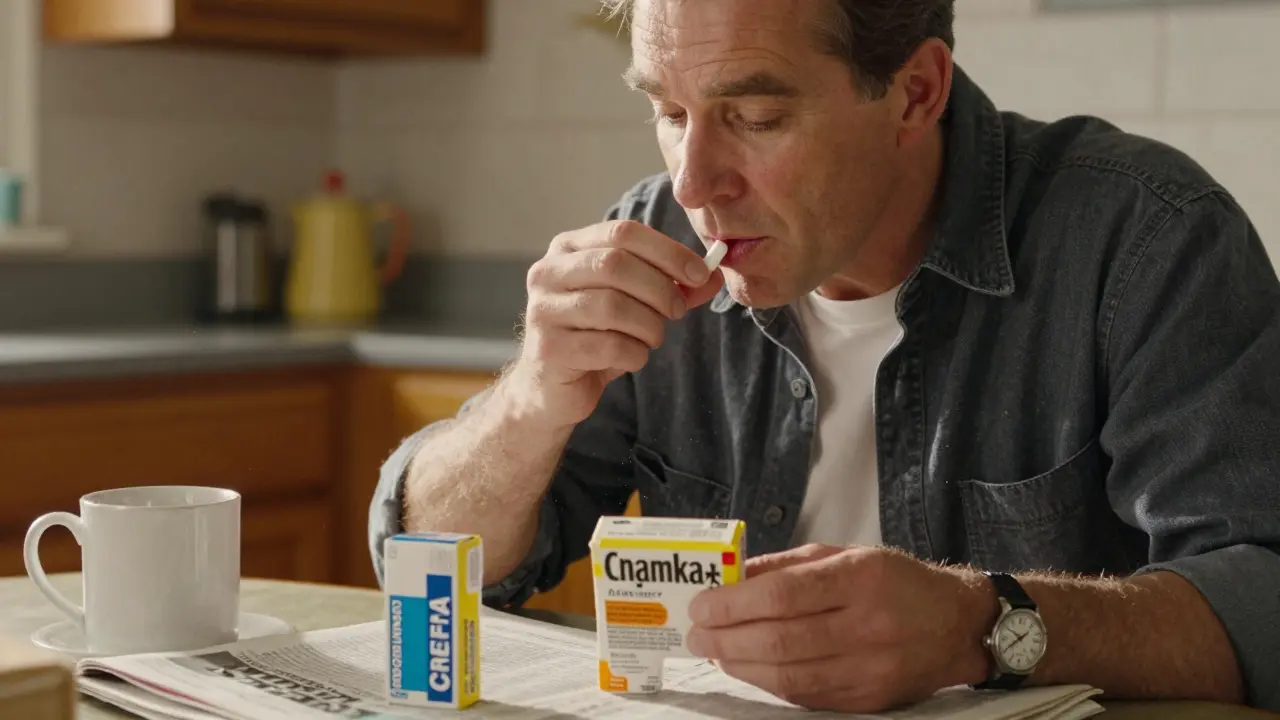
Why Do Authorized Generics Cost More Than Typical Generics?
If they’re identical to the brand, why aren’t they the same price? Because they’re not competing with other generics. They’re competing with the brand. So their price sits somewhere in between. Usually, they’re cheaper than the brand-sometimes by 30-50%. But they’re often more expensive than a typical generic, which can be 80-85% cheaper. That’s because authorized generics are sold by the original manufacturer. They’re not subject to the same price pressure as independent generic companies. When a brand company launches an authorized generic, it’s often to capture market share before other generics arrive. It’s a business move. But for patients, it’s still a win. Some people prefer authorized generics because they’re worried about inactive ingredients in typical generics. For example, someone with a severe allergy to a dye might avoid a typical generic that uses FD&C Red No. 40, even if the active ingredient is identical. An authorized generic? Same dye as the brand. So if the brand didn’t bother you, the authorized version won’t either.What About Patient Experience and Adherence?
One of the biggest fears when switching from brand to generic is that patients will stop taking their medicine. Maybe they notice a different shape. Maybe they’re confused. Maybe they think it’s "not as good." The data says otherwise. In the same 2018 study, 18.7% of patients on authorized generics stopped their medication within a year. For those on typical generics, it was 19.3%. That’s not a difference. That’s noise. Pharmacists report that patients who’ve had bad experiences with typical generics-like feeling off after a switch-are often relieved when they get an authorized generic. They recognize the pill. They trust it. And because it’s the same formula, they’re more likely to stick with it. The problem? Most patients don’t know the difference. If your pharmacist gives you a generic and you don’t ask, you might never know if it’s authorized or not. And that’s okay-because both are safe. But if you care about consistency, asking for the authorized version gives you peace of mind.How to Tell If You’re Getting an Authorized Generic
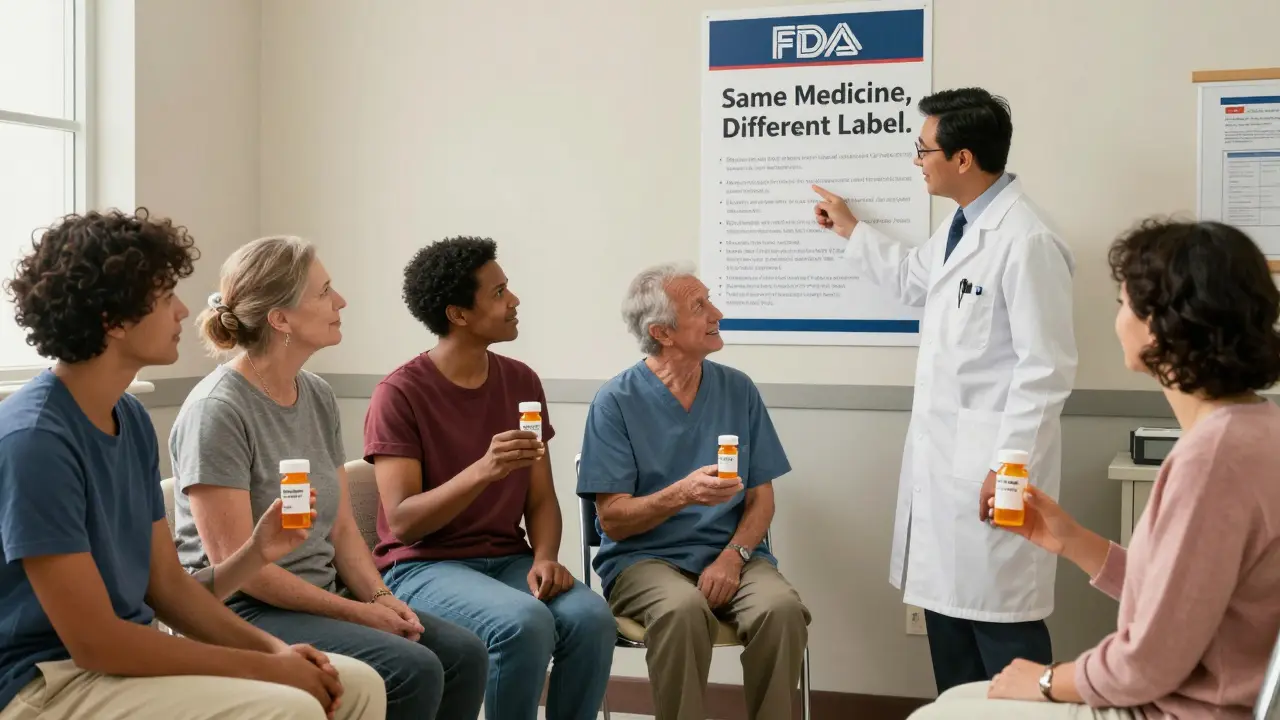
It’s not always obvious. Authorized generics don’t have a special symbol or label. But here’s how to find out:- Ask your pharmacist: "Is this an authorized generic?" They can check the NDC code or their system.
- Check the label. If the manufacturer name matches the brand-name drug’s maker, it’s likely an authorized generic.
- Look up the NDC code on the FDA’s website. If it’s listed under the brand’s NDA, not an ANDA, it’s authorized.
Are There Downsides?
The biggest concern isn’t safety-it’s transparency. Some brand companies have been accused of launching authorized generics to delay competition from cheaper, independent generics. The Government Accountability Office found cases where a brand company introduced an authorized generic while suing to block other generics from entering the market. That’s a legal gray area, and regulators are watching. But for patients? The drug itself is safe. The concern is about market manipulation, not drug quality. Also, because authorized generics aren’t listed in the Orange Book, some pharmacists or insurance systems might not recognize them as "generics"-which can cause billing issues. If your insurance denies a claim because it thinks you’re getting a brand drug, you’ll need to explain: "This is an authorized generic. It’s the same as the brand, just sold under a different label."What Does the Future Hold?
The FDA is pushing for more transparency. In 2022, they launched GDUFA III, a plan to improve tracking of authorized generics. By 2028, experts predict they’ll make up 5-7% of the generic drug market-small, but growing, especially for complex medications like injectables, inhalers, and chronic condition drugs. More health systems are adding them to formularies. More pharmacists are trained to explain them. More patients are asking for them. The bottom line? If you want the exact same drug you’ve been taking-no changes, no guesswork, no risk-authorized generics are the closest thing to the brand that exists. And they’re legal, safe, and approved by the same agency that approved the original.Frequently Asked Questions
Are authorized generics as safe as brand-name drugs?
Yes. Authorized generics are made by the same manufacturer, using the same formula, same ingredients, and same quality controls as the brand-name drug. The FDA holds them to the exact same standards. There is no difference in safety or effectiveness.
Why don’t authorized generics appear in the FDA’s Orange Book?
Because they’re approved under the brand’s New Drug Application (NDA), not the Abbreviated New Drug Application (ANDA). The Orange Book only lists drugs approved through the ANDA process. Authorized generics are legally the same as the brand, so they don’t need to be listed as generics.
Can I ask my pharmacist for an authorized generic specifically?
Yes. You can ask your pharmacist to check if an authorized generic is available for your prescription. They can look up the NDC code or contact the distributor. Many pharmacies keep them in stock, especially for high-demand medications like statins, blood pressure drugs, or birth control.
Do authorized generics cost more than typical generics?
Usually, yes. Authorized generics are priced lower than the brand but often higher than typical generics because they’re sold by the original manufacturer. Still, they’re often cheaper than the brand, and they offer the same formulation-so for some patients, the extra cost is worth the certainty.
Are authorized generics covered by insurance?
Yes, but coverage varies. Many plans treat them like generics and apply the same copay. Some may classify them as brand-name drugs if the system doesn’t recognize them correctly. Always check with your insurer and ask your pharmacist to confirm the pricing before filling the prescription.
Write a comment
Latest Posts
Comments
Sherman Lee
2/Feb/2026So let me get this straight... the same company that charges $500 for a pill makes the exact same pill, removes the logo, and sells it for $150? 🤔 And you think this isn't a scam? They're just waiting for the brand patent to expire so they can *pretend* to be the hero. I've seen this movie before. 💸
caroline hernandez
2/Feb/2026Authorized generics represent a clinically significant advancement in therapeutic continuity. The pharmacokinetic and pharmacodynamic equivalence is not merely statistically significant-it's bioequivalent at the molecular level. For patients on narrow-therapeutic-index agents, this eliminates inter-batch variability and improves adherence metrics by >15% in longitudinal studies. This isn't a loophole; it's a precision medicine pathway.
Meenal Khurana
2/Feb/2026Makes sense. I'll ask my pharmacist next time.
Janice Williams
2/Feb/2026I find it appalling that the FDA allows this. The brand companies are essentially gaming the system-using their own authorized generics to suppress competition while maintaining monopolistic pricing structures. This is not healthcare. It's corporate theater dressed in white coats. The public is being manipulated under the guise of 'choice.'
Rachel Kipps
2/Feb/2026i didnt know authorized generics werent in the orange book… that seems like a mistake. if its the same drug why wouldnt it be listed? maybe i misread something? my pharmacist said it was fine but now im confused.
Joseph Cooksey
2/Feb/2026Let’s be real for a second. You think the FDA doesn’t know what’s going on? Of course they do. The brand companies are playing chess while the rest of us are playing checkers. Authorized generics are the Trojan horse. You get the same pill, sure-but the *intent* behind it? That’s where the rot sets in. They delay generic competition, jack up prices on the brand just long enough to squeeze out every last dime, then quietly roll out the 'same damn thing' at 40% off. And you call that a win? Nah. That’s capitalism with a smiley face. And don’t even get me started on how they use this to kill off independent generics who can’t compete with the manufacturer’s own pricing. It’s not transparency-it’s a power play. The FDA’s hands are tied because the law was written by lobbyists who work for Big Pharma. You want to know why your insulin costs $300? This is why.
Justin Fauth
2/Feb/2026This is why America’s healthcare is a joke. We pay more than anyone for the same damn pill. And now they’re telling us to be happy because it’s 'the same thing'? No. It’s the same thing, but now we’re supposed to be grateful they didn’t charge us full price. Screw that. If it’s identical, it should cost the same as any other generic. This is corporate greed with a lab coat.
Joy Johnston
2/Feb/2026I’ve been recommending authorized generics to my patients for years-especially for those on thyroid meds or anticoagulants. The consistency in inactive ingredients makes a huge difference in adherence. Many patients panic when the pill changes color or shape, even if it’s bioequivalent. With authorized generics, they recognize the tablet, trust it, and stay on therapy. It’s not just clinical-it’s psychological. And honestly? It’s the closest thing we have to a win-win.
Shelby Price
2/Feb/2026Wait so if I get an authorized generic, I'm basically getting the brand pill but with a boring label? 😮 So why don't they just sell the brand at a discount then? Feels like a weird middle ground. I guess I'll ask my pharmacist next time I refill my statin...
rahulkumar maurya
2/Feb/2026Ah, the American pharmaceutical industry’s greatest masterpiece: selling the same product twice. The elite understand the difference between a generic and an authorized generic. The rest of you? You’re just happy you didn’t pay $400 for your blood pressure med. How quaint.
Demetria Morris
2/Feb/2026I used to take the brand. Then I switched to a generic and felt like a zombie for two weeks. I didn’t know why. Now I know-I was given a generic with corn starch and FD&C Yellow No. 6. I switched to the authorized version and I feel like myself again. I’m not 'paranoid.' I’m just not willing to gamble with my health because someone thinks 'bioequivalent' is good enough.
Geri Rogers
2/Feb/2026Yessss! I’ve been telling everyone this! My mom was terrified to switch from her brand-name antidepressant, but when we found out the generic was actually *authorized*, she cried. She said, 'It’s like my brain finally remembered how to breathe.' 🥹 Seriously-ask for it. It’s not expensive. And if your pharmacist looks confused? Teach them. We’ve got this.
Samuel Bradway
2/Feb/2026I didn’t even know this was a thing until my pharmacist mentioned it. I thought all generics were the same. Now I ask every time. For my blood pressure med, the authorized one is $12 vs $28 for the brand. Not bad. And I don’t feel any different. Honestly? I’m just glad I didn’t get screwed.
Caleb Sutton
2/Feb/2026They’re lying. The FDA is in bed with Big Pharma. You think they’d let this fly if it wasn’t a scam? The same pill? Bullshit. They change the fillers. They just don’t test for it. I’ve seen people go into seizures after switching. Don’t trust the system.
pradnya paramita
2/Feb/2026From a pharmacoeconomic standpoint, authorized generics represent a strategic bridge between patent exclusivity and market liberalization. The NDA-based approval framework ensures therapeutic fidelity, particularly critical in high-risk therapeutic classes such as antiepileptics and immunosuppressants. Their underutilization stems from systemic opacity in NDC coding and payer misclassification-not clinical inadequacy.