

Every year, tens of thousands of people in the U.S. get bitten by ticks. Most don’t think much of it - a small bump, maybe a little itch, and it’s gone. But for some, that bite is the start of something far more serious: Lyme disease. It’s not just a summer nuisance. Left untreated, it can lead to joint pain, nerve damage, heart problems, and months - even years - of debilitating symptoms. The good news? If caught early, it’s almost always curable. The problem? Most people don’t recognize the signs until it’s too late.
How Lyme Disease Starts - And How It Spreads
Lyme disease is caused by bacteria called Borrelia burgdorferi a spiral-shaped bacterium transmitted by infected blacklegged ticks. These ticks don’t jump or fly. They wait in tall grass, brush, or leaf litter, clinging to passing animals or people. The real danger comes from nymph ticks tiny, immature ticks, about the size of a poppy seed, that are hard to spot and most active in spring and summer. They’re the main culprits because they’re so small - you might not even feel them biting.Transmission doesn’t happen right away. Research shows the bacteria need time to move from the tick’s gut to its saliva. Most sources agree: it takes at least 24 hours of attachment for the tick to pass on the infection. The CDC says if you remove the tick within 24 hours, your risk drops by 95%. That’s why checking your skin after being outdoors - especially in wooded or grassy areas - is critical. Showering within two hours of coming inside can also help wash off unattached ticks.
In the U.S., two tick species spread Lyme disease: Ixodes scapularis the blacklegged tick, common in the Northeast and Midwest, and Ixodes pacificus the western blacklegged tick, found along the Pacific Coast. You’re most at risk in 14 states: Connecticut, Massachusetts, New York, Pennsylvania, Wisconsin, and others in the Northeast and upper Midwest. But climate change is shifting their range. Ticks are moving north into Canada and up into higher elevations, meaning areas once considered low-risk are now on the map.
The Three Stages of Lyme Disease - And What Happens in Each
Lyme disease doesn’t hit all at once. It unfolds in stages, each with different symptoms and treatment needs.Stage 1: Early Localized (1-28 days after bite)
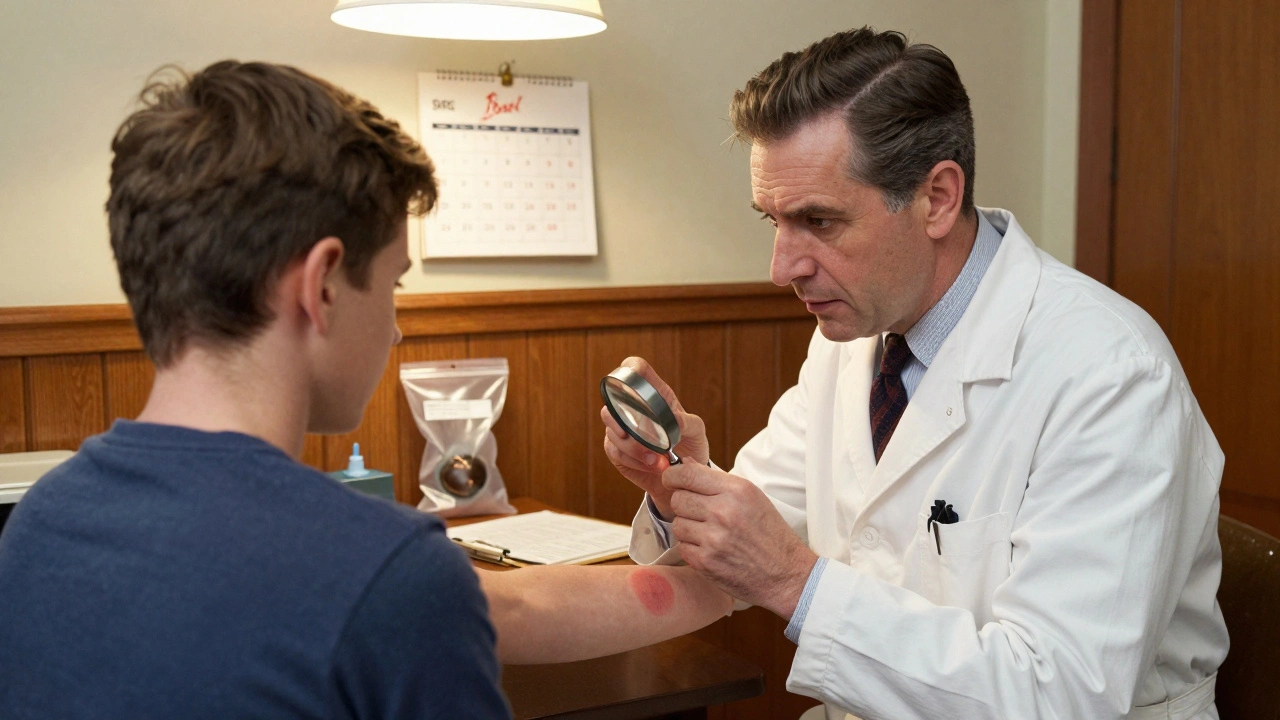
This is the easiest stage to treat - if you catch it. About 70-80% of people develop a telltale rash called erythema migrans a circular, expanding red rash that often looks like a bull’s-eye. It usually shows up 7-14 days after the bite. The rash isn’t always itchy or painful, so people ignore it. Some get flu-like symptoms too: fever (45% of cases), headaches (61%), fatigue (70%), muscle aches, swollen lymph nodes. If you see this rash, don’t wait for a blood test. Doctors treat it based on appearance alone. In fact, the lead researcher who first identified Lyme disease, Dr. Allen Steere, said the rash is so specific that lab tests aren’t needed.
Stage 2: Early Disseminated (weeks to months after bite)
If the infection isn’t stopped, the bacteria spread through the bloodstream. Now you’re in Stage 2. Symptoms get more serious. You might develop multiple rashes elsewhere on your body. Neurological issues can show up: facial paralysis (Bell’s palsy), numbness in limbs, severe headaches, or meningitis. Heart problems can occur too - Lyme carditis, which slows the heartbeat, affects 4-10% of untreated patients. Some people feel their heart skip beats or get dizzy. These symptoms are often mistaken for other conditions, which is why many patients see multiple doctors before getting the right diagnosis.
Stage 3: Late Disseminated (months to years after bite)
This is what happens when Lyme disease goes untreated for too long. Up to 60% of people develop severe joint pain and swelling, especially in the knees. Nerve damage can cause shooting pains, tingling, or burning sensations. Cognitive problems - brain fog, memory loss, trouble concentrating - are common. Some people describe it as feeling like they’re stuck in slow motion. These symptoms can last for years and are often permanent if not treated in time.
How Lyme Disease Is Treated - And When
Treatment is straightforward - if you catch it early.
For Stage 1, doctors prescribe doxycycline an oral antibiotic taken twice daily for 10-21 days. It’s the first-line choice for adults. Kids under 8 and pregnant women get amoxicillin a penicillin-based antibiotic, safe for children and pregnant women. Most people feel better within days. By the end of the treatment, 90%+ are fully recovered.
Stage 2 or 3? That’s where things get more intense. If the infection has reached the nervous system or heart, you’ll need intravenous antibiotics typically ceftriaxone, given daily for 14-28 days. This is done in a clinic or hospital. Oral antibiotics won’t cut it anymore. The goal is to kill the bacteria before they cause permanent damage.
There’s also a special case: prophylactic doxycycline a single 200mg dose given within 72 hours of a tick bite. This is only recommended if the tick is confirmed as an Ixodes scapularis, it’s engorged (meaning it’s been feeding), and it was attached for more than 36 hours. It’s not for every tick bite - only high-risk ones. But when used correctly, it prevents Lyme disease in up to 87% of cases.
Why Diagnosis Is So Hard - And Why It Matters
Here’s the brutal truth: Lyme disease is easy to miss. Blood tests for Lyme - ELISA and Western blot - aren’t perfect. In the first few weeks, they miss up to 60% of cases because your body hasn’t made enough antibodies yet. That’s why doctors rely on symptoms, especially the rash. But not everyone gets the bull’s-eye. Some get a solid red patch. Others get nothing at all.
A 2022 study found that only 52% of primary care doctors could correctly identify all three stages of Lyme disease in a test case. That’s not a failure of patients - it’s a failure of training. Many patients see three or more doctors before getting diagnosed. The average delay? 1.8 years. One Reddit user took 18 months and seven doctors to get diagnosed with neurological Lyme after starting with joint pain.
And even when treated, some people don’t bounce back. About 10-20% of patients develop Post-Treatment Lyme Disease Syndrome (PTLDS) persistent fatigue, pain, or brain fog lasting more than six months after antibiotics. It’s not an active infection - no bacteria are left. But the body’s immune system seems stuck in overdrive. The cause isn’t fully understood, and there’s no proven cure. Rest, physical therapy, and symptom management are the only options.
Meanwhile, a controversial group called "chronic Lyme disease" claims ongoing infection justifies long-term antibiotics. But the Infectious Diseases Society of America says there’s no solid evidence for that. Studies show prolonged antibiotics don’t help PTLDS and can cause serious side effects like C. diff infections or antibiotic resistance. Still, 28 U.S. states have passed laws protecting doctors who prescribe long-term antibiotics for this condition - creating a dangerous gray zone.
New Hope on the Horizon
There’s progress. In March 2023, the FDA approved the first new Lyme test in 20 years: the MiQLick test a urine-based test that detects Borrelia DNA with 92% accuracy in early infection. It’s faster and more reliable than blood tests in the first weeks.
A new vaccine, VLA15, developed by Valneva with Pfizer, showed 70-96% effectiveness in Phase 2 trials. If Phase 3 results hold, it could be available by 2026. Researchers at NIAID are also working on an mRNA vaccine - similar to the COVID shots - expected to enter human trials in 2024.
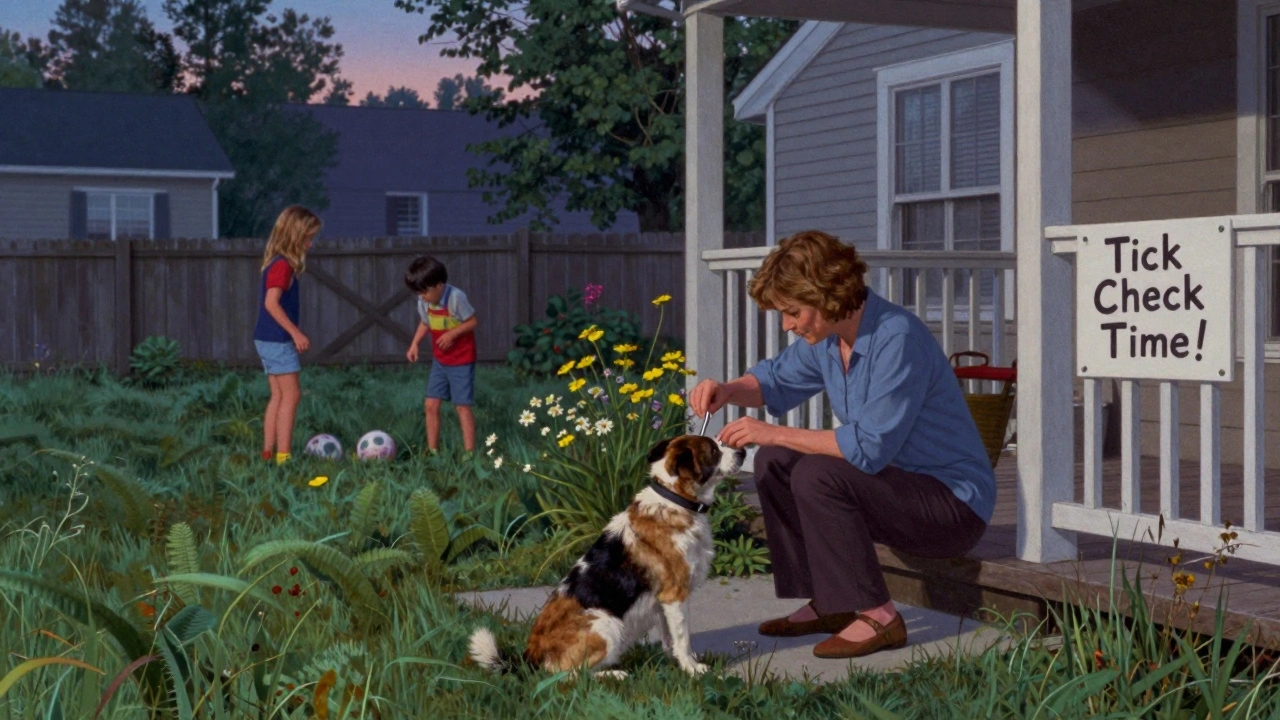
But prevention still beats all of this. Wear permethrin-treated clothing. Use DEET on skin. Check your body - scalp, armpits, groin - after being outdoors. Remove ticks with fine-tipped tweezers, pulling straight up. Save the tick in a bag if you can. And if you develop a rash or flu-like symptoms after a tick bite - don’t wait. See a doctor. Now.
What You Should Do Right Now
- If you live in or visit high-risk areas (Northeast, Midwest, or Pacific Coast), assume every tick bite could be dangerous.
- Check your skin, clothes, and pets every time you come inside - especially after hiking, camping, or gardening.
- Shower within two hours of being outdoors to wash off unattached ticks.
- If you find a tick, remove it immediately with tweezers. Don’t crush it. Don’t use matches or nail polish.
- If the tick was attached for more than 24 hours, or you develop a rash or fever, call your doctor. Don’t wait.
- Keep track of your symptoms. Write down when the bite happened, what the rash looked like, and how you’ve felt since.
Lyme disease isn’t a death sentence. It’s not a mystery. It’s a treatable infection - if you act fast. The longer you wait, the harder it gets. And the cost? Not just in money, but in time, energy, and quality of life.
Can you get Lyme disease from a tick bite right away?
No. Lyme bacteria need time to move from the tick’s gut to its saliva. Transmission usually takes at least 24 hours, and sometimes up to 36-48 hours. Removing a tick within 24 hours reduces your risk of infection by 95%.
Do all ticks carry Lyme disease?
No. Only blacklegged ticks (Ixodes scapularis and Ixodes pacificus) carry the Lyme bacteria, and even then, not all of them are infected. In high-risk areas, 20-50% of nymph ticks may carry the bacteria. Most other ticks - like dog ticks or lone star ticks - don’t spread Lyme.
Is the bull’s-eye rash always present in Lyme disease?
No. While it’s the classic sign, only 70-80% of people develop it. Some get a solid red rash, others get no rash at all. Don’t wait for the bull’s-eye. If you’ve had a tick bite and feel unwell - fever, fatigue, headache - get checked.
Can you get Lyme disease more than once?
Yes. Having Lyme once doesn’t make you immune. You can get infected again if bitten by another infected tick. That’s why prevention - tick checks, repellents, protective clothing - is always important.
Are blood tests reliable for diagnosing Lyme disease?
Not in the early stage. Blood tests detect antibodies, which take weeks to develop. In the first month, they miss up to 60% of cases. The rash is the best diagnostic tool early on. Later, when symptoms spread, blood tests become more accurate - around 87% reliable.
What should I do if I find a tick on me?
Use fine-tipped tweezers to grasp the tick as close to the skin as possible. Pull upward with steady, even pressure. Don’t twist or crush it. Clean the area with soap and water. Save the tick in a sealed bag with the date written on it, in case you need to show it to a doctor later.
Can Lyme disease be cured completely?
Yes - if treated early. Most people who get antibiotics within the first few weeks recover fully. But if treatment is delayed, some people develop lingering symptoms (PTLDS), which can last months or years. There’s no cure for PTLDS yet, but symptoms often improve over time with rest and supportive care.




Comments
Louise Girvan
1/Dec/2025They're lying about the 24-hour rule. I know someone who got Lyme in 8 hours. The CDC is in bed with Big Pharma. Tick saliva has nanobots that hide the bacteria. You think you're safe? You're not. Always assume you're infected. Save the tick. Send it to a lab. Don't trust doctors.
soorya Raju
1/Dec/2025yo so i got bit by a tick in goa last year and i thought it was just a mosquito thing but then i started seeing shadows in my room and hearing whispers in sanskrit?? the doc said lyme but i think its the kundalini awakening from the tick's spirit!! they dont want you to know the ticks are ancient alien bio-weapons!!
Dennis Jesuyon Balogun
1/Dec/2025The epidemiological framework here is fundamentally reductionist. We're treating a systemic immune dysregulation as a binary pathogen-vector model. The microbiome disruption, epigenetic modulation, and neuroinflammatory cascade are being ignored. This is biomedical colonialism-reducing complex host-pathogen dynamics to antibiotic protocols. We need a biopsychosocial model, not a pill-for-pain paradigm. The real crisis is structural: underfunded surveillance, racial disparities in diagnosis, and the commodification of health.
Grant Hurley
1/Dec/2025honestly this post is a lifesaver. i thought i was just tired from work but turns out i had a tick on my neck for 3 days and zero clue. got the doxy and feel like a new person. check your armpits ppl. seriously. i used to just slap on bug spray and call it a day. big mistake. now i shower after every hike. #tickaware
Irving Steinberg
1/Dec/2025so like... if you get lyme you just take antibiotics and boom you're good? 🤔 i mean i got a rash once and it went away so i guess i'm immune now? 🤷♂️
Lydia Zhang
1/Dec/2025I got bit by a tick last summer. Didn't do anything. Still fine.
Kay Lam
1/Dec/2025I think what this post doesn't fully address is the emotional toll of living in constant fear of ticks. I live in Vermont and every time I step outside I scan the grass like it's a minefield. I check my kids every night. I wash their clothes in hot water. I spray their shoes. I don't let them play in the woods anymore. It's not just about the disease-it's about losing your sense of safety in nature. That grief is real. And no antibiotic can fix that.
Matt Dean
1/Dec/2025I've seen this before. People panic over ticks. Meanwhile, 99% of bites are harmless. You're more likely to get struck by lightning than to get chronic Lyme. Stop fearmongering. Go outside. Live your life. Stop treating every bug like a bio-weapon.
patrick sui
1/Dec/2025The MiQLick test is a game-changer, but access is uneven. Rural clinics still rely on ELISA. The diagnostic gap is a structural inequity. We need decentralized testing, mobile units, and community health worker training-not just fancy labs in Boston. Also, the mRNA vaccine? That’s the real hope. If we can deploy it like we did with COVID, we could eliminate Lyme in a decade. But only if we prioritize equity over profit.
Declan O Reilly
1/Dec/2025so i read this and i was like wait… what if the bacteria arent the problem… what if its the tick's saliva that triggers autoimmunity?? like… maybe we're treating the symptom not the cause?? and what if the antibiotics are making it worse by killing our good bugs?? i mean… i know this sounds crazy but… what if??
Conor Forde
1/Dec/2025Lyme is a scam. A corporate hoax. The CDC is funded by Merck. The 'bullseye rash' is just a sunburn. The 'neurological symptoms'? Stress from social media. The 'long-term antibiotics'? That's what the real patients need-NOT the 'chronic Lyme' frauds who just want free disability checks. Wake up, sheeple. This is all a money grab. The real epidemic? Gullibility.
Linda Migdal
1/Dec/2025We don't need more vaccines. We need better border control. Ticks are coming from Canada because we let them in. We need a tick wall. Build it. Fund it. Make America tick-free again. Stop listening to these 'climate change' nonsense. This is an invasion. And we're losing.
Tommy Walton
1/Dec/2025The real tragedy isn't Lyme-it's the collapse of epistemic authority. You're telling me a 20-year-old blood test is still the gold standard? We're living in the post-truth era, and this is what it looks like: outdated diagnostics, misinformed GPs, and patients becoming their own diagnosticians on Reddit. The cure isn't antibiotics-it's a return to scientific rigor. Or, as I like to say: *Cogito, ergo sum... but only if the ELISA is positive.*
James Steele
1/Dec/2025The entire paradigm of Lyme diagnosis is rooted in a 1970s biomedical model that ignores host-pathogen coevolution. Borrelia burgdorferi is a biofilm-forming, antigenically variable spirochete-yet we treat it with monotherapy antibiotics designed for gram-negative rods. The PTLDS phenomenon isn't 'post-treatment'-it's *persistent immune dysregulation due to incomplete pathogen clearance and mitochondrial toxicity*. We need combination antimicrobials, immunomodulators, and metabolic support-not just doxycycline and wishful thinking.