

When a new drug hits the market, it doesn’t just have a patent. It has patent exclusivity and market exclusivity - two completely different tools that work together to block competitors. Most people think a patent is enough to keep generics off the shelf. But that’s not true. A patent can expire, and the drug can still be protected. Here’s how it really works.
Patent Exclusivity: The Legal Right to Exclude
Patent exclusivity comes from the U.S. Patent and Trademark Office (USPTO). It’s a legal monopoly on the invention itself - the chemical structure, how it’s made, or how it’s used. The law gives you 20 years from the day you file the patent application. Sounds straightforward, right? But here’s the catch: drug development takes 10 to 15 years before the FDA even approves it. That means by the time the drug reaches pharmacies, you’ve already lost half your patent life.
That’s why companies get extensions. If the FDA took too long to review the drug, you can apply for a Patent Term Extension (PTE). The law lets you add up to five years, but your total protected time after approval can’t go beyond 14 years. So if your patent was filed in 2010 and the drug got approved in 2020, you might get a 3-year extension - giving you protection until 2023 instead of 2020.
But patents don’t enforce themselves. If a generic company makes the same drug, you have to sue them. That’s expensive, slow, and uncertain. And not all patents are equal. A composition of matter patent - covering the actual molecule - is the strongest. But many companies file secondary patents: for new dosages, delivery methods, or uses. These are easier to get but easier to challenge. In fact, 68% of patents listed in the FDA’s Orange Book are secondary patents, not the core invention.
Market Exclusivity: The FDA’s Approval Lock
Market exclusivity is enforced by the FDA - not the courts. It’s not about the invention. It’s about the data. If you’re the first to prove a drug is safe and effective, the FDA won’t approve any copycat version for a set number of years, even if no patent exists.
There are several types:
- New Chemical Entity (NCE) exclusivity: 5 years. During this time, the FDA can’t even accept an application from a generic maker that relies on your clinical data.
- Orphan drug exclusivity: 7 years for drugs treating rare diseases (under 200,000 patients in the U.S.). This one doesn’t care about patents. Even if the drug has been around for centuries, like colchicine, you can get 7 years of exclusivity just by proving it works for a new rare condition.
- Pediatric exclusivity: 6 extra months added to any existing patent or exclusivity period if you study the drug in children. Since 1997, this has generated over $15 billion in extra revenue for drugmakers.
- Biologics exclusivity: 12 years for complex drugs made from living cells - like Humira or Enbrel. This is longer than most patents last.
- 180-day exclusivity: The first generic company to successfully challenge a patent gets a 6-month head start over all other generics. That’s worth $100 million to $500 million in extra sales.
Here’s the kicker: market exclusivity runs automatically. You don’t have to sue anyone. The FDA just blocks approval. And it can kick in even after all patents expire.
When Patents Expire, Market Exclusivity Still Blocks Generics
Take Trintellix, an antidepressant. Its key patent expired in 2021. But the FDA had granted 3 years of NCE exclusivity. So even though the patent was gone, generics couldn’t enter until 2024. Teva Pharmaceuticals lost an estimated $320 million because they didn’t account for the exclusivity clock.
Even more shocking: colchicine. This drug has been used since ancient Egypt. No one owned a patent on it. But in 2010, Mutual Pharmaceutical got FDA approval for a new use - treating gout - and received 10 years of exclusivity. The price jumped from 10 cents per tablet to nearly $5. No patent. Just exclusivity.
This is why 5.2% of branded drugs have no patent at all - but still have market exclusivity. And 28.6% have neither. Those are the drugs generics can copy right away.
Why the Two Systems Exist - and Why They’re Flawed
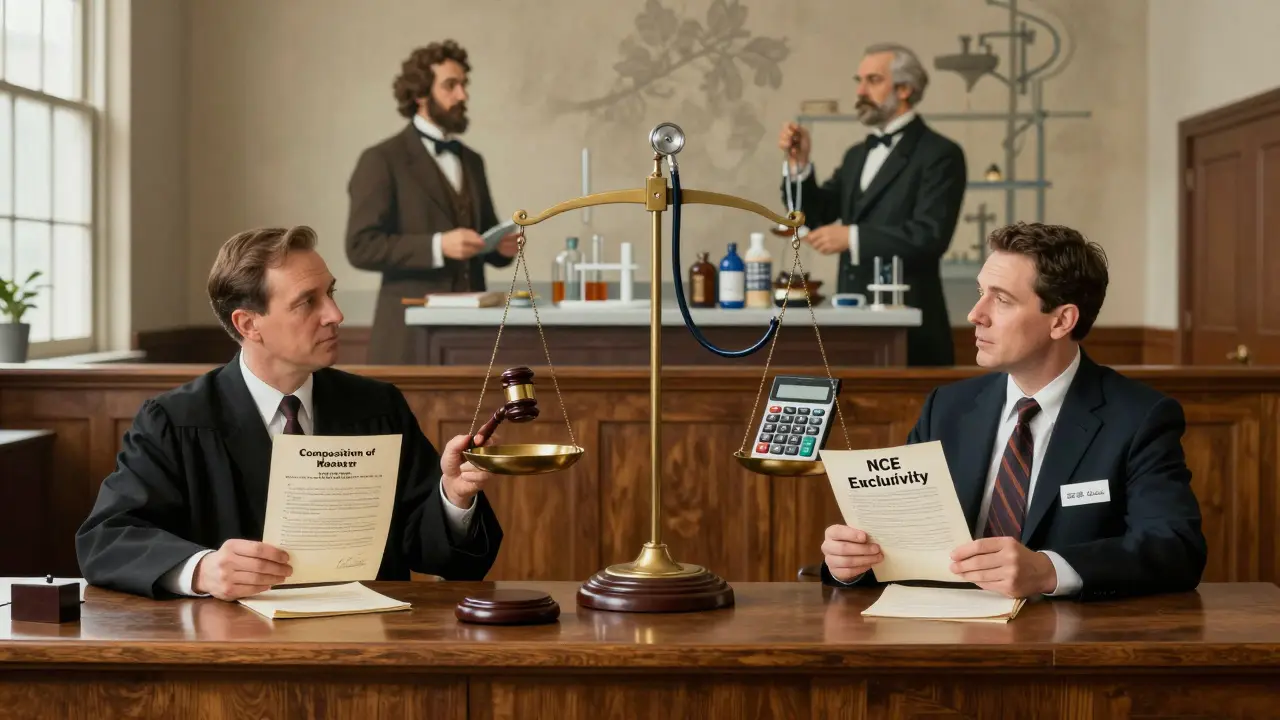
The Hatch-Waxman Act of 1984 created this dual system to balance innovation and access. Without patents, companies wouldn’t spend $2.3 billion to develop a new drug. Without exclusivity, generics could copy your data and rush in the day your patent expires.
But the system has unintended consequences. Companies now use “evergreening”: filing dozens of weak secondary patents just to delay generics. Meanwhile, regulatory exclusivity lets them lock in monopolies for drugs that aren’t even novel.
Dr. Aaron Kesselheim at Harvard calls this a “dual-key system.” You need both keys to fully protect your drug. Lose one, and competitors can slip in. Many small biotech firms don’t realize this. In a 2022 survey, 43% of them mistakenly thought a patent meant automatic market protection. They spent millions on development, only to find out their drug had no exclusivity - and generics could enter immediately.
Who Benefits? Who Gets Left Behind?
The biggest winners? Big pharma and the first generic challenger. The 180-day exclusivity window is a goldmine. The losers? Patients and taxpayers. When exclusivity overlaps with patents, it can delay generic entry by years. The average branded drug earns 65% of its total revenue in the first year after approval - thanks to this protection.
And it’s getting worse. In 2020, 41% of new drugs relied on regulatory exclusivity as their main protection. By 2027, McKinsey predicts that number will hit 52%. Why? Because patents are being challenged successfully in court. Courts are saying: “You didn’t invent anything new - you just tweaked the formula.” So companies are turning to exclusivity instead.
Small companies are especially vulnerable. They often lack legal teams to track both patent filings and exclusivity claims. The FDA found that between 2018 and 2022, 22% of innovator companies failed to claim all the exclusivity they were owed. That’s an average of 1.3 years of protection lost per drug - worth millions.
What You Need to Know
If you’re a patient: Exclusivity is why your prescription costs $500 instead of $5. It’s not about innovation - it’s about legal timing.
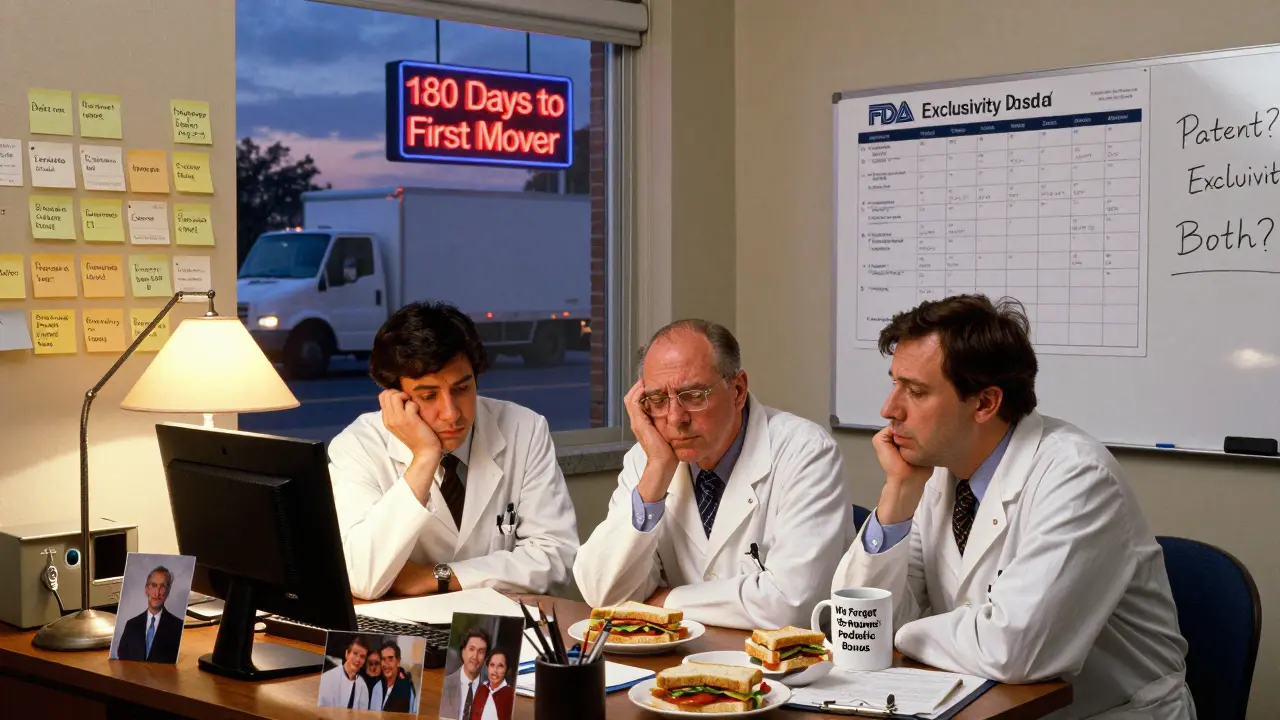
If you’re a generic manufacturer: Check the FDA’s Exclusivity Dashboard. It went live in September 2023. You can see exactly when exclusivity ends - even if the patent is gone. That’s your entry window.
If you’re a drug developer: Don’t assume a patent equals market control. File for exclusivity separately. Submit your data correctly. Miss a deadline, and you lose years of revenue.
The system is complex. But the bottom line is simple: patent exclusivity protects the invention. Market exclusivity protects the approval. One is about law. The other is about bureaucracy. And both can block generics - even when the other one has expired.
Real-World Numbers That Matter
- Average drug development cost: $2.3 billion
- Average time from patent filing to FDA approval: 10-15 years
- Patent term extension cap: 5 years (max 14 years post-approval)
- NCE exclusivity: 5 years
- Orphan drug exclusivity: 7 years
- Biologics exclusivity: 12 years
- Pediatric exclusivity bonus: +6 months
- First generic exclusivity: 180 days
- Drugs with only exclusivity, no patent: 5.2%
- Drugs with both patent and exclusivity: 27.8%
Can a drug have market exclusivity without a patent?
Yes. Market exclusivity is granted by the FDA based on the data submitted for approval, not on whether a patent exists. For example, colchicine had no patent but received 10 years of exclusivity after a new use was approved. Orphan drugs often get 7 years of exclusivity even if the molecule is old or not patentable.
Does patent expiration mean generics can enter immediately?
No. Even if a patent expires, market exclusivity can still block generic approval. For example, Trintellix’s patent expired in 2021, but generics couldn’t enter until 2024 because of 3 years of NCE exclusivity. The FDA won’t approve a copy until both the patent and exclusivity periods are over.
What’s the difference between data exclusivity and market exclusivity?
Data exclusivity prevents generic companies from using your clinical trial data to support their application. Market exclusivity blocks the FDA from approving any competing product, regardless of data source. In the U.S., NCE exclusivity includes both - you can’t use the data, and you can’t get approval. In the EU, they’re separate: 8 years data exclusivity, then 2 years market exclusivity.
Why do some drugs have 180-day exclusivity?
The first generic company to successfully challenge a listed patent (through a Paragraph IV certification) gets 180 days of exclusivity. During that time, no other generic can enter. This incentivizes generic manufacturers to fight patents in court. That 180-day window can be worth hundreds of millions in revenue.
Can the FDA extend exclusivity after approval?
Yes, but only under specific conditions. If a company conducts and submits pediatric studies requested by the FDA, they get an automatic 6-month extension on any existing patent or exclusivity period. This is not discretionary - it’s a statutory incentive. No other extensions are allowed without new legislation.
How can I check if a drug still has exclusivity?
Use the FDA’s Exclusivity Dashboard, launched in September 2023. It lists every drug with active exclusivity, the type, start date, and expiration date. It’s free, public, and updated in real time. Generic manufacturers use it to plan their market entry. Patients and providers can use it to understand why a drug is still brand-only.
Write a comment
Latest Posts


Comments
Lisa Davies
15/Dec/2025This is such an eye-opener. I had no idea market exclusivity could block generics even after patents expired. The colchicine example? Wild. Price jumped from 10 cents to $5 just because of a new use. No patent. Just bureaucracy. That’s capitalism with a side of regulatory magic.
And pediatric exclusivity adding 6 months? That’s a genius loophole. Pharma’s playing chess while the rest of us are playing checkers.
RONALD Randolph
15/Dec/2025Let’s be clear: this isn’t ‘protection’-it’s corporate theft disguised as innovation. The U.S. government is handing monopolies to drug companies on a silver platter-while patients pay $500 for pills that cost 50 cents to make. And you call this a ‘system’? It’s a cartel. The FDA isn’t a regulator-it’s a puppet. And the 180-day exclusivity for generics? That’s just letting one corporation rip off the public while the others wait in line. Shameful.
Nupur Vimal
15/Dec/2025Actually in India we have way better access because we don’t allow evergreening like this. Your system is broken. Colchicine? People have used it for 3000 years. Why should one company own it? You Americans think patents are sacred but they’re just legal tools to extract money. Your healthcare costs are insane because of this. End of story.
Christina Bischof
15/Dec/2025Wow. I just read this and my brain hurt in a good way. Like, I knew drugs were expensive but I never connected the dots between patents, FDA rules, and why my prescription still costs $400 after 10 years. This is the kind of stuff you wish you learned in high school. Thanks for breaking it down without jargon.
Also… the FDA dashboard is actually useful? I’m going to bookmark that.
Benjamin Glover
15/Dec/2025Pathetic. The U.S. regulatory framework is a joke. The British system is far more efficient: data exclusivity is 10 years, no patent extensions, and generics enter promptly. This American circus of overlapping monopolies is economic nonsense.
Michelle M
15/Dec/2025It’s funny how we celebrate innovation until it becomes a tool for control. The system was designed to reward risk-but now it rewards legal maneuvering. The real innovation isn’t in the molecule-it’s in the lawyers’ billable hours.
And yet… if we took away all exclusivity tomorrow, would we get better drugs tomorrow? Or would we just get fewer? Maybe the question isn’t whether the system is broken-but whether we’ve forgotten what we’re trying to fix.
Cassie Henriques
15/Dec/2025Just FYI-the 180-day exclusivity is a huge deal for ANDA filers. I’ve seen generics go from $0 to $400M in 6 months because they won the Paragraph IV lottery. It’s like winning the patent lottery but with less luck and more litigation.
Also, biologics exclusivity at 12 years? That’s insane. Humira’s been on the market for 20+ years and still has exclusivity. No wonder biosimilars are slow to launch.
Mike Nordby
15/Dec/2025There’s a critical misconception here: market exclusivity isn’t just about data-it’s about statutory barriers. The FDA cannot approve a generic until the exclusivity period expires, even if the generic submits its own clinical data. This is a regulatory blockade, not a scientific one.
And the 5.2% of drugs with no patent but full exclusivity? That’s the silent majority of profit engines. Companies are shifting R&D from invention to regulatory strategy. That’s not innovation. That’s optimization of the system’s flaws.
John Samuel
15/Dec/2025Let’s pause for a moment and appreciate the sheer elegance of this regulatory architecture-it’s a symphony of loopholes, incentives, and bureaucratic ballet. The Hatch-Waxman Act was meant to be a bridge between innovation and access; instead, it became a labyrinth where only the well-funded can navigate.
Every orphan drug exclusivity, every pediatric add-on, every 180-day golden ticket-it’s not corruption. It’s policy designed to work exactly as intended. The tragedy? The intended beneficiaries-patients-are the ones who never see the finish line.
And yet… if you remove any one of these levers, the entire machine sputters. We’ve built a system that rewards complexity because simplicity would collapse under its own weight. We’re not broken-we’re brilliantly, tragically over-engineered.
Jake Sinatra
15/Dec/2025Thank you for this detailed breakdown. The distinction between patent and market exclusivity is something even many healthcare professionals misunderstand. The FDA Exclusivity Dashboard is now a bookmarked essential for my work. The fact that 43% of small biotechs didn’t realize exclusivity wasn’t automatic is alarming. This isn’t just policy-it’s a public health literacy crisis.