

When a patient switches from a brand-name drug to a generic version, they don’t just change the pill in their hand-they change their expectations. And those expectations can literally change how they feel. Even though the active ingredient is identical, many patients report new or worse side effects after the switch. This isn’t a flaw in the medicine. It’s the nocebo effect-when negative beliefs about a treatment cause real, measurable harm.
What Exactly Is the Nocebo Effect?
The nocebo effect is the dark twin of the placebo effect. Where placebo turns sugar pills into pain relievers because patients believe they’ll work, nocebo turns the same pill into a source of side effects because patients believe they’ll hurt. It’s not imagination. Brain scans show real changes in pain pathways, stress hormones, and neural activity when people expect harm.
Studies show that about 1 in 5 people on placebo pills in clinical trials report side effects-even though they got nothing but starch or saline. Nearly 1 in 10 drop out of trials because they feel worse. And when those placebo pills are labeled as "generic," the numbers jump. In a 2025 study with 196 healthy volunteers given fake nasal spray, those told it was a cheap generic version reported more side effects than those told it was a branded version-even though both were identical saline solutions.
Why Do Patients Trust Brand Names More?
It’s not just about price. It’s about packaging, name, and history. A 2024 study tested a fake anti-itch cream on 49 people. One group got it in a sleek blue box with a fancy name: "Solestan® Creme." The other got the exact same cream in a plain orange box labeled "Imotadil-LeniPharma Creme." The group with the expensive-looking packaging reported more pain sensitivity-the very side effect the cream was supposed to treat. The cream had no active ingredient. The pain came from perception.
Brand-name drugs come with decades of advertising, recognizable logos, and patient stories. Generics? Often, they’re plain white pills with a code printed on them. To a patient, that looks like something less important. Less trusted. Less effective. Even when they’re chemically identical.
The Data Doesn’t Lie-But Perception Does
In the U.S., 90% of prescriptions filled are for generics. Yet, nearly 40% of patients still worry they’re less effective than brand-name drugs. That gap isn’t about science. It’s about psychology.
Research from Harvard and Brigham and Women’s Hospital found that patients switched to generics reported more side effects-even when blood tests showed the exact same drug levels in their system. One patient might say, "I was fine on Zoloft, but now I’m nauseous on sertraline." But the active ingredient is the same. The difference? Their brain now expects trouble.
Even "authorized generics"-the exact same pills made in the same factory as the brand-still trigger nocebo effects. Why? Because the packaging changes. The label changes. The patient notices.

How Doctors and Pharmacists Can Help
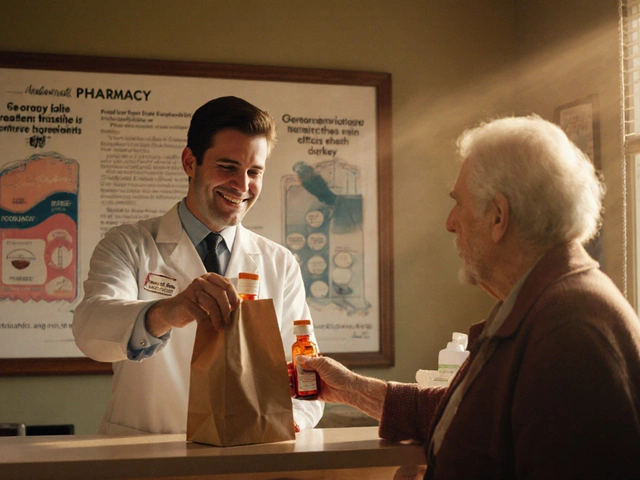
Changing a patient’s mind about generics isn’t about arguing with facts. It’s about reshaping expectations. Here’s what works:
- Don’t lead with the word "generic." Instead, say: "This is the same medicine you were taking, just without the brand name. It’s been tested to work exactly the same way."
- Frame side effects positively. Instead of saying, "You might get headaches, dizziness, or nausea," say: "Most people take this without any issues. If you do notice something unusual, we can adjust it together."
- Explain bioequivalence simply. "The FDA requires that generic drugs deliver the same amount of medicine into your bloodstream as the brand. They’re held to the same strict standards."
- Use cost as a positive. Tell patients they’re saving $3,000 a year-on average-without losing effectiveness. That’s not a compromise. That’s a win.
Kaiser Permanente has a script for this exact moment: "This medication contains the exact same active ingredient as what you were taking before, and studies show that patients do just as well on the generic version." Simple. Clear. Reassuring.
What About Packaging and Branding?
Some companies are starting to notice. In the UK and parts of Europe, "branded generics" are gaining ground-medicines that look more like brand-name products. Same active ingredient. Same quality. But with cleaner packaging, familiar colors, and clearer labeling. Patients don’t feel like they’re getting second-best.
The European Medicines Agency says packaging shouldn’t mimic brands to avoid confusion. But it also says differences shouldn’t scare patients. There’s a middle ground: professional, clean, consistent-not flashy, but not clinical either.
When Switching Causes a Storm
Remember the 2017 switch from brand to generic venlafaxine in New Zealand? At first, adverse effect reports stayed flat. Then the media ran stories about "generic side effects." Within weeks, reports spiked. Patients weren’t getting worse pills-they were getting worse expectations.
That’s why timing matters. Don’t switch a patient on a Friday before a long weekend. Don’t switch someone already stressed about their condition. Don’t switch without warning. Give them time. Talk to them. Let them ask questions.

Tools to Spot High-Risk Patients
Some people are more prone to nocebo effects. They’ve had bad experiences before. They’re anxious. They read every side effect listed online. They’ve seen Reddit threads like: "My doctor switched me to the generic version of sertraline and now I’m having terrible side effects I never had before on the brand."
The Beliefs about Medicines Questionnaire (BMQ) helps identify these patients. It asks: Do you feel you need this medicine? Or do you worry it’ll harm you? Patients with high "worry" scores are more likely to report side effects-even when none exist.
If a patient scores high, take extra time. Don’t rush. Offer to monitor them closely after the switch. Reassure them that feeling different doesn’t mean it’s broken. It might just mean their brain is adjusting.
What Patients Should Know
Patients deserve honesty. But they also deserve hope. Here’s what they need to hear:
- Generics are not "cheap versions." They’re identical medicines approved by the same agencies that approve brand-name drugs.
- The FDA requires generics to match brand-name drugs in strength, purity, and how fast they work.
- Most people feel the same-or better-on generics because they’re not paying as much.
- If you notice new symptoms after switching, tell your doctor. But don’t assume it’s the medicine. It might be your expectations.
One patient told me, "I thought the generic made me tired. But after I stopped thinking about it, the tiredness went away." That’s the power of perception.
The Bigger Picture
Every time a patient refuses a generic because they’re afraid, the system pays more. Every time a doctor avoids prescribing one, the patient pays more. And every time someone blames the medicine for side effects that aren’t there, we lose trust in treatment.
But we can fix this. It starts with how we talk. It starts with how we listen. It starts with recognizing that medicine isn’t just chemistry. It’s psychology. And perception is just as real as the pill.
There’s no magic formula. No secret trick. Just clear, calm, confident communication. That’s what turns fear into trust. And trust into better health.
Are generic medications really the same as brand-name drugs?
Yes. Generic medications contain the exact same active ingredient, in the same strength, and are taken the same way as their brand-name counterparts. The FDA and other global regulators require them to meet strict bioequivalence standards-meaning they deliver the same amount of medicine into your bloodstream at the same rate. The only differences are in inactive ingredients (like fillers), packaging, and price. These don’t affect how well the medicine works.
Why do I feel worse after switching to a generic?
You’re not alone. Many patients report new or worse side effects after switching, even when blood tests show identical drug levels. This is usually the nocebo effect-your brain expects trouble because the pill looks different or costs less. Normal sensations like mild headaches, fatigue, or stomach upset can be misinterpreted as side effects when you’re primed to expect them. Talking to your doctor and reframing your expectations often helps these feelings fade.
Can the packaging of a generic drug cause side effects?
Yes, indirectly. Studies show that plain, unbranded packaging can trigger negative expectations. In one experiment, people given the same inert cream in an expensive-looking box reported fewer side effects than those given the same cream in a generic-looking box. Packaging doesn’t change the medicine-but it changes how you feel about it. That’s why some pharmacies now use cleaner, more professional-looking generic packaging to reduce patient anxiety.
Is it safe to switch back to the brand-name drug if I’m worried?
Yes, if your doctor agrees. If you’re genuinely concerned or having troubling symptoms, switching back is an option. But don’t assume the brand is better. Often, the difference is psychological. If you do switch back, ask your doctor to help you understand why you felt worse on the generic. That insight can help you feel more confident next time.
Do generics have more side effects than brand-name drugs?
No-when studied under controlled conditions, generics do not cause more side effects than brand-name drugs. The same active ingredient produces the same biological response. But because of the nocebo effect, patients report more side effects when they believe they’re taking a generic. This is a perception issue, not a safety issue. Real-world data from millions of patients confirms that generics are just as safe and effective.
How can I reduce the chance of a nocebo effect with generics?
Start by asking your doctor or pharmacist to explain why the switch is being made. Focus on the facts: same medicine, same results, big cost savings. Avoid searching for side effects online before starting the new pill-this primes your brain for trouble. If you notice mild symptoms, wait a few days before assuming it’s the drug. Often, they fade as your expectations adjust. Keep a simple journal: note how you feel, and whether it improves over time.


Comments
John Tran
12/Jan/2026Okay so like… imagine your brain is this overactive TikTok algorithm that just keeps showing you videos of people puking after taking generics, and now every little burp you have is a sign the universe is punishing you for being poor? I switched to generic sertraline and suddenly my left pinky tingled and I swear the ceiling was breathing. I Googled it. Of course I did. And then I cried. Not because I was sick-because I realized my mind had turned a pill into a horror movie. And the worst part? The pill didn’t change. My trauma did.
mike swinchoski
12/Jan/2026People are just weak. If you can’t handle a cheap pill, you shouldn’t be on meds. Stop blaming the system. You’re just lazy and want to pay more for nothing. It’s a pill. Not a magic wand. Get over it.
jefferson fernandes
12/Jan/2026Let’s be real: the nocebo effect isn’t just ‘in your head’-it’s in your nervous system, your cortisol levels, your amygdala firing like a fire alarm set off by a bad label. The brain doesn’t care if the pill is blue or white; it cares if it thinks the pill is dangerous. And when we hand someone a pill with no branding, no story, no trust signal-of course they panic. It’s not ignorance. It’s evolutionary psychology. We’re wired to distrust the unfamiliar. So yes, packaging matters. So does tone. So does how you say, ‘This is the same thing.’ If you say it like you’re handing out discount coupons, they’ll feel like discount people. Change the script. Change the outcome.
Acacia Hendrix
12/Jan/2026It’s fascinating how the biomedical paradigm continues to ignore the phenomenological dimensions of pharmacological experience. The bioequivalence metrics are statistically robust, yet they fail to account for the hermeneutic layer-the patient’s narrative construction of illness and identity. When a patient perceives a shift in pill morphology, they’re not merely registering a pharmacokinetic variable-they’re renegotiating their existential relationship with health, control, and institutional trust. The generic isn’t inferior; it’s hermeneutically destabilizing. We need a semiotics of medication, not just a bioequivalence report.
James Castner
12/Jan/2026Look-I’ve been in this game for 27 years. I’ve seen patients cry because their generic pill was a different shade of yellow. I’ve seen people quit their meds because they thought the generic was ‘watered down.’ And here’s the truth: it’s not about the pill. It’s about the story we tell them. If you say, ‘This is cheaper,’ they hear, ‘This is worse.’ But if you say, ‘This is the same medicine, just without the marketing budget,’ they hear, ‘This is smart.’ We’ve got to stop treating patients like consumers and start treating them like partners in healing. The science is settled. The psychology is the frontier. And if we don’t lead with empathy, we’re not just failing-they’re suffering. And that’s on us.
Adam Rivera
12/Jan/2026My cousin in Texas switched to generic blood pressure meds and started having panic attacks. She thought she was dying. Turned out she just needed someone to sit with her for 10 minutes and say, ‘You’re not broken. This is normal. Let’s watch it for a week.’ She’s fine now. No pill change. Just human connection. Sometimes the real medicine isn’t in the bottle-it’s in the conversation.
Rosalee Vanness
12/Jan/2026I used to be the person who’d panic every time I got a generic. I’d stare at the pill like it was a stranger. But then my therapist said, ‘What if the difference isn’t in the medicine… but in the meaning you’ve given it?’ So I started keeping a journal. Not about side effects-about moments. Did I sleep better? Did I feel calmer? Did I laugh with my kid? Slowly, I stopped seeing the pill as a threat and started seeing it as a tool. And the weird symptoms? They faded. Not because they vanished-but because I stopped feeding them with fear. Your mind is a storyteller. Sometimes, it just needs a better plot.
lucy cooke
12/Jan/2026Oh my god, I’m literally screaming into my pillow right now because I just remembered I switched to generic omeprazole last month and I’ve been convinced I have stomach cancer. I Googled ‘generic acid reflux pill side effects’ and now I think I’m dying of esophageal adenocarcinoma. I didn’t even have heartburn before. Now I’m convinced every burp is a tumor forming. This is why we need a global campaign. Not just for doctors-but for patients. We need to retrain our brains. And maybe, just maybe, someone should make generic pills look like they cost $200. Because right now, they look like they’re from a dollar store in a post-apocalyptic Walmart.