

Every year, thousands of people in the UK get the wrong medicine or the wrong dose from their pharmacy. It’s not because pharmacists are careless. It’s because mistakes happen - even in well-run shops. A label gets mixed up. A computer glitches. A similar-looking drug is pulled off the shelf by accident. You might not even know something’s wrong until you start feeling strange. That’s why you need a simple, personal safety checklist for every pharmacy visit. Not because the system is broken, but because you are your own best safety net.
Why You Can’t Rely on the Pharmacy Alone
Pharmacists are trained professionals. They follow strict rules. They use double-check systems. But they’re also human. They’re juggling five prescriptions at once, answering phone calls, and helping someone with a cough while trying to refill a blood pressure med. In busy shops, especially during flu season or holidays, the pressure builds. And when that happens, even small slips can slip through. A 2022 report from the UK’s National Health Service found that over 1 in 20 medication errors happened at the point of dispensing. That’s not a rare accident. That’s a real risk. And most of those errors were caught before they hurt anyone - but not all. Some slipped through. Some caused hospital visits. Some caused permanent damage. You can’t fix the system. But you can protect yourself.Your Personal Safety Checklist: 5 Steps Before You Leave the Pharmacy
This isn’t about being suspicious. It’s about being smart. You don’t need to know drug names or dosages. You just need to ask three simple questions and check two things. Here’s how to do it every time.- Confirm the medicine matches your prescription - Look at the label. Does it say the exact name your doctor wrote? If your doctor prescribed Amoxicillin 500mg, but the bottle says Amoxil 500mg, that’s the same thing - but you should still ask. Some brands have different names. If it says Metformin 850mg and your script says 500mg, don’t walk out. Ask why.
- Check the dosage and quantity - How many pills are in the bottle? If your script says “take one daily for 30 days,” but you got 60 pills, ask. If it says “take one tablet twice a day,” but the bottle says “take one tablet once daily,” stop. That’s not a small mistake - that’s a dangerous one.
- Ask: “Is this new or a change?” - If you’ve been taking the same medicine for years and suddenly get a different pill, a different color, a different shape - ask. Is this a generic? Did your doctor switch you? If you don’t recognize the pill, don’t take it until you know why. Many errors happen because patients assume the new pill is just a “different brand” and don’t check.
- Verify the instructions - Read the leaflet. Does it say “take with food”? Does it say “avoid alcohol”? Does it say “take at bedtime”? If the pharmacist didn’t explain it, ask. Don’t be shy. Say: “I want to make sure I’m taking this right.” Pharmacists expect this. They’ve been trained to answer.
- Compare with your last fill - Keep a small note in your wallet or phone: the name of each medicine, the dose, how often you take it, and when you last refilled. When you get your new prescription, compare it. Did the dose change? Did the number of pills change? If something looks off, even slightly - speak up.
What to Bring to Your Pharmacy Visit
You don’t need a binder. You don’t need a doctor’s note. Just bring these three things:- Your current medicine list - Write down every pill, patch, inhaler, and liquid you take. Include vitamins, supplements, and over-the-counter drugs. Even the ones you only take once a week. Pharmacists need to see the full picture to spot dangerous interactions.
- Your prescription slip or digital copy - If your doctor sent it electronically, bring your phone. If you have a paper copy, bring it. Don’t rely on memory. You might forget a dose. Or misremember the name. Bring proof.
- A list of questions - Write down: “Is this safe with my blood pressure meds?” “Can I drink coffee with this?” “What side effects should I watch for?” You’re not wasting their time. You’re helping them do their job better.

What to Do If Something Feels Off
Sometimes, you’ll get home and realize: “This doesn’t look right.” Or you’ll take the first pill and feel dizzy. Or you’ll notice the bottle says “100mg” but your script says “25mg.” Here’s what to do:- Don’t take it. Put it back in the bag. Don’t throw it away.
- Call the pharmacy immediately. Say: “I picked up a prescription yesterday and I’m concerned about the dosage.” Don’t wait. Don’t assume it’s your mistake.
- Ask for the pharmacist to call your doctor. If there’s a mismatch, the pharmacist should verify the prescription with your doctor - not just assume they got it right.
- Take a photo of the label. If you’re worried about being dismissed, take a clear photo of the pill, the label, and the prescription slip. It helps if you need to escalate later.
Common Mistakes People Make - And How to Avoid Them
Most errors happen because people assume everything’s fine. Here are the top three mistakes - and how to stop them:- Mistake: “I’ve taken this before, so it’s probably the same.” Solution: Every refill is a new chance for error. Always check.
- Mistake: “The pharmacist didn’t say anything, so it must be fine.” Solution: Pharmacists are busy. They won’t always explain. You have to ask.
- Mistake: “I’m not going to bother - it’s just a pill.” Solution: A single wrong pill can send you to the ER. One wrong dose of warfarin can cause internal bleeding. One wrong dose of insulin can cause a coma. This isn’t about being paranoid. It’s about being alive.
Real-Life Example: What Happened When Someone Used the Checklist
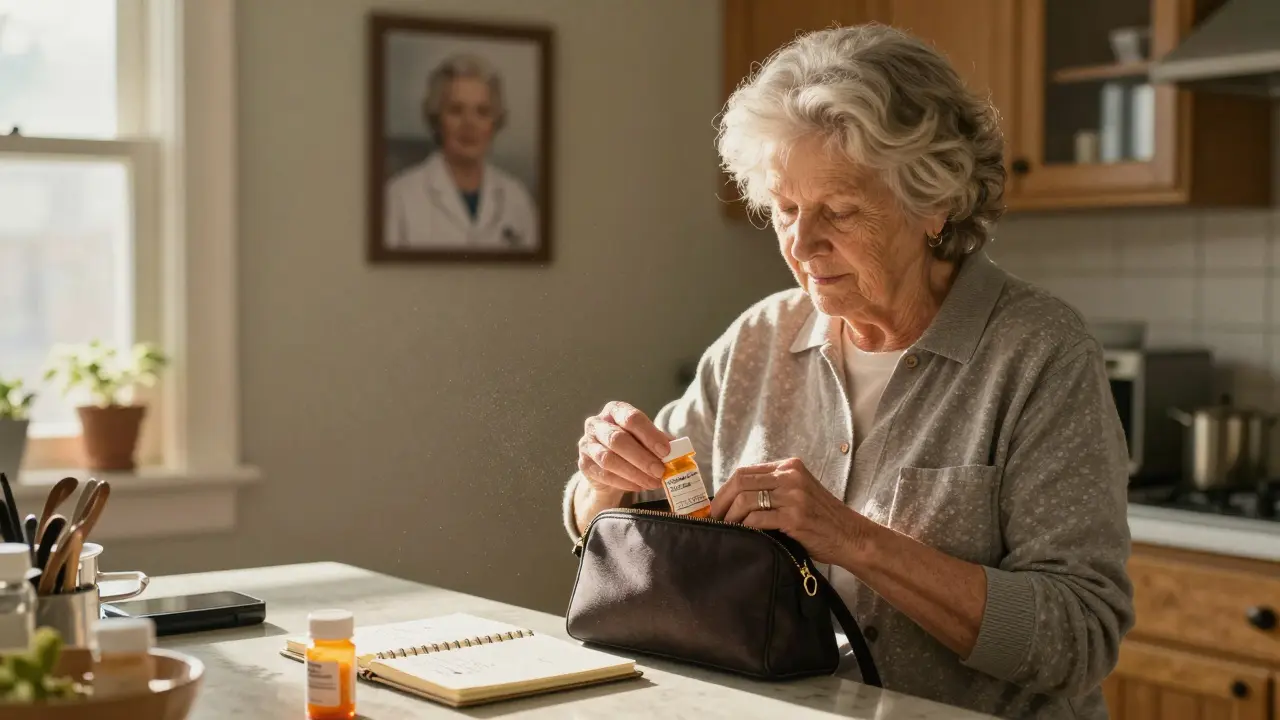
In Bristol, a 72-year-old woman named Margaret went to her local pharmacy to refill her heart medication. She’d been taking Warfarin 5mg for five years. This time, the bottle said Warfarin 10mg. She didn’t say anything. She took it. The next day, she bruised badly. Her arm turned purple. She went to A&E. Blood tests showed her INR - a measure of blood clotting - was dangerously high. She had to be hospitalized. It took three days to stabilize her. Her pharmacist later admitted: “I misread the script. I thought it said 10mg. I didn’t double-check.” Margaret didn’t know how to check. She didn’t have a checklist. She didn’t know to compare pills. If she’d followed the five steps above, she’d have noticed the dose was doubled. She’d have asked. She’d have been safe.Final Thought: You’re Not Overstepping - You’re Owning Your Health
Some people feel awkward asking questions. They think pharmacists will see them as difficult. Or that they’ll be judged. That’s not true. Pharmacists want you to ask. They’re trained to answer. They’ve seen too many errors. They’ve seen too many lives changed because someone didn’t speak up. Your checklist isn’t about distrust. It’s about partnership. You’re not replacing the pharmacist. You’re helping them do their job better. The next time you go to the pharmacy, take five minutes. Ask the questions. Check the label. Compare the dose. Write it down. You’re not being extra. You’re being smart. Your health isn’t a guess. It’s your responsibility. And this checklist? It’s the easiest way to protect it.What should I do if I notice a mistake after I’ve already taken the medicine?
Stop taking the medicine immediately. Call your pharmacy and ask to speak with the pharmacist. Tell them exactly what you took, when, and what you noticed was wrong. Then call your doctor. Don’t wait for symptoms. Even if you feel fine, the wrong dose can build up over time. Keep the bottle, the label, and your prescription slip - they’ll help the pharmacist and doctor investigate.
Can I use a mobile app to help with my checklist?
Yes, but don’t rely on apps alone. Apps like MyTherapy or Medisafe can remind you when to take pills and track your meds, but they don’t verify what the pharmacy gives you. Use them to keep a list of your current medicines, but always double-check the physical bottle and label. The app is a helper - not a safety net.
Do I need to do this for every prescription, even if it’s the same medicine?
Yes. Every refill is a new chance for error. A pharmacy might switch brands, change the dose, or accidentally pull the wrong bottle. Even if you’ve taken the same medicine for years, always check the label, the dose, and the number of pills. It takes 30 seconds. It could save your life.
What if the pharmacist gets annoyed when I ask questions?
A good pharmacist won’t. If they do, ask to speak to the manager. Pharmacists are trained to handle questions - that’s part of their job. If you’re treated poorly for asking, it’s a red flag. You have the right to safe care. Don’t feel guilty for protecting yourself. You’re not being difficult - you’re being responsible.
Are there any medicines that are more likely to be dispensed incorrectly?
Yes. High-risk medicines include blood thinners (like warfarin), insulin, seizure drugs (like phenytoin), and chemotherapy agents. Even common ones like metformin or lisinopril can be mixed up if doses are similar. Always check these more carefully. If you’re on any of these, keep a written note with the correct dose and keep it in your wallet.


Comments
Sumit Mohan Saxena
26/Feb/2026Implementing a personal safety checklist for pharmacy visits is not merely advisable-it is a critical component of patient autonomy in modern healthcare systems. The structural vulnerabilities within dispensing workflows are well-documented, and reliance on institutional safeguards alone is a dangerous assumption. The five-step verification protocol outlined here is methodologically sound and aligns with best practices in medication safety endorsed by the World Health Organization. Consistency in application, regardless of familiarity with the medication, reduces cognitive bias and mitigates confirmation error. Documentation of current medications, including supplements, should be standardized across all patient interactions. This is not an overreach-it is professional diligence.
Pharmacists are not infallible. Their workload, often exceeding 150 prescriptions daily in urban settings, inherently increases error probability. The burden of verification must be shared. Patients who engage proactively with their pharmacists do not create friction-they enhance system integrity.
Every pill bottle is a potential vector of harm. The cost of inaction is measured in ICU admissions, irreversible organ damage, and preventable death. This checklist is not optional. It is foundational.
Brandon Vasquez
26/Feb/2026Been doing this for years. Always check the label. Always compare the pill. Always ask if it’s new.
Simple. Works.
Miranda Anderson
26/Feb/2026I really appreciate how this post doesn’t blame pharmacists-it just acknowledges that humans work in systems, and systems fail. I’ve had moments where I’ve been too embarrassed to ask questions because I didn’t want to seem like I was doubting them. But then I remembered my uncle who ended up in the hospital because he took a higher dose of his thyroid med because he didn’t question the change in pill shape. He thought, ‘It’s the same thing, right?’
Now I carry a little card in my wallet with my meds, doses, and the last refill date. It’s not glamorous, but it’s saved me twice. Once when the pharmacy gave me a different generic, and once when the label said ‘once daily’ but the script was ‘twice.’ The pharmacist actually thanked me. Said they’d missed it because they were rushing. That’s the thing-pharmacists aren’t robots. They’re tired. They’re overwhelmed. And they’ll appreciate you helping them catch mistakes before they hurt someone.
Also, bringing your list of meds? Game changer. I used to think it was overkill. Now I realize most of the time, the pharmacy doesn’t even have an accurate record of what I’m taking. They just see the new prescription. That’s terrifying when you think about it.
Gigi Valdez
26/Feb/2026The checklist is logically structured and grounded in empirical risk factors. The emphasis on comparing physical pill characteristics to prescription documentation is particularly effective, as visual recognition is a primary human cognitive anchor in medication identification.
It is also noteworthy that the suggestion to retain the original packaging and documentation serves dual purposes: it enables immediate triage in case of adverse reaction and provides traceable evidence for regulatory review. This is not paranoia-it is responsible pharmacovigilance.
While the UK NHS data cited is concerning, similar patterns have been observed in the U.S. and Canada. The systemic issue transcends borders. Proactive patient engagement remains the most scalable mitigation strategy available.
Recommendation: Integrate this checklist into routine patient education materials distributed by primary care providers. Standardization across institutions would reduce variability in patient awareness and outcome.
Byron Duvall
26/Feb/2026So let me get this straight-you’re telling me we can’t trust pharmacists anymore? And now we have to become amateur pharmacologists just to get our blood pressure pills? What’s next? Do I need to bring a notary to verify the prescription? Or maybe a second opinion from a guy on TikTok?
Let’s be real. This whole thing is just fear porn. The real problem is that pharmacies are understaffed because corporations cut costs. Instead of fixing that, they’re telling patients to do the work of employees. That’s not safety-that’s exploitation.
And don’t even get me started on ‘take a photo of the label.’ Are we turning healthcare into a courtroom? Next thing you know, they’ll be charging you $20 for a ‘verification fee’ because you asked too many questions.
They want you to be scared. So you’ll accept anything they give you. And if you die? Well, that’s just the cost of doing business.
Wake up. This isn’t about safety. It’s about control.
Katherine Farmer
26/Feb/2026How quaint. A checklist. As if the average person has the cognitive capacity to parse pharmaceutical nomenclature or interpret dosage variations. This is the kind of performative self-help nonsense that thrives in the age of digital narcissism.
Let’s be honest-the real issue isn’t patient vigilance. It’s the abysmal state of medical education in the U.S. and U.K. where pharmacists are trained to prioritize throughput over accuracy. And now we’re asking patients to compensate for institutional incompetence? How noble.
Meanwhile, in Germany, Japan, and Switzerland, automated dispensing systems with barcode verification and AI-assisted cross-checks are standard. No one is scribbling on index cards. No one is ‘comparing pills.’ They just get their meds, and they’re correct.
So instead of this performative checklist, why not advocate for systemic reform? Why not demand investment in real infrastructure? Why do we keep treating symptoms while ignoring the disease?
And yes, I know what you’re going to say: ‘But we can’t wait for reform.’ Fine. Then stop pretending this checklist is a solution. It’s a Band-Aid on a severed artery.
Full Scale Webmaster
26/Feb/2026Okay, so let’s unpack this. First off-Margaret from Bristol. That story? Heartbreaking. But also? Totally predictable. Because here’s the truth no one wants to admit: pharmacies are run by overworked, underpaid, emotionally exhausted people who are one coffee break away from giving someone a lethal dose of insulin because they misread a scribble that looked like a 5 instead of a 10.
And now you want me to believe that a checklist is going to fix this? Please. I’ve worked in retail pharmacy. I’ve seen it. I’ve watched pharmacists cry in the back room because they had to fill 47 scripts in 90 minutes while a diabetic patient screamed because they didn’t get their insulin on time.
And don’t even get me started on the ‘take a photo’ advice. That’s not safety-that’s surveillance. That’s turning every pharmacy visit into a courtroom drama. Who’s gonna pay for the legal fees when someone sues because they didn’t take a photo and then got sick?
And let’s not forget-the people who need this checklist the most? The elderly. The disabled. The mentally ill. The ones who can’t remember their own name half the time. You think they’re gonna carry a wallet card? You think they’re gonna ask questions? No. They’re gonna take the pill because they’re scared to be yelled at.
So what’s the real solution? Pay pharmacists enough so they don’t have to work 12-hour shifts. Hire more staff. Install automated verification systems. Stop treating healthcare like a Walmart checkout line.
This checklist? It’s a distraction. A feel-good hack that lets everyone pretend they’re doing something while the system burns.
And if you’re still reading this, you probably have a loved one who’s already been hurt. So go ahead. Take the photo. Write the card. Ask the questions. But don’t pretend you’re fixing anything. You’re just trying to survive a system that was never meant to care.
Lisa Fremder
26/Feb/2026Why are we letting foreigners tell us how to run our healthcare? In America, we don’t need checklists. We have doctors. We have insurance. We have lawsuits. If something goes wrong, you sue. That’s how it works. This checklist is just another way for people to feel like they’re in control while the government and Big Pharma laugh all the way to the bank.
And don’t even get me started on the ‘write down your meds’ thing. What’s next? Do I need to file a Form 47-B with the FDA before I take my Tylenol?
Stop scaring people. Just let them take their pills. They’ll be fine.