
Did you know that paying cash for your generic medication might actually cost you less than using your health insurance? It sounds counterintuitive. You pay premiums all year long so that your prescriptions are covered, right? But the way pharmacy benefit managers (PBMs) and insurers negotiate prices often leaves patients on the hook for high copays, even for simple generic drugs. This is where Direct-to-consumer (DTC) generic pharmacies come in. These online services sell medications directly to you, bypassing the complex web of insurance rebates and middlemen.
In 2026, the landscape has shifted significantly since these models first gained traction around 2020. With players like Mark Cuban Cost Plus Drug Company, Cost Plus Drugs, Amazon Pharmacy, and Costco Pharmacy leading the charge, many consumers are asking: should I drop my insurance coverage for prescriptions and go cash-pay? The answer isn't a simple yes or no. It depends entirely on what you take, how much it costs, and whether those specific drugs are available through these direct channels.
How DTC Pharmacies Cut Costs
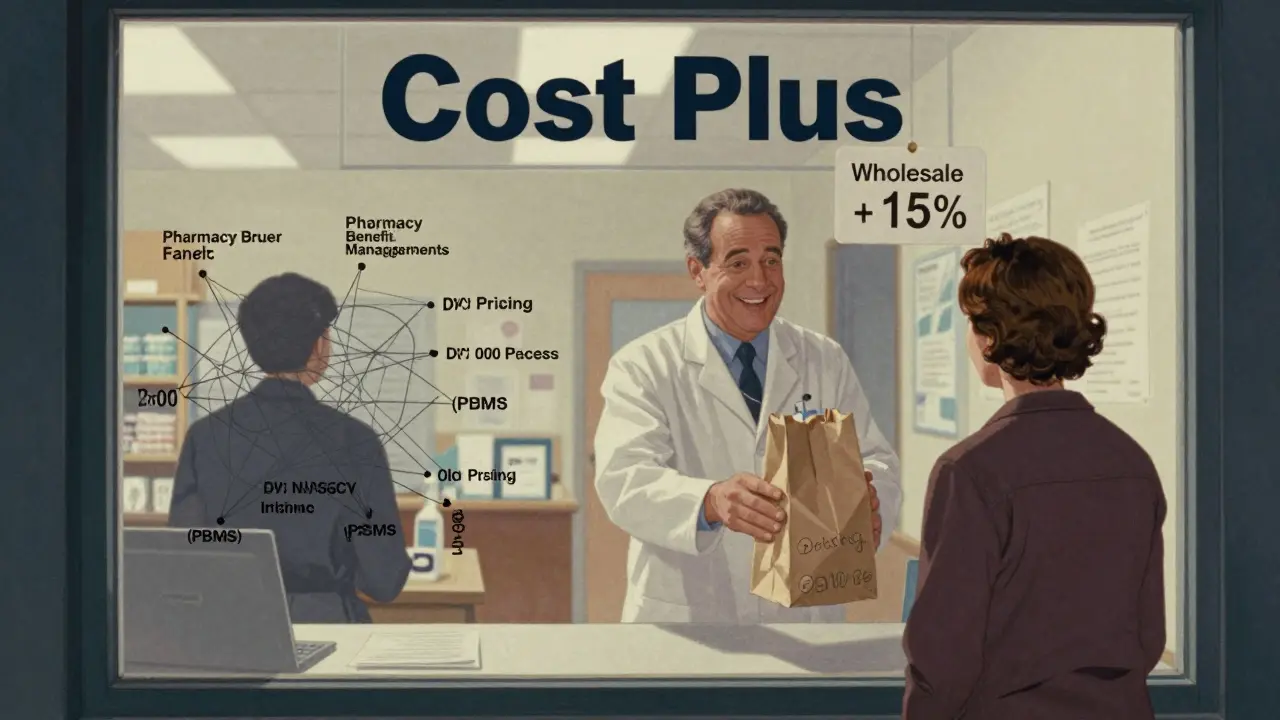
Traditional pharmacy pricing is opaque. When you use insurance, the price you see at the counter is rarely the actual cost the pharmacy paid for the drug. Instead, it’s influenced by rebate structures between manufacturers and PBMs. Often, the negotiated "allowed amount" plus your copay ends up being higher than the wholesale acquisition cost of the drug itself.
DTC pharmacies operate on a transparent, cash-pay model. Take Mark Cuban Cost Plus Drug Company as an example. They buy the drug at wholesale cost and add a flat 15% markup, plus a $3 dispensing fee. No hidden rebates. No negotiation games. Amazon Pharmacy and Costco use similar low-margin strategies, leveraging their massive buying power to offer competitive cash prices. According to a 2024 study published in the Journal of General Internal Medicine, this transparency can lead to massive savings. For expensive generics, the median savings compared to retail pharmacy prices with coupons were about $231 per prescription-a 76% reduction.
However, this model works best when the drug is widely available and the wholesale cost is low to moderate. If the drug is rare, specialized, or not stocked by the DTC provider, the savings vanish instantly because you have nowhere else to turn.
The Savings Breakdown: Expensive vs. Common Generics
Not all generic drugs are created equal when it comes to DTC savings. Research distinguishes between "common" generics (like metformin or lisinopril) and "expensive" generics (such as certain blood thinners or specialty neurological meds). The data shows a stark contrast in where you save the most.
| Drug Type | Median Absolute Savings | Percentage Savings | Best Platform (Most Frequent Winner) |
|---|---|---|---|
| Expensive Generics | $231 | 76% | Amazon Pharmacy (47% of cases) |
| Common Generics | $19 | 75% | Costco (31% of cases) |
For common generics, the absolute dollar amount saved might be small-around $19 on average-but the percentage drop is still significant. For expensive generics, the savings are life-changing for some budgets. However, availability is the catch. The same study found that one-fifth of the most costly generics were simply not available through any major national DTC pharmacy. If your medication falls into that unavailable category, DTC offers zero value because you cannot purchase it there.
Insurance Copay vs. Cash Price: The Decision Matrix
Here is the core dilemma: Your insurance copay might be $10 for a drug that costs $45 cash at a DTC pharmacy. In that scenario, using insurance is clearly cheaper. But if your copay is $40 and the DTC cash price is $25, you save money by paying out-of-pocket.
The problem is that insurance plans vary wildly. Some employers choose high-deductible health plans with low premiums but high copays. Others have robust formularies with low out-of-pocket costs. To decide which route to take, you need to perform a quick comparison for each prescription renewal:
- Check your insurance formulary tier: Find out your exact copay or coinsurance for the specific generic drug.
- Look up the DTC cash price: Visit Amazon Pharmacy, Cost Plus Drugs, or Costco Online. Enter the dosage and quantity (usually a 30-day supply).
- Compare the totals: Does the cash price beat your copay? Remember to factor in shipping fees if they apply (though many DTCs offer free shipping over a certain threshold).
- Consider convenience: Are you willing to manage two different payment methods and delivery schedules? Or do you prefer the simplicity of picking everything up at one local pharmacy?
A critical insight from recent research is that DTC pharmacies do not always beat insured prices. A 2023 analysis commissioned by CVS Health found that for many generic neurological medications, insured patients actually paid less through traditional PBM arrangements than they would have at Mark Cuban Cost Plus Drug Company. In fact, only 2 out of 79 studied neurology generics were cheaper at the DTC platform for insured patients. This highlights that DTC is not a universal replacement for insurance; it is a strategic alternative for specific drugs.
Availability Gaps and Limitations
One of the biggest hurdles with DTC pharmacies is formulary breadth. While they excel at stocking popular chronic care medications (diabetes, hypertension, cholesterol), they often lack niche or newer generic drugs. The 2024 JGIM study highlighted that 20% of the most expensive generics were unavailable across all five major DTC platforms analyzed.
This creates a fragmented experience. You might fill your blood pressure medication at Amazon Pharmacy because it’s $15 cash versus a $30 copay, but you still need to use your insurance for your thyroid medication because it’s not sold online by DTC providers. Managing multiple sources for your health needs adds administrative burden. You have to track refills separately, deal with different customer service teams, and potentially face delays if one shipper runs late.
Additionally, DTC pharmacies generally do not accept insurance payments. This means you lose the protection of annual out-of-pocket maximums. If you have a catastrophic health event requiring expensive medications that aren't covered by DTC, your insurance becomes vital again. DTC is best viewed as a supplement to insurance, not a substitute for comprehensive coverage.
Which DTC Pharmacy Is Best for You?
No single DTC pharmacy consistently offers the lowest price for every drug. The market is fragmented, and competition drives prices down differently across platforms. Here is a breakdown of the major players based on 2024-2026 performance data:
- Amazon Pharmacy: Often wins on price for expensive generics (lowest cost in 47% of cases in the study). Great integration with Prime shipping and automatic refills. Ideal for tech-savvy users who want seamless delivery.
- Mark Cuban Cost Plus Drug Company: Known for its ethical pricing model (cost + 15%). Strong performer for many common drugs, but limited formulary compared to Amazon or Costco. Best for transparency advocates.
- Costco Pharmacy: Dominates for common generics (lowest cost in 31% of cases). Requires a Costco membership, but the savings on everyday items often offset the membership fee. Excellent for bulk buyers.
- Walmart Online Pharmacy: Competitive for common generics, especially for those without insurance. Their $4 and $10 lists cover hundreds of medications, making them a strong contender for basic needs.
- Health Warehouse: A veteran in the DTC space, often competitive for specific mid-range generics. Less brand recognition but solid pricing history.
To maximize savings, you may need to shop around. Dr. Hatim Lalani, lead author of the JGIM study, noted that this shopping process is time-consuming. There is currently no single tool that aggregates real-time prices across all DTC and retail pharmacies to show you the absolute lowest option instantly. You have to manually check a few sites.
Practical Tips for Maximizing Savings in 2026
Navigating the split between insurance and DTC requires a proactive approach. Here are actionable steps to ensure you aren’t overpaying:
- Price Shop at Renewal: Don’t just auto-refill. Every 30 to 90 days, quickly check the cash price of your current medications on Amazon and Cost Plus Drugs. Prices fluctuate, and insurance copays can change during open enrollment.
- Use 90-Day Supplies: Many DTC pharmacies offer lower per-unit costs for 90-day supplies. If your insurance allows a 90-day mail-order copay, compare that total against the 90-day cash price. Often, the cash price for three months’ worth of meds is still lower than three separate insurance copays.
- Leverage GoodRx for Baseline Comparison: Even if you don’t use GoodRx coupons, their website provides a reliable benchmark for retail cash prices. Use this to gauge whether a DTC price is truly exceptional.
- Check for Therapeutic Alternatives: Sometimes, a slightly different generic formulation (same active ingredient, different manufacturer) is available at a much lower DTC price. Ask your doctor if switching manufacturers is safe and acceptable.
- Don’t Ignore Local Independents: While DTC giants dominate headlines, some local independent pharmacies offer cash-price discounts that compete with online options, especially if you pick up in person to avoid shipping times.
The Future of Pharmacy Pricing
The rise of DTC pharmacies has forced traditional insurers and PBMs to respond. We are seeing more transparency initiatives and simplified rebate structures in 2026. However, the fundamental tension remains: insurers profit from volume and network control, while DTCs profit from margin efficiency and direct consumer relationships.
Experts predict that hybrid models will emerge. Imagine an insurance plan that automatically routes your prescriptions to the cheapest source-whether that’s a DTC cash price or a PBM-negotiated rate-without you having to lift a finger. Until then, the burden of optimization falls on you. By understanding the trade-offs between convenience, availability, and cost, you can make informed decisions that keep your healthcare budget under control.
Can I use my insurance card at Mark Cuban Cost Plus Drug Company?
No, Mark Cuban Cost Plus Drug Company does not accept insurance. It operates exclusively on a cash-pay basis. You must pay the listed price upfront, which includes the wholesale cost plus a 15% markup and a $3 dispensing fee.
Is Amazon Pharmacy cheaper than using my insurance?
It depends on your specific drug and insurance plan. For many expensive generics, Amazon Pharmacy offers significant savings (up to 76%) compared to retail prices. However, if your insurance has a low copay (e.g., $10-$20), your insured price may still be lower than the Amazon cash price. Always compare the two before switching.
Do DTC pharmacies carry all generic medications?
No. Research indicates that approximately 20% of the most expensive generic drugs are not available through major national DTC pharmacies. They focus primarily on common chronic care medications. Specialty drugs or niche generics may require you to use traditional insurance or retail pharmacies.
Does buying cash at a DTC pharmacy count toward my insurance deductible?
Generally, no. Payments made directly to a DTC pharmacy are considered out-of-pocket expenses and do not apply to your health insurance deductible or out-of-pocket maximum. This is a key consideration if you expect high medical costs later in the year.
Which DTC pharmacy has the lowest prices overall?
There is no single winner. Amazon Pharmacy often has the lowest prices for expensive generics, while Costco tends to win for common generics. Mark Cuban Cost Plus Drug Company is competitive for many standard medications. To get the best deal, you should compare prices across these platforms for your specific prescriptions.
Are DTC pharmacies safe and legitimate?
Yes, major DTC pharmacies like Amazon Pharmacy, Costco, and Mark Cuban Cost Plus Drug Company are fully licensed and accredited. They dispense FDA-approved medications and employ licensed pharmacists. Always verify that the website uses secure encryption and displays proper licensing information before purchasing.
Can I switch back to insurance after using a DTC pharmacy?
Yes, you can switch back to using your insurance at any time. Simply provide your insurance details to your preferred retail pharmacy. Keep in mind that your pharmacy records may be separate, so your pharmacist might need to contact your previous provider to obtain your medical history.