
Alcohol isn’t just a social lubricant; for millions of people, it becomes a chronic health crisis that quietly dismantles the body and mind. If you or someone you care about struggles to control drinking despite the consequences, you are likely dealing with Alcohol Use Disorder, which is a medical condition characterized by an impaired ability to stop or control alcohol use despite adverse consequences to health and safety. This isn't about willpower or moral failure. It is a complex brain disorder that changes how your body functions, making quitting feel impossible without professional help.
The journey from casual drinking to dependency is often gradual. You might start by needing more alcohol to feel the same effect (tolerance), then find yourself unable to function normally without it (dependence). When you try to stop, your body rebels with severe withdrawal symptoms. Understanding these risks and knowing what treatments actually work is the first step toward reclaiming your life.
Understanding the Diagnosis: What Is AUD?
To treat the problem, we first need to define it clearly. The American Psychiatric Association updated its diagnostic criteria in the DSM-5 (published in 2013) to consolidate "alcohol abuse" and "alcohol dependence" into one spectrum called Alcohol Use Disorder (AUD). This condition ranges from mild to severe. A diagnosis is based on experiencing at least two of eleven specific symptoms within a 12-month period. These include cravings, failing to fulfill major role obligations at work or home, continuing to drink despite physical or psychological problems caused by alcohol, and developing tolerance or withdrawal.
The National Institute on Alcohol Abuse and Alcoholism (NIAAA) helps clarify what constitutes risky behavior. They define excessive alcohol use as:
- Binge drinking: Consuming 5 or more drinks for men, or 4 or more for women, in about 2 hours.
- Heavy drinking: Binge drinking on 5 or more days in the past month.
- Any alcohol use by pregnant women or individuals under 21 years old.
If your drinking fits these patterns, you are at significant risk for progressing to chronic AUD. Recognizing this early can prevent irreversible organ damage.
The Physical Toll: How Alcohol Destroys Your Body
Chronic alcohol misuse doesn't just affect your liver; it attacks nearly every system in your body. The damage is cumulative and often silent until it reaches a critical stage.
Liver Damage: The Three Stages
Your liver processes alcohol, but it cannot keep up with heavy consumption. The damage progresses through three distinct stages:
- Hepatic Steatosis (Fatty Liver): This affects up to 90% of heavy drinkers. Fat builds up in liver cells. The good news? This stage is often reversible if you stop drinking immediately.
- Alcoholic Hepatitis: Widespread inflammation and cell death occur. Symptoms include jaundice (yellowing of skin/eyes), fever, and abdominal pain. This can be fatal if not treated.
- Cirrhosis: Healthy liver tissue is replaced by scar tissue. This scarring is permanent and leads to liver failure. While stopping drinking can prevent further damage, existing cirrhosis rarely heals completely.
Brain and Nervous System Damage
Alcohol is a central nervous system depressant. Long-term use shrinks brain tissue and disrupts communication between neurons. Up to 80% of individuals with severe AUD develop thiamine (Vitamin B1) deficiencies. This can lead to Wernicke-Korsakoff Syndrome, a serious neurological condition causing severe mental confusion, muscular incoordination, and eye movement problems. Without immediate thiamine supplementation, this can progress to Korsakoff's psychosis, characterized by permanent memory loss and confabulation (making up stories to fill memory gaps).
Heart and Cardiovascular Risks
You might hear that red wine is good for the heart, but heavy drinking tells a different story. Excessive alcohol use increases blood pressure, contributing to 16% of all hypertension cases. It weakens the heart muscle (cardiomyopathy) and causes irregular heartbeats. Specifically, heavy drinking increases the risk of stroke by 34% and atrial fibrillation (an irregular heartbeat that can lead to clots) by 40%.
Cancer Risk
The link between alcohol and cancer is direct and dose-dependent. The more you drink, the higher the risk. Heavy drinkers face a 5x higher risk of mouth cancer and a 3x higher risk of head and neck cancers. For breast cancer, each daily drink increases risk by approximately 12%. Alcohol also significantly raises the likelihood of liver, bowel, and esophageal cancers.
| Body System | Specific Condition | Key Statistic/Risk Factor |
|---|---|---|
| Liver | Cirrhosis | End-stage scarring; irreversible without transplant |
| Brain | Wernicke's Encephalopathy | Affects ~80% of severe AUD patients due to B1 deficiency |
| Heart | Stroke | Risk increased by 34% in heavy drinkers |
| Immune System | Pneumonia | 2.7 times more likely to develop community-acquired pneumonia |
| Cellular | Breast Cancer | 12% increased risk per daily drink |
Mental Health and Social Consequences
The impact of AUD extends far beyond physical health. There is a strong bidirectional relationship between alcohol and mental health disorders. Many people use alcohol to self-medicate anxiety or depression, but alcohol is a depressant that ultimately worsens these conditions. The CDC notes strong associations between chronic alcohol misuse and major depressive disorder and generalized anxiety disorder.
Socially, the ripple effects are devastating. The Mental Health Foundation reports that long-term misuse frequently leads to relationship breakdowns, unemployment, financial ruin, and homelessness. The stigma associated with addiction often isolates individuals, making them less likely to seek help until a crisis occurs. Furthermore, the weakened immune system makes sufferers vulnerable to infections like tuberculosis and HIV, as risky behaviors often accompany severe addiction.
Treatment Options: Evidence-Based Solutions
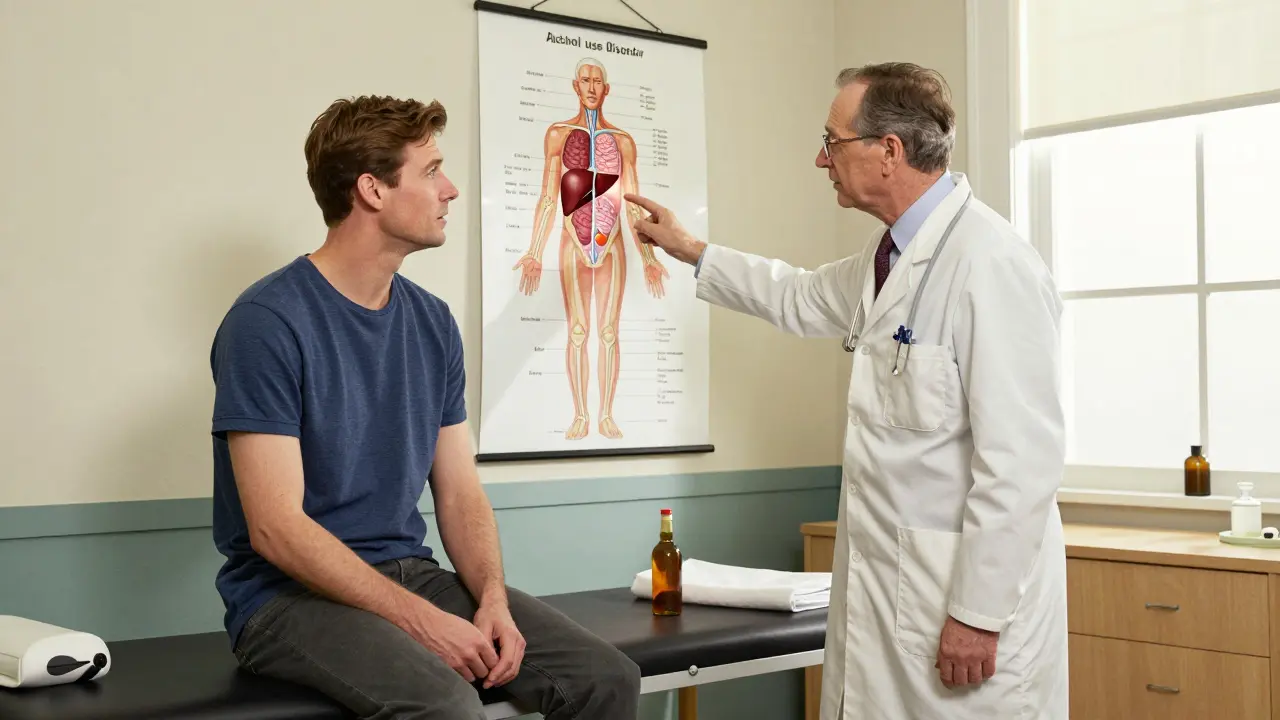
Recovery is possible. Modern medicine treats AUD as a chronic disease, similar to diabetes or hypertension, requiring long-term management rather than a quick fix. Effective treatment usually combines medication, behavioral therapy, and support systems.
Medications for Addiction Treatment (MAT)
Three FDA-approved medications are commonly used to manage AUD:
- Naltrexone (ReVia, Vivitrol): This drug blocks opioid receptors in the brain, reducing the pleasurable effects of alcohol and decreasing cravings. Studies show it can reduce heavy drinking days by up to 60% when combined with therapy.
- Acamprosate (Campral): This medication helps restore the chemical balance in the brain disrupted by chronic alcohol use. It is most effective for maintaining abstinence after detoxification.
- Disulfiram (Antabuse): This works as a deterrent. It causes unpleasant physical reactions (nausea, flushing, palpitations) if you consume even small amounts of alcohol, creating a psychological barrier to drinking.
Behavioral Therapies
Medication alone is rarely enough. Behavioral therapies address the psychological triggers of addiction:
- Cognitive Behavioral Therapy (CBT): Helps patients recognize and avoid situations that trigger drinking. It teaches coping skills for stress and negative emotions without using alcohol.
- Motivational Enhancement Therapy (MET): Focuses on resolving ambivalence. Many people want to quit but are unsure if they can. MET helps build internal motivation for change.
- Contingency Management: Provides tangible rewards for positive behaviors, such as staying sober or attending therapy sessions.
Support Groups and Community
Mutual-support groups play a crucial role in long-term recovery. Alcoholics Anonymous (AA), founded in 1935, remains the most well-known. Their 12-step program emphasizes spiritual growth and peer support. While methodological debates exist about their statistics, many individuals report AA provides the community accountability necessary to stay sober. Other options include SMART Recovery, which uses a secular, science-based approach focusing on self-empowerment.
Detoxification and Withdrawal Management
For those with physical dependence, stopping alcohol abruptly can be dangerous, even fatal. Withdrawal symptoms can include seizures, delirium tremens (DTs), hallucinations, and extreme agitation. Medically supervised detoxification is essential for severe cases. Doctors may prescribe benzodiazepines to safely manage withdrawal symptoms and prevent complications. Detox is not treatment itself-it is the first step to stabilize the body so that therapy and medication can begin.

Emerging Treatments and Future Directions
Research into AUD treatment is advancing rapidly. New approaches include:
- Neuromodulation: Techniques like Transcranial Magnetic Stimulation (TMS) have shown promise. A 2022 study in JAMA Psychiatry reported 50% abstinence rates among patients receiving TMS, suggesting it can help reset brain circuits involved in craving.
- Digital Therapeutics: Apps like reSET provide structured cognitive behavioral therapy on smartphones. In FDA trials, users of these digital tools showed significantly higher abstinence rates compared to controls.
- Combined Approaches: The MATTERS study demonstrated that combining medication with behavioral therapy increased abstinence rates by 24% compared to either treatment alone. This highlights the importance of a multi-modal approach.
Getting Help: Next Steps
If you suspect you or a loved one has AUD, do not wait for a crisis. Early intervention improves outcomes significantly. Start by speaking with a primary care physician who can assess severity and refer you to specialists. In the UK, the NHS offers free treatment services, including counseling and medication management. In the US, SAMHSA’s National Helpline (1-800-662-HELP) provides confidential referrals to local treatment facilities.
Remember, AUD is a treatable medical condition. With the right combination of medical care, therapy, and support, millions of people achieve long-term recovery and rebuild their lives. You don't have to face this alone.
Is Alcohol Use Disorder curable?
AUD is considered a chronic condition, similar to diabetes or hypertension, meaning it is manageable but not always "curable" in the sense of never returning. However, many people achieve long-term remission and live healthy, alcohol-free lives with ongoing treatment and support.
What are the signs of alcohol withdrawal?
Symptoms can range from mild to severe and include anxiety, tremors (shakes), nausea, vomiting, insomnia, racing heart, sweating, and in severe cases, seizures or delirium tremens (confusion, hallucinations). Medical supervision is recommended for anyone dependent on alcohol who attempts to quit.
Can liver damage from alcohol be reversed?
Early stages of liver damage, such as fatty liver (hepatic steatosis), are often reversible if you stop drinking completely. Alcoholic hepatitis may improve with abstinence, but cirrhosis involves permanent scarring. While stopping drinking prevents further damage, existing cirrhosis cannot be fully reversed without a liver transplant.
How does Naltrexone help with alcohol addiction?
Naltrexone blocks opioid receptors in the brain, which reduces the rewarding effects of alcohol. This means drinking feels less pleasurable, helping to decrease cravings and the urge to binge. It is often used alongside behavioral therapy for best results.
Is Alcoholics Anonymous (AA) the only option for support?
No. While AA is widely known, other options include SMART Recovery (which uses a secular, science-based approach), Refuge Recovery (based on Buddhist principles), and secular online communities. Professional therapy groups led by clinicians are also highly effective.
What is the difference between alcohol abuse and alcohol dependence?
The DSM-5 consolidated these terms into "Alcohol Use Disorder" (AUD) with severity levels (mild, moderate, severe). Historically, "abuse" referred to harmful use without physical dependence, while "dependence" included tolerance and withdrawal. Now, both are part of the same diagnostic spectrum.
How long does alcohol detox take?
Acute withdrawal symptoms typically begin 6-24 hours after the last drink and peak within 48-72 hours. Most physical symptoms subside within 5-7 days, but psychological symptoms like anxiety and insomnia can last longer (Post-Acute Withdrawal Syndrome). Medically supervised detox ensures safety during this critical period.
Latest Posts