

Over 80% of people diagnosed with multiple myeloma will develop serious bone damage. It’s not just a side effect-it’s a core part of the disease. These aren’t ordinary fractures or osteoporosis. Myeloma eats away at bone from the inside, leaving behind holes that look like they were punched out with a drill. This isn’t just painful-it’s life-threatening. Patients face broken bones, spinal cord compression, and dangerously high calcium levels in their blood. And for decades, treatment focused only on slowing the damage, never fixing it.
How Myeloma Destroys Bone
Multiple myeloma starts when abnormal plasma cells multiply in the bone marrow. But the real danger isn’t just the cancer cells themselves. It’s what they do to the bone around them. Healthy bone is constantly being rebuilt: old bone is broken down by cells called osteoclasts, and new bone is built by osteoblasts. In myeloma, this balance shatters. Osteoclasts go into overdrive. Osteoblasts shut down completely. The result? Bone disappears faster than it can be replaced.
One key player in this process is the RANKL protein. Myeloma cells trigger bone marrow cells to produce too much RANKL, which tells osteoclasts to eat more bone. At the same time, they suppress OPG, the natural brake on RANKL. The ratio flips-sometimes by 3 to 5 times-making bone destruction unstoppable. But it’s not just RANKL. Myeloma cells also pump out DKK1 and sclerostin, two proteins that block the Wnt signaling pathway. That’s the signal osteoblasts need to start making new bone. Without it, healing stops.
Even the osteocytes-cells that make up 95% of all bone cells-are pulled into the fight. They start releasing more sclerostin, worsening the damage. Studies show myeloma patients have an average sclerostin level of 28.7 pmol/L, compared to 19.3 pmol/L in healthy people. The more DKK1 in the blood, the worse the bone damage. Patients with levels above 48.3 pmol/L have over three times as many bone lesions.
The Toll on Patients
For many, bone disease is the most disabling part of myeloma. About 28 to 38% of patients suffer pathological fractures. Around 5 to 10% develop spinal cord compression, which can lead to paralysis if not treated fast. One in four has hypercalcemia-too much calcium leaking from bones into the bloodstream-causing confusion, dehydration, and kidney failure.
These aren’t just numbers. They’re hospital visits. Lost workdays. Pain that doesn’t go away. A 2022 survey of over 1,200 patients found bone complications were the second most common reason for hospitalization, right after infections. The average stay? Over eight days. And even when patients are stable, the pain lingers. On the r/myeloma subreddit, 68% of respondents said they still had bone pain despite being on standard treatment.
Current drugs help, but they come with their own problems. Zoledronic acid, given by IV every month, can damage kidneys. About 22% of patients need dose changes because their creatinine clearance drops below 60 mL/min. About 18.5% develop low calcium. And then there’s MRONJ-medication-related osteonecrosis of the jaw. Up to 42% of patients on long-term bisphosphonates or denosumab need dental surgery because their jawbone starts dying.
Current Standard Treatments
For over 20 years, the go-to treatments have been bisphosphonates and denosumab. Zoledronic acid and pamidronate are IV infusions given monthly. Denosumab is a shot under the skin, also monthly. Both reduce skeletal-related events by 15 to 18% compared to no treatment. Denosumab has a slight edge in preventing fractures and is preferred by 74% of patients in one Mayo Clinic study because it’s easier than IV infusions.
But here’s the catch: these drugs don’t rebuild bone. They only slow the destruction. Once a hole is punched into the spine or hip, it stays. There’s no healing. That’s why experts call it a “vicious cycle”-bone damage releases growth factors that feed the myeloma cells, which then make more bone damage. Treatments that only block one side of the cycle aren’t enough.
Cost is another barrier. Denosumab runs about $1,800 per dose. Generic zoledronic acid? Around $150. That’s why in Asia, 89% of patients still get bisphosphonates. In the U.S., denosumab is used in 78% of cases. In Europe, it’s only 42%. Reimbursement rules make all the difference.
Novel Agents: The Hope for Healing
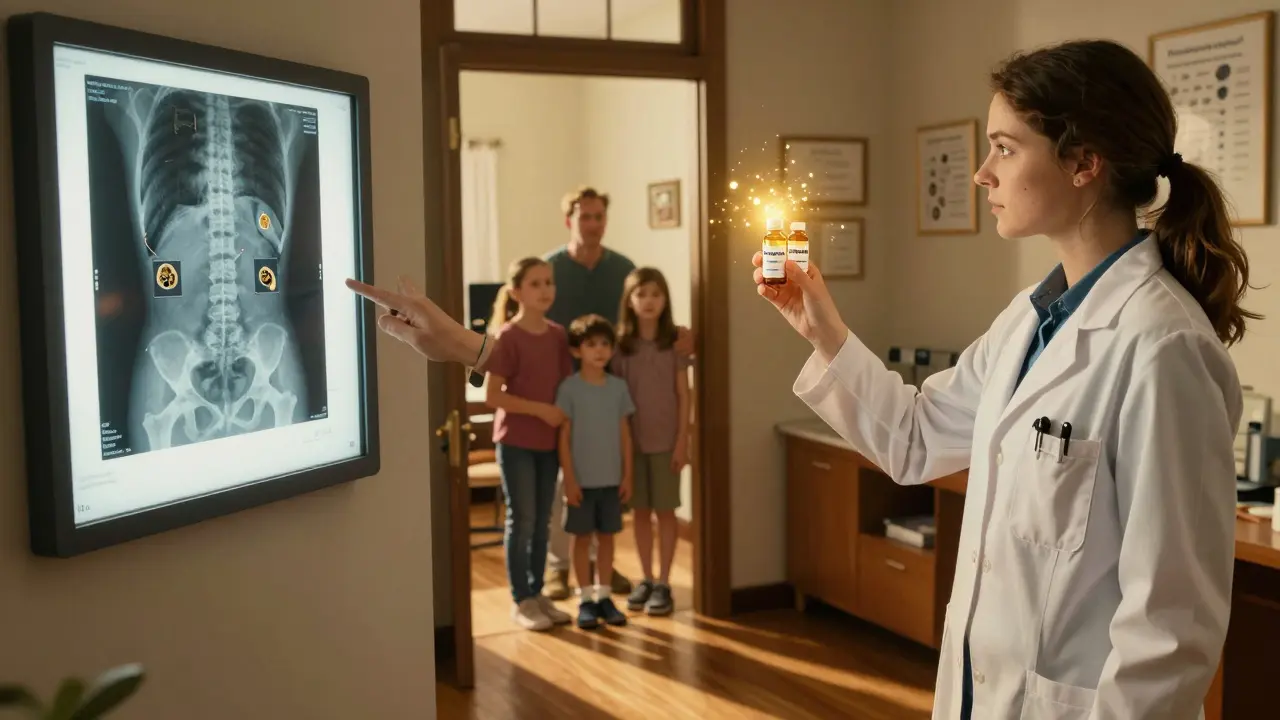
The real breakthrough isn’t just stopping bone loss-it’s making bone grow again. That’s where the new agents come in.
One of the most promising is romosozumab, an antibody that blocks sclerostin. In a 2021 trial with 49 myeloma patients, it increased bone density in the spine by 53% over 12 months. Patients also reported a 35% improvement in pain scores. Another anti-sclerostin drug, blosozumab, cut bone resorption markers by 47% in a 2019 study. Both are now in phase III trials. The BONE-HEAL trial, launched in 2023, is testing romosozumab in 450 patients across the U.S. and Europe.
Then there’s DKN-01, which targets DKK1. In a 2020 trial with 32 patients, it reduced bone resorption markers by 38%. It’s not just about numbers-some patients saw visible healing on scans. Gamma-secretase inhibitors, which block the Notch pathway, showed a 62% reduction in bone lesions in animal models. Human trials are just beginning.
But not all hope has panned out. Odanacatib, a cathepsin K inhibitor, showed strong results in phase II with a 31% drop in bone breakdown markers. But it was pulled from development in 2016 after a spike in stroke risk. That’s the risk with these powerful drugs: turning up bone formation can have unintended consequences.
What’s Next? The Future of Bone Healing
The next wave of treatments is even more targeted. Bispecific antibodies are being designed to hit both myeloma cells and bone-damaging signals at the same time. Seven are already in early trials. RNA therapies like Alnylam’s ALN-DKK1 can silence the gene that makes DKK1-preclinical data shows a 65% drop in the protein. That could mean less bone destruction and more healing.
Doctors are also starting to use bone turnover markers-like serum CTX and PINP-to guide treatment. Instead of giving everyone the same drug, they’re testing which patients have high resorption, high formation, or both. That way, they can match the right agent to the right person.
And there’s a shift in timing. The European Hematology Association updated its guidelines in June 2023 to say: start bone protection at diagnosis, not after a fracture. Early intervention could prevent damage before it happens.

Challenges and Real-World Barriers
Even with all this progress, big problems remain. First, not all patients respond the same. Bone disease in myeloma isn’t one thing-it’s different in each person. Some have mostly lytic lesions. Others have mixed patterns. We still don’t have good biomarkers to predict who will benefit from which drug.
Second, access. Romosozumab and DKN-01 aren’t approved yet. Even when they are, cost will be high. Novartis and BeiGene are investing heavily, but pricing will determine who gets these drugs. In countries without universal healthcare, many patients won’t see them for years.
Third, coordination. Managing myeloma bone disease needs a team: hematologists, oncologists, orthopedic surgeons, dentists, and endocrinologists. But most clinics don’t have that structure. Patients get caught in the gaps.
And then there’s the fear. MRONJ is rare, but terrifying. That’s why guidelines now require a dental check-up within 30 days of starting any bone-targeting drug. Patients need to avoid extractions, implants, or deep cleanings during treatment.
What Patients Should Know
If you have multiple myeloma, ask these questions:
- Have I had a full bone scan? A whole-body low-dose CT or PET-CT is better than an X-ray.
- Am I on the right bone drug? Is it working? Are there signs of kidney issues or low calcium?
- Have I seen a dentist recently? Don’t wait for pain.
- Am I eligible for a clinical trial? New drugs are still being tested-and they might offer better results.
Don’t assume bone pain is just part of aging. It’s not. And don’t accept pain as normal. There are options now that didn’t exist five years ago. The goal isn’t just to survive myeloma anymore. It’s to live without broken bones, without constant pain, without losing your independence.
By 2030, experts believe we’ll be able to heal myeloma bone damage, not just slow it down. That’s the new standard. And it’s closer than you think.
Can multiple myeloma bone disease be reversed?
Currently, standard treatments like bisphosphonates and denosumab stop bone loss but don’t repair damage. However, new drugs like romosozumab and DKN-01, which target sclerostin and DKK1, have shown in clinical trials that they can actually increase bone density and promote healing. In one trial, patients saw a 53% increase in spine bone density after 12 months. While these agents aren’t yet approved for myeloma, ongoing phase III trials suggest bone healing will become a standard outcome within the next few years.
What’s the difference between zoledronic acid and denosumab?
Both reduce skeletal-related events by about 15-18%, but they work differently. Zoledronic acid is a bisphosphonate given as a monthly IV infusion. It sticks to bone and kills osteoclasts over time. Denosumab is a monthly injection under the skin that blocks RANKL, the signal that activates osteoclasts. Patients often prefer denosumab because it’s easier than IVs and doesn’t require kidney monitoring as closely. But it’s more expensive-$1,800 per dose versus $150 for generic zoledronic acid. Denosumab also carries a slightly higher risk of hypocalcemia, so calcium and vitamin D supplements are mandatory.
Why do myeloma patients get jaw problems from bone drugs?
The drugs that stop bone breakdown-like bisphosphonates and denosumab-can interfere with the jawbone’s natural healing process. This can lead to medication-related osteonecrosis of the jaw (MRONJ), where parts of the jawbone die and become exposed. It’s rare-under 10% of patients-but serious. Risk increases with dental surgery, poor oral hygiene, or long-term use. That’s why guidelines now require a dental exam within 30 days of starting treatment and discourage invasive procedures during therapy.
Are there new drugs in development for myeloma bone disease?
Yes. Romosozumab and blosozumab (anti-sclerostin) are in phase III trials and show strong bone-building effects. DKN-01 (anti-DKK1) has already shown reduced bone resorption in early trials. Gamma-secretase inhibitors like nirogacestat are being tested to block the Notch pathway. RNA therapies like ALN-DKK1 aim to silence the gene that produces DKK1. Bispecific antibodies that target both myeloma cells and bone signals are also in phase I/II. These aren’t just slowing damage-they’re trying to rebuild bone.
How do I know if my bone treatment is working?
Your doctor should track bone turnover markers like serum CTX (a sign of bone breakdown) and PINP (a sign of bone formation). A drop in CTX means less destruction. A rise in PINP means bone is rebuilding. Imaging matters too-CT or PET scans can show if lesions are stabilizing or shrinking. Pain levels and mobility are also key. If you’re still having fractures or worsening pain, your treatment may need adjustment. Don’t wait for a crisis-ask for these tests at every visit.

Comments
Wendy Claughton
16/Jan/2026Just read this and cried. Not because I’m sad-because I’m so tired of hearing ‘it’s just part of the disease.’ It’s not just part of it. It’s the whole damn war. I’ve seen my mom’s spine collapse like a house of cards, and no one told us the drugs could make her jaw rot. Now I’m begging every doctor I meet: please, test for sclerostin. Please. 🙏💔
Stacey Marsengill
16/Jan/2026Oh sweet mercy. So now we’re supposed to believe Big Pharma is gonna save us with ‘novel agents’? 😂 They’ll charge $50K a dose and call it ‘personalized medicine’ while the rest of us beg for generic zoledronic acid. And don’t get me started on dental checks-like I’m supposed to drop $2K on a dentist when I’m already broke from chemo. This isn’t hope. It’s a luxury tax on suffering.
Aysha Siera
16/Jan/2026They don’t want you to heal. They want you on lifelong injections. Look at the timeline-2023 trials? Coincidence? Or did the FDA get a memo from the same people who buried hydroxychloroquine? Sclerostin inhibitors? Sounds like a coded name for something they don’t want you to Google. The real cure was buried in 1998. They just need you to forget.
rachel bellet
16/Jan/2026Let’s be clear: the entire paradigm of myeloma bone disease management is fundamentally flawed. Bisphosphonates and denosumab are RANKL inhibitors-yes, but they’re palliative, not curative. The failure to integrate bone turnover biomarkers (CTX, PINP) as primary endpoints in clinical trials is a systemic oversight. Without longitudinal serological monitoring, we’re flying blind. And romosozumab? Anabolic, yes-but its Wnt pathway activation carries inherent oncogenic risk. We need pathway-specific modulation, not blunt-force inhibition. This isn’t medicine. It’s trial-and-error with a side of billing codes.
Pat Dean
16/Jan/2026Why are we even talking about this? In America, we have the best science. If these drugs aren’t approved yet, it’s because the FDA is being too cautious. Stop whining about cost. If you can’t afford it, move to India. They’ve got cheaper meds and better chai. We don’t need to fix bone disease-we need to fix lazy patients who won’t take their pills. And stop using ‘pain’ as an excuse. My cousin had myeloma and never missed a day of work.
Selina Warren
16/Jan/2026They told me I’d be in a wheelchair by 40. I’m 43. Walking. Still in pain? Yes. But I’m alive. And I’m not waiting for some magic drug to come out in 2027. I’m doing yoga, eating turmeric, and screaming into pillows when the pain hits. This isn’t just about science-it’s about refusing to be broken. They can’t take your will. Not yet. And if you’re reading this and you’re scared? Good. That means you’re still fighting. Keep going.
Robert Davis
16/Jan/2026Interesting. But you didn’t mention the fact that sclerostin levels correlate with BMI. I checked my lab results-my sclerostin was 31.2 pmol/L. My BMI is 32. So is this really myeloma? Or am I just obese? Maybe we’re overdiagnosing bone damage because we’re not controlling for metabolic factors. Just saying. I’ve got a PhD in biostats. I’ve seen this before.
Joni O
16/Jan/2026my dentist just called me after i told her i was on denosumab… she said ‘oh honey, you need to avoid extractions like the plague.’ i didn’t even know that. thank you for this post. i’m going to ask my oncologist about bone turnover markers next visit. i’ve been too scared to ask anything. but now i feel like maybe i can. 🤍
Max Sinclair
16/Jan/2026This is one of the most thorough, compassionate, and scientifically accurate summaries of myeloma bone disease I’ve ever read. The distinction between bone destruction and bone healing is critical-and too often ignored. The fact that we’re finally targeting sclerostin and DKK1 gives me real hope. I’m a hematologist, and I’ve been pushing for earlier intervention for years. Thank you for highlighting the need for multidisciplinary care. This is the future.
christian Espinola
16/Jan/2026Let’s cut through the noise. The entire ‘bone healing’ narrative is a distraction. These drugs don’t fix myeloma-they just delay the inevitable. The real issue? The cancer cells are still there. Killing bone doesn’t kill the tumor. We’re rearranging deck chairs on the Titanic while the industry profits off ‘novel agents’ that cost more than a house. If you want real progress, stop chasing bone density and start targeting the plasma cells at the root. Everything else is just marketing.