

The U.S. Food and Drug Administration (FDA) doesn’t just oversee drugs made in America-it checks every pill, vial, and capsule that crosses the border. With over 186 billion in pharmaceutical imports in 2022, the FDA’s job is to stop tainted, counterfeit, or illegally made drugs from reaching patients. This isn’t a passive system. It’s a high-stakes, real-time operation that screens more than 1.2 million drug entries every year, using data, risk models, and physical inspections to protect public health.
How the FDA catches risky drug shipments
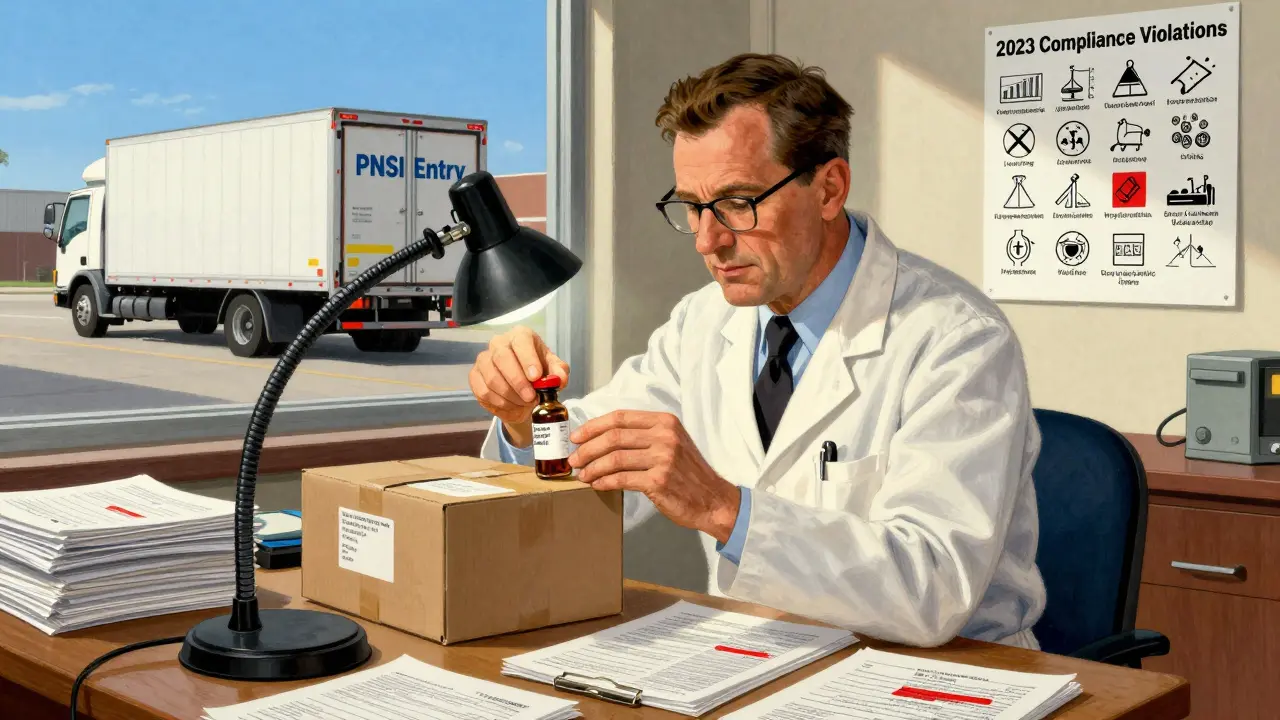
Every drug shipment entering the U.S. goes through five stages: Entry Submission, Entry Review, Examination and Sampling, Compliance Review, and Final Admissibility Decision. It starts the moment a shipper files an electronic notice through the FDA’s Prior Notice System Interface (PNSI). Over 98% of entries are screened automatically using a risk-based algorithm. The system flags anything unusual-like a shipment from a facility with past violations, incomplete paperwork, or a product type known for counterfeiting.
That’s where things get serious. About 15.7% of entries get flagged as high risk. Another 8.3% are flagged because of missing or incorrect data. If you’re shipping active pharmaceutical ingredients (APIs) from India or finished drugs from China, you’re more likely to be caught in this net. The FDA doesn’t inspect everything-it can’t. With over 100 million drug shipments entering annually, physical inspections happen on just 1.2% of them. That’s why the system relies on smart targeting.
When a shipment is flagged, it’s held at the port. No exceptions. Even small packages under $800-once exempt-are now fully inspected. This change, effective October 2023, closed a major loophole that smugglers exploited to send pill presses and fake opioids through the mail. The FDA’s Harmonized Real-Time Alert System kicks in if a dangerous product is found at one port. Within 45 minutes, every port in the country is notified. If counterfeit insulin was found in Miami, inspectors in Los Angeles, Seattle, and New York immediately start watching for similar shipments.
What gets detained-and why
The FDA doesn’t just look at labels. It checks for three things: physical condition of the product, labeling compliance, and lab test results. A shipment might be detained for a dozen reasons:
- Missing or incorrect registration with the FDA
- Labeling that doesn’t meet 21 CFR Part 201 standards (e.g., no lot number, missing warnings)
- Failure to prove the facility is registered and inspected
- Products that don’t match the approved application
- Contaminated APIs (like the 2022 valsartan case where a toxic impurity slipped through)
In 2022, 14.3% of physically examined drug shipments were detained. Of those, 67.8% were ultimately refused entry. That means nearly 1 in 10 inspected shipments never made it to U.S. pharmacies. The most common violations? Incorrect product coding (28% of delays), incomplete registration (21%), and labeling errors (19%).
Some facilities get blacklisted. If a company has multiple violations, the FDA issues an Import Alert. Once on the list, every future shipment from that facility is automatically detained without inspection. No second chances. Johnson & Johnson, for example, is not on any Import Alert-but many generic manufacturers are. Teva Pharmaceuticals reported that in Q2 2023, 37% of API shipments from certain Indian suppliers were detained, even though those facilities had no documented compliance issues. That’s because the FDA’s system flags based on patterns, not just past records.
The fast lane: SSCPP and who gets it
Not all importers are treated the same. The Secure Supply Chain Pilot Program (SSCPP) lets top-tier manufacturers skip most inspections. To qualify, a company must have a flawless compliance record for at least three years, pass rigorous audits, and demonstrate end-to-end control of its supply chain. As of Q3 2023, only 27 companies qualified-and each could designate up to five products for expedited clearance.
For those companies, clearance time dropped from 7-10 days to under 48 hours. Johnson & Johnson says the program cut their shipment variability from ±5 days to ±8 hours. That’s huge for just-in-time manufacturing. But here’s the catch: the program is only open to large firms. Small biotech startups can’t afford the audit costs or the years of perfect compliance history. The FDA plans to expand SSCPP to 50 participants by mid-2024, including contract manufacturers-but eligibility still requires millions in investment and legal resources.
The hidden costs and industry pain points
For academic researchers and small biotech firms, the 2023 elimination of the de minimis exemption has been brutal. Before, they could send small research samples under $800 with minimal paperwork. Now, each shipment costs $285-$420 and adds 3-5 days to timelines. A 2023 survey by the Association of American Medical Colleges found 63% of institutions reported “significant delays” in importing biological samples.
Customs brokers report mixed results. Fifty-eight percent say clients are more frustrated than ever-unpredictable delays, unclear reasons for detention, and last-minute document requests. But 42% say the electronic entry system introduced in 2021 made things clearer. The problem? Many importers still submit incomplete paperwork. One missing field can delay a shipment for 4.7 business days.
Generic drug makers are especially vulnerable. While brand-name companies control their supply chains tightly, many generics source APIs from multiple overseas suppliers. The FDA’s risk system flags these shipments more often, not because they’re unsafe-but because they’re harder to track. The National Association of Chain Drug Stores found that 78% of pharmacy executives believe the current system works for brand-name drugs but fails for generics.
What’s next: AI, blockchain, and global coordination
The FDA isn’t standing still. Its five-year roadmap includes:
- AI-driven risk assessment tools to improve targeting accuracy by 25% by 2025
- A blockchain pilot for supply chain verification, launching Q1 2024
- Harmonizing standards with international regulators through PIC/S
These changes aim to reduce clearance times by 30-40% while catching more violative products. But there’s a cost. The Congressional Budget Office estimates $187 million in implementation expenses over five years. And despite the improvements, the Government Accountability Office found only 4 of 17 key performance indicators from FDASIA have been fully implemented.
Meanwhile, counterfeit drugs still slip through. The Partnership for Safe Medicines estimates $4.3 billion in fake medications entered the U.S. in 2022-63% of which came through the old de minimis loophole. The FDA’s own data shows 41% of websites selling drugs to Americans operate outside any regulatory oversight. That’s a growing blind spot.
What importers need to get right
If you’re shipping drugs into the U.S., here’s what you can’t afford to miss:
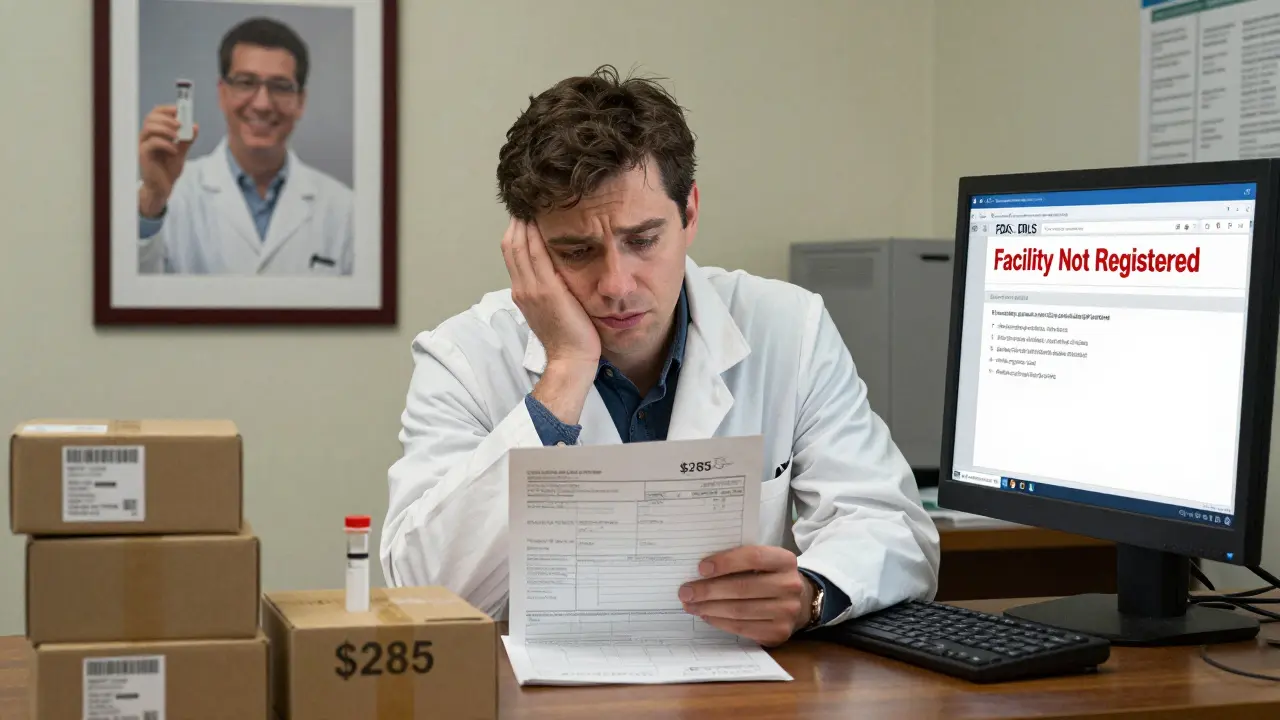
- Register your facility with the FDA before shipping
- Ensure your product is listed in the FDA’s database
- Submit accurate, complete Prior Notice via PNSI-errors cause delays
- Verify labels match FDA requirements (active ingredient, lot number, expiration, manufacturer)
- Keep records for 3 years post-entry
Experienced importers say the biggest advantage? Building relationships. Contacting FDA entry reviewers directly at your port can cut processing time by 22-35%. The FDA has 24/7 port-specific hotlines with an average response time of 1.8 hours. Use them.
For small businesses, hiring a customs broker who specializes in pharmaceuticals isn’t optional-it’s essential. At $285-$450 per entry, it’s expensive. But it’s cheaper than a detained shipment that sits at the port for weeks.
Final reality check
The FDA’s import system is one of the most advanced in the world. It’s not perfect. It’s underfunded. It’s overloaded. But it’s the best line of defense we have. The system caught 14.3% of inspected shipments as violative. That’s 143 out of every 1,000. For every one that gets through, there are dozens that never make it past the border.
For patients, that means fewer fake pills, fewer contaminated batches, and more confidence in the drugs they take. For manufacturers, it means stricter rules, higher costs, and more paperwork. But in the end, the goal is simple: no drug enters the U.S. unless it’s safe, effective, and properly made. That’s not just regulation-it’s protection.
What happens if a drug shipment is detained by the FDA?
If a shipment is detained, it’s held at the port of entry while the FDA reviews the case. The importer gets a notice explaining why. They can submit additional documentation, request a re-inspection, or withdraw the shipment. If the FDA finds violations and the importer doesn’t fix them, the shipment is refused entry and may be destroyed or exported. Importers have 90 days to respond before the FDA automatically refuses the product.
Can small companies import drugs without using a customs broker?
Yes, but it’s risky. Small companies can file their own entries through the FDA’s electronic systems, but mistakes are common. One error in the product code, registration number, or label description can delay a shipment for weeks. Most small firms use brokers because they understand the nuances-like which port has faster review times or how to respond to an Import Alert. The FDA doesn’t require a broker, but the complexity makes it nearly impossible to avoid one without significant expertise.
Why are generic drugs more likely to be detained than brand-name drugs?
Generic drugs often source active ingredients from multiple overseas suppliers, many of which have weaker regulatory oversight. The FDA’s risk model flags these supply chains as higher risk because they’re harder to trace. Brand-name companies usually control their entire supply chain and have long-standing compliance records. Generics also face higher scrutiny because they’re cheaper and more attractive to counterfeiters. As a result, even compliant generic shipments get flagged more often.
Does the FDA inspect drugs shipped by mail or courier?
Yes. Since October 2023, all FDA-regulated products-even small packages under $800-are subject to inspection. This includes mail-order shipments, courier deliveries, and e-commerce packages. The FDA works with U.S. Customs and Border Protection to scan, track, and sample these shipments. Previously, low-value shipments were exempt, but that loophole was closed after counterfeit opioids and unapproved weight-loss drugs flooded the market through online sellers.
How can I check if my drug manufacturer is FDA-registered?
You can search the FDA’s Drug Registration and Listing System (DRLS) online. Enter the company name, facility address, or product name. If the facility is registered and the product is listed, it will appear. If not, the shipment will be detained. Always verify this before shipping. The FDA doesn’t notify importers if a facility is unregistered-it’s your responsibility to check.
Write a comment
Latest Posts


Comments
Sandy Wells
20/Mar/2026This whole system feels like overkill. I get that safety matters, but the bureaucracy is insane. My cousin works at a small biotech lab and their research samples get held for weeks. It’s not protecting patients-it’s just making science harder.
Also, why does every shipment need 17 forms? Someone’s got a PowerPoint slide deck titled 'Regulatory Excellence' and they’re living for it.
Timothy Olcott
20/Mar/2026AMERICA FIRST!!! 🇺🇸 The FDA is doing GOD’S WORK. Every time some cheap pill from China tries to sneak in, we shut it down. 1.2M inspections a year? That’s just the tip of the iceberg. Let ‘em try to send fentanyl through the mail again. We’re watching. 🤖💊
Desiree LaPointe
20/Mar/2026Oh wow. So the FDA is now the global drug police. How quaint. Let me guess-next they’ll be inspecting your aspirin bought at a gas station in Nebraska? 🙄
Meanwhile, the real crisis is that we let 78% of pharmacies rely on generics from suppliers who can’t spell 'compliance.' But hey, at least the FDA flags them with 98% accuracy. That’s not a system. That’s a spreadsheet with delusions of grandeur.
Jackie Tucker
20/Mar/2026The irony is thick enough to spread on toast. We spend billions to stop counterfeit insulin while 1 in 4 Americans can’t afford the real thing. The FDA’s 'risk models' don’t care if you’re dying-they care if your label lacks a lot number.
It’s not about safety. It’s about control. And control is the only thing this system delivers with 100% consistency.
shannon kozee
20/Mar/2026For anyone shipping research samples: always double-check the DRLS. I’ve had shipments delayed because a facility’s registration expired by 3 days. Easy fix, but it costs time and money. Pro tip: email the port officer directly. They’ll help. Really.
Natali Shevchenko
20/Mar/2026I’ve spent years thinking about how systems like this reflect our values. We don’t just want safe drugs-we want to believe we’re in control. The FDA’s algorithm isn’t just filtering shipments. It’s filtering trust. It says: 'We don’t believe you until you prove you’re worthy.'
But what if the system itself is the problem? What if the real danger isn’t the counterfeit pills… but the idea that we need this much surveillance to feel safe?
Maybe we’re not protecting health. Maybe we’re just feeding a machine that needs to be fed.
Johny Prayogi
20/Mar/2026This is actually pretty impressive. I work in pharma logistics and the new PNSI system? Game changer. Yeah, it’s strict, but now we know why things get held. No more 'mystery detention' emails.
Also, using port hotlines? Total hack. I called the LA port last month, talked to a real person, got my shipment cleared in 8 hours. You’re welcome, future importers. 😎
Allison Priole
20/Mar/2026I used to think this was all red tape. Then my mom got her insulin from a foreign supplier because our insurance wouldn’t cover it. It was approved, labeled right, everything. Took 47 days to clear.
I get why they’re cautious. But when you’re choosing between a delayed drug and no drug at all… the system stops feeling like protection. It feels like punishment.
Maybe we need more grace. Not just more scanners.
Casey Tenney
20/Mar/2026If you’re shipping drugs and you don’t know the DRLS, you deserve to have your shipment burned. No excuses. This isn’t Amazon. It’s your life. Or your kid’s. Don’t be lazy. Register. Label. Submit. Done.
Chris Dwyer
20/Mar/2026To everyone stressed about the new rules: you got this. Yeah, it’s a pain. But every delay you push through? Someone else gets a safe pill. I’ve seen what happens when a batch slips through-real people, real harm.
Start small. Talk to a broker. Learn one form. You’re not fighting the system. You’re learning to dance with it. And hey-your future self will high-five you.
Thomas Jensen
20/Mar/2026You think this is about safety? Nah. This is a cover for the Pharma Lobby. The FDA doesn’t want to stop fake drugs-they want to stop COMPETITION. That’s why generics get flagged. That’s why small labs get crushed. The 'AI tools' are just fancy algorithms to protect Big Pharma’s monopoly.
And don’t get me started on blockchain. That’s just Wall Street’s new religion. They’re not securing supply chains-they’re securing profits.
trudale hampton
20/Mar/2026I’ve been doing this for 15 years. The system’s flawed, sure. But it’s the best we’ve got. I’ve seen shipments from places where they use tap water to wash vials. The FDA catches those. And yeah, sometimes it’s slow. But I’d rather wait 10 days than have my patient get a batch of poison.
Shaun Wakashige
20/Mar/2026I just want to know why the FDA doesn’t inspect the people who post 'buy pills online' ads on Instagram. That’s where the real danger is. Not the ports. The DMs.