

Every year, millions of people around the world take medicines that aren’t what they claim to be. These aren’t just fake pills with sugar instead of active ingredients-they can contain toxic chemicals, wrong dosages, or no medicine at all. The counterfeit drugs market is worth over $200 billion, and the World Health Organization estimates that 1 in 10 medicines in low- and middle-income countries are fake. Even in high-income regions like the UK and US, counterfeit drugs slip through. But there are official tools and systems designed to stop them. Knowing how to use them could save your life-or someone you care about.
Why Drug Authenticity Matters
A fake painkiller might not relieve your headache. A counterfeit antibiotic could make your infection worse. Some fake drugs contain rat poison, heavy metals, or industrial dyes. The FDA warns that counterfeit medicines may contain the wrong ingredients, too little or too much active drug, or none at all. The risks aren’t theoretical. In 2021, over 1,200 people in Nigeria died after taking fake malaria medication. In the UK, NHS pharmacists have intercepted counterfeit cancer drugs and insulin. These aren’t rare events-they’re part of a global supply chain problem.How the EU Stops Fake Drugs: The Falsified Medicines Directive (FMD)
If you live in the European Union, you’ve probably seen a 2D barcode on your medicine box. That’s part of the Falsified Medicines Directive (FMD), which came into full force on February 9, 2019. Every prescription medicine sold in the EU now has a unique 12-digit serial number, a tamper-evident seal, and a barcode. When you pick up your medicine at the pharmacy, the pharmacist scans the code. The system checks it against the EU Hub-a central database that tracks every package from factory to pharmacy. If the code doesn’t match, or if the package has already been scanned (meaning it was sold before), the system flags it. Over 70% of NHS pharmacists say the system is quick and easy to use. But it’s not perfect. Early on, many pharmacists confused the warning pop-ups with messages saying a drug had already been dispensed. That led to missed alerts. Today, most UK pharmacies use custom colors and audio alerts to reduce confusion. Some hospitals are even testing voice notifications to make sure no one misses a red flag.The US Approach: DSCSA and the Gaps It Leaves
In the United States, the Drug Supply Chain Security Act (DSCSA) was passed in 2013 and fully implemented by November 27, 2023. Unlike the EU, the US system doesn’t require pharmacies to scan every single medicine before giving it to you. Instead, verification happens at each step of the supply chain-between manufacturers, distributors, and wholesalers. But once the medicine reaches your local pharmacy, there’s no mandatory check before it goes into your hands. This gap is a big concern. The FDA’s 2022 Supply Chain Security Report called it a “critical vulnerability.” A fake drug could pass through 10 checkpoints and still end up on your shelf without anyone checking it. The FDA is now proposing a rule to close this gap by 2027, requiring pharmacies to verify medicines at the point of dispensing. Until then, patients in the US have less protection than those in Europe.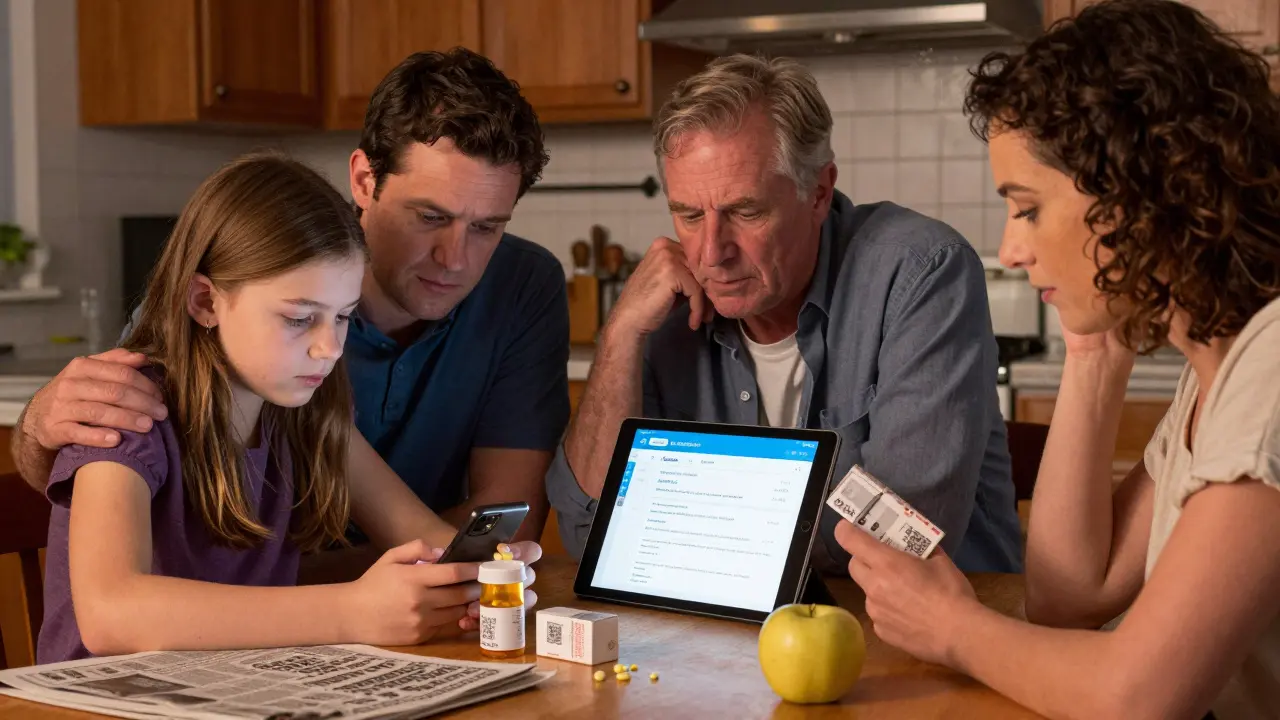
How to Check Your Medicine: Tools You Can Use
You don’t need a lab to spot a fake. Here are the official tools available to the public:- EU FMD Scanner Apps: Some countries, like Germany and France, offer free smartphone apps that let you scan the 2D barcode on your medicine. The app connects to the national database and tells you if the package is legitimate. These are only available in EU member states.
- QR Code Verification: Many legitimate medicines now include QR codes that link to the manufacturer’s verification page. Scan it with your phone. If it takes you to a site like pfizer.com/verify or novartis.com/authenticate, that’s a good sign. If it leads to a random website or doesn’t work, be suspicious.
- Pharmacist Verification: In the EU, your pharmacist is legally required to verify every prescription medicine. Ask them to show you the scan result. In the US, ask if your pharmacy uses DSCSA-compliant systems. Most large chains do, but smaller ones may not.
- Check Packaging: Look for spelling errors, blurry logos, mismatched colors, or missing batch numbers. Fake drugs often have packaging that looks “off.” Compare it to a previous box from the same brand.
Advanced Tools Used by Professionals
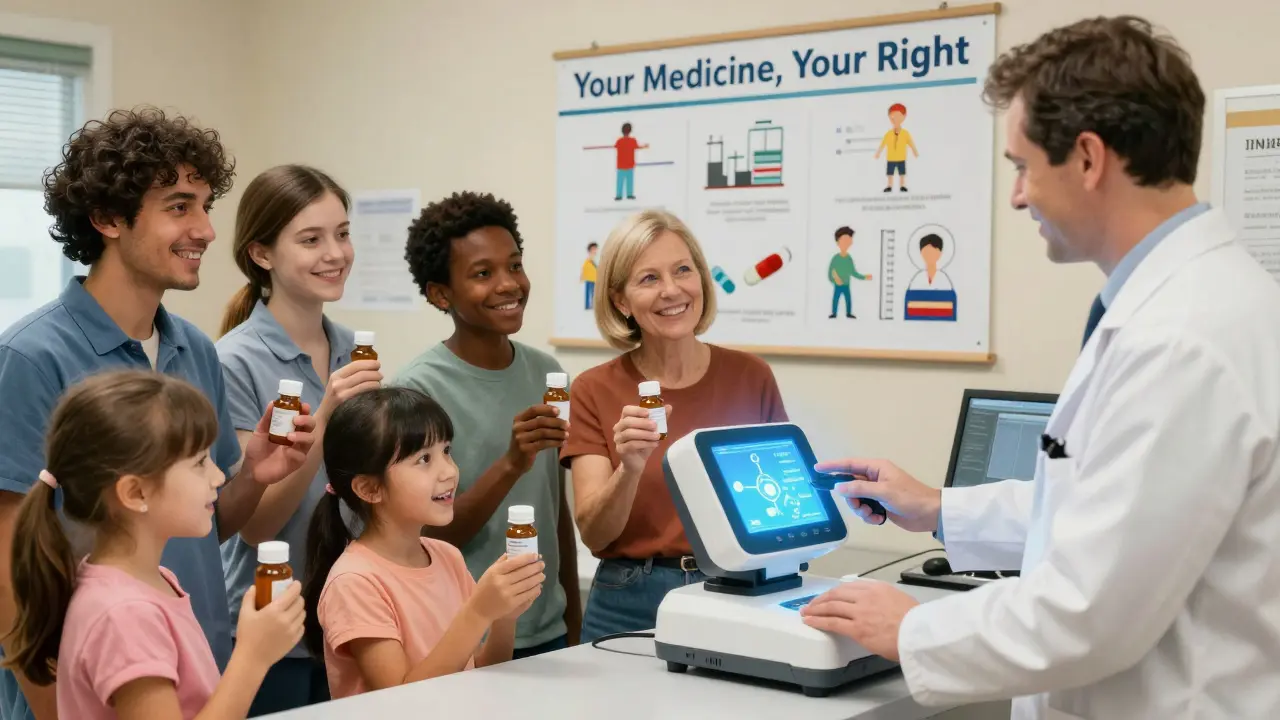
Pharmacists, regulators, and labs use more powerful tools that most people won’t have access to-but knowing they exist helps you understand what’s being done:- Spectroscopy Devices: Handheld tools like those from Thermo Fisher Scientific use near-infrared or Raman light to scan the chemical makeup of a pill. They compare it to a database of known authentic drugs. Accuracy in labs is over 98%, and field accuracy has improved from 78% in 2018 to 92% in 2022.
- Molecular Taggants: Some companies embed invisible chemical markers into pills. These can’t be seen or felt, but special scanners can detect them. This method is 99.9% accurate but adds $0.03 to $0.15 per pill to manufacturing costs.
- Blockchain Verification: Companies like Pfizer and IBM are testing blockchain systems that track each medicine from production to patient. These systems record every transfer in a secure, unchangeable ledger. Pfizer reports 99.8% accuracy in countries where it’s deployed.
These tools are expensive and require training. They’re not for consumers-but they’re why you can trust that your medicine is safe in regulated markets.
What to Do If You Suspect a Fake
If something feels wrong with your medicine-strange taste, unusual color, or packaging that looks cheap-don’t take it. Here’s what to do:- Don’t use it. Even if it looks like it works, fake drugs can cause long-term damage.
- Return it to the pharmacy. Pharmacies in the EU are required to take back suspicious medicines. In the US, most pharmacies will accept them for investigation.
- Report it. In the UK, report to the MHRA via their Yellow Card system. In the US, use the FDA’s MedWatch program. Provide photos, batch numbers, and where you bought it.
- Ask for a replacement. Legitimate pharmacies will replace the medicine at no cost.
Why Online Pharmacies Are Risky
Buying medicine online without a prescription is one of the biggest ways people end up with counterfeit drugs. The WHO says over 50% of websites selling medicine without a prescription are fake. Even sites that look professional-complete with logos, testimonials, and secure payment badges-can be scams. Stick to pharmacies that:- Require a valid prescription
- Have a physical address and phone number you can call
- Are licensed by your country’s health authority (e.g., GPhC in the UK, NABP in the US)
- Display a verified pharmacy logo (like the EU’s common logo or the NABP VIPPS seal)
Never buy from sites that offer “miracle cures,” extremely low prices, or no doctor consultation. If it sounds too good to be true, it is.
What’s Changing in 2025 and Beyond
The fight against fake drugs is getting smarter. The EU is rolling out AI systems that analyze verification data to spot unusual patterns-like a batch being scanned in three countries in one day. The USP and FDA are building a public database of spectral signatures for 1,200 essential medicines by 2025. That means future handheld scanners will be able to check more drugs without needing proprietary databases. Pfizer and other companies are testing DNA-based taggants-tiny synthetic DNA strands embedded in pills that can be read with a portable device. These are nearly impossible to copy. And by 2030, McKinsey predicts 95% of global pharmaceuticals will be tracked with some form of digital authentication.What You Can Do Today
You don’t need to be a pharmacist to protect yourself. Here’s a simple checklist:- Always get prescriptions filled at licensed pharmacies.
- Ask your pharmacist to verify your medicine if you’re in the EU.
- Check packaging for tampering or errors.
- Use official apps or QR codes if available.
- Report anything suspicious-your report could stop a fake batch from reaching others.
Counterfeit drugs thrive in silence. When people don’t ask questions, fakes spread. When you verify, you’re not just protecting yourself-you’re helping to shut down a global criminal network.
How can I tell if my medicine is fake?
Look for changes in packaging-misspelled names, blurry logos, or mismatched colors. Check for a tamper-evident seal and a unique barcode. In the EU, your pharmacist must scan it before giving it to you. You can also use official apps or QR codes linked to the manufacturer’s site. If something feels off, don’t take it.
Is it safe to buy medicine online?
Only buy from online pharmacies that require a prescription, have a physical address, and are licensed by your country’s health authority. Look for verified seals like the EU common logo or the NABP VIPPS in the US. Over half of websites selling medicine without a prescription are fake. Even sites that look professional can be scams.
What should I do if I find a counterfeit drug?
Stop using it immediately. Return it to the pharmacy where you bought it. Then report it to your national health authority-in the UK, use the MHRA Yellow Card system; in the US, file a report with the FDA’s MedWatch program. Include photos, batch numbers, and where you purchased it. Your report helps track and remove fake medicines from circulation.
Does the FMD system work in all EU countries?
Yes. The Falsified Medicines Directive is mandatory across all 27 EU member states. Every prescription medicine must have a unique serial code and be verified at the pharmacy. Compliance is nearly 100%, and the system has intercepted thousands of fake medicines since 2019.
Why doesn’t the US require pharmacies to scan every drug like the EU?
The US Drug Supply Chain Security Act (DSCSA) focuses on tracking drugs between manufacturers, distributors, and wholesalers-but doesn’t require verification at the point of sale to patients. This gap is being addressed: the FDA proposed a rule in 2023 to require pharmacy-level scanning by 2027. Until then, US patients have less protection than those in the EU.
Can I use my phone to scan medicine barcodes?
In the EU, yes-some countries offer official apps that connect to the national verification database. In the US, most barcodes are for supply chain tracking and won’t work with public apps. Always use only government-approved tools. Avoid third-party apps claiming to verify drugs-they’re often scams or collect your data.
Are generic drugs more likely to be fake?
No. Generic drugs are subject to the same safety and verification rules as brand-name drugs in regulated markets. However, counterfeiters often target generics because they’re cheaper and less closely monitored by consumers. Always buy generics from licensed pharmacies and check packaging just as you would for brand-name drugs.
How accurate are handheld drug scanners used by pharmacists?
Handheld spectroscopy devices (like those using Raman or NIR technology) are over 92% accurate in field use as of 2022, up from 78% in 2018. They work by analyzing the chemical signature of the pill and comparing it to a database. While not 100% foolproof, they’re far more reliable than visual checks alone.
Write a comment
Latest Posts
Comments
Angie Thompson
25/Jan/2026This is the kind of post that makes me wanna hug a pharmacist. 🤗 Seriously, scanning your meds isn't just tech-it's a lifeline. I just got my insulin delivered and I scanned the QR code. Took 3 seconds. Said 'verified.' I cried a little. Thank you for making this info so clear.
Mohammed Rizvi
25/Jan/2026The US system is basically 'trust us, we did the paperwork.' Meanwhile in the EU, your pharmacist is checking your pills like a bouncer at a club. Guess which one makes you feel safer?
Shweta Deshpande
25/Jan/2026I live in rural India and I’ve seen people buy antibiotics off Facebook ads because they’re ‘90% off.’ I showed my aunt how to check the batch number on the CDSCO portal-it took her 10 minutes and now she won’t buy anything without verifying. It’s not about being paranoid, it’s about being smart. Every time someone asks me how to check a pill, I send them this link. This post? Pure gold. Keep sharing stuff like this. We need more people like you who don’t just post, but protect.
Aishah Bango
25/Jan/2026People still buy pills from shady websites and then act shocked when they get sick. If you don’t verify your meds, you’re not just risking your life-you’re enabling criminals. This isn’t a suggestion. It’s a moral obligation. Stop being lazy. Scan the damn barcode.
John Wippler
25/Jan/2026I used to think fake drugs were a ‘third world problem’ until my dad’s blood pressure med turned out to be chalk and glitter. We bought it from a ‘licensed’ online pharmacy that had a .com domain and a 5-star review. Turns out, the license number was fake too. The FDA didn’t even respond to our report for 6 months. So yeah, the system’s broken. But at least now I know how to check. I just wish more people cared before it’s too late.
rasna saha
25/Jan/2026Thank you for writing this. I work at a small clinic in Kerala and we get so many patients who come in with meds bought online. I show them how to check the QR code on the manufacturer’s site. Most of them don’t even know it exists. You made it sound so simple. I’m printing this out for our waiting room.
Sally Dalton
25/Jan/2026OMG I JUST REALIZED I NEVER SCANNED MY ANTIBIOTICS LAST MONTH 😭 I THOUGHT THE BARCODE WAS JUST FOR THE PHARMACY. I’M SO SCARED NOW. THANK YOU FOR THIS POST. I’M GOING BACK TO THE PHARMACY TOMORROW TO ASK THEM TO SCAN IT AGAIN. I’M TELLING EVERYONE I KNOW.
Napoleon Huere
25/Jan/2026It’s fascinating how we’ve built these intricate systems to verify medicine-blockchain, DNA tags, spectroscopy-and yet the most vulnerable people still get sold poison because they don’t know how to ask. The real problem isn’t the counterfeiters. It’s the silence. We’ve normalized not asking. We’ve normalized trusting a website because it has a padlock icon. But safety isn’t a feature. It’s a right. And this post? It’s a quiet rebellion against that normalization.
Geoff Miskinis
25/Jan/2026The EU’s FMD system is a triumph of bureaucratic over-engineering. Yes, it works. Yes, it’s precise. But let’s not pretend this is some miraculous innovation-it’s just regulatory theater with a fancy barcode. Meanwhile, the US system is pragmatic: trust the chain, not the consumer. And frankly, if you’re buying meds without a prescription, you’re already gambling. Don’t blame the system for your poor choices.
Shawn Raja
25/Jan/2026I once bought a ‘generic’ Viagra from a site that looked like it was coded in 2003. Took it. Felt like I’d been hit by a truck. Turns out it had enough caffeine to power a small city. Now I only buy from CVS or Walgreens. And I scan. Always. The tech isn’t perfect, but it’s better than dying because you saved $10.
Betty Bomber
25/Jan/2026I just scanned my blood pressure pill. It worked. I didn’t even know I could do that. Thanks for teaching me something useful today.