

When you pick up a generic version of your prescription, you’re not just getting a cheaper version of the same medicine-you’re benefiting from a carefully designed system that lets competition do the heavy lifting. Unlike brand-name drugs, which can cost hundreds or even thousands of dollars a month, generic drugs often cost less than $10. In fact, 90% of all prescriptions filled in the U.S. are for generics, yet they make up just 23% of total drug spending. That’s not an accident. It’s the result of deliberate government policies that focus on generic drug pricing through competition, not direct price setting.
Why Governments Don’t Set Prices for Generic Drugs
Most people assume that if drug prices are high, the government must step in and cap them. But when it comes to generics, that’s not how it works. The U.S. government doesn’t set prices for generic medications because the market already does it better. Once a brand-name drug’s patent expires, multiple manufacturers can start making the same pill. Each one wants your business, so they slash prices to win contracts with pharmacies, insurers, and government programs like Medicare.
By the time three or more generic makers are selling the same drug, prices usually drop to just 10-15% of the original brand’s cost. The FDA found that within six months of a new generic entering the market, prices fall by 75%. After two years, they’re down 90%. That’s not because a regulator ordered it. It’s because competition forces companies to undercut each other.
Even the most recent federal efforts to lower drug costs, like the Inflation Reduction Act of 2022, explicitly leave generics out. The law lets Medicare negotiate prices for 15 high-cost brand-name drugs by 2027-but only if no generic version exists. The Department of Health and Human Services confirmed this in April 2024: generics don’t need negotiation because they’re already affordable.
The Hatch-Waxman Act: The Foundation of Generic Competition
The system that makes this possible started in 1984 with the Hatch-Waxman Act. Before this law, generic manufacturers had to run the same expensive clinical trials as the original drugmaker-even though the medicine was identical. That made generics too costly to produce. Hatch-Waxman changed that by letting generics prove they were bioequivalent to the brand, not reinvent the drug.
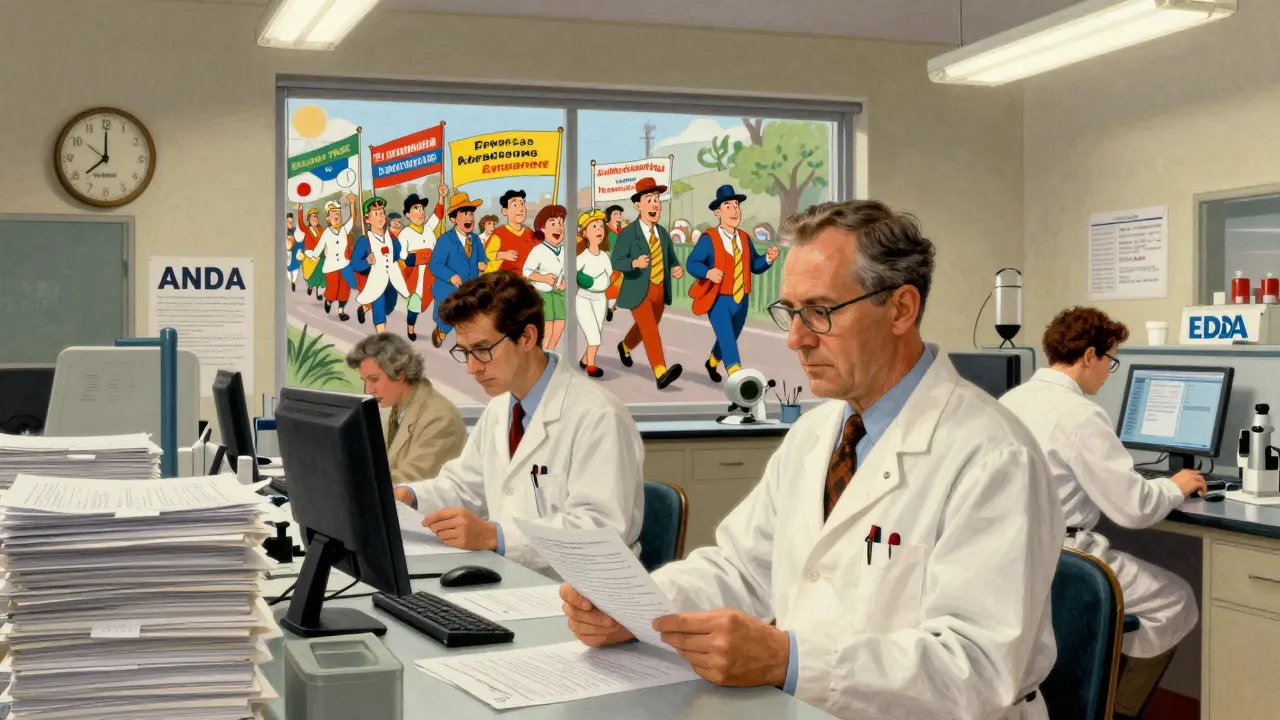
Instead of repeating full clinical trials, generic companies submit an Abbreviated New Drug Application (ANDA). This cuts development costs from $2.6 billion (for a new brand) to just $2-3 million. That’s why thousands of generics flood the market after patents expire. In 2023 alone, the FDA approved 1,083 generic drugs. That’s more than three per day.
The result? More options. Lower prices. And no need for price controls.
How the FDA Speeds Up Generic Approvals
Approval time used to be a bottleneck. In the early 2010s, it took an average of 18 months for the FDA to review a generic drug application. That delay meant fewer competitors entered the market, and prices stayed higher longer.
That changed with the Generic Drug User Fee Amendments (GDUFA), first passed in 2012 and renewed in 2022 with $750 million in industry fees through 2027. The goal? Cut approval time to 10 months. And it worked. By 2023, the FDA hit a 92% compliance rate for standard generics, meeting its 10-month target. That’s a 44% faster approval process than a decade ago.
For complex generics-drugs with tricky formulations like inhalers, injectables, or extended-release pills-the process is still slower. Only 38% of those met the 10-month deadline in 2023. But the FDA responded by creating a new submission template in late 2023. Early results show a 35% reduction in review time for these harder-to-make drugs. Real-time tracking is now available through the FDA’s Generic Drug User Fee Public Dashboard, so manufacturers and pharmacists can see where each application stands.
Stopping Anti-Competitive Tactics That Hurt Prices
Not all manufacturers want competition. Some brand-name companies pay generic makers to delay entering the market. These deals, called "pay-for-delay," keep prices high by blocking cheaper alternatives.
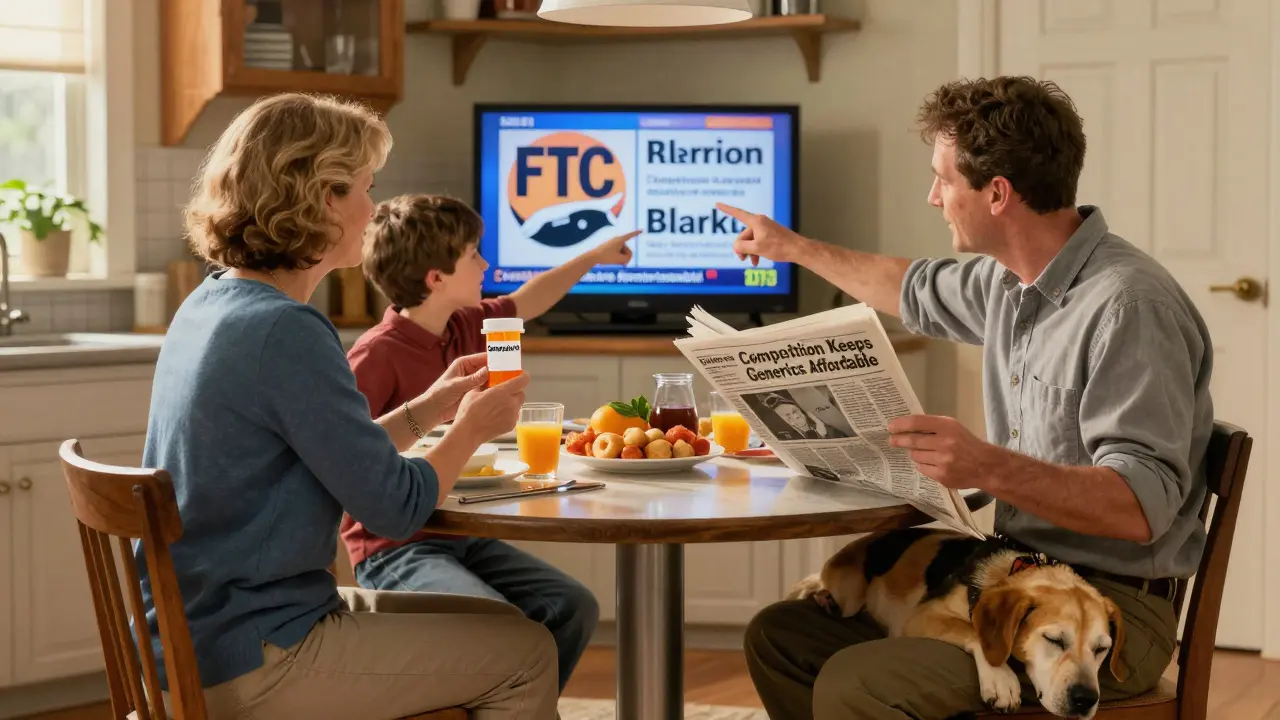
The Federal Trade Commission (FTC) has made shutting these down a top priority. In 2023 alone, the FTC challenged 37 pay-for-delay agreements. One study estimated that stopping these deals saves consumers $3.5 billion a year. The FTC also blocked the proposed merger between Teva and Sandoz in January 2024, fearing it would reduce competition for 13 key generic drugs.
Another tactic is "product hopping"-when a brand company slightly changes its drug (like switching from a pill to a tablet) and pushes patients to the new version just before the patent expires. This tricks insurers and pharmacies into staying with the expensive brand instead of switching to the cheaper generic. The FDA’s 2024-2026 Generic Drug Implementation Plan now targets these practices directly, encouraging faster approval of authorized generics (the same drug made by the brand company itself) to prevent this kind of manipulation.
How Medicare and Insurers Use Rebates to Keep Costs Low
Even without government price caps, Medicare Part D and private insurers have their own ways of keeping generic prices down. They don’t pay the list price. They negotiate rebates.
In 2024, Medicare Part D plans paid generic drugs at an average of 15% below the Average Manufacturer Price (AMP). For preferred generics-those on the plan’s preferred list-rebates averaged 28%. Non-preferred generics still got 15% off. These rebates are built into the system, not forced by law. Pharmacies and insurers choose which generics to promote based on cost.
That’s why 76% of Medicare beneficiaries pay $10 or less for their generic prescriptions. Compare that to just 28% for brand-name drugs. A 2024 KFF survey found that 82% of generic users are satisfied with affordability-compared to only 41% of brand-name users.
The Rare Cases Where Generic Prices Spike
Most of the time, generics stay cheap. But sometimes, they don’t. When only one or two companies make a drug, competition disappears. That’s when prices can jump.
For example, in 2023, the generic version of sertraline (an antidepressant) went from $4 to $45 per month at some pharmacies. That spike affected less than 0.3% of all generic drugs. The FDA’s Drug Shortage Report showed that 18% of hospital pharmacists had trouble getting critical generics because manufacturers stopped making them. Why? The price had fallen below the cost to produce.
This is the tightrope of generic pricing: too low, and companies quit. Too high, and patients suffer. The system works best when there are enough competitors to keep prices in check. When there aren’t, the FTC and FDA step in to encourage new entrants or block mergers that reduce choices.
Why Other Countries Do It Differently
In the U.S., there are, on average, 14.7 manufacturers per generic drug. In Europe, it’s 8.2. In Japan, just 5.3. More competitors mean more price pressure. That’s why U.S. generic prices are lower than in most other wealthy countries-even though the U.S. spends more overall on healthcare.
Some countries, like Canada and the UK, set direct price caps on all drugs, including generics. But studies show those systems often lead to shortages. If a company can’t make a profit at the capped price, they stop producing the drug. The U.S. approach-letting competition drive prices-keeps drugs available and affordable.
What’s Next for Generic Drug Pricing?
The future of generic pricing isn’t about more regulations. It’s about removing barriers. The CMS proposed rule in April 2024 aims to stop insurance plans from requiring unnecessary prior authorization for generics. That alone could save Medicare beneficiaries $420 million a year.
The Congressional Budget Office projects generic drug prices will keep falling-by 3.5% annually through 2030. Branded drugs? They’ll rise by just 0.8%. That gap isn’t closing because of a law. It’s closing because competition works.
Experts like Dr. Aaron Kesselheim of Harvard Medical School say adding price controls to generics would be unnecessary-and possibly harmful. "Generic drugs have demonstrated the ability to achieve substantial price reductions through competition alone," he told the Senate Finance Committee in 2024. "Additional price controls could reduce incentives to enter the market, leading to fewer options and higher prices in the long run."
The real policy win isn’t setting a price. It’s making sure enough companies can enter the market, make the drug, and sell it without being blocked by patents, mergers, or red tape.
Why don’t government agencies set prices for generic drugs?
Government agencies avoid setting prices for generic drugs because competition among manufacturers naturally drives prices down. When multiple companies make the same drug, they undercut each other to win contracts. The FDA estimates that with three or more generic makers, prices stabilize at 10-15% of the original brand price. Direct price controls could discourage new manufacturers from entering the market, leading to shortages and higher prices over time.
How do generic drug prices drop so quickly after a brand expires?
After a brand-name drug’s patent expires, manufacturers can submit an Abbreviated New Drug Application (ANDA) to the FDA, skipping expensive clinical trials. This lowers development costs from $2.6 billion to $2-3 million. Once the first generic enters, prices typically drop 75% within six months. With three or more competitors, prices fall 90% within two years. The Hatch-Waxman Act of 1984 made this possible by allowing bioequivalence instead of full clinical testing.
What is the role of the FTC in generic drug pricing?
The Federal Trade Commission (FTC) protects competition in generic drug markets by blocking anti-competitive practices. In 2023, the FTC challenged 37 "pay-for-delay" agreements where brand companies paid generics to delay entry. It also blocked the Teva-Sandoz merger over fears it would reduce competition for 13 generic drugs. The FTC estimates these actions save consumers $3.5 billion annually by restoring competition.
Why do some generic drugs suddenly become expensive?
Rare price spikes happen when only one or two manufacturers make a drug. If production costs rise or one company exits the market, competition disappears. For example, in 2023, sertraline’s price jumped from $4 to $45 per month because of supply chain issues and lack of competitors. These cases affect less than 0.3% of generics. The FDA and FTC monitor these markets closely and encourage new entrants when shortages occur.
Do Medicare and insurance plans negotiate generic drug prices?
Yes. Medicare Part D and private insurers don’t pay the list price. They negotiate rebates with manufacturers. In 2024, Part D plans paid generics at an average of 15% below the Average Manufacturer Price (AMP). Preferred generics got 28% rebates, while non-preferred ones got 15%. These rebates are built into the system and help keep out-of-pocket costs low-76% of Medicare beneficiaries pay $10 or less for their generic prescriptions.
Is the U.S. approach to generic pricing better than other countries’?
The U.S. has more manufacturers per generic drug (14.7 on average) than most other wealthy nations-Europe has 8.2, Japan has 5.3. This intense competition keeps U.S. generic prices lower than in countries with direct price controls. While other nations cap prices, they often face drug shortages because manufacturers can’t profit. The U.S. system prioritizes availability and affordability through competition, though it requires strong enforcement against anti-competitive behavior.
Write a comment
Latest Posts



Comments
Sue Stone
21/Jan/2026Bro, I paid $3 for my generic Adderall last month. My buddy in Canada paid $45 for the same thing. U.S. system wins.
Anna Pryde-Smith
21/Jan/2026Let me get this straight-big pharma pays generic companies to NOT sell cheap drugs? And we’re supposed to be shocked? This isn’t capitalism, it’s a rigged casino where the house prints the money and the players get fined for winning.
They’re not ‘managing competition’-they’re murdering it with cash bribes and legal loopholes. The FTC? A toothless bulldog barking at a tank.
I’ve seen my insulin price drop 80% when three generics hit. Then one company bought the other two. Price jumped back up. Coincidence? Nah. It’s the same damn script every time.
They call it ‘market-driven pricing.’ I call it ‘monopoly theater.’
Stacy Thomes
21/Jan/2026Y’ALL. This is the most important thing I’ve read all year. Seriously. Generic drugs are the unsung heroes of American healthcare. No hype. No ads. Just pure, clean, life-saving affordability.
I’m on a $2 generic for high blood pressure. My mom’s on a $5 antidepressant. We’re alive because of this system. Not because of some politician. Because COMPETITION.
If you think price controls are the answer, you haven’t been to a pharmacy when the only generic left is made by one company. Prices go through the roof. People skip doses. People die.
Let the market work. Let the manufacturers fight. Let us win.
Oladeji Omobolaji
21/Jan/2026Back home in Nigeria, generics cost more than brand names because only one company imports them. No competition. No FDA. Just middlemen and luck.
I wish we had your system. Not perfect, but better than nothing.
Janet King
21/Jan/2026The data supports the claim. The FDA’s approval timeline has improved from 18 months to 10 months for standard generics. The GDUFA program has been instrumental. Rebates under Medicare Part D reduce out-of-pocket costs significantly. These are measurable outcomes, not opinions.
When competition is unimpeded, prices fall. When competition is restricted, prices rise. The evidence is consistent and public.
Vanessa Barber
21/Jan/2026Yeah, but what about the 0.3% of drugs that go from $4 to $45? That’s not competition. That’s exploitation. And you’re acting like it’s just a glitch.
Also, who’s to say the next drug to spike isn’t your insulin? Or your seizure med? Or your chemo pill?
Competition only works if there’s more than one player. And right now, the system lets them disappear whenever they want.
dana torgersen
21/Jan/2026so... like... the hatch-waxman act... it's like... a miracle? i mean... really? it just... made everything cheaper? and now the fda is like... 'hey guys, here's a dashboard'... and we're just... supposed to be happy? and the ft c is... kinda doing their job? but also... not really? because pay-for-delay is still happening? and... why do we need to track this stuff on a website? shouldn't it just... work? without us having to be like... super vigilant? i feel like we're just... patching a leaky boat with duct tape and hope...
Dawson Taylor
21/Jan/2026Competition reduces price. Monopoly increases it. The mechanism is simple. The policy is sound. Enforcement is the challenge.
Sallie Jane Barnes
21/Jan/2026This is why I’m proud to live in a country that lets innovation and competition work together. No one’s asking for perfection-just fairness. And right now, the system delivers more fairness than any price cap ever could.
Thank you to the FDA, FTC, and every small manufacturer who showed up to make a difference.
Andrew Smirnykh
21/Jan/2026In Japan, generics are cheaper but harder to get because manufacturers exit when margins shrink. In the U.S., they stay because even a thin margin is profitable at scale. It’s not about being ‘better’-it’s about scale and density of competition.
Our system isn’t ideal, but it’s the most resilient one I’ve seen.
Laura Rice
21/Jan/2026OMG I JUST REALIZED-my cousin in Ohio was paying $120 for her generic metformin last year because there was only ONE maker. Then a new company started making it and now it’s $5. Like, WHAT? That’s not magic. That’s JUST COMPETITION.
And now she’s telling all her friends. We need to spread this like wildfire. This is healthcare justice. And it’s working.
Don’t let them tell you otherwise. This is the quiet revolution.
charley lopez
21/Jan/2026Market-based pricing in the generic pharmaceutical sector exhibits strong negative price elasticity following market entry, particularly under conditions of oligopolistic competition. The GDUFA framework has demonstrably reduced regulatory latency, thereby accelerating supply-side response curves. The FTC’s interventionist posture against pay-for-delay constitutes a corrective mechanism within imperfect market structures.
Kerry Evans
21/Jan/2026So you’re saying we should trust the same corporations that got us into the opioid crisis to now be the heroes of affordable medicine? That’s not a system. That’s a fantasy. The FTC doesn’t stop anything-they just make press releases. The FDA approves drugs faster, but still lets the same companies monopolize through loopholes. This isn’t freedom-it’s a slow-motion heist.
And you call this ‘success’? I call it a trap.
Susannah Green
21/Jan/2026Just a heads-up: the FDA dashboard is actually super useful. I used it last month to track a generic for my kid’s asthma inhaler. Saw it was stuck at ‘review’ for 8 months-called my pharmacist, they flagged it, and it got approved two weeks later. Small win, but it matters.
Also-sertraline spike? That was because the only two makers were in India and one had a quality issue. Not a conspiracy. Just a supply hiccup. The FDA stepped in and fast-tracked a new applicant. It’s working.
Kerry Moore
21/Jan/2026Thank you for this comprehensive and meticulously sourced overview. The structural incentives outlined-particularly the interplay between Hatch-Waxman, GDUFA, and FTC enforcement-are precisely what policymakers must preserve. Any move toward price controls on generics would inadvertently undermine the very mechanism that has delivered unprecedented access to essential medications for millions. The data is clear: competition, not regulation, is the most effective and sustainable force for affordability. To alter this equilibrium risks reversing decades of progress.
Dawson Taylor
21/Jan/2026Well said. The risk isn’t just higher prices-it’s fewer options. When margins vanish, production vanishes. And when production vanishes, people suffer.