

Every year, over 100,000 people in the U.S. are hospitalized because of drug interactions that could have been avoided. The key? Reading your prescription label correctly. This guide breaks down exactly how to use label information to stay safe.
Prescription labels are legal documents that provide critical information about medications, including dosing instructions, side effects, and drug interactions. They're not just small pieces of paper; they're your first line of defense against dangerous medication combinations. According to the BeMedWise Foundation, unanticipated drug interactions cause about 2 million adverse drug events annually in the U.S., with 100,000 resulting in hospitalization. The FDA mandates specific information about these interactions on prescription labels to help prevent such issues.Where to Find Interaction Info on Labels
Prescription labels follow strict FDA guidelines. The Drug Interactions section (Section 7) gives detailed info on how other medications might affect your drug. The Warnings and Precautions section (Section 5) highlights serious risks requiring immediate attention. The FDA's 2024 guidance requires this section to clearly state: "there's a problem," "how bad is the drug interaction," and "what to do about it."
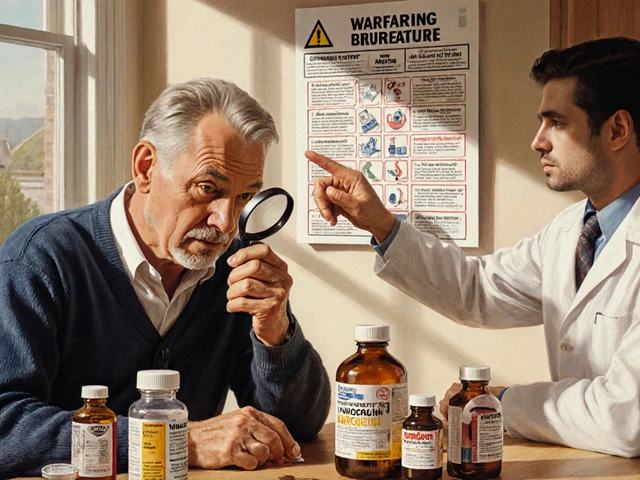
For example, you might see "Avoid concomitant use of Warfarin with Ibuprofen" in the Warnings section. This means taking both together could cause dangerous bleeding. In the Drug Interactions section, you might find "Reduce Warfarin dosage when used with Amiodarone" with specific monitoring instructions.
Key Phrases to Watch For
Prescription labels use specific language to describe interactions. Here's what to look for:
- Avoid concomitant use - means do not take these medications together. For instance, "Avoid concomitant use of Clopidogrel with Omeprazole" could reduce the effectiveness of your heart medication.
- Monitor for [symptoms] - you need to check for specific signs like "Monitor for dizziness or nausea when using this drug with alcohol."
- Reduce dosage - your dose may need to be lowered when taking another medication. Example: "Reduce Simvastatin dosage when used with Clarithromycin."
- Do not use with - common in OTC labels. Like "Do not use with blood thinners" on a pain reliever.
The CDC reports that 68% of patients with five or more prescriptions can't correctly identify these warnings on their own. This is why understanding these phrases is critical.
| Section | Prescription Labels | OTC Labels |
|---|---|---|
| Location | Section 7: Drug Interactions; Section 5: Warnings and Precautions | Warnings section |
| Required Details | Specific instructions like "avoid concomitant use" or "monitor for symptoms" | Basic interaction warnings, e.g., "Do not take with blood thinners" |
| Reading Level | 10th-grade level on average | Varies; often higher |
| Consumer Awareness | Only 41% of adults consistently read them | 57% of consumers read OTC warnings |

Steps to Take When You See a Warning
When you spot a drug interaction warning on your label, follow these steps:
- Create a complete medication list - include all prescriptions, over-the-counter drugs, supplements, and vitamins. Sharing this with all healthcare providers reduces interaction risks by 47% (BeMedWise, 2023).
- Ask your pharmacist for clarification - pharmacists review all your medications and can spot potential interactions you might miss. A 2023 study found this identifies interactions in 22% of cases.
- Don't ignore warnings - even if you've taken the combination before, interactions can change based on your health or other medications.
- Use trusted tools like Drugs.com - but remember it's a supplement, not a replacement for professional advice. Drugs.com processes 1.2 million monthly queries with 89% accuracy, though it covers only 92% of prescription drugs.
Special Considerations for Seniors and Kids
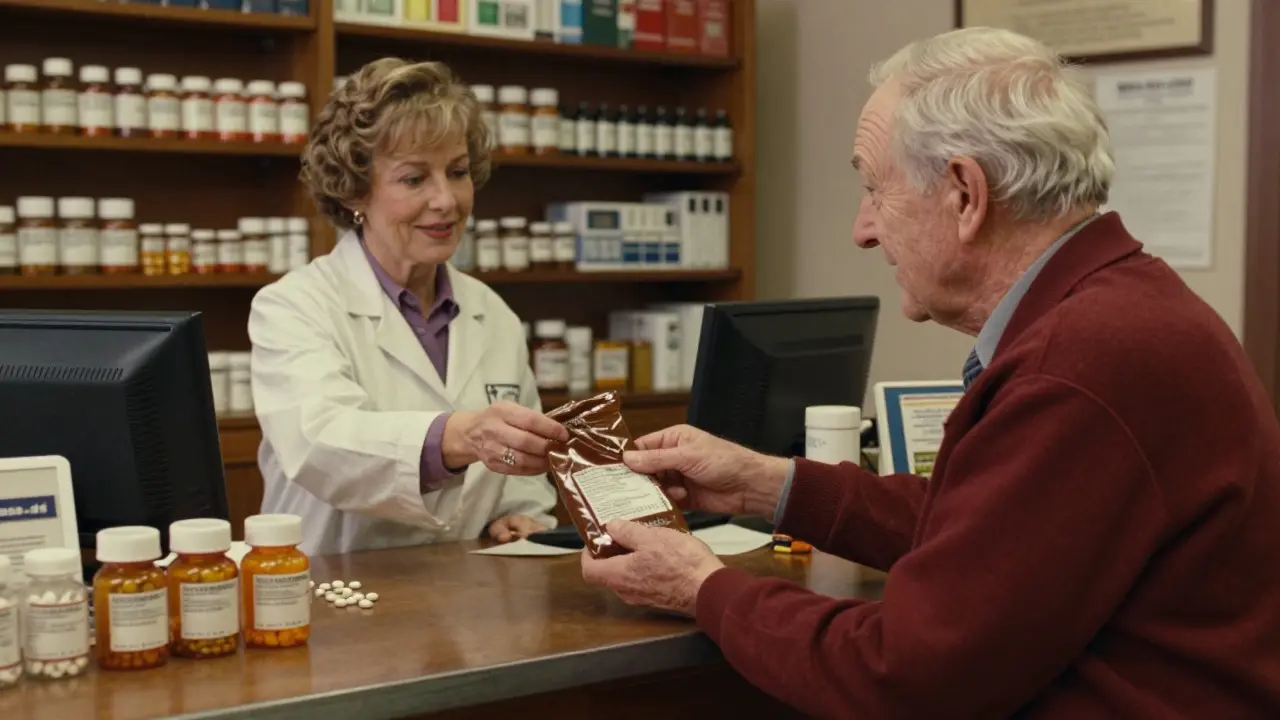
Seniors often take multiple medications, increasing interaction risks. The BeMedWise Foundation reports that 67% of seniors take five or more medications daily. For these patients, pharmacists recommend a "brown bag review" - bringing all medications to the pharmacy for a full check. This catches hidden interactions that might not be obvious from labels alone.
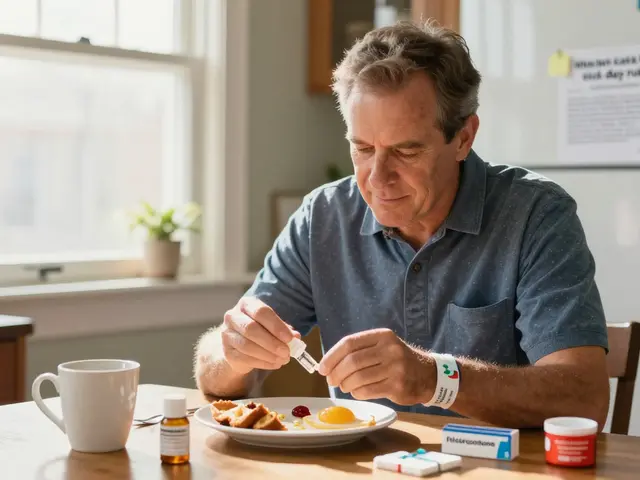
For children, the CDC's "Check the Label" approach is essential: read the label, follow directions, and measure doses using the provided device. This method reduced pediatric dosing errors by 31% in a 2023 clinical trial. Never guess doses for kids - even a small mistake can be dangerous.
Using Tools Responsibly
Drug interaction apps like Drugs.com can help, but they have limits. The FDA cautions that these tools should never replace professional medical advice. While Drugs.com has high accuracy (89%), it misses some drugs and doesn't account for individual patient factors like age or other health conditions. Always cross-check with your pharmacist or doctor, especially for complex medication regimens.
For example, a 2023 Harvard Health study found 147 cases where patients took warfarin with herbal supplements like ginkgo biloba, leading to severe bleeding. Prescription labels often don't mention supplement interactions, making pharmacist consultations crucial for these cases.
Why Talking to Your Pharmacist Matters
Your pharmacist is a trained expert who checks for interactions daily. When you pick up a prescription, bring all current medications - including supplements and OTC drugs - for a comprehensive review. This simple step identifies potential interactions in 22% of cases according to a 2023 study of 10,000 pharmacy consultations.
Pharmacists also explain label information in plain language. For instance, they can clarify that "concomitant use" means using medications at the same time. They'll tell you exactly what to watch for and when to seek help. This personalized guidance is especially valuable for people with chronic conditions or multiple prescriptions.
What does "concomitant use" mean on a prescription label?
"Concomitant use" means using two or more medications at the same time. For example, if a label says "Avoid concomitant use of Drug A with Drug B," it means you should not take both together. This phrase often appears in drug interaction warnings and is critical for avoiding harmful reactions. Always check with your pharmacist if you're unsure about the timing of your medications.
Should I check OTC labels for drug interactions too?
Yes, absolutely. Over-the-counter medications contain critical interaction information in their "Warnings" section, but only 57% of consumers read them. For example, common pain relievers like ibuprofen can interact with blood thinners or blood pressure medications. Always check OTC labels before taking new medicines, even if they seem harmless.
How do I know if a supplement interacts with my meds?
Prescription labels rarely mention supplement interactions, which accounts for 32% of serious drug interactions. The best approach is to tell your pharmacist about every supplement you take - including vitamins, herbs, and teas. For example, ginkgo biloba can cause dangerous bleeding when combined with warfarin, but this isn't always listed on labels. Pharmacists have access to databases that track these hidden risks.
What should I do if I miss a dose due to an interaction warning?
Never skip doses without professional advice. Contact your pharmacist or doctor immediately. They'll guide you on whether to take the missed dose later or adjust your schedule. For example, if a blood thinner interaction warning applies, they might recommend a temporary alternative or monitor your blood levels. Skipping doses without guidance could worsen your condition.
How often should I review my meds with a pharmacist?
At least once a year for most people, but more often if you take five or more medications or have a new health condition. The CDC reports that 68% of patients with multiple prescriptions can't identify interactions on their own. A pharmacist review takes just 5-10 minutes and can catch life-threatening risks before they cause harm. Many pharmacies offer free medication therapy management programs for chronic conditions like diabetes or heart disease.



Comments
Rene Krikhaar
5/Feb/2026I've seen many people struggle with understanding prescription labels
It's crucial to read them carefully to prevent dangerous drug interactions
For instance 'avoid concomitant use' means taking two medications together can be harmful
Like warfarin and ibuprofen together can cause dangerous bleeding
Always ask your pharmacist for clarification
They're trained to explain things in plain language
It's easy to miss important details when you're in a hurry
Taking time to understand these warnings can prevent hospitalization
I encourage everyone to review their medications regularly
Your safety matters more than anything else
Pharmacists are there to help you navigate these complexities
Don't be afraid to ask questions
Many people don't realize how common these issues are
But with a little effort you can stay safe
It's worth the time to protect your health
one hamzah
5/Feb/2026So true! 😊 pharmacists are lifesavers! 💊 always ask them questions. they know the ins and outs. like 'concomitant use' means same time use. dont worry its easy to learn. keep safe everyone! 🌍
Dr. Sara Harowitz
5/Feb/2026Americans must read these labels properly! It's a national issue! The FDA has clear guidelines! Ignoring them is reckless! You should know this! It's basic health literacy! How can you be so careless? This is why we have problems! Wake up!
Joyce cuypers
5/Feb/2026This article is really helpful. I've been using the 'brown bag review' for my grandpa and its great. Always check with your pharmacist. They can catch things you miss. Even small mistakes can be dangerous. Dont skip doses without talking to a professional. Its all about being careful.
Lisa Scott
5/Feb/2026The system is rigged Labels are designed to confuse They don't tell you about all interactions Trust no one Use alternative sources Always double-check The FDA is hiding something This is why people get hurt Its all about profit
Kate Gile
5/Feb/2026I understand your concerns but there are regulations in place
Pharmacists are trained to catch interactions
Always talk to them before making changes
They're there to help
Let's work together to stay safe
Its important to trust professionals
We can do this
Bella Cullen
5/Feb/2026Needs more examples.
divya shetty
5/Feb/2026Patients must be educated about prescription labels
It is their responsibility to read them carefully
Ignorance is not an excuse
Healthcare providers should enforce this
The government must improve labeling standards
This is a matter of public health
Nancy Maneely
5/Feb/2026Ugh! Why do people not take this seriously? Its so simple! Just read the labels! The government isnt doing enough. Its all about money. Wake up people! This is dangerous. We need to do better.
Phoebe Norman
5/Feb/2026Drug interactions are complex
The labels don't capture everything
Pharmacists are essential
But they're overwhelmed
Many patients don't understand the terminology
This is a systemic issue
We need better education
Its frustrating
Safety should be a priority