

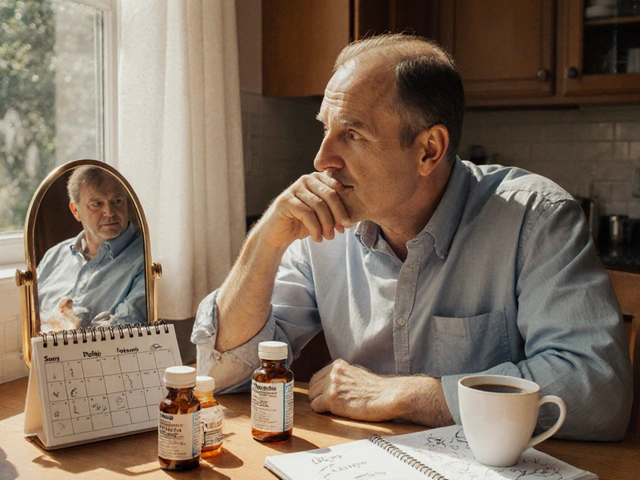
Forgetting a pill here or there might seem like a small mistake, but when you're managing a chronic condition, those missed doses add up. In fact, the World Health Organization notes that roughly 50% of people with chronic illnesses struggle to stick to their prescribed treatments. This isn't usually about laziness; it's about the overwhelming mental load of managing health, side effects, and the loneliness of a long-term diagnosis. While a doctor can give you a prescription, they can't live your daily life. That's where medication compliance is the degree to which a patient correctly follows medical advice and takes their medications as prescribed becomes a community effort rather than a solo battle.
The Power of Peer Support
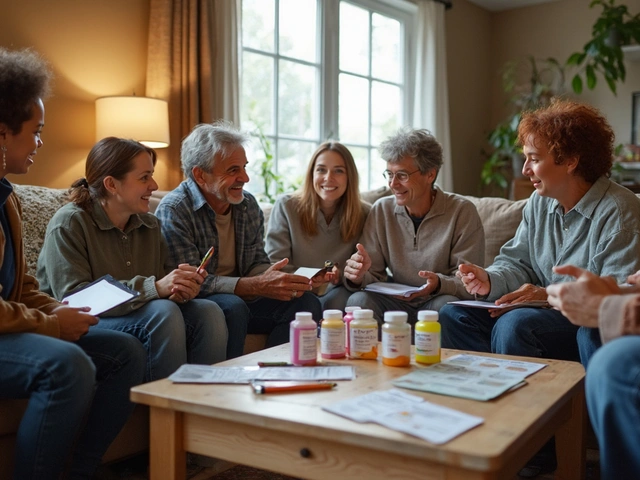
Why does talking to a stranger with the same condition work better than a brochure from a clinic? It comes down to shared experience. When you're in a support group, you're not just getting medical advice; you're getting "life hacks" from people who have actually lived through the side effects. For example, someone in a diabetes group might share a specific way to store their meds or a trick to remember a mid-day dose that a doctor would never think to mention.
Research shows this works. A study in the Journal of Medical Care found that peer-facilitated interventions were significantly more effective than educational materials alone. While a brochure tells you why you should take a pill, a peer group provides the emotional scaffolding and social accountability that actually makes you do it. For many, the simple act of knowing someone will ask "did you take your meds today?" during a weekly meeting is the strongest motivator there is.
Types of Community Programs That Actually Work
Not all support systems are created equal. Depending on your lifestyle, different models offer different levels of help. Some people need the high-touch environment of a clinic, while others need the flexibility of a smartphone.
- Hospital-Based Groups: These are structured sessions, usually meeting once or twice a week with about 8 to 12 people. They are great for those who need professional oversight and a consistent routine.
- Community Health Worker Programs: These involve a professional coming to your home. Over a few months, they help you organize your medicine cabinet and identify barriers in your home environment that might be causing you to miss doses.
- Digital Peer Platforms: Sites like PatientsLikeMe or specialized apps provide 24/7 access. This is a lifesaver for people in rural areas who can't drive to a city center for a meeting.
- Family-Centric Interventions: Involving a spouse or child is often the most effective route. Data suggests a strong link between family involvement and higher adherence rates compared to general social support.
| Model Type | Primary Strength | Biggest Drawback | Best For... |
|---|---|---|---|
| Peer Groups | Emotional bonding | Scheduling conflicts | Long-term motivation |
| Home Visits | Personalized setup | Intrusive for some | Elderly or disabled patients |
| Digital Apps | Instant access | Lacks deep emotional connection | Tech-savvy users/Rural areas |
| Family Support | High trust/Daily proximity | Potential for family tension | Complex dosing regimens |
The Role of the Pharmacist and Facilitator
A group of people talking is helpful, but a group led by an expert is transformative. This is where the Pharmacist becomes a key player. Unlike a physician who might only see you for 15 minutes, a pharmacist-led support group can dive deep into the mechanics of the drugs. According to a Cochrane Review, pharmacist-led groups saw 23% higher adherence rates than those led by physicians. Pharmacists can explain the "how" and "why" of drug interactions in a way that feels accessible.
However, the quality of the facilitator matters. It's not enough to just have a leader; they need specific training in active listening and cultural competency. Research indicates that programs where facilitators had more than 40 hours of certification training were significantly more effective than those with less. When the leader understands the cultural nuances of the group-such as matching the group's ethnicity or primary language-patient satisfaction and trust skyrocket.
Overcoming the "Complexity Barrier"
We have to be honest: sometimes the problem isn't a lack of support, but the sheer complexity of the treatment. If you're taking seven different pills at four different times of the day, a support group can only do so much. Experts, including those from Stanford University, have pointed out that simplifying the dosing schedule (like moving from four times a day to twice a day) can sometimes improve adherence more than a support group can.
The most successful programs use a "combination approach." They don't just give you a group to talk to; they help you simplify your meds, provide text message reminders, and connect you with a peer mentor. This multi-pronged strategy is about 31% more effective than using just one method. If you're struggling, don't just look for a group-ask your doctor if there is a simpler version of your medication or a once-a-day alternative.
Real-World Impact and ROI
For healthcare systems, these programs aren't just "nice to have"-they are a financial necessity. Medication non-adherence costs the U.S. healthcare system hundreds of billions of dollars annually due to avoidable emergency room visits and hospital readmissions. When people stick to their meds, they stay out of the hospital.
One study of a diabetes support program showed a staggering 18:1 return on investment. By spending a small amount on peer support, the system saved massive amounts in hospitalization costs. For the patient, the ROI is even higher. Imagine the difference between a daily struggle with uncontrolled blood sugar and the stability that comes from a 6.9% A1c level, as reported by some peer-group participants.
Getting Started: How to Find the Right Program
If you or a loved one are struggling to stay on track with medications, don't try to white-knuckle it. Start by asking your primary care provider if they have any partnerships with local community health workers. If you're a veteran, check with the Veterans Health Administration, which has a massive network of peer support programs.
If you prefer something more private, look for moderated online forums. Just be careful-ensure the group is moderated by a professional or a certified peer mentor to avoid misinformation. The goal is to find a space where you feel "less alone," because that feeling of connection is often the glue that holds a treatment plan together.
Can a support group really replace a doctor's advice?
No, a support group is not a replacement for medical care. Its purpose is to provide the social and emotional support needed to follow the doctor's advice. While peers can share tips on managing side effects, any change in medication or dosage must be approved by a healthcare provider.
What if I'm too anxious for group settings?
Group anxiety is common. In that case, a one-on-one peer mentoring program or a digital platform may be a better fit. Community health worker home visits are also a great alternative, as they provide a safe, private environment to address your challenges.
How do I know if a community program is legitimate?
Look for programs affiliated with recognized health organizations, hospitals, or government agencies (like the CDC or VA). Legitimate programs usually have trained facilitators, clear goals, and a structured approach rather than just being an unmoderated chat room.
Are these programs usually free?
Many nonprofit community programs are free to participants because they are funded by grants. Hospital-based programs may be covered by insurance or integrated into your care plan. Always ask about cost upfront, but many options exist that require no out-of-pocket payment.
Do digital apps actually work as well as in-person groups?
Digital apps are excellent for tracking and reminders, but they often lack the deep emotional support of face-to-face groups. Research suggests that hybrid models-combining an app for reminders and a group for emotional support-produce the highest adherence rates.
Comments
Joel Bonstell
30/Apr/2026Honestly this hits home. I've struggled with the mental load of chronic illness for years and honestly just havin someone check in on me is a total game changer. Most doctors just hand you a script and kick you out the door without carin how you're actually gonna manage it all in the real world
Kelly Feehely
30/Apr/2026Please. You're seriously telling people to trust 'moderated' forums and 'certified' mentors? Wake up. These programs are just a way for big pharma to track your adherence data and make sure you keep buying their overpriced poisons. The 'emotional scaffolding' is just social engineering to keep you compliant with a system that wants you sick and dependent. Don't be sheep!
princess lovearies
30/Apr/2026It's really about finding that sense of belonging in the middle of the storm.
Ken Baldridge
30/Apr/2026The synergy here is absolutely wild! We're talking about a paradigm shift in patient outcomes by leveraging social determinants of health. When you integrate a bio-psycho-social approach, you're not just treating a symptom, you're optimizing the entire therapeutic alliance. It's honestly legendary how a simple peer-led cohort can mitigate the cognitive load and prevent the catastrophic failure of a complex pharmacological regimen. I've seen it happen time and time again-total game changer for the patient's quality of life!
Jimmy Crocker
30/Apr/2026While the author makes some... quaint points, one must observe that the mere sugestion of using a 'smartphone' for medical adherence is almost embarrassingly plebeian, as if the average person possesses the requisite discipline to manage a chronik condition via an app without the refined guidence of a truly sophisticated medical concierge service, which is obviously the only real way to ensure precision in such matters, though I suppose for the masses, a meager support group is better than nothing at all, really.
Preety Singh
30/Apr/2026The analysis is rudimentary at best. One finds the obsession with 'life hacks' to be quite distasteful. True adherence requires an internal discipline that cannot be outsourced to a social circle of similarly afflicted individuals. It is profoundly naive to believe that emotional bonding compensates for a lack of personal fortitude
Seema Karanje
30/Apr/2026Stop overthinking it and just JOIN A GROUP ALREADY! If you're failing your treatment, it's because you're not trying hard enough to find a community! Get off your butt and find a mentor now or just accept that you're going to fail! ACTION IS THE ONLY THING THAT MATTERS HERE!
Kartik Agarwal
30/Apr/2026From a pedagogical standpoint, the focus on the 'combination approach' is spot on. We need to implement a holistic framework that addresses the systemic barriers to adherence. By integrating pharmacokinetic education with psychosocial support, we create a sustainable ecosystem for the patient. This isn't just about reminders; it's about enhancing the patient's health literacy so they can navigate the healthcare continuum with autonomy and confidence. It's the only way to truly close the gap in health outcomes across different demographics.