

It’s early spring, and your eyes are burning, watering, and itching like crazy. You rub them, but it only makes it worse. You’re not sick-no fever, no sore throat. Just itchy eyes that won’t quit. If this sounds familiar, you’re not alone. About 40% of people in the U.S. deal with eye allergies every year, and the numbers are climbing. Pollen counts are higher than ever, and climate change is making allergy season longer and meaner. But here’s the good news: you don’t have to suffer. There are effective, safe ways to calm down those red, itchy eyes-and most of them start with a simple bottle of eye drops.
What’s Really Going On With Your Eyes?
Your eyes aren’t infected. They’re overreacting. When pollen, dust, or pet dander lands on the thin membrane covering your eyeball (called the conjunctiva), your immune system mistakes it for an invader. Mast cells in your eye go into overdrive and dump histamine-the same chemical that gives you a runny nose during allergy season. That histamine triggers three things: blood vessels swell (redness), nerves scream (itching), and tear glands flood (watery eyes). It’s not contagious. It’s not an infection. It’s just your body being too sensitive.
Doctors call this allergic conjunctivitis. And the symptoms? They’re unmistakable. In a 2023 study, 92% of people with eye allergies said itching was their worst symptom. Eighty-eight percent had red eyes. Seventy-six percent had puffy eyelids. And 85% couldn’t stop tearing up. If you’re seeing yellow or green gunk, that’s a different problem-probably a bacterial infection. Allergic conjunctivitis only gives you clear, watery discharge. No fever. No pain. Just relentless itch.
Why Antihistamine Eye Drops Work-And Which Ones Actually Help
Not all eye drops are created equal. Some just make the redness disappear. Others stop the itch at its source. The best ones? Antihistamine eye drops that also stabilize mast cells. These are called dual-action drops, and they’re the gold standard now.
First-generation drops like Naphcon-A (pheniramine) work fast-within 3 to 5 minutes. But they wear off quickly. You’ll need to use them every 4 to 6 hours. Plus, about 1 in 4 people feel a stinging sensation when they use them. Not fun.
Second-generation drops like olopatadine (Pataday), ketotifen (Zaditor, Alaway), and epinastine (Elestat) are better. They last 12 to 24 hours. They sting less. And they don’t just block histamine-they stop mast cells from releasing it in the first place. That means longer relief and fewer flare-ups.
Pataday Once Daily Relief (olopatadine 0.2%) is the standout. In FDA trials, it cut itching scores from 2.8 to 0.7 on a 4-point scale within just 3 minutes-and kept working for 16 hours. That’s one drop in the morning, and you’re good until bedtime. Zaditor (ketotifen) works fast too, but you usually need to reapply by midday. A 2022 head-to-head trial showed Pataday outperformed Zaditor at the 16-hour mark by a wide margin.
Cost matters. Generic ketotifen runs about $13 for a 2.5mL bottle. Brand-name Pataday? Around $43. But if you have insurance, you might pay just $15 to $40 for a prescription version. Many people swear by Pataday, even if it’s pricier. On Amazon, it has a 4.4 out of 5 rating. Users write things like, “Works within minutes and lasts all day.” Zaditor gets a 4.1, with comments like, “Great value but need to reapply midday.”
What Not to Use-And Why
Don’t reach for Visine-A, Clear Eyes, or any drop that says “redness relief.” Those contain decongestants like tetrahydrozoline. They shrink blood vessels, so your eyes look less red. But they don’t touch the itch. And if you use them for more than 3 days? You’ll get rebound redness. Studies show 65% of people who use these drops daily for a week end up with worse redness than before. It’s a trap.
Oral antihistamines like Zyrtec or Claritin? They help your nose and throat, but they can dry out your eyes. One study found 40% of users said their eyes felt grittier after taking them. If you already have dry eyes, these can make things worse.
Corticosteroid drops like loteprednol are powerful-but risky. They’re reserved for severe cases and should only be used under a doctor’s watch. Long-term use can raise eye pressure or even cause cataracts. These aren’t for daily relief. They’re for emergencies.
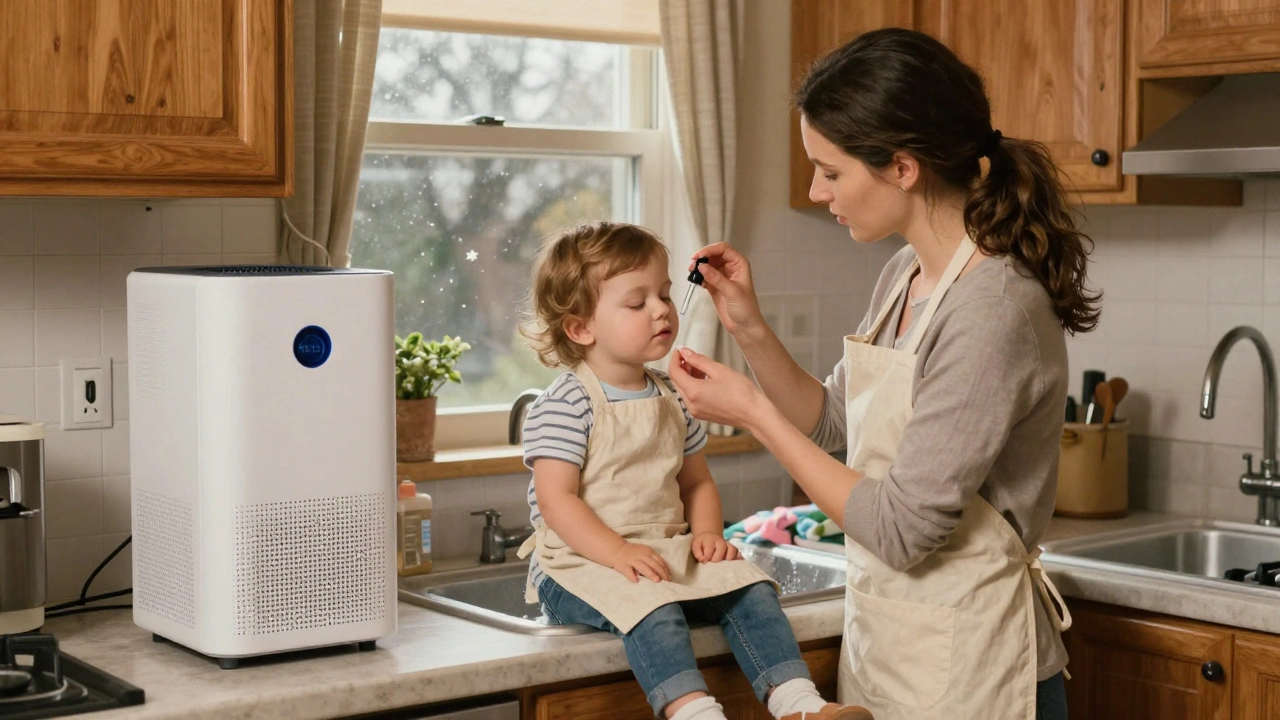
How to Use Eye Drops the Right Way
Even the best drops won’t work if you’re not using them correctly. Most people mess this up. Here’s how to do it right:
- Tilt your head back and look up.
- With one hand, gently pull down your lower eyelid to create a small pocket.
- Hold the bottle close-don’t touch your eye or eyelid.
- Squeeze one drop into the pocket.
- Closed your eye for 30 seconds and press gently on the inner corner near your nose. This stops the drop from draining into your throat.
Doing this cuts contamination risk by 75%, according to a 2022 study. And it keeps the medicine where it belongs-on your eye, not down your throat.
Also, don’t forget to wash your hands. And if you wear contacts? Remove them before applying drops. Wait at least 10 minutes before putting them back in. Some drops contain preservatives that can stick to lenses and irritate your eyes.
What Else Helps? Beyond the Drops
Medicine helps. But environment matters more. You can’t avoid all allergens-but you can reduce your exposure.
- Wash your face and hands after being outside. Pollen sticks to skin and hair.
- Use preservative-free artificial tears 4 to 6 times a day. They rinse allergens out before they trigger a reaction.
- Wear wraparound sunglasses outside. A 2023 trial showed they block about half the pollen that hits your eyes.
- Keep windows closed during peak pollen hours (usually 5 a.m. to 10 a.m.).
- Use an air purifier with a HEPA filter in your bedroom.
- Wash bedding weekly in hot water to kill dust mites.
Some people swear by cold compresses. Place a clean cloth soaked in cold water over your closed eyes for 10 minutes. It soothes itching and reduces swelling. One Reddit user wrote: “Pataday in the morning plus cold compresses reduced my symptoms from unbearable to manageable in 48 hours.”
When to See a Doctor
If your symptoms don’t improve after 2 weeks of using antihistamine drops correctly, it’s time to see an eye doctor. About 20% of people who think they have eye allergies actually have dry eye disease, blepharitis, or another condition that looks similar. A simple exam can tell the difference.
If you’re using drops daily and still struggling, your allergist might suggest immunotherapy. That’s allergy shots or sublingual tablets. It doesn’t work fast-it takes 6 to 12 months to start helping. But after 3 to 5 years, 60 to 80% of people report major improvement. It’s the only treatment that changes how your body responds to allergens long-term.
The Future of Eye Allergy Treatment
Science is moving fast. In 2023, the FDA approved a new once-daily drop called bepotastine (Bepreve), which works just as well as Pataday. And there’s something even more exciting on the horizon: a tiny implant that goes in your tear duct and releases medicine for 3 months straight. Ocular Therapeutix is testing it, and early results show 65% symptom reduction.
Researchers are also looking at biologics-drugs that target specific allergy chemicals like IL-4 and IL-13. These are already used for eczema and asthma, and early trials show promise for eye allergies too.
But for now, the best solution is still simple: use the right drops, avoid triggers, and don’t reach for the redness-relief bottle. Your eyes will thank you.
Can eye allergies cause permanent damage?
No, eye allergies themselves don’t cause permanent damage. But constant rubbing can scratch the cornea or lead to keratoconus-a condition where the cornea thins and bulges. If you’re rubbing your eyes often, try cold compresses or antihistamine drops instead. Also, if symptoms last more than 2 weeks despite treatment, see an eye doctor to rule out other conditions like dry eye or infection.
Are over-the-counter eye drops safe for long-term use?
Antihistamine/mast cell stabilizer drops like Pataday and Zaditor are safe for daily, long-term use. They’re designed for chronic allergy sufferers. But avoid decongestant drops (those that say “redness relief”) for more than 3 days-they cause rebound redness. Always check the label. If you’re using drops daily for months, talk to your doctor about preservative-free options, especially if your eyes feel dry or irritated.
Do antihistamine eye drops make your eyes dry?
Unlike oral antihistamines, topical antihistamine eye drops don’t typically cause dryness. In fact, many contain ingredients that help lubricate the eye. However, some people may feel a slight stinging or temporary dryness right after applying the drop. If dryness persists, switch to a preservative-free version or use artificial tears between doses. A 2023 survey found only 15% of chronic users had preservative sensitivity.
Can children use antihistamine eye drops?
Yes, but only certain ones. Ketotifen (Zaditor, Alaway) is FDA-approved for children 3 years and older. Olopatadine (Pataday) is approved for children 2 years and up. Always check the label for age restrictions. For younger kids, use only under a doctor’s guidance. Apply the drop carefully and avoid letting them rub their eyes afterward. Cold compresses can also help soothe young children.
Why do my eyes get worse in the spring?
Spring brings higher pollen counts-especially from trees like oak, birch, and cedar. In 2023, Atlanta recorded over 12 pollen grains per cubic meter during peak season, one of the highest levels in years. Climate change is making pollen seasons start earlier and last longer. Pollen counts have risen 21% globally since 1990. If your symptoms flare up every March or April, you likely have seasonal allergic conjunctivitis. Tracking local pollen forecasts can help you prepare.
Is there a cure for eye allergies?
There’s no cure, but there’s long-term control. Immunotherapy (allergy shots or tablets) can retrain your immune system to stop reacting to allergens. After 3 to 5 years of treatment, 60-80% of people see major improvement. For most, daily antihistamine drops and environmental changes are enough to live comfortably. The goal isn’t to eliminate allergies-it’s to manage them so they don’t control your life.





Comments
Gerald Nauschnegg
2/Dec/2025Bro I used Naphcon-A for a week and my eyes looked like I’d been crying during a thunderstorm. Then I switched to Pataday and it was like my eyeballs got a spa day. No more 3am rubbing. Life changed.
Also side note: don’t sleep with your windows open. Pollen is basically airborne glitter and it hates you.
Joanne Rencher
2/Dec/2025Wow. Another ‘miracle drop’ article. You know what fixes allergies? Not living near trees. Or dirt. Or basically everything outside. But sure, spend $40 on a bottle of liquid hope while ignoring the fact that your immune system is a toddler throwing a tantrum.
Erik van Hees
2/Dec/2025Pataday’s great but you’re missing the real MVP: olopatadine 0.2% is the same active ingredient as Pataday, just cheaper. Prescription version at CVS is like $15 with GoodRx. And no, Zaditor isn’t ‘almost as good’ - it’s half as effective after 8 hours. I’ve got the graphs.
Also, don’t use preservative-free drops unless you’re using them daily. Otherwise you’re just wasting money and your eyeballs don’t care.
Josh Bilskemper
2/Dec/2025Antihistamine drops are a Band-Aid on a gunshot wound. You’re treating symptoms not the root cause which is your immune system being a cowardly idiot that thinks pollen is a terrorist. The real solution is immunotherapy. But nah, let’s just keep popping drops like candy while the planet burns.
Also Pataday is overpriced. You’re paying for the brand, not the chemistry. Same molecule. Same efficacy. Different price tag because marketing is smarter than biology.
Storz Vonderheide
2/Dec/2025Hey everyone - I’m a grad student in immunology and I’ve had seasonal allergies since I was 5. This post is actually spot on.
For anyone new to this: don’t panic. Eye allergies suck but they’re not dangerous. The drops work. The habits help. And yes, your sunglasses really do block half the pollen. I wear mine even when it’s cloudy.
Also - if you’re using drops and still itchy? Try washing your eyelids with a gentle baby shampoo on a cotton swab. Sounds weird, but it removes pollen stuck in lashes. Game changer.
dan koz
2/Dec/2025I’m from Nigeria and we don’t have this problem much here. But when I visited Texas last spring, my eyes were on fire. I thought it was the water. Turns out it was pollen. I bought Zaditor at Walmart and it saved me. Now I carry it everywhere.
Also, don’t rub. I learned that the hard way. Now I use cold tea bags. Green tea. Works better than ice.
Ethan McIvor
2/Dec/2025It’s wild how something so small - a grain of pollen - can make you feel like your whole body is betraying you. I used to hate spring. Now I just take my drops, put on my sunglasses, and walk outside anyway. It’s not perfect. But it’s mine again.
Also, cold compresses are underrated. I keep a damp washcloth in the freezer. Feels like a hug for your eyeballs. 😊
Mindy Bilotta
2/Dec/2025OMG I thought I had pink eye for weeks. Turns out it was just allergies. I was so embarrassed to go to the doctor. But once I tried Pataday? Magic. Also, I wash my pillowcases every 3 days now. No more waking up with crusty eyes. 😅
Michael Bene
2/Dec/2025Let me tell you about the time I tried to ‘tough it out’ and didn’t use drops for three days. My eyes looked like two overcooked eggs that had been through a war. I couldn’t read. Couldn’t drive. Couldn’t look at my phone without crying. I swear, the pollen was laughing at me.
And then I found Pataday. One drop. And suddenly, the world came back into focus. It wasn’t just relief - it was resurrection. I wept. Not from allergy tears. From gratitude.
Also, if you’re still using Visine? You’re not just wasting money. You’re committing a crime against your cornea. The rebound redness? That’s your eyes screaming for mercy.
Chris Jahmil Ignacio
2/Dec/2025They don’t want you to know this but the FDA approved Pataday because Big Pharma owns them. The real cure is vitamin D and avoiding all processed foods. Pollen isn’t the problem - your gut is. Your immune system is confused because you eat gluten and sugar like it’s oxygen.
Also, the ‘climate change’ thing is a scam. The pollen counts are fake. The government is just trying to sell you more drops. I stopped using them. Now I breathe through my mouth. My eyes are fine. The world is fine. You’re just being manipulated.
And yes, I’ve read every study. I’m not crazy. I’m awake.
Paul Corcoran
2/Dec/2025Just want to say - if you’re reading this and feeling overwhelmed, you’re not alone. I used to avoid going outside in spring. Now I take my drops, wear my hat and sunglasses, and go for walks. It’s not perfect. But I’m out there. And that’s victory.
Also, try using a humidifier at night. Dry air makes everything worse. And if you’re using drops, don’t forget to wash your hands before. Tiny thing. Big difference.
Colin Mitchell
2/Dec/2025My 7-year-old started rubbing her eyes like crazy last spring. We tried everything. Then we got Zaditor. She didn’t even cry when I put it in. She just blinked and said ‘it feels better’. Now she calls them her ‘magic eye water’. I’m not crying. You’re crying.
Chad Kennedy
2/Dec/2025Why are you all so obsessed with drops? You know what really works? Just don’t go outside. Stay indoors. Wear a mask. Use air purifiers. Stop pretending you can ‘manage’ allergies. You can’t. You’re just being lazy. The real solution is moving to Antarctica. Or at least to a city with zero trees.
And why is everyone praising Pataday? It’s just another corporate scam. I’ve been using saline rinse for 10 years. My eyes haven’t bothered me since.
Cyndy Gregoria
2/Dec/2025You got this. Seriously. I used to think allergies ruined my life. Now I’ve got a routine: drops in the morning, sunglasses on the way out, wash face when I get home. It’s not glamorous. But it works. And you deserve to enjoy spring. Go outside. Breathe. You’ve earned it.