

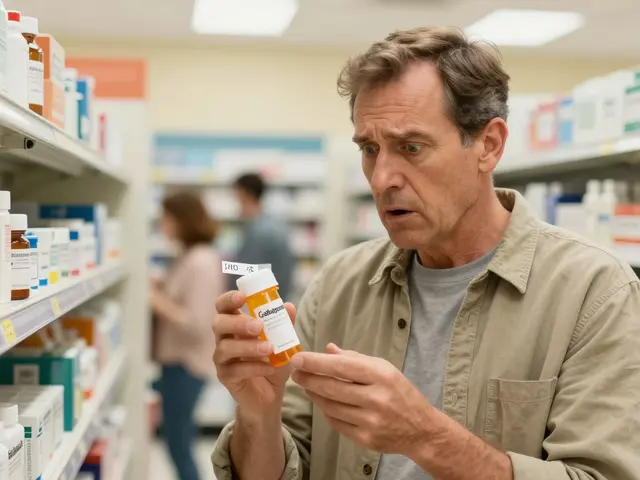
When you pick up a prescription for a generic drug, you might wonder: is this really the same as the brand-name version? It’s a fair question. After all, the pill looks different, costs a fraction of the price, and often comes in a plain bottle. But here’s the truth: if it’s FDA-approved, it’s not just similar-it’s required to be the same in every way that matters for your health.
What the FDA Actually Requires for Generic Drugs
The FDA doesn’t just approve generic drugs because they’re cheaper. They’re held to the same strict standards as brand-name drugs. Under the Hatch-Waxman Act of 1984, a generic drug must prove two things: pharmaceutical equivalence and bioequivalence.Pharmaceutical equivalence means the generic has the same active ingredient, strength, dosage form (like tablet or injection), and route of administration (oral, topical, etc.) as the brand-name drug. It also has to be used for the same medical conditions. That’s non-negotiable.
But what about the color? The shape? The filler ingredients? Those can be different. The FDA allows minor changes in inactive ingredients-like dyes or binders-as long as they don’t affect how the drug works. A generic metformin tablet might be white instead of blue, or oval instead of round, but the active ingredient and how your body absorbs it must be identical.
Bioequivalence: The Real Test
This is where things get technical, but it’s the most important part. Bioequivalence means your body absorbs the generic drug at the same rate and to the same extent as the brand-name version. The FDA uses two key measurements: Cmax (the highest concentration in your blood) and AUC (how much of the drug your body is exposed to over time).For approval, the 90% confidence interval for the ratio of these values between the generic and brand-name drug must fall between 80% and 125%. That’s not a wide range-it’s tight. If the generic delivers even 15% less or 25% more of the drug into your bloodstream, it gets rejected.
Most small-molecule generics are tested in 24 to 36 healthy volunteers. They take the drug, blood samples are drawn over hours, and scientists compare the results. It’s not guesswork. It’s controlled science. And it’s required for nearly every generic that hits the market.
Manufacturing: Same Rules, Same Facilities
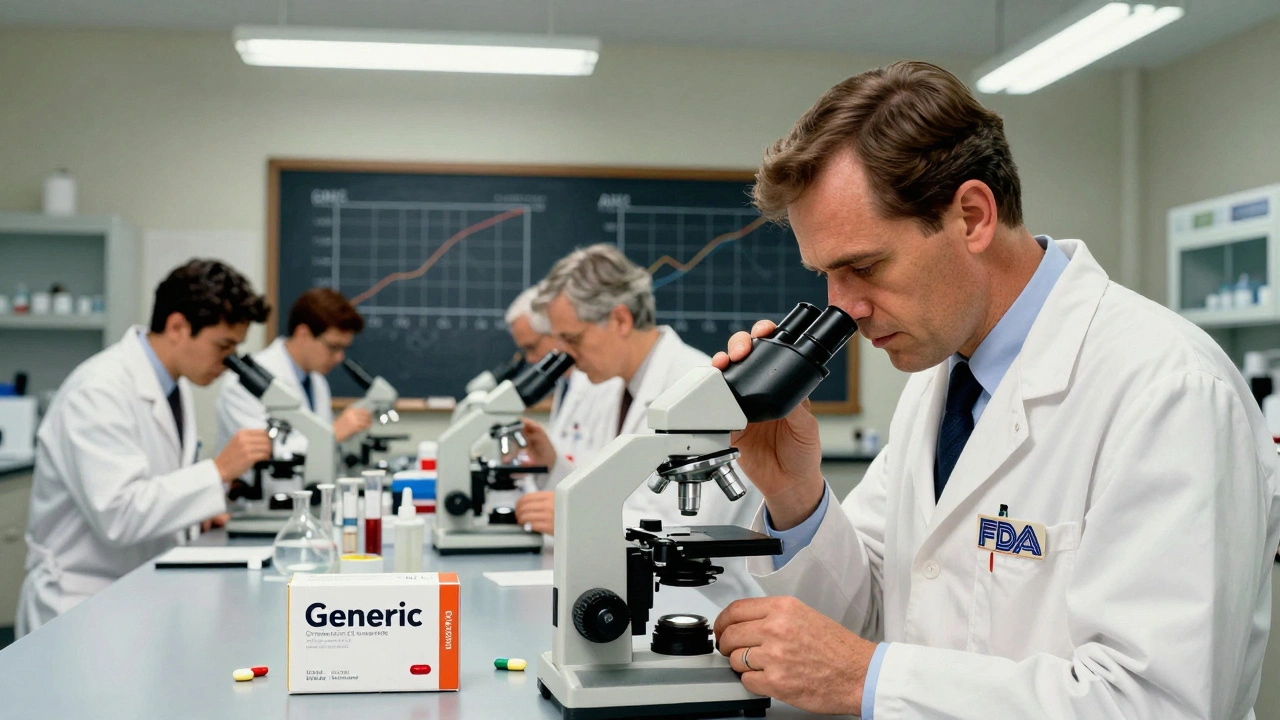
You might think generic manufacturers cut corners. They don’t. All drugmakers-whether making brand-name or generic pills-must follow Current Good Manufacturing Practices (cGMP). These are detailed rules in 21 CFR Parts 210 and 211 that cover everything: how raw materials are stored, how equipment is cleaned, how batches are tested, and how records are kept.The FDA inspects about 3,500 drug manufacturing sites each year, including factories in the U.S., India, China, and elsewhere. Many of these inspections target generic drug plants. And here’s something surprising: about half of all generic drugs in the U.S. are made by the same companies that produce the original brand-name versions. In fact, some generics come from the exact same production lines as the branded drugs you see on TV ads.
Stability Testing: Making Sure It Lasts
A drug isn’t approved just because it works the first time you take it. It has to stay stable over its shelf life. Generic manufacturers must run stability studies under real-world conditions. That means storing samples at room temperature for 12 to 24 months, plus accelerated tests at 40°C and 75% humidity for six months. If the drug breaks down, changes color, or loses potency during these tests, it’s rejected.Every batch of a generic drug must also pass identity, strength, purity, and quality checks before it’s released. These aren’t random samples. Every lot is tested against strict specifications set by the FDA or industry standards like those from the U.S. Pharmacopeia.
The ANDA Process: How a Generic Gets Approved
Generic drugs don’t go through the same long clinical trials as new drugs. Instead, they submit an Abbreviated New Drug Application (ANDA). This means they don’t have to prove safety and effectiveness from scratch-they rely on the brand-name drug’s data. But the FDA still reviews every detail: chemistry, manufacturing, labeling, and bioequivalence results.The review process takes about 10 months for a complete application under the Generic Drug User Fee Amendments (GDUFA). In 2022, the FDA approved 892 original ANDAs and issued 478 complete response letters-meaning the application had issues that needed fixing. This isn’t a rubber-stamp process. It’s rigorous.
As of 2023, the FDA has approved over 20,000 generic drug products covering 14,800 different brand-name drugs. That’s more than 90% of all prescriptions filled in the U.S. And yet, generics make up only about 23% of total drug spending-saving the system an estimated $37 billion in 2022 alone.
Complex Generics: When It’s Not So Simple
Not all drugs are created equal. Some, like inhalers, injectables, or topical creams, are far harder to copy. These are called complex generics. For them, measuring blood levels isn’t enough. The FDA needs to check particle size, viscosity, spray pattern, or how the drug binds to skin.That’s why the FDA has created 2,143 product-specific guidances for complex drugs. These documents tell manufacturers exactly what tests to run. In 2023 alone, 27 new guidances were added. For these products, the approval process can take longer, and the FDA may require additional clinical studies.
Some specialists, like former FDA director Dr. Charles Ganley, have pointed out that for certain complex generics, proving equivalence is still a scientific challenge. But the FDA is investing $15.7 million in research to improve testing methods. They’ve also held 18 public workshops with scientists and industry experts to tackle these issues.
What Patients Actually Experience
Most people don’t notice a difference between brand and generic drugs. A 2022 Consumer Reports survey found 89% of users were satisfied with generics, and 62% actively chose them to save money. On Reddit’s pharmacy forum, 83% of 1,427 respondents said they saw no difference between generic and brand versions.But there are exceptions. For drugs with a narrow therapeutic index-where even a small change in blood level can cause harm-some patients report issues. One 2021 JAMA study found that 12.3% of people switching between different generic versions of levothyroxine (a thyroid drug) needed dose adjustments. That’s why some doctors stick with one generic brand for these patients.
For seizure medications and blood thinners like warfarin, some patients and doctors are cautious. But that’s not because generics are unsafe-it’s because the margin for error is tiny. The FDA’s position remains clear: approved generics are safe and effective. When problems occur, they’re often due to switching between multiple generic brands, not the generic system itself.
Why This Matters
The FDA’s system for generic drugs isn’t perfect, but it works. It keeps prices low without sacrificing quality. It lets millions of people afford life-saving medications. And it’s backed by science-not marketing.If you’ve been hesitant to use generics, consider this: the same agency that approves the $10,000 cancer drug also approves the $4 generic version. The same inspectors check both. The same standards apply. The only real difference? The price tag.
When your doctor prescribes a generic, you’re not settling. You’re getting the same medicine, tested the same way, made under the same rules. And you’re saving money-without compromise.
Write a comment
Latest Posts

Comments
Ryan Brady
7/Dec/2025LOL so the FDA says it's the same? 😂 I've taken generics for years and my anxiety meds always make me feel like a zombie. Brand name? Perfect. Guess who's paying extra? Me. 🤡
Morgan Tait
7/Dec/2025You know what they don't tell you? Most of these 'generic' factories are in India or China... and the FDA inspects maybe 1% of them. The rest? Just paperwork. 🤫 I've seen pills crumble in my hand. Not all generics are equal. The system's rigged.
ian septian
7/Dec/2025Generics save lives. Period. Stop overthinking it.
Chris Marel
7/Dec/2025I appreciate this breakdown. I was worried about switching from my brand-name statin, but now I feel better knowing the science behind it. Thank you for sharing this clearly.
Elliot Barrett
7/Dec/2025Yeah right. The FDA's just a rubber stamp for Big Pharma. You think they really test every batch? Please. They're too busy taking bribes to care.
Ajit Kumar Singh
7/Dec/2025In India we make generics for the whole world and we know what quality means. No one here takes fake medicine. You Americans think everything is poison unless it costs $200. We make life saving drugs for pennies. You should be grateful. No punctuation needed.
Maria Elisha
7/Dec/2025I switched to generic lisinopril last year and I'm still alive. Honestly? I can't tell the difference. Why pay more for a logo?
Lisa Whitesel
7/Dec/2025The 80-125% bioequivalence range is a joke. That’s a 45% swing. That’s not medicine. That’s gambling with your kidneys. And they call this science? No.
Larry Lieberman
7/Dec/2025This is actually super interesting 🤯 I had no idea the FDA does so much testing. I thought generics were just cheap knockoffs. Turns out they're basically the same. Mind blown 🧠💊
Sabrina Thurn
7/Dec/2025The ANDA process is a masterclass in regulatory efficiency. By leveraging the originator’s clinical data and focusing validation efforts on bioequivalence and cGMP compliance, the FDA achieves a high-risk, high-reward equilibrium-maximizing access while preserving therapeutic integrity. The pharmacokinetic parameters (Cmax, AUC) are statistically robust, and the 90% CI within 80-125% is pharmacologically defensible for most small molecules.
Simran Chettiar
7/Dec/2025One wonders if the human condition is not defined by our ability to commodify healing, and yet we still cling to the illusion that a pill can be identical because its active ingredient matches... but what of the soul of the medicine? The intention? The energy? The silent suffering of the worker in the factory in Hyderabad who packs these pills? Is that not part of the equation? The FDA measures blood levels... but who measures the cost to humanity?
Anna Roh
7/Dec/2025I used to hate generics until I started getting them for my thyroid med. Then I switched between three different ones and my heart started racing. Now I stick to one brand. Not because I'm paranoid. Just because I'm tired of feeling like a lab rat.
Richard Eite
7/Dec/2025America makes the best drugs. Why are we letting China and India make our generics? This is a national security issue. Wake up people. 🇺🇸
Katherine Chan
7/Dec/2025This is so encouraging! I’m so glad we have access to affordable meds. It’s not about the brand-it’s about getting better. You’re doing the right thing by choosing generics. Keep going 💪❤️
Brianna Black
7/Dec/2025The FDA’s standards are a triumph of modern pharmacology. Yet, one cannot ignore the cultural disparity in perception: while Americans view generics as inferior, in nations like Germany and Japan, they are the default. This is not a scientific gap-it is a marketing-induced myth. The pill does not care who paid for the ad campaign.