

You know that feeling. You’ve been scrolling through your phone or watching videos on a tablet, and suddenly you realize it’s 2 AM. You’re tired, but your brain is buzzing. You can’t seem to drift off. For years, we blamed this on the content itself-the drama, the news, the endless feeds. But science points to a different culprit: blue light.
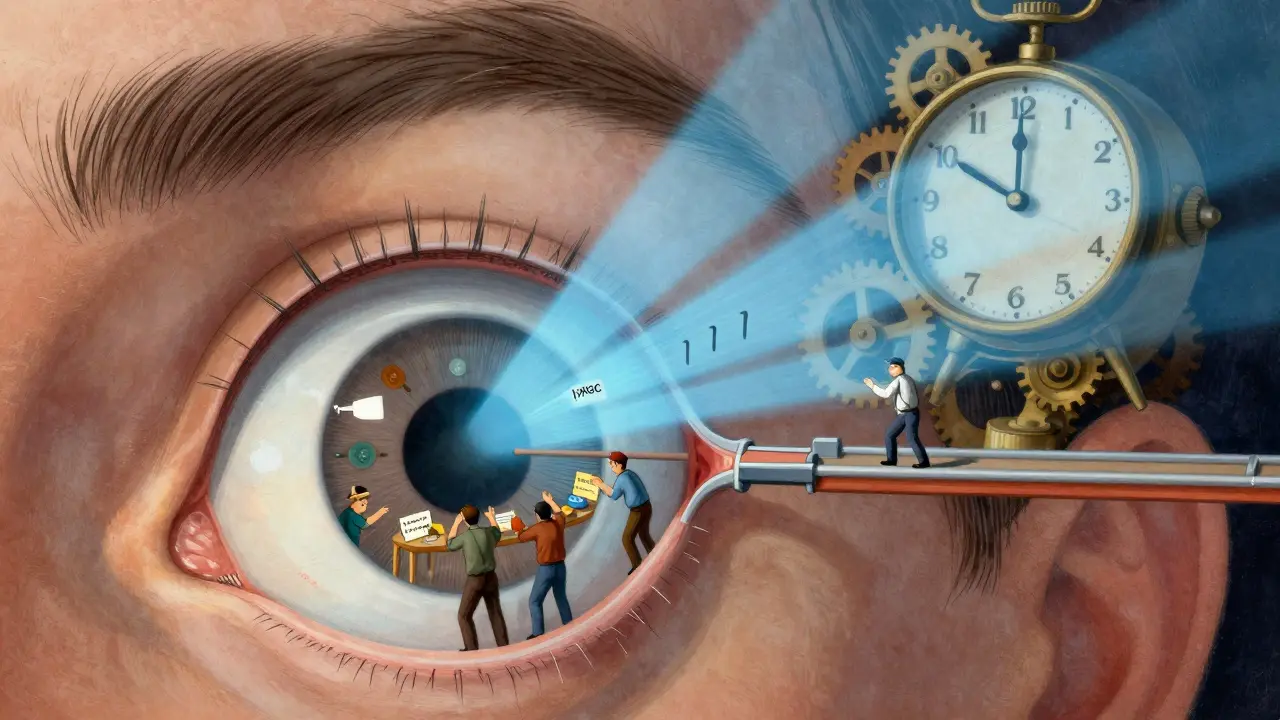
Blue light is high-energy visible (HEV) light with wavelengths between 400 and 495 nanometers. While natural blue light from the sun helps keep us alert during the day, artificial blue light from our screens at night tricks our bodies into thinking it’s still morning. This disrupts the production of melatonin, the hormone that signals to your body that it’s time to sleep.
The good news? You don’t need expensive gadgets to fix this. By understanding how screen time affects your circadian rhythm and setting strict sleep hygiene rules, you can reclaim your rest. Here is exactly what the latest research says about limiting screen exposure and how to do it without feeling like you’re cutting yourself off from the world.
Why Blue Light Keeps You Awake
To understand why your phone ruins your sleep, you have to look at your eyes. Specifically, a type of cell called intrinsically photosensitive retinal ganglion cells (ipRGCs). These cells are different from the ones that help you see shapes and colors. Their main job is to detect light levels and send signals directly to your brain’s internal clock.
Research from Harvard Medical School in 2012 showed that exposure to blue light suppresses melatonin secretion more powerfully than other wavelengths. In their study, participants exposed to blue light for 6.5 hours had their melatonin suppressed for about three hours afterward. In contrast, green light of the same brightness only suppressed it for 1.5 hours. Blue light also shifted their circadian rhythms by three hours, compared to just 1.5 hours for green light.
This matters because modern LED screens emit significantly more blue light than older technology. A typical smartphone emits about 30-40% blue light in its spectrum, whereas traditional incandescent bulbs emit only around 15%. When you hold a phone 30 centimeters from your face for two hours before bed, you are exposing your ipRGCs to enough blue light (30-50 lux) to cut melatonin production by half. That is a massive biological signal telling your body to stay awake.
The Scientific Debate: Is It Just the Brightness?
Not every scientist agrees that blue light is the sole villain. Some studies suggest that the intensity of the light matters more than its color. Researchers at the University of Toronto conducted an experiment where they controlled for cone activation while keeping ipRGC stimulation equal across different light colors. They found no significant difference in circadian disruption between blueish, yellowish, and white light when the overall stimulation was matched.
Dr. Christine Blume from the University of Basel supported this view, noting that changes along the blue-yellow dimension might be less relevant than previously thought if ipRGC stimulation is constant. However, the majority of clinical evidence still points to blue light as a primary disruptor. A systematic review in the Journal of Athletic Training (2022) found that 50% of studies reported decreased tiredness with daytime blue light exposure, but evening exposure consistently reduced sleep quality and duration in most trials.
Even if the specific wavelength debate continues, the behavioral impact is undeniable. Dr. Matthew Walker, a sleep scientist at UC Berkeley, notes that even if blue light effects are partially overstated, the act of using screens displaces wind-down routines. Replacing relaxation with stimulating content is a proven sleep killer, regardless of the light color.
Practical Screen Time Limits for Better Sleep
So, how much screen time is too much? The American Academy of Sleep Medicine (AASM) recommends avoiding screens for at least one hour before bedtime. This guideline is based on data showing that 83% of Americans use electronic devices within an hour of sleeping, contributing to widespread sleep fragmentation.
If you cannot completely avoid screens, here are specific, actionable limits to minimize damage:
- The 90-Minute Rule: Stop all screen use 90 minutes before your intended bedtime. A survey by the Sleep Foundation found that 83% of people who followed this rule reduced their time to fall asleep from over 45 minutes to under 20 minutes.
- Brightness Control: Keep your screen brightness below 50 nits, which is roughly 30% of maximum brightness. Dimmer screens reduce the total energy hitting your ipRGCs.
- Distance Matters: Maintain a viewing distance of at least 40 centimeters (about 16 inches) from your device. The further away the light source, the less intense the exposure.
- Timing: Avoid bright screens after 9 PM if your average bedtime is 11 PM. This gives your body a buffer zone to start producing melatonin naturally.
Implementing these habits takes time. A study from the University of Glasgow found that participants needed an average of 5.7 days to establish consistent pre-sleep screen avoidance habits. Don’t get discouraged if the first few nights feel awkward. Your brain is rewiring itself.
Tools and Technologies to Help
You don’t always have to throw your phone in the drawer. Technology can also help mitigate blue light exposure if used correctly. Most modern devices come with built-in filters:
| Tool | Effectiveness | User Feedback | Best For |
|---|---|---|---|
| Night Shift (iOS) | Reduces blue light by ~60% | High satisfaction for ease of use | iPhone/iPad users |
| f.lux Software | Adjusts color temperature automatically | 78% of users reported improved sleep onset | Desktop/Laptop users |
| Blue Light Blocking Glasses | Blocks 90-100% of HEV light | 68% report improvement; 22% note vision discoloration | Those who must work late |
| Sleep Focus Mode (iOS 17+) | Automates dimming and notifications | New feature, growing adoption | Automated routine lovers |
Apple’s introduction of "Sleep Focus" mode in iOS 17 is a step forward. It automatically activates dimmed display settings one hour before your scheduled bedtime. Similarly, f.lux software adjusts your computer’s color temperature based on the time of day. However, remember that filters are not a cure-all. A crossover study showed that blue-light blocking glasses improved Pittsburgh Insomnia Rating Scale scores, but they worked best when combined with reduced screen brightness and earlier cutoff times.
The Hidden Cost of Evening Screens
Beyond melatonin suppression, evening screen time has broader health implications. Dr. Charles Czeisler from Brigham and Women’s Hospital warned that chronic melatonin suppression could contribute to long-term issues like diabetes, heart disease, and obesity. Melatonin isn’t just a sleep hormone; it plays a role in metabolic regulation and immune function.
Digital eye strain is another immediate consequence. The American Academy of Ophthalmology reports that 65% of adults experience digital eye strain symptoms, with 70% attributing it to screen use before bed. Symptoms include dry eyes, headaches, and blurred vision, which can make falling asleep even more difficult due to physical discomfort.
Furthermore, the content you consume matters. Engaging with stressful news or social media triggers cortisol release, a stress hormone that is physiologically opposite to melatonin. Even if you use a blue light filter, reading bad news will keep your nervous system activated. Combine low light with calming content for the best results.
Building a Sustainable Night Routine
Changing your relationship with screens requires a shift in behavior, not just technology. Start by creating a "digital sunset" policy for your home. Many Fortune 500 companies now implement these policies for employee wellness, and you can do the same for yourself.
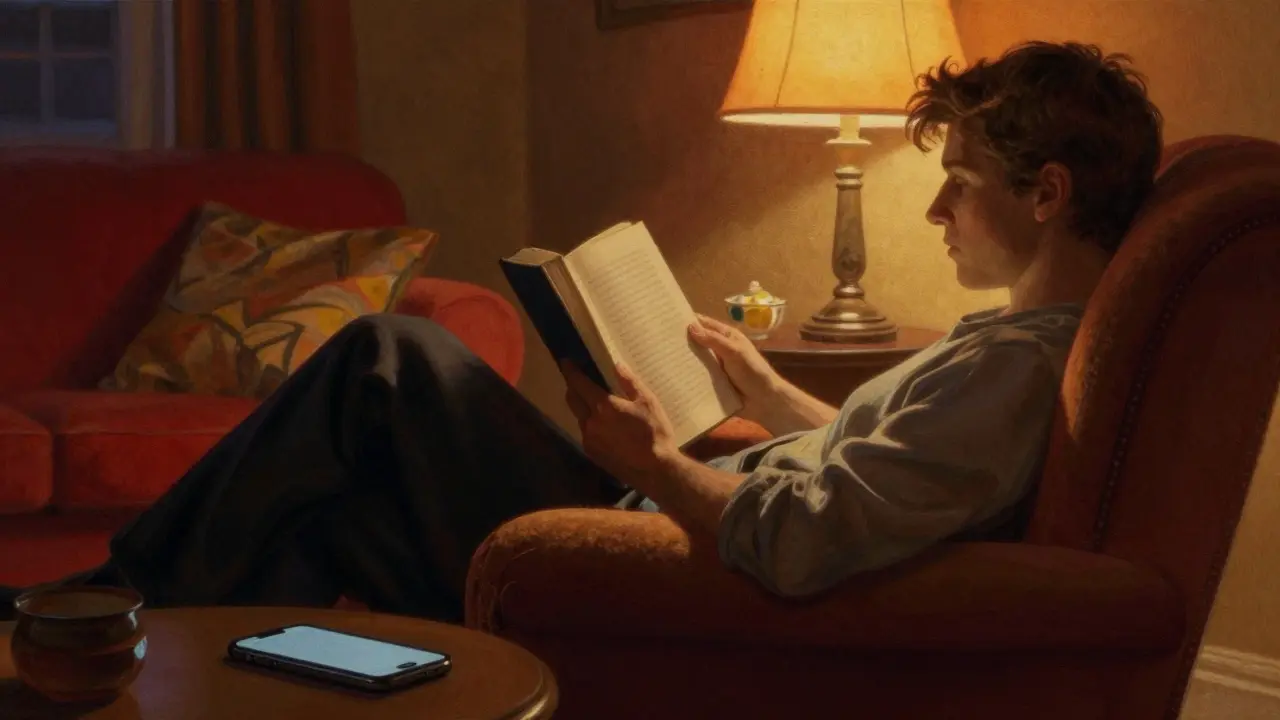
Replace screen time with low-stimulation activities. Reading a physical book, practicing gentle stretching, or listening to calm music can help transition your brain into sleep mode. The key is consistency. Try to go to bed and wake up at the same time every day, even on weekends. This reinforces your circadian rhythm, making it easier to fall asleep when melatonin levels rise naturally.
If you struggle with insomnia, consider tracking your sleep patterns. Apps that monitor movement and sound can help you identify correlations between screen time and sleep quality. Use this data to adjust your cutoff times gradually. If stopping screens at 9 PM doesn’t help, try 8:30 PM. Find what works for your unique biology.
Remember, better sleep is not about perfection. It’s about progress. Every minute you spend away from blue light before bed is a minute your body can recover. Start small, stay consistent, and watch your rest improve.
How many hours before bed should I stop using my phone?
The American Academy of Sleep Medicine recommends avoiding screens for at least one hour before bedtime. However, many users find that a 90-minute cutoff provides better results, reducing sleep onset time significantly.
Do blue light blocking glasses actually work?
Yes, studies show they can improve sleep satisfaction and duration. However, they are most effective when combined with reduced screen brightness and limited usage time. About 68% of users report significant improvement, though some find the vision discoloration distracting.
Is blue light worse than other colors of light?
Research indicates that blue light (400-495 nm) is particularly potent at suppressing melatonin and shifting circadian rhythms compared to green or red light. However, some studies suggest that overall light intensity also plays a major role.
Can I use my phone if I turn on Night Shift mode?
Night Shift mode reduces blue light emission by approximately 60%, which helps. However, it does not eliminate the issue entirely. You should also lower your screen brightness and limit the duration of use to minimize impact on your sleep.
Does screen time affect sleep quality or just sleep onset?
Screen time affects both. It delays sleep onset by suppressing melatonin and can reduce overall sleep quality by fragmenting sleep cycles and increasing nighttime awakenings. Chronic exposure may also lead to unrested sleep and frequent waking.





Comments
Desirea Gaona
14/May/2026I appreciate this comprehensive overview of the physiological mechanisms at play. It is crucial for us to understand that our well-being is interconnected with our digital habits. I encourage everyone here to reflect on their own routines and consider how small adjustments might lead to significant improvements in their overall health and happiness.
Yuvraj Singh
14/May/2026This is a really solid breakdown of the science behind screen time and sleep. The distinction between ipRGC stimulation and general brightness is often overlooked in casual discussions. For those looking to implement changes without feeling overwhelmed, I'd suggest starting with the 90-minute rule mentioned here. It’s less about perfection and more about consistency. If you find yourself struggling, try pairing your device usage with a specific task rather than passive scrolling. This helps create a mental boundary between 'work/engagement' mode and 'rest' mode. Also, don't underestimate the power of ambient lighting in your room; warm lamps can help signal to your body that the day is winding down even if you aren't ready to put the phone away completely yet.
Dana Ellington
14/May/2026OMG yes!! I literally tried the night shift thing last week and wow my eyes feel so much better in the morning!! Like seriously who knew?? I used to stay up till 3am scrolling tiktok and now i actually fall asleep faster which is crazy right?? Just turn down the brightness too guys its super easy!!
victoria catharinaa
14/May/2026i hate when people say blue light is bad because then they sell expensive glasses lol but yeah i get tired easily now too maybe its just me being old or whatever but i stop using my phone an hour before bed and it helps a bit i guess
Glen Speck
14/May/2026the real question is why we have allowed technology to colonize our private time so thoroughly. it is a philosophical failure as much as a biological one. we trade presence for distraction and wonder why we are exhausted. the solution is not just filters but a reclamation of attention.
Sam Mackellar
14/May/2026One must acknowledge that while the scientific consensus leans heavily towards blue light mitigation, individual variability remains a significant factor. It would be prudent for readers to experiment with these guidelines rather than adopting them as rigid dogma. A balanced approach that respects both technological convenience and biological necessity is likely the most sustainable path forward for the majority of users.
Justina Ingram
14/May/2026lol whatever man just buy the glasses if u cant stop scrolling :P