

Macrolide Therapy Risk Calculator
Assess Your Risk Before Starting Macrolide Antibiotics
This calculator helps determine if you need an ECG before starting macrolide antibiotics based on current clinical guidelines. Remember: this is for informational purposes only and should not replace professional medical advice.
Risk Factors Assessment
Your Risk Assessment
Risk Score:
When you’re prescribed an antibiotic like azithromycin or clarithromycin, you probably don’t think about your heart. But for some people, these common drugs can trigger a dangerous rhythm problem - and it shows up on a simple ECG. The issue isn’t rare. It’s not theoretical. It’s real, measurable, and preventable. So who actually needs an ECG before starting macrolide therapy? And why are so many doctors skipping it?
Why Macrolides Can Be Risky for Your Heart
Macrolide antibiotics - azithromycin, clarithromycin, erythromycin - are workhorses in treating pneumonia, bronchitis, and sinus infections. But they also block a key electrical channel in the heart called hERG. This slows down the heart’s recharge cycle, lengthening the QT interval on an ECG. That might sound technical, but here’s what it means: a longer QT interval increases the chance of a deadly arrhythmia called Torsades de Pointes. It can strike suddenly. It can kill. The risk isn’t the same for everyone. Erythromycin carries the highest risk, with studies showing it’s nearly five times more likely to cause QT prolongation than azithromycin. But even azithromycin - the most commonly prescribed macrolide - raises the risk of cardiovascular death by 2.7 times compared to amoxicillin, according to a major 2012 study in the New England Journal of Medicine. That’s not a small number. That’s enough to make you pause before prescribing it.Who Is at Highest Risk?
Not every patient needs an ECG. But some do - badly. The British Thoracic Society (BTS) and the National Institutes of Health (NIH) both point to the same high-risk groups:- Women (risk is nearly three times higher than in men)
- People over 65 (risk doubles)
- Those with existing heart conditions or a history of arrhythmias
- Patients taking other QT-prolonging drugs - like certain antidepressants, antifungals, or anti-nausea meds
- People with kidney or liver disease (they clear the drug slower)
- Anyone with a known or suspected inherited Long QT Syndrome
What the Guidelines Actually Say
There’s a big gap between what guidelines recommend and what happens in real life. The British Thoracic Society says: Every patient getting long-term macrolide therapy - think months for bronchiectasis or cystic fibrosis - needs a baseline ECG. And a repeat one after one month. Their rules are clear: QTc over 450 ms in men or 470 ms in women? Don’t start the drug. If it climbs after starting? Stop it. But in primary care? Most doctors don’t do this. A 2024 survey of 247 UK GPs found only 22% routinely ordered ECGs before prescribing azithromycin. Why? Time. Lack of clear guidance for short courses. And the belief that “healthy people” are fine. Here’s the problem: “Healthy” doesn’t mean low risk. A 68-year-old woman with no known heart disease can still have a QTc of 480 ms - undetected until she develops Torsades on day 4 of clarithromycin. That’s not a freak accident. It’s a predictable outcome.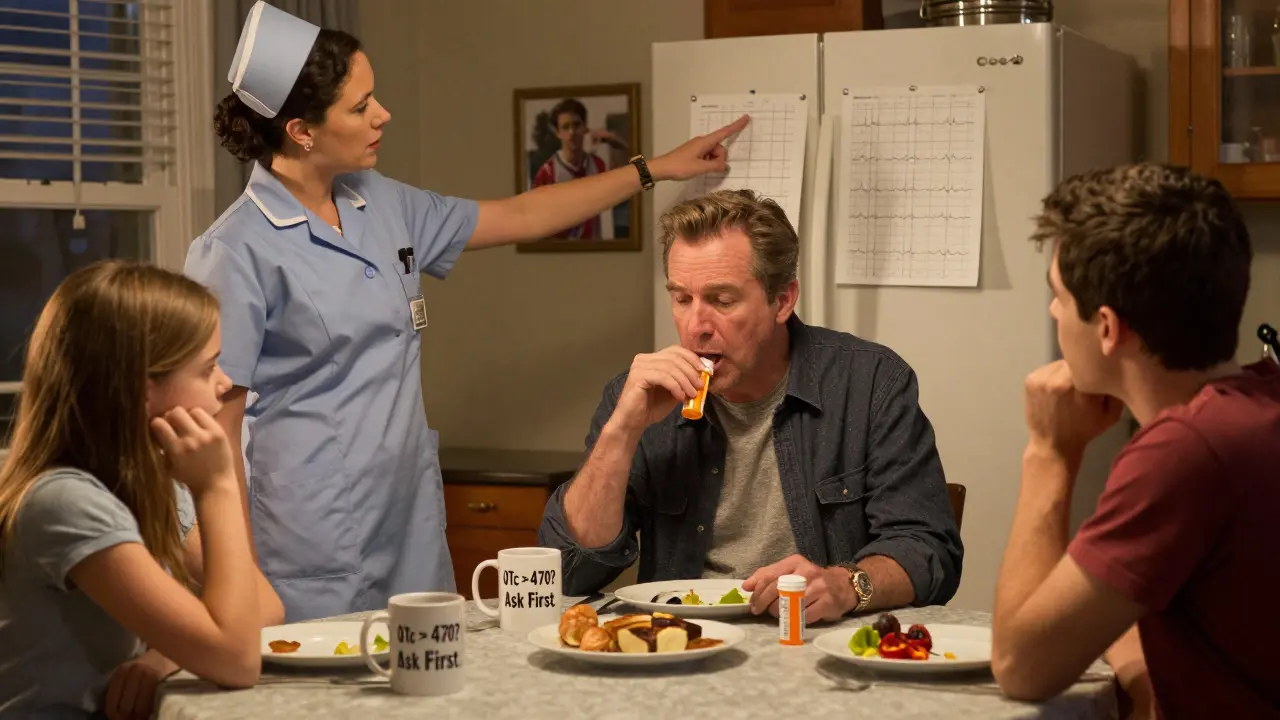
The Cost of Skipping ECGs
Some say screening everyone is too expensive. In the UK, one ECG costs about £28.50. With 12 million macrolide prescriptions a year, that’s £342 million. Sounds like a lot. But consider this: a single Torsades case can cost over £50,000 in emergency care, ICU stays, and long-term complications. And some patients don’t survive. A 2024 study across 12 UK hospitals found that adding ECG screening to respiratory clinics increased consultation time by just 8.7 minutes - but cut drug-related heart events by 34%. That’s not just safer. It’s cheaper. And here’s something most people don’t realize: ECG screening catches undiagnosed inherited Long QT Syndrome in 1.2% of patients. That’s one in every 80 people screened. Finding that early can save a life - not just from antibiotics, but from sudden cardiac death during exercise, stress, or sleep.What Should You Do?
If you’re a patient:- If you’re over 65, female, or on other medications - ask for an ECG before starting a macrolide.
- If you’ve ever fainted for no reason, had unexplained seizures, or have a family history of sudden cardiac death - mention it.
- Don’t assume “it’s just an antibiotic.”
- Screen all patients on long-term macrolides. It’s non-negotiable.
- For short courses (5-7 days), screen if any risk factors exist - even one.
- Use the NIH’s 9-point risk score (age, sex, renal function, meds, etc.) if your EHR doesn’t auto-flag risk.
- Know your QTc limits: 450 ms for men, 470 ms for women. Anything above 500 ms? Avoid macrolides entirely.
The Future: Smarter, Faster, Safer
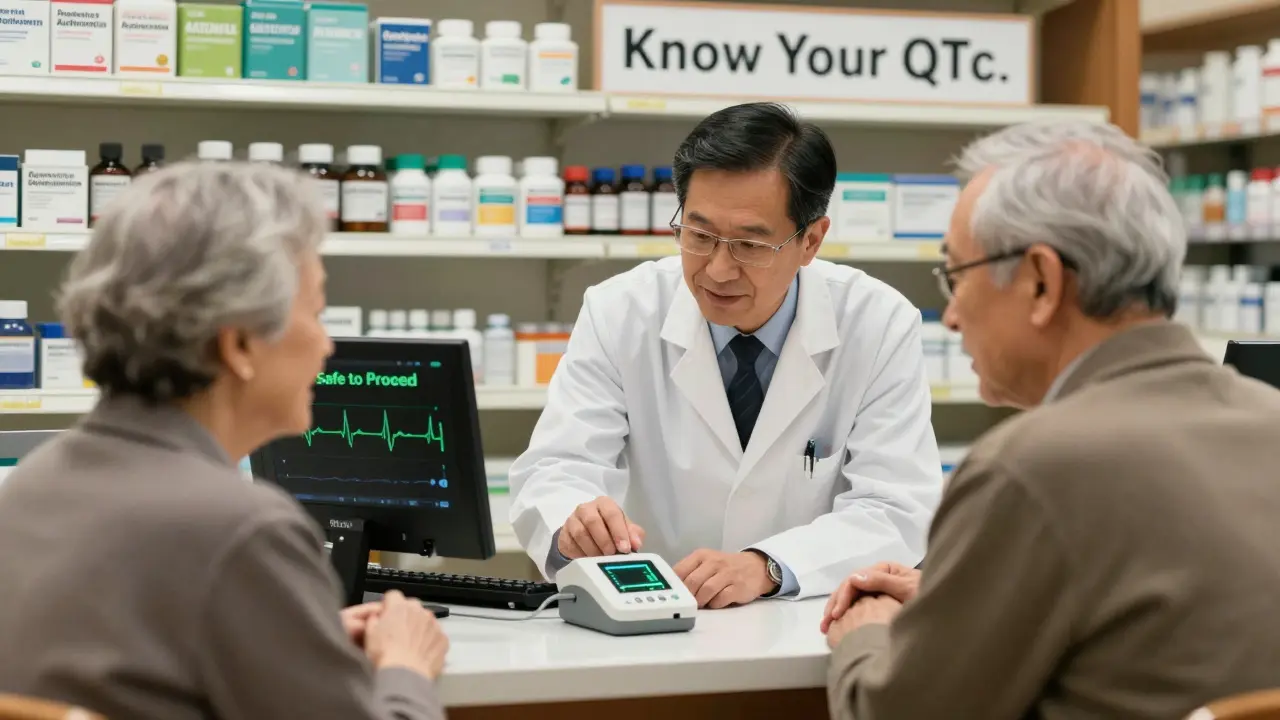
Change is coming. The British Thoracic Society is testing handheld ECG devices in 15 clinics. These give results in under 5 minutes - no waiting days. Early data shows treatment delays dropped from over 5 days to less than 1. In the U.S., major EHR systems like Epic now auto-alert doctors when a macrolide is prescribed to someone with a QTc over 470 ms. That’s huge. It’s not perfect - alerts can be ignored - but it’s progress. The American Heart Association’s 2025 update says it best: Don’t screen everyone. Screen the right people. That’s the goal. Risk-based, not blanket. Smart, not stubborn.Final Thought
Macrolides are lifesavers - for infections. But they can turn into silent killers if we ignore the heart. You don’t need to ECG every single patient. But you absolutely need to ECG the ones who are at risk. And if you’re not doing that, you’re not just cutting corners. You’re gambling with lives.Do all macrolide antibiotics carry the same heart risk?
No. Erythromycin has the highest risk, with studies showing it’s nearly five times more likely to prolong the QT interval than azithromycin. Clarithromycin falls in the middle. Azithromycin is the safest of the three, but it still carries a measurable risk - especially in people with other risk factors. The British Thoracic Society treats all macrolides as potentially dangerous for the heart and recommends the same screening rules for all of them.
Can I skip the ECG if I’m young and healthy?
Not necessarily. Even young, healthy people can have undiagnosed Long QT Syndrome. In fact, 1.2% of patients screened for macrolide therapy were found to have inherited Long QT - a condition they didn’t know they had. If you’re female, over 65, taking other medications, or have a family history of sudden cardiac death, you’re at higher risk. And even if you don’t, the ECG takes minutes. The consequences of skipping it can be fatal.
What’s the difference between QT and QTc?
QT is the raw measurement of the heart’s electrical recovery time on the ECG. But heart rate affects this - faster rates shorten the QT. QTc (corrected QT) adjusts for heart rate, giving you a true picture of risk. All clinical guidelines use QTc, not QT. The cutoffs are 450 ms for men and 470 ms for women. Above 500 ms? That’s a red flag.
How long after starting a macrolide should I worry about arrhythmia?
Most cases occur within the first 3-7 days of starting the drug. That’s why the British Thoracic Society recommends a repeat ECG at one month - to catch delayed prolongation. But the biggest danger window is early. If you’re on a 5-day course, the risk peaks around day 4. If you feel dizzy, have palpitations, or faint, seek help immediately.
Are there alternatives to macrolides if I’m at risk?
Yes. For many common infections like sinusitis or bronchitis, amoxicillin, doxycycline, or even no antibiotics at all may be appropriate. The key is not to default to azithromycin. Ask your doctor: Is this the safest option for me? If you have multiple risk factors, switching to a non-QT-prolonging antibiotic can prevent a cardiac event.
Does insurance cover ECGs for macrolide screening?
In the UK, ECGs are covered under the NHS for any medically indicated reason, including pre-therapy screening for high-risk patients. In the U.S., Medicare and most private insurers cover ECGs when ordered for drug safety monitoring, especially if risk factors are documented. The real barrier isn’t cost - it’s awareness. Many providers don’t know it’s covered or don’t think to order it.
Can I get an ECG at a pharmacy or urgent care?
Yes. Many urgent care centers and some pharmacies now offer portable ECGs. These aren’t as detailed as hospital-grade machines, but they’re accurate enough to detect significant QT prolongation. If your doctor says you need an ECG before starting a macrolide and you can’t get in for a week, a walk-in clinic can help you avoid dangerous delays.
What if my QTc is borderline - 470-490 ms?
Borderline QTc values (470-490 ms) are tricky. They’re not an automatic stop sign, but they’re a red flag. The NIH recommends avoiding macrolides in this range if you have any other risk factors - like age, female sex, or other drugs. If you’re otherwise healthy and this is your first borderline result, your doctor might consider a repeat test in a week or switch to a safer antibiotic. Never ignore a borderline value.
Write a comment
Latest Posts





Comments
THANGAVEL PARASAKTHI
8/Feb/2026Man, i never thought about this before. I get azithromycin every time i get a bad cough, and i’m 32, male, no heart issues. But now i’m wondering-what if i’ve got some silent QT thing? My grandpa dropped dead at 60, no warning. Maybe i should ask my doc for an ECG next time. Easy test, right?
Frank Baumann
8/Feb/2026Let me tell you something that keeps me up at night. I’m a paramedic in Chicago. We had a 67-year-old woman come in last month-no history, ‘just felt weird’-and she coded on the way to the hospital. Turned out she was on clarithromycin for a sinus infection. QTc was 512. She didn’t survive. And guess what? Her PCP had prescribed it without even checking her meds list. No ECG. No warning. Just ‘take this pill.’ That’s not negligence. That’s a systemic failure. We’re letting people die because we’re too lazy to push a button on a computer. And don’t even get me started on how EHRs just spam alerts until we turn them off. This isn’t about cost. It’s about dignity. It’s about not turning a routine antibiotic into a death sentence.
Chelsea Deflyss
8/Feb/2026Ugh i swear drs are so lazy. My aunt took azithromycin and passed out on day 3. They said 'oh its prob just anxiety' but her QTc was 508. She had a pacemaker installed after. If they just did a 2 min ECG like they do for old people with pneumonia why not for everyone? Its not hard. Its not expensive. Its common sense. Stop being so damn careless.
Scott Conner
8/Feb/2026So wait-does this mean if I’m on sertraline and get a sinus infection, I’m basically playing Russian roulette with my heart? Because I’ve been on Zoloft for 8 years and just got azithromycin last week. No ECG. No warning. I’m gonna go get one tomorrow. Better safe than sorry, right? Also, is there a list somewhere of all the drugs that mess with QT? I feel like I’m on half of them.
Alex Ogle
8/Feb/2026I’ve been in primary care for 15 years. I used to think ECGs before macrolides were overkill. Then I had a 63-year-old woman come in after a syncopal episode. She’d just finished a 5-day course of clarithromycin for bronchitis. QTc was 492. She had no family history, no heart disease, no other meds. Just… female. Over 65. And the drug. That’s all it took. Since then, I screen everyone over 60, anyone on antidepressants, anyone with a history of fainting-even if they say it was 'just dehydration.' It takes 7 minutes. The cost? A few bucks. The alternative? A funeral. I don’t care if it’s not 'standard.' I care about people walking out of my office alive.
Brandon Osborne
8/Feb/2026THIS IS WHY AMERICA IS FALLING APART. Doctors are just handing out antibiotics like candy. No thought. No caution. No accountability. People are dying because we’ve turned medicine into a fast-food chain. 'Oh, here’s azithromycin, have a nice day.' What happened to the Hippocratic Oath? You think you’re helping? You’re just covering your ass while someone’s heart stops because you were too lazy to check a simple lab. This isn’t just negligence-it’s criminal. Someone needs to get sued. Someone needs to lose their license. And if you’re reading this and you’re a doctor who skips ECGs? You’re part of the problem. Shame on you.
Marie Fontaine
8/Feb/2026OMG this is so important!! 😭 I’m a nurse and I’ve seen this happen. One time a 70yo grandma got azithromycin, fainted in the hallway, and we had to code her. She had no idea she was at risk. Now I always ask: 'Are you on anything for anxiety? Depression? Nausea?' If yes-I hand them the ECG form before the script. It’s not hard! And it saves lives 💕 Seriously, if you’re on meds or over 60-ask for it! Your heart will thank you 🫶
Lyle Whyatt
8/Feb/2026Just read this whole thing. I’m in Australia, and we’ve got the same problem here. GPs are slammed. They’ve got 10 patients an hour. ECGs? Not on the radar unless you’re 80 and diabetic. But here’s the kicker-I work in a rural clinic, and we started doing portable ECGs for anyone over 60 on antibiotics. We found 3 cases of undiagnosed Long QT in 6 weeks. One guy had a brother who died at 32 during a rugby match. He didn’t know why. Now he’s on a beta-blocker. That’s not a fluke. That’s a pattern. And the best part? We didn’t slow down. The whole thing takes 4 minutes. We’re not asking for miracles. Just a little more attention. It’s not about being paranoid. It’s about being smart. And honestly? If we can catch one life, it’s worth it.