

It’s not uncommon to walk into the pharmacy expecting to pay $5 for your generic thyroid medication-only to be charged $45. You didn’t switch brands. Your doctor didn’t change the prescription. The pill looks exactly the same. So why the sudden price jump? The answer lies in something most people never think about: tiered copays.
How Your Insurance Turns Pills Into Tiers
Most health plans don’t charge the same amount for every prescription. Instead, they sort drugs into tiers-like levels in a video game-with each level having its own price tag. Tier 1 is usually the cheapest: preferred generics, often $0 to $15 for a 30-day supply. Tier 2 might be brand-name drugs you’re allowed to use, costing $25 to $50. Tier 3? That’s where non-preferred brands land-$60 to $100. And above that, you’ve got specialty drugs, sometimes costing hundreds or even thousands per month. But here’s the twist: not every generic drug is in Tier 1. Some generics, even ones that are chemically identical to their cheaper cousins, get stuck in Tier 2 or even Tier 3. You might be taking levothyroxine, the same drug millions use, but if your insurer’s contract with the manufacturer expired or didn’t include a big enough rebate, your copay could jump overnight. No clinical reason. No safety issue. Just a business deal.Why a Generic Isn’t Always the Cheapest Option
You’d think generics are all the same. And they are-chemically, pharmacologically, therapeutically. But insurers don’t care about that. They care about rebates. Pharmacy Benefit Managers (PBMs) like CVS Caremark, Express Scripts, and OptumRx negotiate discounts with drugmakers. The bigger the discount, the lower the tier. If one manufacturer offers a 30% rebate and another offers 10%, the one with the bigger rebate gets placed in Tier 1-even if both pills are made in the same factory. That means you could be handed a generic version of your medication that’s identical to the $5 version, but costs $30 because the manufacturer didn’t cut a good enough deal with your insurer. This happens with common drugs like atorvastatin (for cholesterol), lisinopril (for blood pressure), and metformin (for diabetes). One version is preferred. The others? Not so much. A 2023 analysis found that 12% to 18% of generic drugs are classified as specialty drugs and placed in higher tiers-not because they’re complex, but because they cost more than $600 a month to produce. Even if they’re not biologics or injectables, they get lumped into the expensive pile.What Happens When Your Drug Gets Moved
Insurers change their formularies all the time. Every year, around October, Medicare plans update theirs. Commercial plans do it whenever they renegotiate contracts-which can happen mid-year. In 2023 alone, 17% of employer plans changed their drug tiers between January and June. When a drug moves up a tier, you don’t always get a heads-up. You might show up for your refill and be shocked by the price. Some patients report switching medications because they can’t afford the new copay-even when their doctor says the original drug is essential. Studies show this hurts adherence. One study found that when diabetes meds moved from Tier 2 to Tier 3, patients were 7.3% less likely to refill their prescriptions. That’s not just inconvenient-it’s dangerous. And here’s another problem: pharmacists are often told to substitute your prescription with a preferred generic without asking you. So you might get a different version of your drug without knowing it. If that version is in a higher tier, your out-of-pocket cost goes up-even if you didn’t ask for it.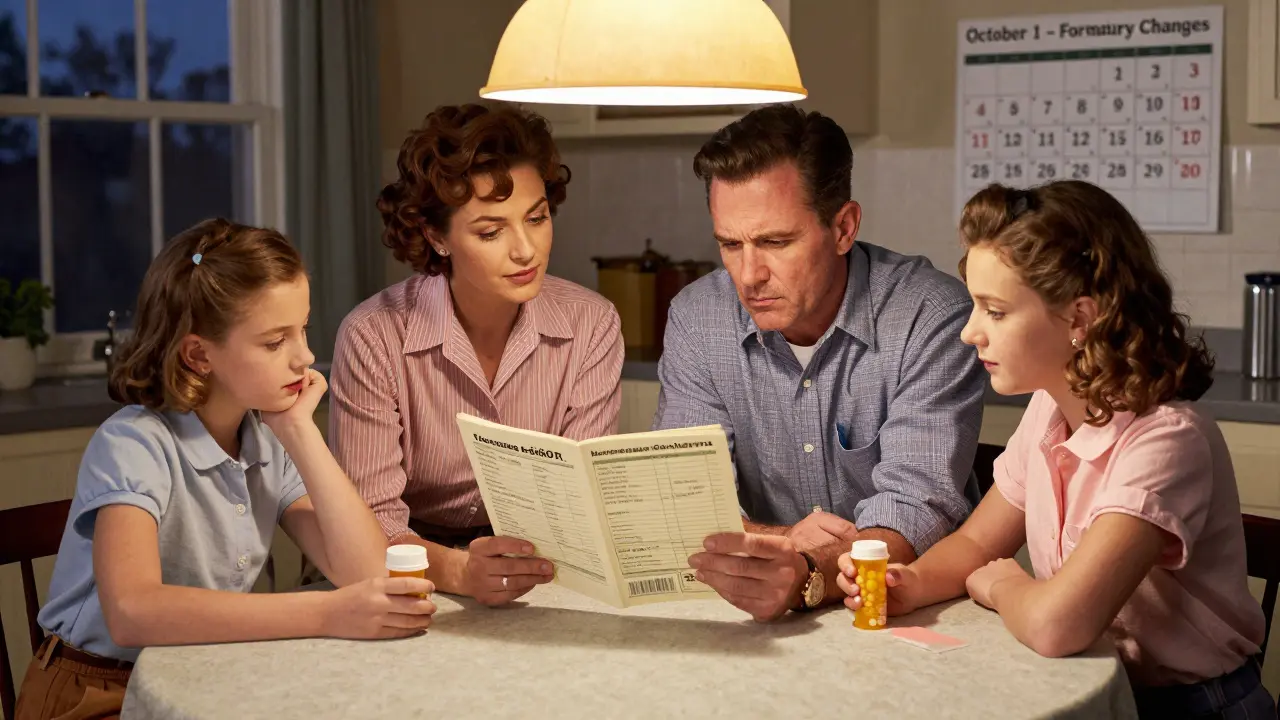
Who Decides Where Your Drug Goes?
The short answer: not your doctor. Not you. Not even the pharmacist. It’s the PBM. These are the middlemen between insurers, pharmacies, and drugmakers. They’re not doctors. They’re not regulators. They’re profit-driven companies that negotiate rebates and decide which drugs get the best pricing. Dr. Dennis G. Smith, former head of Medicaid services, put it plainly: “Preferred status has nothing to do with clinical superiority-it’s entirely about the rebates.” That’s why two identical pills can have two different prices. One manufacturer paid more to be on the preferred list. The other didn’t. And now you’re stuck paying more. Even experts are frustrated. Dr. Aaron Kesselheim from Harvard called the practice “a betrayal of the whole point of generics.” If the goal is to save money, why are we making patients pay more for the same medicine?What You Can Do About It
You can’t control the formulary. But you can fight back. Step 1: Check your plan’s formulary. Every insurer publishes a list of covered drugs and their tiers. Look it up on your plan’s website. Don’t wait until you’re at the counter. Do it now. Formularies change every year, usually in October. Step 2: Ask your pharmacist. If your copay spiked, ask: “Is there another generic version of this drug that’s in a lower tier?” Pharmacists often know which versions are cheaper-and they can sometimes switch your prescription without calling your doctor. Step 3: Request a therapeutic interchange. If your doctor agrees, they can submit a form asking your insurer to cover your current drug despite its tier. This works about 63% of the time, according to Medicare Rights Center data. Step 4: Use price tools. GoodRx, SmithRx, and your insurer’s own drug lookup tool can show you the lowest out-of-pocket cost for your medication across nearby pharmacies. Sometimes, paying cash is cheaper than using insurance. Step 5: Look into manufacturer assistance. Many drugmakers offer coupons or patient assistance programs. For specialty generics like biosimilars for rheumatoid arthritis, these programs can cut your monthly cost by hundreds or even thousands.



Comments
Jeffrey Frye
23/Dec/2025so i got hit with a $42 copay for metformin last month. same pill. same dose. just a different manufacturer. my insurance didn't even notify me. i called them and they said "it's on tier 3 now because the rebate dropped." like... i didn't ask for a business seminar. i asked for my diabetes meds. 🤡
Dan Gaytan
23/Dec/2025this hit me right in the feels 😔 i've been on levothyroxine for 8 years and just last month my copay jumped from $5 to $38. i didn't change anything. i didn't ask for this. i just want to live. i called my pharmacist and they switched me to the cheaper generic without even asking. thank god for them. 🙏
Usha Sundar
23/Dec/2025i live in india. we don't have this mess. generics are cheap. always. no tiers. no rebates. just medicine. how did we get so lost?
claire davies
23/Dec/2025you know what’s wild? this whole system was designed to save money, but it’s basically turning patients into financial negotiators. like, why should i have to become a PBM detective just to get my blood pressure pills? i’m not a corporate strategist, i’m a person trying not to have a stroke. and don’t get me started on how pharmacists are forced to swap meds without telling you. it’s like your doctor wrote a love letter to your body, but the insurance company changed the words to something that costs more. and no one’s apologizing. just… sigh.
Chris Buchanan
23/Dec/2025so let me get this straight: the system rewards companies that pay the most to be on the list, not the ones that make the best medicine? genius. absolute genius. next they’ll charge extra if your pill is blue instead of white. 🤦♂️ i swear, if i had to file a complaint every time my meds got reclassified, i’d have a second job.
Wilton Holliday
23/Dec/2025big shoutout to anyone who’s ever called their pharmacy and asked, "is there a cheaper version?" you’re doing the work the system should be doing for you. and if your doc says "try this one" and you’re nervous? ask for a therapeutic interchange. it’s not a last resort-it’s your right. i’ve helped three friends get their meds back to $5. you can too. you’re not alone.
Raja P
23/Dec/2025my uncle in delhi takes the same generic lisinopril for $0.30 a pill. no insurance needed. no tier. no drama. here we're fighting over rebates like they're playoff points. it's wild. but thanks for the tips. gonna check goodrx tonight.
Joseph Manuel
23/Dec/2025The structural inefficiencies inherent in the current Pharmacy Benefit Manager (PBM) model are not merely operational anomalies; they represent a systemic misalignment between clinical efficacy and economic incentive structures. Empirical data from the Journal of the American Medical Informatics Association (2023) indicates that tiered formularies exhibit a statistically significant correlation with non-adherence rates (p < 0.01), particularly among low-income populations. The absence of transparent rebate disclosure protocols further exacerbates information asymmetry between stakeholders.
Delilah Rose
23/Dec/2025i used to think this was just me being unlucky. then i started talking to people at my support group-diabetics, thyroid patients, people on blood pressure meds-and half of them had the same story. one month it’s $5, next month it’s $40. no warning. no explanation. just a receipt that makes your stomach drop. and the worst part? the insurance reps always say, "you can switch to another generic." but what if the other one gives you headaches? or makes you dizzy? or you’ve been on the same one since 2017 and your body knows it? it’s not just money. it’s stability. and they treat it like a game of musical chairs. i’m tired. but i’m also filing that therapeutic interchange tomorrow. because if i don’t, who will?