
Visual Aura: What It Is, What It Means, and What to Do Next
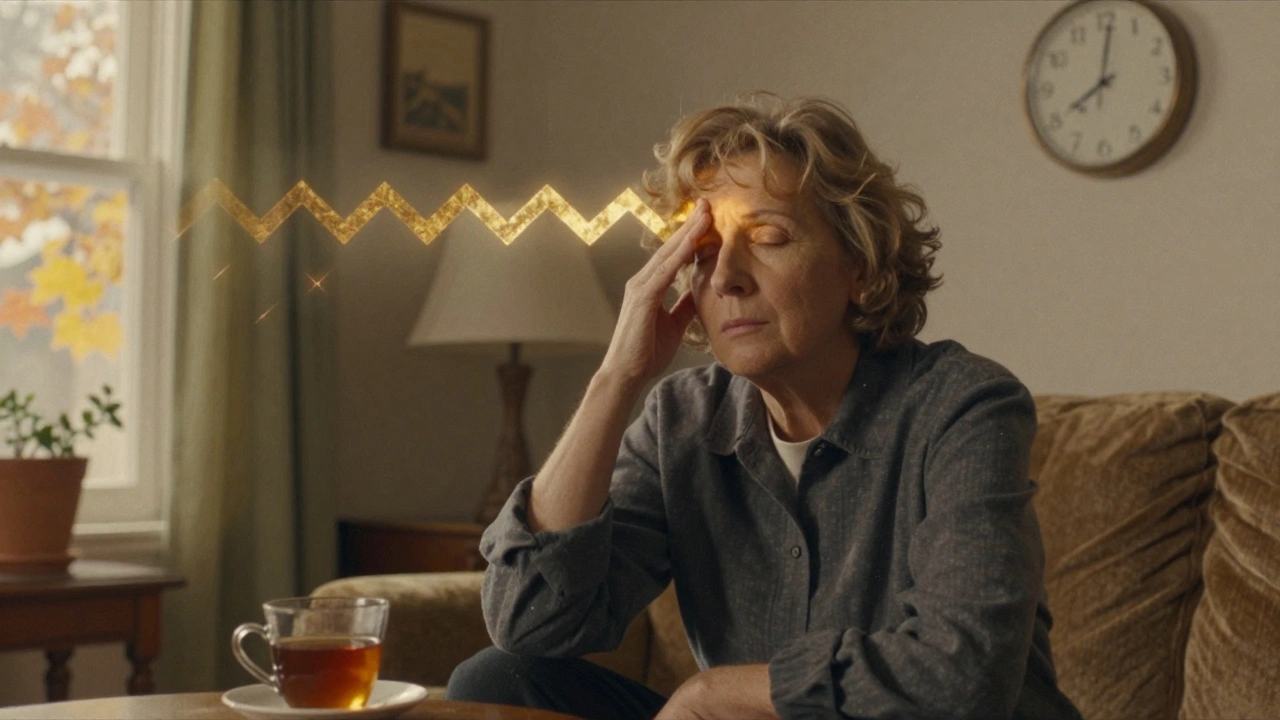
When you see zigzags, flashing lights, or blind spots that come out of nowhere, you're experiencing a visual aura, a temporary neurological disturbance that affects vision before or during a migraine attack. Also known as migraine aura, it’s not a disease—it’s a warning sign your brain is resetting itself. This isn’t just "seeing stars." It’s a wave of electrical activity spreading across the visual cortex, often starting as a tiny flicker in the corner of your eye and growing into a jagged, shimmering arc that blocks part of your sight. It usually lasts 20 to 60 minutes and fades on its own—but it can be scary if you’ve never had it before.
Visual aura is closely tied to migraine, a neurological condition marked by intense headaches and sensory disturbances, but not everyone who gets aura ends up with a pounding headache. Some people only get the visual symptoms. Others feel tingling in their hands, trouble speaking, or sudden fatigue. The real link? It’s your brain’s way of signaling a chemical imbalance—often triggered by stress, lack of sleep, bright lights, or certain foods like aged cheese or red wine. If you’ve had one episode, you’re more likely to have another, especially if you’re female, under 40, or have a family history of migraines.
What you won’t find in most articles is how often visual aura gets mistaken for something worse—like a stroke or retinal detachment. The key difference? Aura symptoms build slowly, move across your vision, and resolve completely. Stroke symptoms hit fast, stay stuck, and often involve weakness or confusion. If you’re over 50 and get aura for the first time, or if the symptoms don’t fade, see a doctor. But if you’ve had it before and know the pattern, you can manage it. Many people track triggers with simple apps or journals. Others find that dimming lights, drinking water, or taking a nap at the first sign helps stop the migraine before it starts.
Below, you’ll find real stories and practical guides from people who’ve lived with this. You’ll learn how to tell if what you’re seeing is aura or something else, how to talk to your doctor about it, and which medications or habits actually help reduce the frequency. No fluff. Just what works—for your eyes, your brain, and your daily life.
- 3/Dec/2025
- by William Womack
-
 ocular migraines
visual aura
retinal migraine
migraine with aura
when to see a doctor
ocular migraines
visual aura
retinal migraine
migraine with aura
when to see a doctor
Ocular Migraines: Visual Aura and When to Worry
Ocular migraines aren't one condition-they're two. Learn the difference between migraine with aura and retinal migraine, what triggers them, and the critical warning signs that mean you need urgent care.
Read