

When you’re on antibiotics, your gut pays the price. Even if the medicine kills off the bad bacteria, it doesn’t discriminate-it wipes out good ones too. That’s why so many people end up with diarrhea, bloating, or yeast infections after a course of antibiotics. The fix isn’t just to pop a probiotic whenever you remember. Timing matters. Take them too close together, and the antibiotics kill the probiotics before they even get started. Get the spacing right, and you can cut your risk of antibiotic-associated diarrhea by more than half.
Why Spacing Matters More Than You Think
Antibiotics don’t just target the infection. They flood your digestive tract, and anything alive in there-good bacteria, bad bacteria, yeast-gets hit. Probiotics are live microbes. If you swallow them right after your antibiotic pill, the antibiotic is still active in your gut. It’s like throwing a lifeline into a flood. The probiotics drown before they can settle in. Research shows that taking probiotics within two hours of an antibiotic dose reduces their survival rate by 78% to 92%. That’s not a small loss. That’s almost all of them. The goal isn’t just to take probiotics-it’s to make sure enough of them live long enough to do their job: restoring balance, crowding out harmful bugs, and helping your gut heal.The Two-Hour Rule: Simple, Proven, Effective
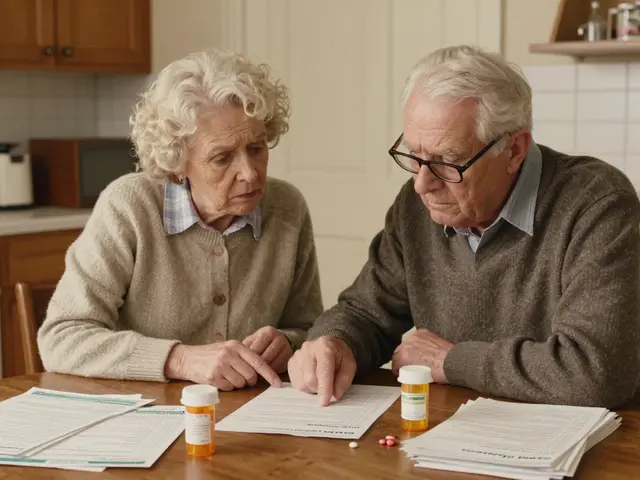
The clearest, most consistent advice from doctors and researchers? Take your probiotic at least two hours before or after your antibiotic. This isn’t a guess. It’s based on how long antibiotics stay active in your digestive system. After two hours, most of the drug has moved on, leaving your gut less hostile to friendly bacteria. For example, if you take amoxicillin at 8 a.m. and 8 p.m., your probiotic should go in at 6 a.m. and 6 p.m., or 10 a.m. and 10 p.m. No need to overcomplicate it. Just keep the two-hour gap. Even if you’re busy, set a phone reminder. Skipping doses cuts effectiveness by 37%, according to clinical studies tracking gut bacteria recovery.Not All Probiotics Are the Same
Here’s where most people get confused. Not every probiotic needs the same treatment. There are two main types: bacterial and yeast-based. Bacterial strains like Lactobacillus rhamnosus GG and Bifidobacterium species are alive, just like the bacteria in your gut. They’re fragile. They need that two-hour buffer. But Saccharomyces boulardii is different. It’s a yeast, not a bacterium. Antibiotics don’t touch yeast. That means you can take Saccharomyces boulardii at the same time as your antibiotic-with no loss in effectiveness. It’s one of the few probiotics that can work even when antibiotics are still in your system. Studies show Saccharomyces boulardii reduces antibiotic-associated diarrhea by 52% at a dose of 20 billion CFUs per day. Lactobacillus rhamnosus GG does almost as well-47% reduction-at 10 to 20 billion CFUs. So if you’re unsure which strain you have, check the label. If it says Saccharomyces boulardii, you’re safe to take it with your antibiotic. If it’s Lactobacillus or Bifidobacterium, wait two hours.How Much Should You Take?
Dose matters. A 5 billion CFU probiotic might help with mild bloating, but it won’t cut the risk of serious diarrhea. Clinical trials use much higher doses.- For short courses (3-5 days): 5-10 billion CFUs per day
- For moderate symptoms like diarrhea: 10-20 billion CFUs
- For long courses (14+ days) or pre-existing gut issues: 20-40 billion CFUs

How Long Should You Keep Taking Them?
Don’t stop when the antibiotics run out. Your gut is still recovering. The bacteria that got wiped out don’t bounce back overnight. In fact, it can take months for your microbiome to fully recover without help. Experts recommend continuing probiotics for 7 to 14 days after your last antibiotic dose. Some studies show 14 days gives the best recovery results. One 2024 study found that people who stuck with probiotics for two weeks after antibiotics had 89% microbiome recovery. Those who stopped early? Only 63%. Think of it like rebuilding a house after a storm. The antibiotics are the storm. The probiotics are the builders. If you send them away too soon, the foundation stays weak.What About Time-Release or Capsule Technology?
Newer probiotics claim to survive antibiotics better because they’re in acid-resistant capsules or have time-release coatings. Companies like Seed and Pendulum are pushing these products. They sound promising. But here’s the catch: there’s still no solid clinical proof that these tech-enhanced probiotics let you skip the two-hour rule. The CDC’s 2024 antimicrobial resistance report confirms that 27 out of 31 major medical institutions still recommend spacing as the standard. Until more independent studies back up the claims, stick with the proven method: time your doses.Common Mistakes and How to Avoid Them
Most people mean well. But they make the same errors over and over:- Taking probiotics with food or coffee-some acidic drinks can kill probiotics before they reach your gut. Take them with water, preferably on an empty stomach.
- Choosing a brand without strain names-if the label just says “probiotic blend” with no specific strains, you’re flying blind. Look for Lactobacillus rhamnosus GG, Bifidobacterium lactis, or Saccharomyces boulardii CNCM I-745.
- Assuming all probiotics are equal-yogurt isn’t a replacement. Most commercial yogurts have too few live cultures to make a difference. Stick with supplements that list CFUs and strains.
- Waiting until after antibiotics to start-studies show this reduces effectiveness by 32%. Start within 48 hours of your first antibiotic dose.

What the Experts Say
The International Scientific Association for Probiotics and Prebiotics (ISAPP), Harvard Medical School, and the NIH all agree: probiotics help. They reduce diarrhea risk by up to 50%. But they also warn against one thing: assuming one size fits all. Dr. Mary Ellen Sanders, a leading probiotic researcher, says: “Studies showing benefit started probiotics as soon as possible after antibiotics began.” That means don’t wait. Don’t delay. Just space them out. Dr. Emeran Mayer from UCLA adds a caution: for broad-spectrum antibiotics like ciprofloxacin or clindamycin, which cause major gut damage, some experts suggest waiting until after the course ends. But this is still debated. For most people, starting early with proper spacing works best.Final Checklist: Your Probiotic-antibiotic Game Plan
Before you start your next antibiotic course, write this down:- Check your antibiotic schedule. When do you take it? Twice a day? Once?
- Check your probiotic label. Does it say Saccharomyces boulardii? If yes, you can take it with your antibiotic. If it’s Lactobacillus or Bifidobacterium, wait two hours.
- Choose a dose: 10-20 billion CFUs for most cases. Go higher if your course is long or you’ve had issues before.
- Start within 48 hours of your first antibiotic dose.
- Take it daily, every day, even if you feel fine.
- Keep going for 14 days after your last antibiotic pill.
What If You Forget?
Life happens. You miss a dose. You take your probiotic 30 minutes after your antibiotic. Don’t panic. One slip won’t ruin everything. Just get back on track. Don’t double up. Don’t try to “catch up.” Just take the next dose at the right time. Consistency over perfection is what matters.Bottom Line
Antibiotics save lives. But they also break your gut. Probiotics can help you recover faster, avoid diarrhea, and protect your long-term gut health. But only if you take them right. Two hours apart. With the right strain. At the right dose. For the right length of time. It’s not complicated. Just precise. And that precision makes all the difference.Can I take probiotics at the same time as antibiotics?
Only if your probiotic is Saccharomyces boulardii, a yeast strain unaffected by antibiotics. For bacterial probiotics like Lactobacillus or Bifidobacterium, taking them within two hours of an antibiotic kills most of the live cultures. Always space them at least two hours apart unless you’re sure you’re using yeast-based probiotics.
How long should I wait after antibiotics before starting probiotics?
Don’t wait. Start within 48 hours of your first antibiotic dose. Studies show starting early reduces antibiotic-associated diarrhea by 71% in children and significantly lowers risk in adults. Waiting until after the course ends cuts effectiveness by 32%.
Do I need a high CFU count?
Yes, for best results. Clinical trials use 10-40 billion CFUs per day. Low-dose probiotics (under 5 billion) may help with mild symptoms but won’t prevent diarrhea effectively. For short courses, 10 billion is enough. For long courses or if you’ve had issues before, aim for 20-40 billion.
Is yogurt enough instead of supplements?
No. Most store-bought yogurts contain too few live cultures to make a difference. They also often have added sugar, which can feed bad bacteria. Supplements with labeled strains and CFU counts are far more reliable for preventing antibiotic-related gut issues.
Should I take probiotics every day during and after antibiotics?
Yes. Take them daily throughout your antibiotic course and for 7-14 days after. Stopping early reduces gut recovery by 26%. Consistent daily use is what leads to the best microbiome restoration.
What if I take my probiotic too close to my antibiotic by accident?
Don’t double up or panic. Just skip the next dose and get back on schedule. One mistake won’t ruin your results. What matters is sticking to the right timing most of the time. Consistency beats perfection.
Are multi-strain probiotics better than single-strain?
No. Studies show no significant advantage. A single, well-researched strain like Lactobacillus rhamnosus GG or Saccharomyces boulardii works just as well-or better-than blends with 10 or more strains. Focus on the strain and dose, not the number of strains.
Can probiotics interfere with antibiotic effectiveness?
No. There’s no evidence that probiotics reduce how well antibiotics fight infections. Their job is to protect your gut, not interfere with the drug. The only risk is killing the probiotics if you take them too close together.


Comments
James Rayner
15/Dec/2025Two hours? I’ve been doing it wrong for years… 😅
Just took my probiotic with breakfast, antibiotic at lunch. No wonder my gut felt like a war zone.
Going to try this now-setting alarms for 6 a.m. and 6 p.m. like the article says.
Worth a shot. My bloating’s been worse than my ex’s texts.
Also, Saccharomyces boulardii? Didn’t even know that was a thing.
Google just told me it’s a yeast. So… probiotic yeast? Wild.
Anyway, thanks for the clarity. I feel like I just got a manual for my insides.
Hope I don’t forget again. My colon deserves better.
Also, 20 billion CFUs? That’s a lot of little guys. I’m impressed.
They’re probably doing backflips in there right now.
And no, I’m not high. Just really into gut health now.
Souhardya Paul
15/Dec/2025This is actually one of the most practical health guides I’ve read in a while.
Too many people treat probiotics like candy-pop one whenever, hope for the best.
But timing? Dose? Strain? These are the details that actually matter.
I’ve been using L. rhamnosus GG for a year now, twice daily, spaced two hours from my antibiotic.
Zero diarrhea, even after a 14-day course of amoxicillin.
Also, the yogurt myth needs to die. I used to think yogurt was enough until I checked the label-500 million CFUs? That’s a drop in the bucket.
Real talk: if your probiotic doesn’t list the strain and CFUs, it’s probably just sugar water with a fancy bottle.
And yeah, starting within 48 hours? Critical.
I waited three days once. Regretted it.
My gut took three months to feel normal again.
Don’t be like me.
Josias Ariel Mahlangu
15/Dec/2025People these days think they can outsmart biology with supplements.
You take antibiotics because you’re sick. Not because you want a spa day for your gut.
Let your body heal naturally. Don’t clutter it with more chemicals.
Probiotics are a scam marketed by supplement companies.
If your gut can’t recover on its own, maybe you shouldn’t have gotten sick in the first place.
Stop treating your body like a broken machine you can fix with pills.
It’s not a car. It’s not a phone.
It’s a living system that knows how to heal-if you let it.
And no, I don’t take probiotics. I’ve never needed them.
And I’m 52.
Still running marathons.
Because I don’t overcomplicate things.
anthony epps
15/Dec/2025Wait, so if I take probiotics at the same time as antibiotics, they just die?
Like, poof? Gone?
So I gotta wait two hours?
What if I forget?
Do I just skip it?
And what’s CFU? Is that like a unit of bacteria?
Is it like, 10 billion bacteria in one pill?
That’s a lot.
Are they alive?
Do they swim?
Sorry, I’m not smart.
But I wanna do this right.
Can someone just tell me what to do without the science stuff?
Andrew Sychev
15/Dec/2025THIS IS WHY AMERICA IS FALLING APART.
You people are so obsessed with ‘gut health’ you’ve turned your intestines into a cult.
Two hours? 20 billion CFUs? Saccharomyces what-now?
You’re not healing. You’re performing.
Someone takes an antibiotic, and suddenly they’re a microbiologist.
‘I’m taking my probiotic at 6 a.m. sharp, with filtered water, in the dark, while listening to binaural beats.’
It’s not medicine. It’s TikTok wellness theater.
And now you’re judging people who don’t take supplements.
‘Oh, you didn’t take probiotics? Your gut’s probably full of demons.’
Get a grip.
Antibiotics work. Your body recovers.
Stop turning your colon into a business model.
Dan Padgett
15/Dec/2025Man, this article hit me like a warm bowl of jollof rice after a long day.
Back home in Nigeria, we don’t have fancy probiotic bottles, but we have fermented pap-called ‘ogi’-and we’ve been using it for generations to calm the belly after antibiotics.
It’s not 20 billion CFUs, but it’s alive, it’s local, and it doesn’t cost a fortune.
Same idea: space it out, don’t rush it.
My grandma said, ‘Don’t mix the healer with the hitter.’
She didn’t know about Lactobacillus, but she knew timing.
And now I see she was right all along.
Probiotics ain’t magic.
But they ain’t nonsense either.
Just treat your gut like a garden.
Don’t spray poison and then dump seeds right after.
Wait. Let the soil rest.
Then plant.
That’s all.
Hadi Santoso
15/Dec/2025Okay so I just learned that yogurt isn’t enough… and I’ve been eating it every morning for 5 years thinking I was doing good 😅
Also, Saccharomyces boulardii? I had no idea that was a yeast.
So it’s like… a probiotic mushroom? Cool.
And I thought multi-strain was better-turns out, nah.
One good strain > ten confused ones.
Also, I’ve been taking mine right after breakfast with coffee.
Oh no.
That’s probably why I still get gassy.
Going to switch to water, empty stomach, two hours apart.
And I’m getting the 20 billion CFU one now.
My gut’s gonna be so confused but in a good way.
Also, thanks for not making me feel dumb for not knowing this.
You’re a good human.
Kim Hines
15/Dec/2025Just wanted to say thank you for writing this.
It’s the first time I’ve seen someone explain this without sounding like a pharmaceutical ad.
Simple. Clear. No hype.
I’ve been on antibiotics twice this year.
Both times, I had awful diarrhea.
Now I know why.
Not because I’m weak.
Because I didn’t know.
And now I do.
That’s all.
Ron Williams
15/Dec/2025James Rayner’s comment made me laugh but also nod hard.
‘They’re probably doing backflips in there right now.’
That’s the most accurate description I’ve ever heard.
And Josias, I hear you-but your ‘let nature heal’ stance ignores that modern medicine has created a new kind of imbalance.
Antibiotics are powerful, yes.
But they’re blunt instruments.
Probiotics aren’t about replacing nature-they’re about helping it recover faster.
Like putting a bandage on a deep cut so it doesn’t get infected while healing.
It’s not magic.
It’s medicine with common sense.
And if you’ve never had antibiotic diarrhea, you’re lucky.
Not morally superior.
Just lucky.
Kitty Price
15/Dec/2025Just took my probiotic 2 hours after my antibiotic for the first time.
And I didn’t even think about it.
Just… did it.
And for once, my stomach didn’t feel like a stormy sea.
So… thank you.
And no, I didn’t need a 1000-word essay to understand.
Just the two-hour rule.
That’s all I needed.
And I’m gonna keep doing it.
For 14 days after.
Even if I forget one day.
Then I’ll just try again tomorrow.
That’s all.