

Every year, hundreds of thousands of people in the U.S. end up in the emergency room because they took the wrong pill, too much of a pill, or missed a dose entirely. For older adults managing five or more medications, it’s not a matter of being careless-it’s a matter of complexity. A morning routine with four different pills, each at a different time, can easily turn into a confusing mess. That’s where blister packs and pill organizers come in. They’re not fancy gadgets. They’re simple, proven tools that stop mistakes before they happen.
Why Medication Mistakes Happen
Most people don’t realize how easy it is to mess up meds. Imagine you’re juggling prescriptions for high blood pressure, diabetes, cholesterol, arthritis, and a sleep aid. You’ve got bottles scattered around the bathroom counter. Some pills look almost identical. You’re tired. You’re in a rush. You grab the bottle labeled "10 mg"-but was that the morning one or the night one? Did you already take it? This isn’t rare. A 2022 study found that nearly half of all adults with chronic conditions don’t take their meds as prescribed. And it’s not because they’re forgetful. It’s because the system is broken. The biggest risks? Overdosing on blood thinners, mixing up diabetes meds, or doubling up on painkillers. These aren’t theoretical. They lead to falls, kidney damage, hospital stays, and sometimes death. The cost? Over $200 billion a year in avoidable healthcare spending. The fix? Simple organization.What Are Blister Packs?
Blister packs are pre-filled, sealed plastic trays with individual compartments for each dose. Each bubble holds one pill, clearly labeled with the day and time: "Mon AM," "Tue PM," "Wed Bedtime." They’re made by specialty pharmacies, not your local drugstore. You give them your full medication list, and they sort everything for you-often covering a full month. These aren’t the same as the little plastic blister packs you get from the pharmacy when you buy a single prescription. Those are just packaging. The kind used for adherence are custom-built for your schedule. Each compartment is tamper-evident, so you can tell if someone opened it. Many now include QR codes you can scan with your phone to hear a voice explain what the pill is for and why you need it. Studies show they cut medication errors by 67% compared to traditional bottles. In one trial with 180 older adults on multiple meds, those using blister packs took their pills correctly 87% of the time. Those using regular bottles? Only 64%. That’s a 23-point difference. And it matters. Blood pressure dropped more in the blister pack group. Fewer people ended up in the hospital.How Pill Organizers Work
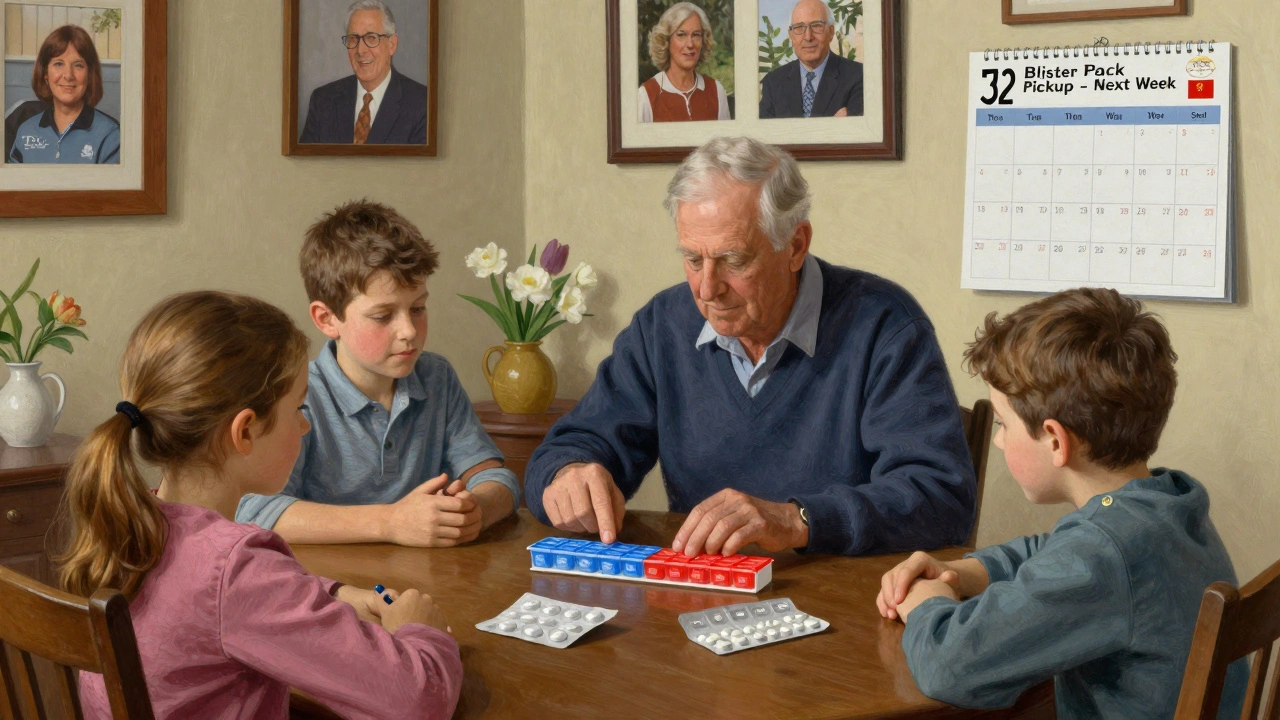
Pill organizers are the do-it-yourself version. You buy a plastic box-usually with seven compartments, one for each day. Some have four slots per day: morning, noon, evening, bedtime. You fill them yourself, once a week, using your original prescription bottles. They’re cheap. You can find a basic one for under $10 on Amazon. They’re portable. Great for travel. But they have a big flaw: you have to fill them. And that’s where mistakes creep in. If you have arthritis, your hands might shake. If you’re tired, you might grab the wrong bottle. One caregiver on AgingCare.com said her dad with dementia kept taking extra doses because he thought he’d missed one. He’d see an empty slot and assume he hadn’t taken it yet. That’s not a memory issue-it’s a design flaw. Single-compartment organizers don’t show time of day. People mix up pills. One study found 34% of users made errors during their first refill.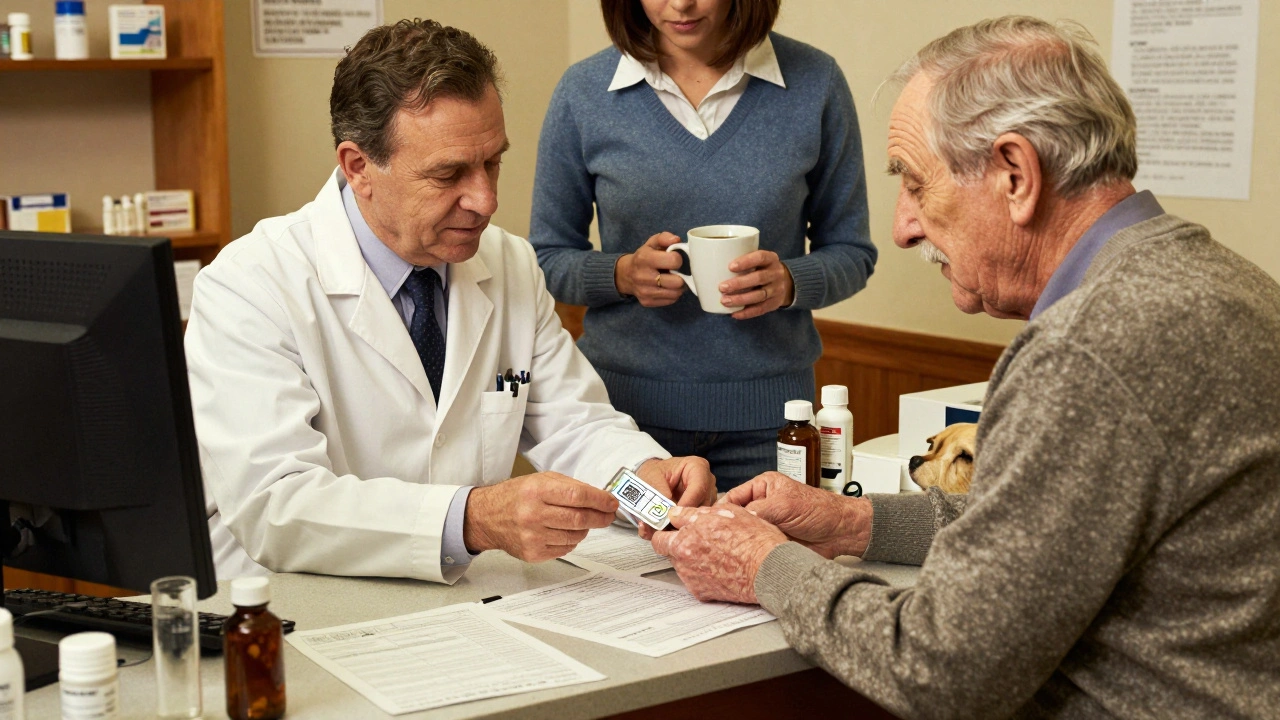
Blister Packs vs. Pill Organizers: Which Is Better?
| Feature | Blister Packs | Pill Organizers |
|---|---|---|
| Who fills it? | Pharmacy | You or caregiver |
| Accuracy | 98% | 75-82% |
| Time to set up | 3-5 business days | 10-15 minutes per week |
| Cost per month | $45-$105 | $5-$20 (reusable) |
| Handles complex schedules? | Yes (multiple times per day) | Only with multi-compartment models |
| Changes to meds? | Requires new pack | Easy to adjust |
| Reduces overdose risk? | Yes-prevents double-dosing | Only if used perfectly |
Real Stories, Real Results
One woman in Seattle, u/CaregiverInSeattle on Reddit, said her 82-year-old mom was missing 3-4 doses a week. After switching to blister packs, it dropped to 1-2 per month. "She can see exactly which bubbles are empty," she wrote. "No more guessing." A caregiver in Michigan shared that her father with dementia had been going to the ER every few months because he took too many painkillers. After using blister packs, he went 18 months without a single visit. A survey of 1,247 caregivers found 89% saw fewer mistakes after using blister packs. The top reasons? "Easy to double-check missed doses" (78%), "less chance of taking the wrong med" (82%), and "huge time saver" (65%).How to Get Started with Blister Packs
You can’t buy blister packs off the shelf. You need to work with a pharmacy that does multi-dose packaging. Most Medicare Advantage plans cover them. Ask your pharmacist if they offer "unit-dose blister packaging" or "medication adherence packaging." Here’s how it works:- Call your pharmacy and ask if they provide custom blister packs.
- Bring a list of all your meds-prescription, over-the-counter, vitamins, supplements.
- The pharmacy reviews your regimen and builds your pack. This takes 3-5 days.
- You get your pack with clear labels. They’ll show you how to open it.
- Follow-up call in 7 days to make sure everything’s working.
When Pill Organizers Are Still Useful
Blister packs aren’t perfect. They can’t hold medications that need refrigeration-like insulin or certain antibiotics. They’re not ideal if your doctor changes your meds every week. That’s where pill organizers shine. If you’re on a stable routine, or you’re traveling, or you’re trying a new med for a few weeks, a pill organizer gives you flexibility. Just make sure you use one with separate compartments for morning, afternoon, evening, and bedtime. Don’t use a simple 7-day box if you take meds more than once a day. Use color-coded organizers. Blue for morning, red for evening. Transparent lids so you can see inside. And always refill them on the same day each week-Sunday works for most people.What to Avoid
Don’t mix pills from different bottles in the same compartment. Even if they look the same, they’re not. One pill might be 5 mg, another 10 mg. Don’t rely on memory. Don’t use pill organizers if you have dementia or severe memory loss unless someone else fills them. Don’t assume your doctor knows you’re using a blister pack. Tell them. They need to know so they don’t prescribe something that can’t go in one. And never, ever skip the follow-up. If the pack doesn’t make sense-if you’re not sure what a pill is for-call the pharmacy. The FDA found that 32% of people using blister packs still didn’t understand why they were taking certain meds. That’s a safety gap.The Future of Medication Safety
New tech is making blister packs smarter. Some now have sensors that send alerts to your phone or caregiver’s app if you don’t open a dose. Others have QR codes that play video instructions. In 2023, the FDA approved the first QR-enabled blister packs. By 2025, nearly half of Medicare beneficiaries are expected to use them. But the real win isn’t the tech. It’s the peace of mind. For families, it means fewer late-night calls to the ER. For seniors, it means staying independent longer. For the system, it means billions saved. You don’t need a fancy gadget to prevent a medication mistake. You just need the right system. And for most people managing multiple pills, that system is a blister pack.Can I use blister packs for all my medications?
No. Blister packs can’t hold medications that need refrigeration, like insulin or some antibiotics. They also aren’t ideal for drugs that need to be crushed or split, or those taken on an as-needed basis, like pain relievers. Always check with your pharmacy before switching.
Are blister packs covered by insurance?
Most Medicare Advantage plans cover custom blister packs. Some Medicaid programs and private insurers do too. Ask your pharmacy-they’ll check your coverage and bill the insurer directly. You’ll usually pay little or nothing out of pocket.
How often do I need to get new blister packs?
Most people get them every 30 days. If your medications change, your pharmacy will make a new pack. You don’t have to refill it yourself. Just bring your updated list to your next appointment.
Can I use a pill organizer instead of a blister pack?
Only if your regimen is simple-like one pill once a day. If you take four or more meds daily, or need different doses at different times, a pill organizer increases your risk of error. Blister packs are safer and more reliable for complex regimens.
What should I do if I miss a dose in my blister pack?
Don’t double up. Look at the label: if it says "take today," and you missed it, take it as soon as you remember-if it’s still the same day. If it’s already the next day, skip it. Never take two doses at once unless your doctor says so. The pack is designed to prevent this exact mistake.


Comments
Ignacio Pacheco
1/Dec/2025So let me get this straight - we’re paying $100 a month so my grandma doesn’t have to read the tiny print on her pill bottles? And this is the best our healthcare system can do? I mean, sure, it works, but it’s like giving a drowning man a life jacket made of duct tape and hope.
Gavin Boyne
1/Dec/2025Blister packs are the quiet revolution nobody asked for but everyone needs. We’ve outsourced our cognitive load to pharmacies because the system failed us - not because we’re old or forgetful. This isn’t convenience. It’s damage control. And honestly? The fact that QR codes now whisper the purpose of your meds like a gentle AI aunt? That’s the future. Not flying cars. Not AI therapists. Just someone making sure you don’t swallow your blood thinner thinking it’s your calcium.
Rashi Taliyan
1/Dec/2025Oh my god, I just remembered my aunt in Mumbai - she uses a little tin box with sticky notes for each time of day. One for morning, one for night, one for ‘when I remember’. She’s 86. No internet. No pharmacy. Just her and her handwritten labels. I cried reading this. We think tech fixes everything, but sometimes, love and a Sharpie do the job better than any QR code.
Kara Bysterbusch
1/Dec/2025Let me be crystal clear: this is not about gadgets. This is about dignity. The moment a person has to rely on a plastic tray labeled ‘Tue PM’ to avoid a hospital bed, we’ve already lost the battle. But the fact that these blister packs are reducing ER visits by nearly a third? That’s not just data - that’s someone’s mother still cooking dinner. That’s someone’s father still walking the dog. That’s the quiet triumph of systems over chaos. And yes, it’s worth every penny. Even if your insurance doesn’t cover it, fight for it. Your future self will thank you.
Rashmin Patel
1/Dec/2025OMG I LOVE THIS SO MUCH 🙌 I’ve been using a pill organizer for my mom since last year and I swear, I’ve become a pill-organizing ninja 🥷✨ I color-code everything - blue for heart meds, red for pain, green for vitamins (because green = healthy, duh), and I refill every Sunday like clockwork 📅 I even took a photo of the layout and printed it out so my sister can help if I’m away. And guess what? My mom hasn’t missed a single dose in 11 months! 🎉 Also, if you’re scared of opening bubbles? Get the easy-open ones - they’re like little magic doors that just pop right open 😍 Seriously, if you’re on 5+ meds, this is non-negotiable. No excuses. Do it. Your brain will thank you.
sagar bhute
1/Dec/2025This is what happens when you let old people live alone. They need babysitters with plastic trays. You think this is healthcare? It’s custodial care with a fancy name. The real problem is we’re keeping people alive too long without fixing the root cause - families don’t care anymore. Blister packs are a bandage on a gunshot wound.
Cindy Lopez
1/Dec/2025Minor grammatical note: The phrase ‘you don’t count pills. You don’t sort them.’ is a fragment. It should be ‘You don’t count pills or sort them.’ Also, ‘blister packs’ is plural throughout - ensure consistency. Otherwise, the content is compelling and well-researched. Thank you for the clarity.
shalini vaishnav
1/Dec/2025In India, we’ve been using pill boxes for decades. Why is this a revelation in America? You have the technology to send rockets to Mars, but you need a plastic tray to remember to take your blood pressure pill? This isn’t innovation - it’s cultural failure. We don’t need QR codes. We need children who visit their parents. Not apps. Not pharmacies. People.
vinoth kumar
1/Dec/2025I just showed this to my uncle who’s on 7 meds and he cried. Said he’s been taking his meds wrong for 3 years and never knew. We’re gonna get him a blister pack next week. Honestly, this post saved his life. Thank you for writing this. I’m sharing it with every family group chat I’m in. Let’s make this common knowledge. No one should have to guess if they took their pill.
bobby chandra
1/Dec/2025THIS. IS. A. GAME. CHANGER. 🚀 I used to laugh at my mom’s pill organizer - now I’m the one buying the easy-open blister packs with QR codes. I’ve got a spreadsheet tracking her doses, a calendar alert, and a little voice memo I left her: ‘If you’re not sure, don’t guess. Call me.’ But the real magic? The first time she opened a bubble and said, ‘Oh. So that’s why I’m taking this.’ That’s not compliance. That’s understanding. And that’s power. We’re not just preventing mistakes - we’re restoring agency. And that? That’s worth every single dollar.
Archie singh
1/Dec/2025Blister packs are a scam. They’re expensive. They’re bureaucratic. And they make people feel like children. The real solution? Teach people to read. Or stop prescribing so many pills. Simple.