

Key Takeaways
- Purpose: To provide clear, non-technical safety info for high-risk medications.
- Default Access: Your pharmacist must give you a paper copy every time the drug is dispensed.
- Rights: You can request an electronic version or ask for a guide even if one wasn't provided.
- REMS: Some guides are part of a stricter safety program called REMS.
- Future: The FDA is moving toward a standardized "Patient Medication Information" (PMI) system.
Where to Get Your Medication Guide
For most people, the easiest way to access these guides is at the pharmacy counter. According to 21 CFR part 208 regulations, pharmacists are required to hand you a paper guide each time a required medication is dispensed in an outpatient setting. This applies whether it's a brand-new prescription or a routine refill.
If you are at a community pharmacy or an ambulatory care unit-basically anywhere you'll be taking the medicine without a doctor watching you-the guide should be in your bag. However, things get a bit different in a hospital. If you're an inpatient and a nurse is administering the drug, the pharmacy isn't required to give you a guide because a professional is managing the dose. But here's the catch: if you ask for one, they still have to provide it.
If you've lost your guide or never received one, you have a few options:
- Ask your pharmacist: They are the primary distributors and can print a fresh copy.
- Request a digital copy: While paper is the default, you can specifically ask for an electronic version to save trees or keep on your phone.
- FDA Online Repository: The U.S. Food and Drug Administration maintains a database of approved labeling and guides on its official website, though it can be a bit clunky to navigate compared to a pharmacy's direct help.

Why Some Drugs Have Guides and Others Don't
You'll notice that your blood pressure pill might not have a guide, but a strong anticoagulant or a specific psychiatric medication does. The FDA doesn't pick these at random. A drug is flagged for a required guide based on three specific triggers: the risks are so serious they might change your mind about taking the drug, the drug is only effective if you follow directions perfectly, or the guide itself is the best way to prevent a catastrophic adverse effect.
In some cases, these guides are part of a larger safety net known as REMS (Risk Evaluation and Mitigation Strategies). When a drug is under a REMS program, the guide isn't just a handout; it's a requirement for the program. Your doctor might even be required to sit down and review the guide with you before you're even allowed to start the medication.
| Feature | Medication Guide (MG) | Standard Package Insert |
|---|---|---|
| Target Audience | Patients and Caregivers | Healthcare Providers |
| Language | Non-technical, plain English | Medical jargon, clinical data |
| Length | Short, focused on safety | Comprehensive, many pages |
| Delivery | Mandatory at every dispensing | Usually provided once or on request |
The Problem with Current Guides
Despite the rules, these guides aren't always easy to read. A 2012 study published in PMC (PMC3509312) pointed out a frustrating trend: as the number of required guides grew (from 40 in 2006 to 305 by 2011), the readability didn't actually get better. Many guides still use language that's too complex for the average person, failing to meet federal readability standards.
This creates a gap where a patient has the document in their hand but still doesn't truly understand the risks. This is why you should always ask your pharmacist to "walk you through" the guide if something seems confusing. Don't just nod and put it in the drawer; if the guide is required, the information inside is vital for your survival or the drug's success.
What's Changing: The Shift to PMI
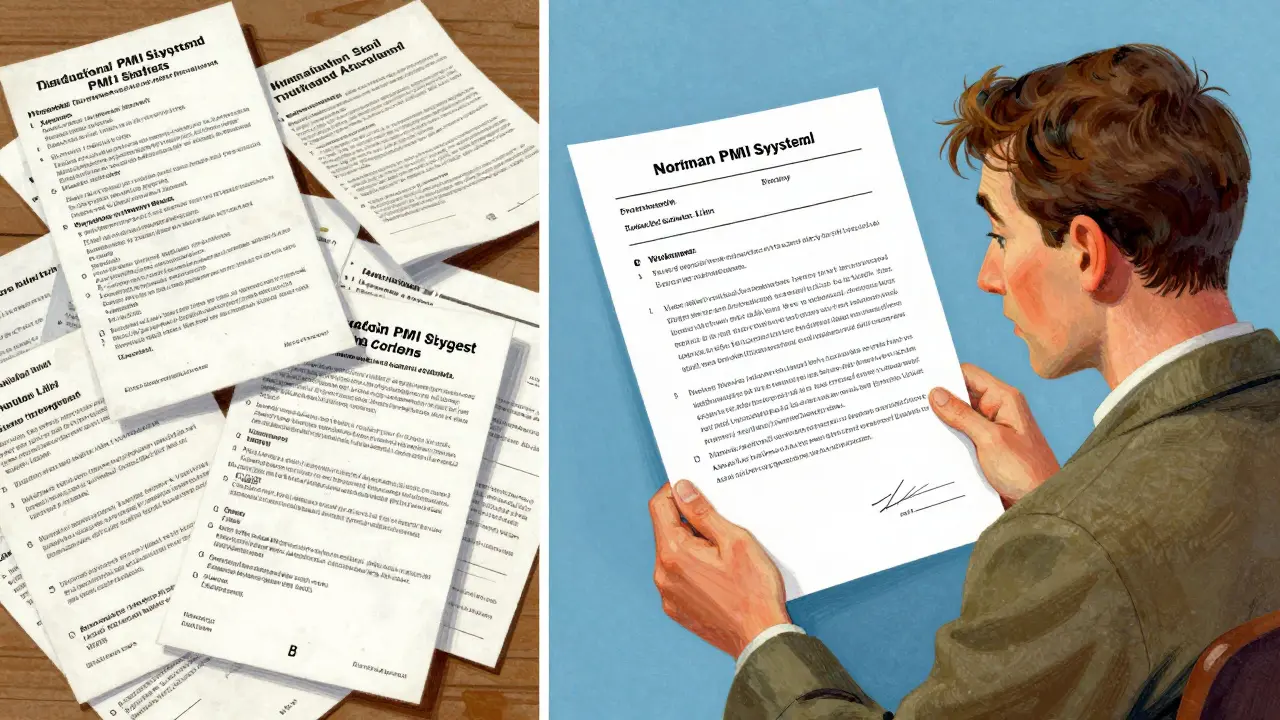
The FDA knows the current system is flawed. To fix the readability and accessibility mess, they've proposed a new system called Patient Medication Information (PMI). Unlike the current guides, which can be any length and style, PMI will be a standardized, one-page document.
The goal is to create a central, FDA-managed online repository where any patient can find a consistent, easy-to-read summary of their drug. This would replace the haphazard nature of current guides. The rollout is happening in stages based on when the drug was first approved, with some drugs needing to switch to the PMI format within a year and others taking up to five years.
Do I have to take a Medication Guide if my doctor said it's not necessary?
Yes, you have the right to request one regardless of what your prescriber says. While a doctor might feel the guide is unnecessary for your specific case, the FDA regulations ensure that the patient's right to this safety information comes first.
Is a Medication Guide the same as the long leaflet in the box?
No. The long leaflet is the full prescribing information meant for doctors. The Medication Guide is a shorter, plain-English version specifically designed for patients to help them avoid serious risks.
Can I get these guides in a language other than English?
By law, the FDA requires these guides to be written in English using non-technical language. However, many manufacturers provide translations. Ask your pharmacist if a version in your preferred language is available.
What happens if my pharmacist forgets to give me the guide?
If you know your medication requires a guide and you didn't receive one, call your pharmacy immediately. They are legally obligated to provide it for outpatient dispensing. You can also look it up on the FDA's official labeling website.
Are these guides updated often?
They are updated whenever the FDA approves a change in the drug's labeling or discovers new safety risks. This is why it's important to look at the guide provided with your most recent refill, not just the one you got three years ago.
Next Steps for Your Safety
If you're starting a new high-risk medication, don't just glance at the guide. Highlight the "Important Safety Information" and "Common Side Effects" sections. If you're a caregiver for someone else, make sure you're the one reading the guide, as you'll be the first to notice if the patient is having an adverse reaction.
If you're currently taking a medication and realize you never got a guide, check the FDA's labeling resources or call your pharmacist. It only takes a few minutes to get the document, but those few minutes could prevent a serious medical mistake.
Write a comment
Latest Posts

Comments
Rim Linda
12/Apr/2026Omg I literally almost died because my pharmacist didn't give me the guide for my meds!!! 😱 I had no idea about the side effects and it was a total nightmare! Why is it so hard for them to just do their jobs?? This is actually terrifying 😭
Tabatha Pugh
12/Apr/2026Actually, the failure rate of pharmacists providing these isn't just about laziness, it's a systemic failure of the pharmacy workflow. Most people don't even realize these aren't the standard inserts. If you're taking a high-risk drug like warfarin, you should already be in a REMS program or at least be meticulously tracking your INR levels regardless of whether a piece of paper was handed to you or not.
Mark Dueben
12/Apr/2026It might be worth mentioning that some people find the pharmacy environment a bit overwhelming, so it's okay to ask the pharmacist to step aside for a moment to explain the guide. We all deserve to feel comfortable and informed about our medications without feeling rushed at the counter.
rupa das
12/Apr/2026pmi is just another way for the fda to pretend they are fixing things when the actual problem is the drug companies writing the text anyway
Randy Ryder
12/Apr/2026The transition to a standardized PMI repository is a significant step in mitigating information asymmetry between the provider and the patient. By leveraging a centralized digital database, the FDA can ensure that the pharmacokinetic and pharmacodynamic warnings are delivered in a more digestible format, effectively reducing the iatrogenic risks associated with suboptimal medication adherence.
Ikram Khan
12/Apr/2026Wow! I never knew the FDA had a whole database for this! 🌟 That is just amazing! It's like having a secret weapon for your health! I'm definitely going to check out my current meds and see if there's anything I missed. Let's all stay safe and empowered! 💪✨
Brooke Mowat
12/Apr/2026It's like a litle map for a scary jungle of chemistry, innit? We gotta be the captains of our own health ship and sail through the fog of medical jargon with a bit of spark and courage. Just imagging the relief when we finlly get a one-page summary that doesn't feel like it was written by a robot from the future. Let's just keep glowwing and growwing in our wellness journey, one little piece of paper at a time!