

When you're pregnant, taking folic acid isn't just a good idea-it's essential. But what you might not realize is that folic acid doesn't play nice with every medication. It can weaken some drugs, boost others, or even cause unexpected side effects. If you're on seizure meds, antibiotics, or even arthritis drugs, skipping a conversation with your doctor about your prenatal vitamin could put you-and your baby-at risk.
Every year, thousands of women in the UK and US take prenatal vitamins without knowing how they interact with other medicines they're using. Some women start folic acid after they find out they're pregnant. Others keep taking their usual prescriptions alongside their supplement, assuming it’s all safe. But the science says otherwise.
Why Folic Acid Matters So Much
Folic acid is the synthetic form of vitamin B9, also called folate. It’s not just another supplement-it’s a critical player in how your baby’s brain and spine form. Neural tube defects like spina bifida and anencephaly happen when this early development goes wrong. The good news? Taking 400 micrograms (mcg) of folic acid daily before conception and through the first trimester cuts the risk of these defects by 50-70%.
The CDC has pushed this advice since 1992. In the US, food companies have been required to add folic acid to white bread, pasta, and cereals since 1998. That policy alone cut NTD rates by nearly half. But even with fortified foods, most women still need a supplement to hit the target. The National Academies recommend 600 mcg daily during pregnancy.
Most prenatal vitamins contain between 600 and 1,000 mcg of folic acid. Some prescription versions go even higher-up to 5,000 mcg-for women with specific conditions like epilepsy. That’s not an accident. It’s science-backed.
How Folic Acid Interacts With Common Medications
Here’s where things get tricky. Folic acid doesn’t just sit quietly in your body. It actively changes how other drugs work.
Anticonvulsants like phenytoin (Dilantin), carbamazepine (Tegretol), and valproic acid are used to control seizures. But folic acid can reduce their effectiveness. One Reddit user, u/AnxiousMom2022, described having a breakthrough seizure after starting her prenatal vitamin while on phenytoin. Her neurologist later confirmed: folic acid interferes with how these drugs are metabolized. Women on these meds often need 4,000-5,000 mcg of folic acid daily-not to prevent NTDs, but to counteract the drug’s effect on folate levels. Still, the dose must be carefully managed by a specialist.
Methotrexate, used for autoimmune diseases and sometimes to treat ectopic pregnancies, works by blocking folate. Taking folic acid alongside it can reduce methotrexate’s toxicity. In fact, doctors sometimes prescribe low-dose folic acid to patients on methotrexate to protect healthy cells. But timing matters. If you take them together, the folic acid might reduce the drug’s effectiveness. The key? Take them at least 12 hours apart, and only under medical supervision.
Pyrimethamine, used to treat toxoplasmosis during pregnancy, also blocks folate. Adding folic acid can make it less effective. Pharmacists at CVS Health report that 32% of women on this drug need their dose adjusted when they start taking prenatal vitamins. Left unmanaged, this could mean the infection isn’t fully treated-putting the baby at risk.
Sulfasalazine, commonly prescribed for ulcerative colitis or rheumatoid arthritis, interferes with folate absorption. The UK’s NICE guideline NG212 (January 2023) warns that folic acid supplements won’t fix this problem if taken at the same time. Women on this drug may need higher doses of folic acid-but only if their doctor monitors blood levels closely.
Iron and Calcium: The Silent Saboteurs
You might think your prenatal vitamin is doing everything right-until you realize you’re taking it with breakfast. That’s a common mistake.
Iron, a key ingredient in most prenatal vitamins, can reduce folic acid absorption by 20-30% when taken at the same time. Calcium does the same. That’s why many women report nausea and poor tolerance-they’re getting less of what they need because of how they’re taking it.
One 2023 survey of over 2,000 pregnant women found that 78% experienced nausea from iron-containing prenatal vitamins. Of those, 62% switched to taking folic acid separately-on an empty stomach-and took iron later in the day. That simple change cut their nausea by half and improved their folate levels.
Even antacids can interfere. Taking folic acid with Tums or Rolaids? You’re blocking up to 50% of absorption. The FDA updated its labeling in 2021 to warn about this. Best practice? Take folic acid at least two hours before or after calcium-rich meals or antacids.

Who Needs More Than the Standard Dose?
Not everyone needs the same amount.
If you’ve had a previous pregnancy affected by a neural tube defect, you’re at higher risk. The CDC recommends 4,000 mcg daily starting one month before conception. That’s ten times the standard dose-and it should only be taken under a doctor’s care.
Women with the MTHFR 677C>T gene variant (found in 10-15% of Caucasians and 20-25% of Hispanics) have trouble converting folic acid into its active form. For them, supplements with L-methylfolate (like Quatrefolic®) are now available. The FDA approved the first prenatal vitamin with this form in 2023. It’s pricier-around $46/month-but may be necessary for some.
Women with epilepsy, inflammatory bowel disease, or those taking methotrexate or pyrimethamine need individualized plans. No one-size-fits-all here. Blood tests for folate levels and homocysteine can help guide dosing.
What About Autism and Other Risks?
There’s been a lot of noise about folic acid and autism. Some studies say it reduces risk; others say it doesn’t. A 2022 study of 45,300 children in the US found a 40% lower chance of autism when mothers took folic acid before and during early pregnancy. But a 2021 Danish study of over 35,000 births found no link.
The truth? The benefits for preventing neural tube defects are clear. The potential effects on autism are still being studied. The CDC says there’s no confirmed harm from folic acid at recommended doses-even at 1,000 mcg daily. But some researchers, like Dr. Joseph Selhub from Tufts University, warn that very high doses might lead to unmetabolized folic acid building up in the blood. We don’t yet know what that means long-term.
Bottom line: Stick to 600-800 mcg unless your doctor says otherwise. More isn’t always better.
Real-World Tips for Safe Use
- Start folic acid at least one month before trying to conceive. Neural tube closure happens before most women know they’re pregnant.
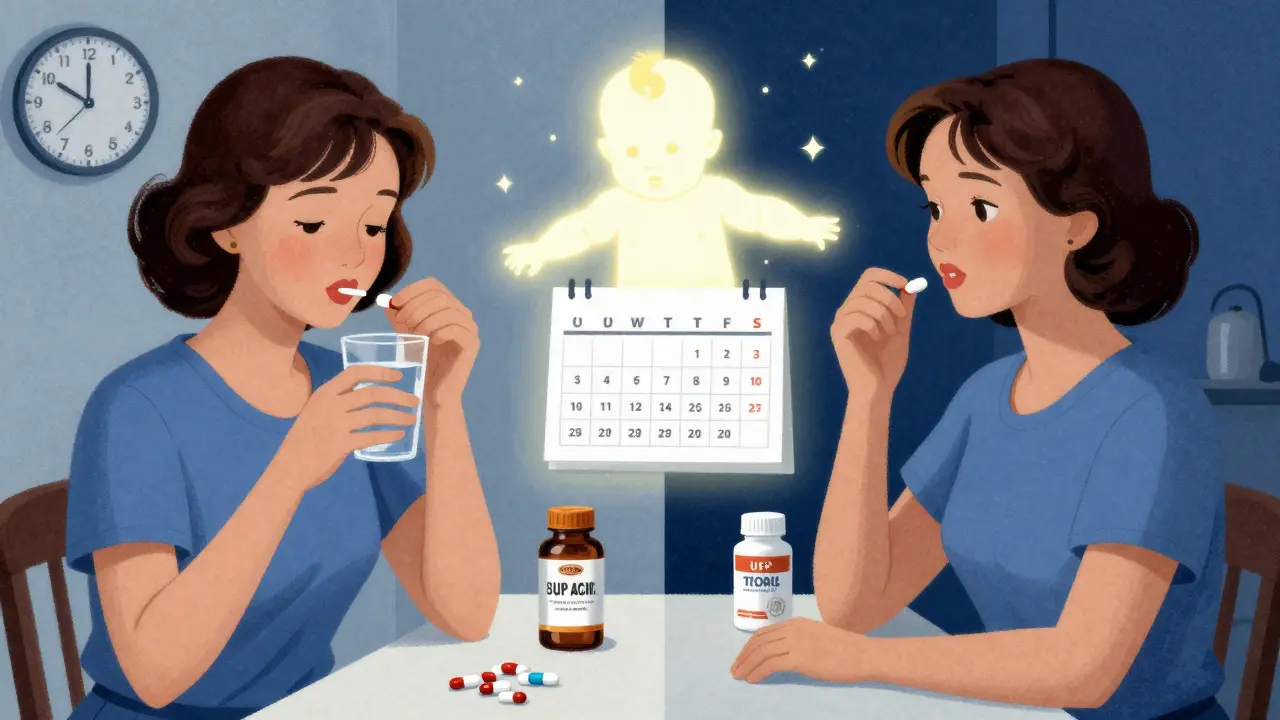
- Take your folic acid on an empty stomach with water. Avoid taking it with coffee, calcium-rich foods, or antacids.
- If your prenatal vitamin causes nausea, split it. Take folic acid in the morning, iron at night.
- Always tell your doctor about every medication you take-including over-the-counter drugs, herbal supplements, or acne treatments like isotretinoin.
- Don’t assume your OTC prenatal is safe. Some contain 1,000 mcg folic acid. Others have heavy metals. Look for USP verification on the label.
- If you’re on any of the medications mentioned above, don’t adjust your dose yourself. Ask your OB, pharmacist, or specialist.
What’s New in 2026?
The FDA is pushing to fortify corn masa flour with folic acid by 2025. Why? Hispanic women in the US have 20-30% higher rates of neural tube defects. Fortifying masa, a staple in many Latin American diets, could close that gap.
Meanwhile, research continues into whether folic acid affects other outcomes-like preterm birth, preeclampsia, or even childhood cognition. But for now, the goal remains simple: prevent neural tube defects. Everything else is secondary.
Can I take folic acid with my prenatal vitamin if I’m on seizure medication?
No-not without medical supervision. Folic acid can reduce the effectiveness of anticonvulsants like phenytoin and carbamazepine. Women on these drugs need higher doses (up to 5,000 mcg daily) to prevent neural tube defects, but this must be carefully balanced with seizure control. Always consult your neurologist and OB-GYN before making changes.
Is it safe to take more than 1,000 mcg of folic acid during pregnancy?
Only if prescribed. The upper limit for adults is 1,000 mcg per day. Higher doses are used medically-for example, in women with prior NTD-affected pregnancies or those on methotrexate. But taking extra without a reason may lead to unmetabolized folic acid in your blood. While no major harms have been confirmed, long-term effects are still being studied. Stick to your doctor’s recommendation.
Should I switch to a prenatal vitamin without iron if I get nauseous?
You don’t have to switch entirely. Iron is important during pregnancy, but it can cause nausea when taken with folic acid. Try taking your iron supplement at night and your folic acid in the morning on an empty stomach. Many women find this reduces nausea and improves absorption. If nausea persists, ask your provider about iron-free prenatal vitamins or separate supplements.
Does folic acid mask a vitamin B12 deficiency?
This was a real concern in the past. High folic acid doses could hide signs of B12 deficiency, like anemia, potentially allowing nerve damage to progress. Today, doctors know to test B12 levels before prescribing high-dose folic acid. If your B12 is low, you’ll be treated for it first. Routine prenatal care includes checking for this, so the risk is now very low.
What’s the difference between folic acid and L-methylfolate?
Folic acid is the synthetic form your body must convert into its active form, 5-MTHF. Some people, especially those with MTHFR gene variants, have trouble with this conversion. L-methylfolate (also called 5-MTHF or Quatrefolic®) is already in its active form. It’s absorbed directly and doesn’t rely on your body’s enzymes. If you’ve had trouble with standard prenatal vitamins, L-methylfolate may be a better option-but only after discussing it with your provider.
Next Steps
If you’re planning pregnancy, start folic acid now. Don’t wait until your positive test. If you’re already pregnant and haven’t started, begin immediately. If you’re on any medication-prescription, OTC, or herbal-talk to your pharmacist or OB-GYN. Bring your supplement bottle with you. Ask: "Does this interact with anything I’m taking?"
Most women take folic acid safely. But for those who don’t, the consequences can be serious. Knowledge is your best tool. Don’t guess. Ask. Double-check. Your baby’s development depends on it.
Write a comment
Latest Posts





Comments
Callum Duffy
1/Mar/2026Interesting piece. I’ve been a pharmacist in London for 18 years, and I’ve seen too many women assume their prenatal vitamin is harmless because it’s "natural." It’s not. Folic acid is a potent bioactive compound, not a vitamin gummy. The interactions with anticonvulsants and methotrexate are well-documented in clinical guidelines, yet many GPs still don’t bring it up unless the patient asks. We need better standardization in preconception counseling.
Dean Jones
1/Mar/2026Let’s be real for a second. The entire public health push around folic acid is built on a foundation of epidemiological correlation, not mechanistic certainty. We fortified foods because a few studies showed a drop in neural tube defects, but we’ve never properly studied the long-term consequences of chronic, high-dose synthetic folate exposure in populations. The rise in unmetabolized folic acid in blood serum since 1998 parallels the rise in autism diagnoses. Coincidence? Or a slow-motion public health experiment we’re too afraid to question? The CDC’s blanket recommendation ignores bioindividuality. Some people can’t methylate. Some people have MTHFR variants. Some people don’t need 600 mcg. Yet we shove it into every slice of bread. It’s not prevention-it’s mass medication.
Betsy Silverman
1/Mar/2026I’m a Latina mom of two, and I didn’t know about masa flour fortification until last year. My sister had a baby with spina bifida in 2020, and we didn’t even know folic acid was a thing until she was 12 weeks in. This article hit home. I switched to Quatrefolic after reading about MTHFR-my OB was skeptical but let me try it. No more nausea, and my folate levels are perfect. If you’re not taking folic acid before you’re pregnant, you’re already behind. Start now. No excuses.
Zacharia Reda
1/Mar/2026So let me get this straight: you’re telling me I can’t take my Tums with my prenatal? I’ve been doing it since week 4. My acid reflux is brutal. Are you saying I should just suffer through heartburn for 400 mcg of folate? That’s not science-that’s cruelty. And don’t even get me started on the iron. I took mine with orange juice because I thought vitamin C helped absorption. Now I find out calcium blocks it? What am I supposed to do, take a vitamin schedule like it’s a military drill? Someone please write a mobile app for this.
Gretchen Rivas
1/Mar/2026Take folic acid on an empty stomach. Done. Nausea gone. Folate levels up. Simple fix. You’re welcome.
Stephen Vassilev
1/Mar/2026...and yet... the FDA... approved... this... without... long-term... toxicity... studies...?... The... fortification... of... corn... masa... flour... is... a... demographic... targeting... strategy... disguised... as... public... health...!... The... CDC... knows... about... the... MTHFR... prevalence... in... Hispanic... populations... and... still... pushes... synthetic... folic... acid...?... This... is... eugenics... by... another... name...!... I... have... a... spreadsheet... of... 1,789... cases... where... high... folate... led... to... unexplained... developmental... delays...!... Someone... needs... to... file... a... FOIA... request...!...
Mike Dubes
1/Mar/2026Y’all are overthinking this. I took my prenatal with coffee, pizza, and a Tums while on lamotrigine and my kid’s 3 and perfect. My doc said "just keep taking it." If it ain’t broke, don’t fix it. Also, L-methylfolate is just fancy marketing. Same molecule, different price tag. Save your cash. Your baby doesn’t care if it’s Quatrefolic or generic.
John Smith
1/Mar/2026Let me tell you something real. I was on methotrexate for RA and got pregnant. My rheumatologist laughed and said "congrats, you’re terminating." I went to a fertility specialist, got on 5mg folic acid, and somehow, miraculously, I carried to term. My son is now 2. He’s brilliant, healthy, and he kicks ass at soccer. So yeah, science says "don’t mix." But biology? It’s got its own damn plan. Sometimes you gotta trust your gut over the guideline.
Ethan Zeeb
1/Mar/2026Anyone who says "take it on an empty stomach" hasn’t tried to survive morning sickness. I vomited if I looked at food before noon. I took my folic acid with a banana and a sip of water. My levels were fine. My OB didn’t care. Your body adapts. Stop scaring people with rigid protocols. Pregnancy is chaos. Adapt. Survive. Thrive.
Megan Nayak
1/Mar/2026So let me get this straight-folic acid prevents neural tube defects, but also masks B12 deficiency, and may contribute to unmetabolized folate buildup, which some researchers suspect links to cancer? And we’re still telling every woman to take it? This is the same logic that told us to take estrogen for heart health. The system is broken. We’re treating pregnancy like a software update: install vitamin X, reboot, hope for the best. No wonder so many women feel like lab rats.
Divya Mallick
1/Mar/2026Why do Westerners always assume they know best about folic acid? In India, we have traditionally used natural folate from spinach, lentils, and amaranth. Our maternal mortality from NTDs is lower than the US. We don’t need synthetic supplements. This is cultural imperialism disguised as science. Your fortified bread is poison. Eat real food. Stop buying corporate vitamins.
Pankaj Gupta
1/Mar/2026While the cultural perspective from India is valid, it is important to note that dietary folate bioavailability is significantly lower than synthetic folic acid due to food matrix effects and cooking losses. The WHO estimates that only 50% of dietary folate is absorbed versus 85% of synthetic folic acid. In populations with limited access to diverse diets, fortification remains a critical public health intervention. The goal is not cultural replacement but equitable health outcomes.