

When a patient gets a generic version of a specialty drug, many assume it’s just like picking up a cheap pill at the corner pharmacy. But that’s not how it works. Specialty pharmacy providers still handle these medications with the same care, complexity, and oversight as the brand-name versions-even when the price drops by 70%. Why? Because the drug isn’t the only thing that matters. The process, the support, and the risks are what make the difference.
What Makes a Drug ‘Specialty’?
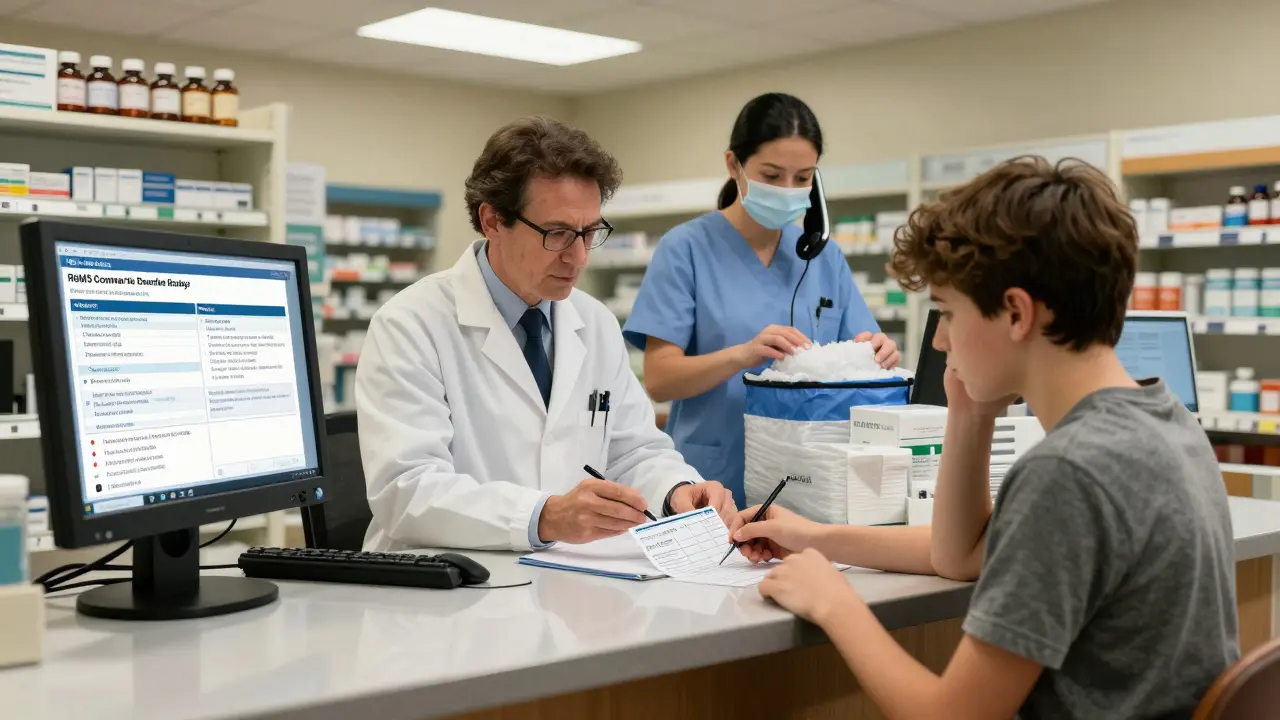
A specialty drug isn’t defined by its cost alone. It’s defined by how it’s used. These are medications that need special handling-like refrigeration, IV infusion, or precise dosing schedules. Many are injectable or infused. Some treat rare or chronic conditions: rheumatoid arthritis, multiple sclerosis, hepatitis C, or cancer. Even when a generic version exists, the drug still needs to be dispensed through a specialty pharmacy because the manufacturer requires it. The FDA doesn’t allow traditional retail pharmacies to dispense these drugs, even if they’re generic. Why? Because manufacturers set up exclusive distribution networks. This isn’t about profit-it’s about safety. These drugs come with strict Risk Evaluation and Mitigation Strategies (REMS). That means patients must be trained on how to use them, monitored for side effects, and followed up with regularly. A retail pharmacist doesn’t have the time, training, or systems to do that.Generic Doesn’t Mean Simple
There’s a big misunderstanding here: generic specialty drugs aren’t like generic aspirin. Most specialty drugs are biologics-complex proteins made from living cells. You can’t just copy them like a small-molecule drug. Instead, you get biosimilars. These aren’t exact copies, but highly similar versions approved after rigorous testing. They’re cheaper, but still require the same handling, storage, and patient support as the original. Take adalimumab (Humira). Its biosimilars-like Amjevita or Cyltezo-are now available. But if your doctor prescribes one of these, you won’t get it at CVS or Walgreens. You’ll get it through a specialty pharmacy. Why? Because the manufacturer still requires it. The FDA doesn’t change the distribution rules just because the price dropped.The Provider’s Role: More Than Just Filling a Prescription
Specialty pharmacy providers don’t just ship pills. They run a full clinical support system. When a prescription comes in, here’s what happens:- Verification: Is the prescription complete? Are the patient’s insurance details correct?
- Prior authorization: The pharmacy contacts the insurer to get approval. This can take days. For generic specialty drugs, insurers sometimes still fight it-even though the drug is cheaper.
- Financial assistance: Many patients can’t afford even the reduced price. Specialty pharmacies help apply for co-pay cards or patient assistance programs.
- Education: A pharmacist calls the patient to explain how to use the drug. For injectables, they may send a nurse to train the patient at home.
- Monitoring: The pharmacy tracks lab results, side effects, and refill patterns. If a patient misses a dose or reports a reaction, someone calls back within 24 hours.
- Delivery: Medications are shipped in temperature-controlled packaging. Some need to be kept at 2-8°C. One wrong temperature change can ruin the whole batch.
Why Can’t Retail Pharmacies Handle This?
Retail pharmacies aren’t equipped for specialty drugs. They don’t have:- Temperature-controlled storage for biologics
- Systems to track REMS requirements
- Staff trained in disease-specific care (like oncology or autoimmune disorders)
- Integrated patient management software to coordinate with doctors and insurers
Real Patient Experiences
Patients have mixed feelings. Some appreciate the continuity. One Reddit user wrote: “My generic version of Xeljanz still comes through the same specialty pharmacy. The nurse knows my history. She remembers my side effects. That’s worth something.” Others are frustrated. “I switched from $15 copay at Walgreens to $75 through the specialty pharmacy. Took two weeks to get it. I had to delay my treatment.” Trustpilot data shows specialty pharmacies score 4.2/5 for clinical support but only 3.1/5 for delivery speed. The disconnect? Patients expect fast service but don’t realize the behind-the-scenes work. When the same care team stays with them-even after switching to a generic-they’re more likely to stick with it. A 2024 MyHealthTeams survey found 68% of patients preferred staying with the same specialty pharmacy when transitioning to a biosimilar.The Business Side: Who’s in Charge?
Three companies control most of the U.S. specialty pharmacy market: OptumRx (32%), CVS Specialty (28%), and Express Scripts (24%). These aren’t just pharmacies-they’re integrated health systems. They have in-house nurses, pharmacists, data analysts, and insurance negotiators. The cost? Specialty pharmacies charge a dispensing fee of $250-$500 per prescription, plus a markup on the drug. That’s expensive. But it’s not just for the pill. It’s for the 12-15 data points they collect per patient-far more than the 5-7 needed for a retail prescription. It’s for the 3-4 phone calls they make per patient per month. It’s for the 6-8 months of training their pharmacists go through to handle these drugs.
What’s Changing in 2026?
New rules are coming. In 2024, Medicare Part D was required to cover all FDA-approved biosimilars. That means more generic specialty drugs will flow through specialty pharmacies. By 2026, biosimilar volume is expected to jump 40%. Specialty pharmacies are upgrading their tech. Real-Time Prescription Benefit systems now cut prior authorization time by 3.2 days on average. That’s huge. But the biggest shift? Health systems are trying to take control. Sixty-three percent of hospitals plan to build their own specialty pharmacy operations. That could mean fewer independent specialty pharmacies-and more pressure on pricing.What This Means for Providers
Providers-doctors, nurse practitioners, clinics-have a critical role. They’re the ones who write the prescription. But they also need to understand what happens after it’s sent. If a provider prescribes a generic specialty drug, they must know:- It won’t be filled at a retail pharmacy
- The patient will need education and follow-up
- Delays are common, but they’re part of the safety process
- Switching to a biosimilar doesn’t mean switching pharmacies
The Bottom Line
Generic specialty drugs aren’t simple. They’re complex, high-risk, and require expert handling. The provider’s job isn’t just to prescribe. It’s to understand that the pharmacy isn’t a warehouse-it’s a care center. The drug’s cost doesn’t change the need for monitoring, training, and follow-up. Whether it’s brand or generic, if the drug is specialty, it needs specialty care. The future of specialty pharmacy isn’t about cheaper drugs. It’s about smarter, safer care. And that’s something no algorithm or retail store can replace.Can a retail pharmacy dispense a generic specialty drug?
No. Even if a specialty drug is generic or a biosimilar, federal rules and manufacturer distribution agreements require it to be dispensed only through a specialty pharmacy. Retail pharmacies don’t have the infrastructure, training, or authorization to handle these medications safely.
Why do generic specialty drugs cost more than regular generics?
The price isn’t just for the drug-it’s for the full service package. Specialty pharmacies charge for prior authorization, patient education, clinical monitoring, temperature-controlled shipping, and ongoing follow-up. A $15 generic aspirin doesn’t need any of that. A generic biologic does.
Do biosimilars require the same level of care as brand-name biologics?
Yes. Biosimilars are highly similar to their reference biologics but not identical. They still require the same storage conditions, administration training, and monitoring for adverse reactions. The FDA and manufacturers treat them the same way in terms of distribution and patient support.
Why does it take so long to get a specialty drug?
The delay comes from prior authorization, insurance verification, financial assistance applications, and coordination with the prescribing provider. On average, it takes 7.2 days from prescription receipt to delivery. Oncology and hepatitis C drugs take longer-up to 9 days-because of extra documentation and monitoring requirements.
Is it better to stay with the same specialty pharmacy when switching to a generic?
Yes. Patients who stay with the same specialty pharmacy report higher satisfaction. They benefit from continuity of care-the same nurse, pharmacist, and care team who already know their medical history, side effects, and treatment goals. Switching pharmacies often means restarting education and losing valuable context.
Are specialty pharmacies going away because of lower drug costs?
No. The value of specialty pharmacies isn’t in the drug price-it’s in the care. Even as biosimilars bring down costs, the need for patient education, monitoring, and complex logistics remains. Experts predict specialty pharmacy services will grow, not shrink, because the complexity of treatment is increasing, not decreasing.



Comments
Dave Old-Wolf
7/Jan/2026I never realized how much goes into these specialty drugs. I thought generics meant simple, but now I see it’s more about the whole system behind it. That nurse coming to your house to teach you how to inject? That’s next-level care.
Kristina Felixita
7/Jan/2026Yessss!! This is why I keep going back to my specialty pharmacy-even though it takes forever. My nurse remembers my flare-ups, my weird side effects, even what coffee I drink. That’s not a pharmacy-that’s family. 💯
swati Thounaojam
7/Jan/2026took 3 weeks for my biosimilar. no one called. no one checked in. just a box dropped at my door. this is broken.
Annette Robinson
7/Jan/2026Swati, I’m so sorry you had that experience. That’s not what specialty care should look like. The system’s supposed to be there for you-not just ship a vial and disappear. Maybe reach out to your provider? They can escalate it if the pharmacy’s dropping the ball. You deserve better.
Aubrey Mallory
7/Jan/2026Let’s be real-this whole ‘specialty pharmacy’ model is a cash grab dressed up as care. If a drug is generic, why should I pay $500 just to get it? Retail pharmacies could handle this if they weren’t locked out by corporate monopolies. The real villain here isn’t the system-it’s the three companies controlling everything. Optum, CVS, Express Scripts-they’re not saving lives, they’re saving profits.
Evan Smith
7/Jan/2026Wow, so you’re saying the only reason we can’t get these at Walgreens is because the big three don’t want competition? That’s not care-that’s a cartel. And we’re the ones paying for it. 😏
Donny Airlangga
7/Jan/2026I get the frustration, but I’ve been on a biosimilar for two years now. My pharmacy called me every time my labs came back weird. They helped me get a co-pay card when I lost my job. I didn’t just get a drug-I got a team. That’s worth something, even if it’s slow.
christy lianto
7/Jan/2026Donny, you just said it perfectly. This isn’t about speed. It’s about survival. I’ve seen people skip doses because they didn’t understand how to use their meds. I’ve seen people give up because they couldn’t afford it. Specialty pharmacies don’t just fill scripts-they keep people alive. And yeah, it’s messy, it’s slow, but it’s necessary. If you’ve ever had a chronic illness, you know: the difference between a pharmacy and a lifeline is everything.
Lois Li
7/Jan/2026the fact that we still treat biosimilars like theyre magic potions instead of just cheaper versions of the same thing is wild. if the science says theyre safe and effective why do we need all this red tape? the system is overcomplicating something that should be simpler. i get safety matters but we need to fix the bureaucracy not just accept it as normal
Annette Robinson
7/Jan/2026Lois, you’re hitting on something huge. The system’s built on fear-not science. Manufacturers lock down distribution because they’re scared of liability, not because it’s medically necessary. But here’s the thing: patients who get this care stick with treatment. Adherence jumps from 50% to 80%. That’s not bureaucracy-that’s outcomes. Maybe we don’t need all the red tape, but we need the care. The challenge is decoupling the two. Let’s streamline the paperwork, but keep the nurses calling.