

Quick Takeaways: What You Need to Know
- Identical Formula: They have the same active and inactive ingredients as the brand name.
- Same Manufacturing: They are made in the same facilities using the same processes.
- FDA Backed: They operate under the original New Drug Application (NDA), meaning no new approval is needed.
- Lower Cost: They typically cost 15-30% less than the brand version.
- Clinical Equivalence: Studies show no meaningful difference in health outcomes between the two.
The Secret Difference Between Authorized and Traditional Generics
To understand why authorized generics are a bit different, we have to look at how drugs get approved. Most generics go through an Abbreviated New Drug Application (ANDA) process. This requires the manufacturer to prove "bioequivalence"-basically showing that the drug works similarly to the original. While this is a rigorous standard, traditional generics can use different inactive ingredients, known as excipients, which can occasionally cause sensitivity in some patients.
Authorized generics skip this entire process. Because authorized generics are produced by the same company that held the original patent, they use the exact same formulation. They don't need to prove they are "similar" because they are authorized generics-they are identical. This is why you won't find them in the FDA's Orange Book; they aren't "equivalents" to the brand; they are the brand product, just without the marketing.
Breaking Down the Quality and Efficacy
When it comes to how well a drug works, the metric that matters most is the chemical composition and the delivery system. Authorized generics maintain identical technical specifications across the board. This includes the strength, the dosage form (like a tablet or a capsule), and the route of administration.
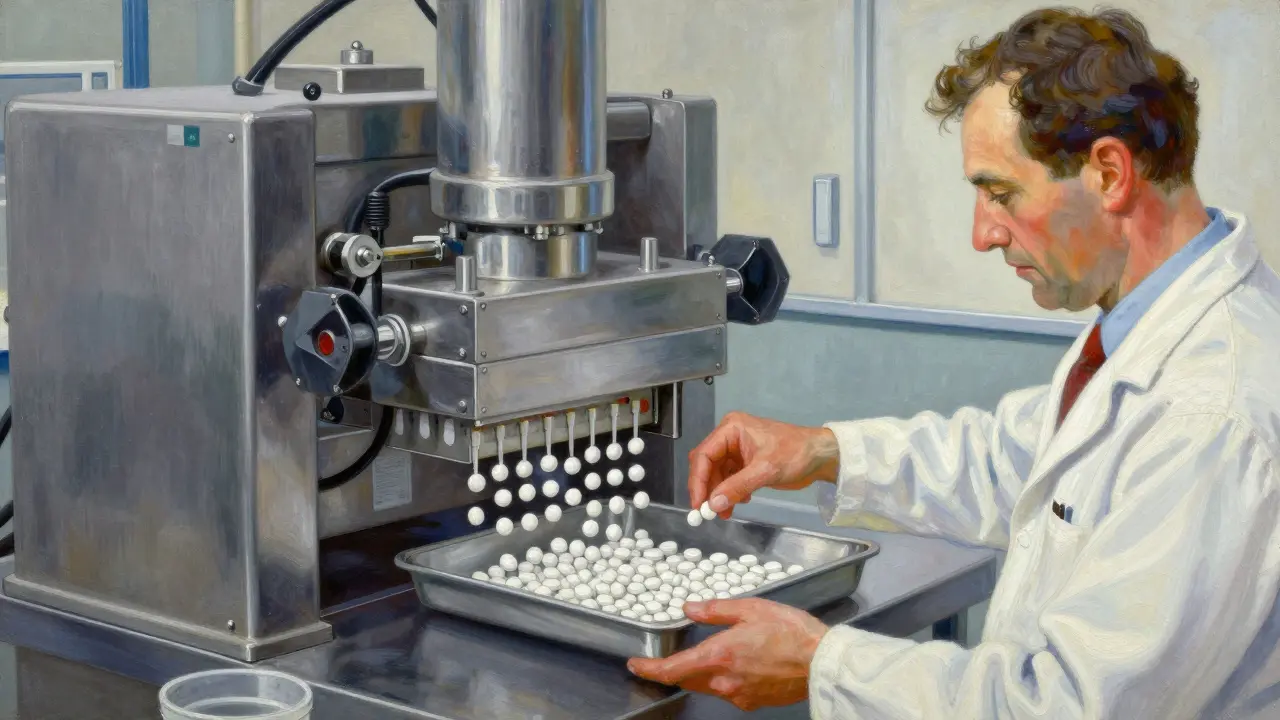
Since they are produced under the same Current Good Manufacturing Practices (cGMP) as the brand-name version, they undergo the same FDA inspections. There is no "budget" version of the manufacturing line; the pills are popped from the same machines and tested using the same dissolution profiles to ensure the drug releases into your system at the right speed.
| Feature | Brand Name | Authorized Generic | Traditional Generic |
|---|---|---|---|
| Active Ingredients | Original | Identical to Brand | Identical to Brand |
| Inactive Ingredients | Original | Identical to Brand | May Vary |
| Manufacturing Process | Original | Identical to Brand | Manufacturer's Process |
| FDA Pathway | NDA | Original NDA | ANDA |
| Typical Cost | Highest | Medium (15-30% lower) | Lowest |
Do the Real-World Results Match the Lab?
It's one thing to say a drug is identical in a lab, but does it actually work the same way in a human body over several years? A large-scale study published in PMC looked at over 5,000 patients who switched from brand-name drugs to generics between 1999 and 2014. The researchers found that patients using authorized generics had nearly identical outcomes in terms of hospitalizations, outpatient visits, and medication discontinuation rates compared to those who stayed on the brand name.
This is a crucial point because authorized generics act as the perfect "proxy." Since they eliminate the variable of different inactive ingredients, they prove that the act of switching to a generic doesn't inherently compromise health. Even in community forums, like those run by the Asthma and Allergy Foundation of America, users report a massive success rate-around 87% found the authorized version of Singulair to be just as effective as the branded one.

Why Do Companies Even Make Authorized Generics?
You might wonder why a pharmaceutical company would sell its own drug for less money. It's all about strategy. When a patent expires, traditional generic companies rush in to steal market share. By launching an authorized generic, the original brand company can keep a piece of that generic market for themselves. It allows them to compete on price while still leveraging their own manufacturing infrastructure.
For the patient, this creates a middle ground. While traditional generics are usually the cheapest, authorized generics provide a "safety net" for people who are nervous about switching from a brand name or those who have had bad reactions to the inactive ingredients in traditional generics.
Practical Tips for Your Next Pharmacy Visit
Navigating the pharmacy counter can be confusing. Sometimes a pharmacist might tell you a drug is "different" simply because the packaging has changed or the pill color is different (though authorized generics often look identical to the brand). If you want to ensure you're getting an authorized generic, you can ask your pharmacist if the medication is being sold under the original New Drug Application (NDA).
From a financial perspective, check your insurance formulary. Most insurance companies group authorized generics in the same tier as traditional generics, which means you get the brand-level quality for a generic-level copay. If you're paying out of pocket, you'll typically find that authorized generics are a few dollars more expensive than traditional ones but significantly cheaper than the brand.
Are authorized generics exactly the same as brand-name drugs?
Yes. Authorized generics are the same drug product as the brand-name version, manufactured by the same company using the same ingredients and processes. The only difference is that the brand name is removed from the label.
Why are authorized generics more expensive than traditional generics?
They often carry a slight premium because they provide the exact formulation of the brand drug, whereas traditional generics may use different inactive ingredients. This gives some patients more confidence in the drug's consistency.
Do I need a new prescription to switch to an authorized generic?
Usually, no. Because they are therapeutically equivalent and share the same NDA, most pharmacists can substitute them without needing a new consultation with your doctor, depending on local laws and your specific prescription.
Can I have a different reaction to an authorized generic than the brand name?
It is highly unlikely. Since the active and inactive ingredients are identical, your body will process the drug exactly the same way it does with the brand-name version.
How can I tell if my medication is an authorized generic?
The easiest way is to ask your pharmacist. Check the label; it will not have the brand name, but the pharmacist's records will show if it was sourced as an authorized generic from the original manufacturer.
Write a comment
Latest Posts




Comments
Rauf Ronald
5/Apr/2026This is a great breakdown of a confusing topic. I've worked in pharmacy tech for years and patients always get stressed when the pill looks different, but knowing the NDA is the same is the real clincher here. It's basically the same juice in a different bottle!
Danielle Kelley
5/Apr/2026Typical pharma propaganda! They tell you it's the same just so they can keep squeezing every penny out of us while controlling the supply chain. Who actually believes the FDA isn't in their pocket? Total scam!
Christopher Cooper
5/Apr/2026It is fascinating how the market strategy plays out here. The concept of an authorized generic acting as a defensive moat against other generic manufacturers is a classic economic move to maintain a revenue stream while appearing to offer a cheaper alternative to the consumer. It really highlights the complexity of drug pricing in the US.
Victoria Gregory
5/Apr/2026Omg I never knew this!!! 😱 I always just assumed the cheap ones were like... lower quality or something!! Thanks for clearing this up!!! ✨💊
Benjamin cusden
5/Apr/2026Most people fail to realize that the "price premium" for authorized generics is essentially a tax on the risk-averse. If you have the intellectual capacity to read a chemical composition list, you'll realize traditional generics are perfectly sufficient for 99% of the population. This is basic pharmacology.
GOPESH KUMAR
5/Apr/2026Whatever. It's all just a way for the big guys to keep the little guys out. You call it a "strategy" but it's just basic greed wrapped in corporate speak. I've seen enough to know that the cheapest option is usually a gamble anyway.
Laurie Iten
5/Apr/2026money is just a social construct anyway and these labels are just symbols we agree to trust
Vivek Hattangadi
5/Apr/2026I totally agree with the point about the safety net! For people who are genuinely anxious about their health, having that middle option is a huge win. It's all about making the patient feel comfortable while saving money, and that's a win-win for everyone involved!
Kathleen Painter
5/Apr/2026I've spent a lot of time helping my elderly parents navigate their medications and it's honestly so overwhelming for them because the labels change every few months and they start thinking they are taking the wrong thing, so having a clear explanation like this about the manufacturing process actually helps lower the anxiety levels significantly when we go to the pharmacy together. It's not just about the chemistry, it's about the peace of mind that comes from knowing you aren't accidentally taking a different version of a life-saving drug, even if the science says it's equivalent, because the psychological stress of a "different" pill can actually affect how a patient feels about their recovery process over the long term.
Ruth Swansburg
5/Apr/2026Excellent clarity. Very informative.
Sarabjeet Singh
5/Apr/2026Keep pushing for the better options. It helps everyone.
Dhriti Chhabra
5/Apr/2026It is most commendable that such a detailed comparison has been provided for the benefit of the public. The distinction between ANDA and NDA pathways is often overlooked in general discourse.
Michael Flückiger
5/Apr/2026I'm just glad we have options!!! Some people are way too skeptical for no reason... just trust the science and save your money!!!
Rupert McKelvie
5/Apr/2026Good to see some honest info here. It's a relief to know that the cost doesn't necessarily equal a drop in quality.
charles mcbride
5/Apr/2026This is really encouraging news for those of us on a tight budget. It's great to know we can maintain the same quality of care without breaking the bank.