

When someone vomits blood or passes black, tarry stools, it’s not just unpleasant-it’s a medical emergency. Upper gastrointestinal (GI) bleeding can kill within hours if not handled right. It’s not rare: about 100 people out of every 100,000 in the U.S. experience it each year. And the biggest culprits? Peptic ulcers and esophageal varices. Both can bleed out suddenly, with no warning. But here’s the good news: if you act fast, survival rates jump dramatically.
What Exactly Is Upper GI Bleeding?
Upper GI bleeding means blood is coming from somewhere in the upper digestive tract-your esophagus, stomach, or the first part of your small intestine (duodenum). It’s not the same as rectal bleeding from hemorrhoids or colon issues. This is bleeding from above the ligament of Treitz, a key anatomical landmark. The symptoms are unmistakable: vomiting bright red blood, or vomit that looks like coffee grounds (that’s partially digested blood). Black, sticky stools? That’s melena-digested blood passing through your gut. In massive bleeding, you might even pass maroon-colored stools. Alongside these, you’ll often see dizziness, rapid heartbeat, low blood pressure, and sweating. These aren’t just signs-they’re your body screaming for help.Peptic Ulcers: The #1 Cause
About half of all upper GI bleeds come from peptic ulcers. These are open sores in the lining of your stomach or duodenum. Most are caused by H. pylori bacteria or long-term use of NSAIDs like ibuprofen or aspirin. Gastric ulcers (in the stomach) make up 20-30% of ulcer bleeds. Duodenal ulcers (in the small intestine) are even more common, causing 70-80% of ulcer-related bleeding. What makes ulcers dangerous isn’t just the sore-it’s the blood vessels underneath. When the ulcer erodes into one of those vessels, it can start bleeding like a faucet. Some bleed slowly, others erupt violently. The risk doesn’t go away after the first bleed. Without treatment, up to 30% of patients rebleed within 72 hours.Esophageal Varices: The Silent Killer
While ulcers are common, esophageal varices are more deadly. These are swollen, twisted veins in the lower esophagus, usually caused by advanced liver disease and portal hypertension. When the liver gets scarred (cirrhosis), blood can’t flow through it normally. It backs up into smaller veins in the esophagus, which stretch and thin out until they rupture. About 10-20% of upper GI bleeds are from varices. And here’s the scary part: 20% of people who bleed from varices die within six weeks. Why? Because they can bleed out fast-sometimes a liter of blood in minutes. Unlike ulcers, varices don’t usually cause pain. The first sign is often vomiting blood or passing black stool. Patients with cirrhosis are at constant risk. Even if they’ve never bled before, they need regular monitoring.Other Causes You Can’t Ignore
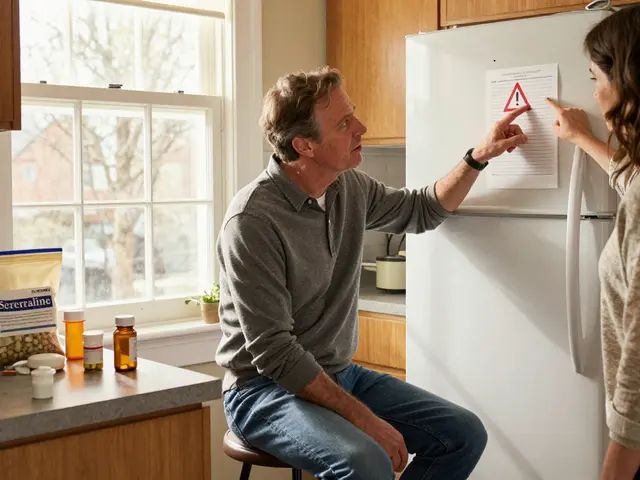
Not every bleed comes from an ulcer or varices. Erosive gastritis-where the stomach lining gets worn down by acid, alcohol, or stress-accounts for 15-20% of cases. Esophagitis from severe acid reflux or infections like candida can also bleed. Mallory-Weiss tears, which are small tears at the junction of the esophagus and stomach, often happen after violent vomiting or retching. They’re usually not life-threatening, but they can still need treatment. Then there’s cancer-stomach or esophageal tumors-which cause 2-5% of bleeds. And don’t forget about medications. People taking SSRIs (like sertraline or fluoxetine) have twice the risk of upper GI bleeding compared to non-users. Even a single daily dose can increase the danger, especially in older adults or those on blood thinners.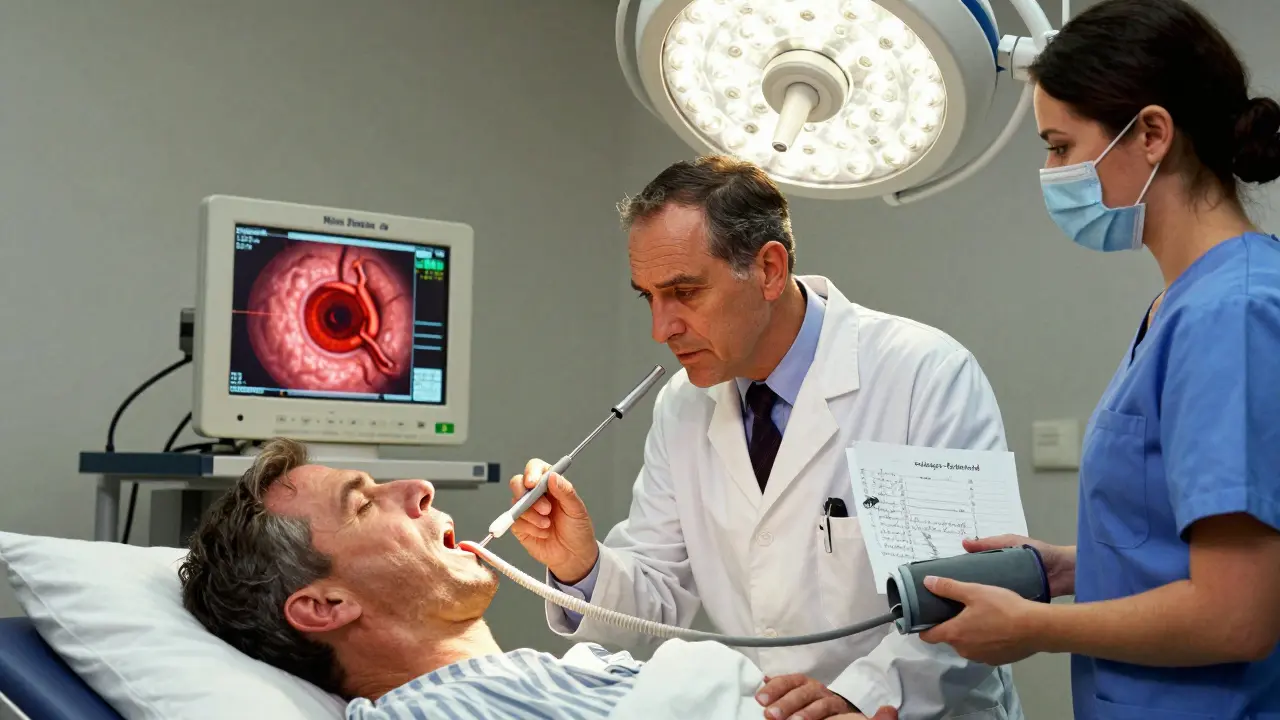
Stabilization: The First 30 Minutes Matter
Before you even think about finding the source, you have to stabilize the patient. That means protecting the airway, giving oxygen, and starting IV fluids. If the patient is dizzy, has a heart rate over 100, or a systolic blood pressure below 90, they’re in shock. That’s a red flag. The first step is to get two large-bore IV lines going and start fluids. Blood transfusions aren’t always needed right away. Current guidelines say to target a hemoglobin level of 7-9 g/dL-no higher. Giving too much blood too fast can actually make things worse by increasing pressure in the bleeding vessels. Each unit of packed red blood cells raises hemoglobin by about 1 g/dL. So if someone’s hemoglobin is 6 g/dL, two units will get them to 8. That’s enough to stabilize without overloading the system.The Glasgow-Blatchford Score: Your Triage Tool
Not every patient needs to go to the ICU. That’s where the Glasgow-Blatchford score comes in. Developed in 2000 and updated in 2019, it uses six simple, objective numbers to predict who needs urgent care. Points are added for: hemoglobin below 12.9 g/dL (men) or 11.9 g/dL (women), systolic blood pressure under 100 mmHg, pulse over 100 bpm, melena, syncope (fainting), liver disease, or heart failure. A score of 0 means you can probably go home. A score of 2 or higher? You need hospitalization. A score of 12 or above? You’re at high risk for rebleeding or death. Studies show this tool correctly identifies 85% of patients who need intervention. It’s not perfect, but it’s the best we have. And it’s used in nearly every emergency department in the U.S. today.Endoscopy: The Gold Standard
Once stabilized, the next step is endoscopy. Not tomorrow. Not in 24 hours. Within 12 hours. The American College of Gastroenterology says early endoscopy cuts mortality by 25%. During the procedure, doctors use the Forrest classification to judge how bad the bleeding is. Class Ia means blood is spurting out-90% chance of rebleeding without treatment. Class Ib is oozing-50% rebleed risk. Class IIa shows a visible vessel underneath the ulcer-also 50% risk. Class III is just a clean base-low risk. This tells the doctor exactly what to do next. For Ia, Ib, and IIa, they’ll use epinephrine injections to narrow the blood vessels, then apply heat or clips to seal the spot. For varices, they use rubber bands. Band ligation is now preferred over injecting chemicals because it’s safer and more effective. Rebleeding drops from 60% to 25% with bands.
Medications That Save Lives
For non-variceal bleeds, high-dose IV proton pump inhibitors (PPIs) are standard. An 80 mg bolus, then 8 mg/hour continuous drip. This isn’t just to reduce acid-it helps clots form and stay intact. The COBALT trial showed this cuts rebleeding from 22.6% to 11.6%. For varices, vasoactive drugs like terlipressin or octreotide are given immediately. These drugs lower pressure in the portal vein, stopping the bleed before endoscopy even starts. Antibiotics like ceftriaxone are also given to prevent infections-common in cirrhotic patients. Don’t give PPIs blindly. A 2023 Johns Hopkins study found that 30% of low-risk patients were given PPIs unnecessarily, just because they had black stools. That’s overtreating. Endoscopy must come first.What’s New in 2026
The field is moving fast. In 2023, the FDA approved Hemospray-a powder sprayed directly onto bleeding sites during endoscopy. It forms a physical barrier, like a bandage, and works in 92% of cases where traditional methods fail. Then there’s AI. In the 2023 ENDOSCAPE trial, AI systems spotted bleeding signs with 94.7% accuracy-way better than human eyes at 78.3%. But there’s a catch: these AI tools were trained mostly on data from white patients. They’re 15% less accurate in Black and Hispanic patients. That’s a serious gap. The NIH is now running the UGIB-360 study, tracking 10,000 people to build personalized risk models using genetics, gut bacteria, and clinical history. Results come in late 2025. Hospitals that use the “Upper GI Bleed Bundle”-rapid assessment, scoring, PPIs, early endoscopy, and follow-up-have cut their 30-day death rate from 8.7% to 5.3%.What Patients Say
Real people don’t talk about scores or Forrest classifications. They talk about fear. One Reddit user described waking up at 3 a.m. coughing up coffee-ground material. He ended up in the ER, got three units of blood, and stayed eight days. Another user said his doctor dismissed his black stools as “just iron pills” for two weeks-until he collapsed. His hemoglobin was 5.8. That’s life-threatening. After surviving, 68% of patients say they’re terrified of it happening again. Many quit alcohol, stop NSAIDs, and avoid spicy food-even if their doctor never told them to. That’s the emotional toll. And it’s real.When to Worry
If you’re over 60, on blood thinners, have liver disease, or take NSAIDs daily, you’re at higher risk. If you vomit blood-any amount-go to the ER. Don’t wait. Don’t call your doctor tomorrow. Don’t Google it. If you pass black, sticky stools for more than a day, get checked. If you feel lightheaded or your heart is racing without reason, get help. The window to save a life is narrow. But it’s wide enough-if you act.What causes upper GI bleeding?
The most common causes are peptic ulcers (40-50% of cases), esophageal varices (10-20%), erosive gastritis (15-20%), and Mallory-Weiss tears (5-10%). Other causes include esophagitis, tumors, and certain medications like SSRIs or NSAIDs. In people with liver disease, portal hypertension is the root cause of varices.
Is upper GI bleeding life-threatening?
Yes. It’s a medical emergency. Without prompt treatment, bleeding can lead to shock, organ failure, or death. Variceal bleeding has a 20% mortality rate within six weeks. Even ulcers can be deadly if they rebleed. Early recognition and intervention are critical to survival.
How is upper GI bleeding diagnosed?
Diagnosis starts with symptoms like vomiting blood or passing black stools. Doctors check vital signs and run blood tests-hemoglobin, INR, and BUN-to-creatinine ratio (above 30:1 strongly suggests upper GI bleeding). The definitive test is urgent endoscopy (EGD), usually within 12 hours. The Glasgow-Blatchford score helps determine urgency and risk level before endoscopy.
What’s the difference between ulcers and varices as causes?
Ulcers are sores in the stomach or duodenum, often caused by H. pylori or NSAIDs. They bleed slowly or suddenly but are treatable with PPIs and endoscopic clips. Varices are enlarged veins in the esophagus due to liver disease. They bleed massively and suddenly, with high death rates. Treatment requires vasoactive drugs, antibiotics, and band ligation-not PPIs.
Do I need a blood transfusion?
Not always. Current guidelines recommend transfusing only if hemoglobin is below 7 g/dL or if you have symptoms like dizziness or chest pain. The goal is to raise hemoglobin to 7-9 g/dL. Giving more than that can increase pressure in bleeding vessels and raise the risk of rebleeding.
Can I prevent upper GI bleeding?
Yes. Avoid long-term NSAID use. If you need pain relief, use acetaminophen instead. Test for and treat H. pylori if you have ulcers. Limit alcohol, especially if you have liver disease. Don’t ignore black stools or vomiting blood. If you’re on SSRIs and have risk factors, talk to your doctor about alternatives. For those with cirrhosis, regular endoscopic screening for varices can prevent the first bleed.


Comments
Rob Webber
30/Jan/2026This post is basically a medical textbook with a pulse. But let's be real-half the people reading this won't recognize melena until they're already in the ER. And don't even get me started on how many docs still order unnecessary transfusions. I've seen it. It's lazy. Stop treating bleeding like it's a coffee stain.
calanha nevin
30/Jan/2026Early endoscopy within 12 hours saves lives. That's not a suggestion. It's standard of care. The Glasgow-Blatchford score is underutilized in community hospitals. If you're in a rural ER and your patient has a score over 2, don't wait for a specialist. Transfer immediately. Time is tissue. And yes, this applies even if the patient says they're fine. They're not.
Lisa McCluskey
30/Jan/2026I appreciate how the post breaks down the difference between ulcers and varices. So many people think all GI bleeds are the same. But varices? They're silent. No pain. No warning. Just a sudden collapse. For anyone with cirrhosis, even if they feel fine, get screened. Band ligation isn't scary. Waiting is.
Claire Wiltshire
30/Jan/2026The use of PPIs in low-risk patients is a significant issue in clinical practice. A 2023 Johns Hopkins study showed 30% of patients received PPIs unnecessarily based solely on melena. This leads to antibiotic resistance, C. diff risk, and increased costs. Endoscopy must precede pharmacological intervention. Always. This is not up for debate in evidence-based medicine.
Darren Gormley
30/Jan/2026AI detects bleeding at 94.7% accuracy? Cool. But the model was trained on white patients. So if you're Black or Hispanic, the AI might miss it. Meanwhile, the NIH is running a 10k-person study that won't finish until 2025. We're using biased algorithms on real people right now. This isn't innovation. It's medical colonialism. 🤦♂️
Mike Rose
30/Jan/2026bro i had black poop for 3 days and thought it was just my protein powder. then i passed out. 5.8 hgb. now i dont even touch ibuprofen. also why are they spraying powder in your stomach??
Yanaton Whittaker
30/Jan/2026America has the best GI care in the world. We have AI, Hemospray, early endoscopy, and protocols that save lives. Other countries? They're still using 1990s protocols. If you're bleeding, come to the US. We fix this. 🇺🇸
Bobbi Van Riet
30/Jan/2026I used to work in the ER and saw this over and over. People come in with black stools and say they're fine because they 'ate beets' or 'took iron.' But then you check their vitals and their heart rate is 130 and they're sweating cold. I had one guy who waited two weeks because his doctor told him it was 'just gastritis.' He ended up in ICU. No one should be dismissed like that. If you're over 60, on blood thinners, or have liver issues-don't wait. Go now. It's not dramatic. It's survival.
Holly Robin
30/Jan/2026They say PPIs help clots form. But what if they're just covering up the real problem? What if Big Pharma is pushing PPIs so we don't look at the gut microbiome? And why is the NIH study only starting now? Why didn't they do this 10 years ago? There's a reason they don't want you to know. They're hiding something. And Hemospray? That's just a band-aid on a bullet wound. You know what really stops bleeding? A clean diet. No chemicals. No pills. Just real food. But they won't tell you that.