

Medication Vision Risk Checker
This tool helps you understand potential vision risks from your current medications. Enter your medications below to check for known vision-related side effects and get guidance on next steps.
Note: This is not medical advice. Always consult your healthcare provider for personalized guidance.
Blurred vision isn’t always just tired eyes or needing new glasses. For millions of people taking common medications, it’s a warning sign - one that can signal something serious if ignored. Whether you’re on blood pressure medicine, acne treatment, or a migraine drug, your eyes might be reacting in ways you didn’t expect. And while many cases are temporary, others can lead to permanent damage if not caught early.
Why Do Medications Cause Blurred Vision?
Your eyes are sensitive. They rely on precise fluid balance, nerve signals, and blood flow to work right. Many medications interfere with these systems - sometimes unintentionally. It’s not always about the drug targeting your eyes. Often, it’s a side effect of how the medicine works elsewhere in your body.
For example, blood pressure meds like beta-blockers can reduce blood flow to the optic nerve. Anti-inflammatory drugs like ibuprofen, taken daily for years, can cause tiny retinal bleeds. Anticholinergic drugs - used for overactive bladder or Parkinson’s - relax the muscle that focuses your lens, making near vision blurry for hours. And some drugs, like isotretinoin (Accutane), dry out your eyes so badly that blinking doesn’t help.
The mechanisms vary, but the result is the same: your vision gets fuzzy, hazy, or distorted. And because these changes often creep in slowly, people assume it’s aging or screen fatigue. That’s when things get dangerous.
Top Medications Linked to Blurred Vision
More than 100 prescription and over-the-counter drugs are known to affect vision. Here are the most common ones and what they do:
- Topiramate (Topamax): Used for seizures and migraines, this drug can trigger acute angle-closure glaucoma - a medical emergency. Symptoms include sudden blurred vision, severe eye pain, headache, and nausea. Without treatment within 24 to 48 hours, permanent vision loss can occur.
- Amiodarone (Cordarone): This heart rhythm medication causes vortex keratopathy in over 70% of long-term users. You’ll see halos around lights and blurry vision, especially at night. Corneal deposits often don’t go away even after stopping the drug.
- Hydroxychloroquine (Plaquenil): Prescribed for lupus and rheumatoid arthritis, this drug can cause bull’s eye maculopathy, a type of retinal damage that’s irreversible in 95% of advanced cases. Risk rises sharply after five years of use.
- Isotretinoin (Accutane, Absorica): For severe acne, this drug dries out the tear film in 45-60% of users. Many report blurry vision, light sensitivity, and discomfort so bad they can’t wear contacts.
- Corticosteroids: Whether taken as pills, inhalers, or injections, steroids raise eye pressure in 30-40% of people with glaucoma. They also cause cataracts - especially in diabetics - with 5-7% developing posterior subcapsular cataracts after six months.
- Tamsulosin (Flomax): Used for enlarged prostate, this drug causes intraoperative floppy iris syndrome during cataract surgery. Surgeons need to know you’re taking it - even if you stopped months ago - because the effects can last up to 18 months.
- PDE5 inhibitors (Viagra, Cialis): Rarely, these can cause optic nerve damage, leading to sudden vision loss. The FDA has issued warnings, and cases are rising slightly as use increases.
Who’s at Highest Risk?
Not everyone on these drugs will have vision problems. But some groups are far more vulnerable:
- People with diabetes: They’re 3.2 times more likely to develop steroid-induced cataracts or glaucoma. Blood sugar swings already stress the retina; adding medication makes it worse.
- Those with narrow anterior chamber angles: This anatomical trait - often undiagnosed - puts you at higher risk for acute glaucoma from drugs like Topamax. If you’ve had laser eye treatment before, you might already have this.
- Patients on long-term or high-dose therapy: Amiodarone, Plaquenil, and steroids need years to cause damage. But once it starts, it often can’t be undone.
- Older adults: Aging eyes have less tear production and slower healing. Combine that with multiple meds, and blurred vision becomes more common - and more dangerous.
One patient on Reddit shared: “I took Topamax for six months. My vision got blurry. I thought it was stress. Then I couldn’t read the clock. By the time I saw a doctor, the pressure in my eye was sky-high. I lost peripheral vision. I’m 32 and now I have glaucoma.”
When to Seek Help Immediately
Not all blurred vision is an emergency. But some signs mean you need to act fast - like within hours, not days.
Call your doctor or go to the ER if you have:
- Sudden blurred vision in one or both eyes
- Eye pain, redness, or swelling along with blurriness
- Halos around lights, especially if you’re on amiodarone
- Headache with nausea and vision changes (possible glaucoma)
- Loss of peripheral vision or dark spots in your sight
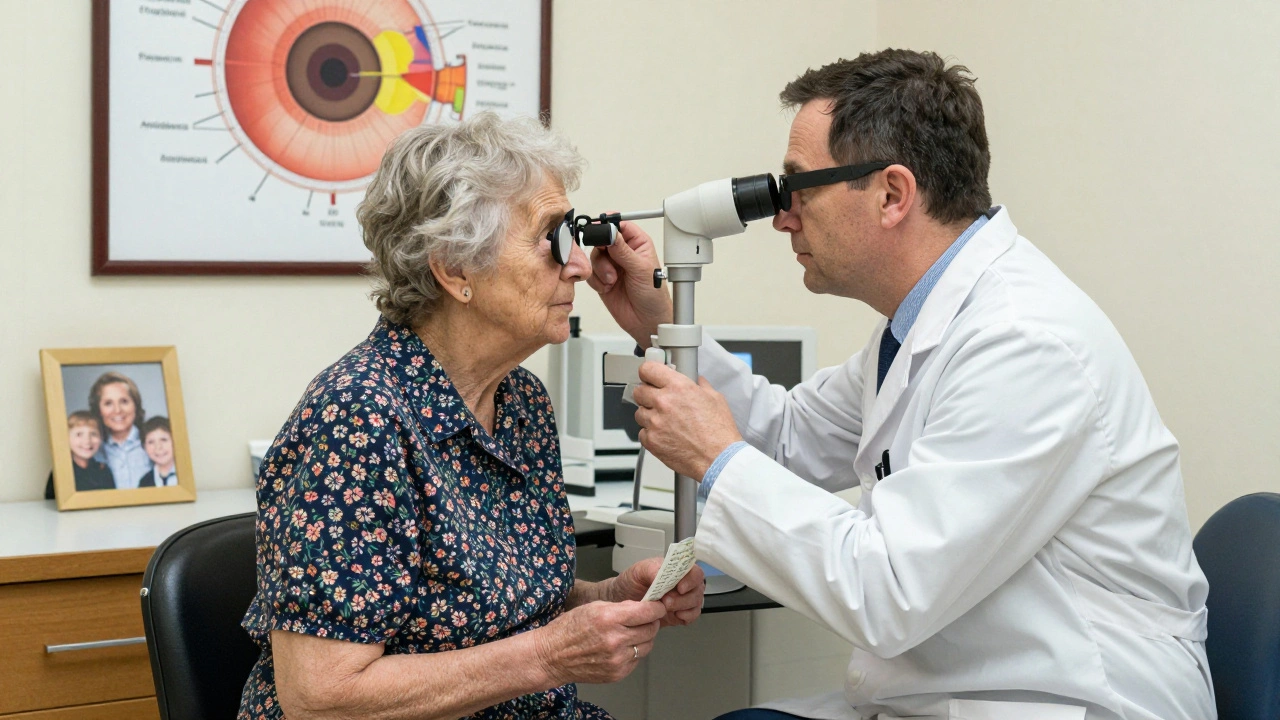
These aren’t “wait and see” symptoms. Acute angle-closure glaucoma can blind you in under two days. Retinal toxicity from Plaquenil can progress silently for months before you notice. Early detection saves sight.
What Your Doctor Should Do
Good doctors don’t just prescribe - they monitor. For high-risk drugs, regular eye checks aren’t optional. Here’s what the American Academy of Ophthalmology recommends:
- For Plaquenil: Baseline exam before starting, then yearly. After five years, switch to every 6 months. Tests include automated visual fields and SD-OCT scans to catch early retinal changes.
- For Amiodarone: Annual slit-lamp exams to check for corneal deposits. If you’ve been on it over 400mg daily for more than six months, ask about optic nerve imaging.
- For Corticosteroids: Check eye pressure every 2-4 weeks if you’re on long-term therapy. Diabetics need extra vigilance.
- For Flomax: Tell your cataract surgeon at least four weeks before surgery. They’ll adjust techniques to prevent complications.
- For Accutane: Use preservative-free artificial tears 4-6 times daily. If dryness persists, ask about Restasis or punctal plugs.
Many patients don’t know these protocols exist. Ask your doctor: “Should I be getting eye exams while on this drug?” If they hesitate, get a second opinion.

What You Can Do Right Now
You don’t have to wait for symptoms to get worse. Take control:
- Know your meds: Look up each prescription. Check the patient leaflet for “vision” or “eye” side effects. If it’s listed, don’t ignore it.
- Track changes: Keep a simple log. When did your vision get blurry? After starting the drug? After increasing the dose? Write it down.
- Don’t skip eye exams: Even if you think your vision is fine. A routine check can catch damage before you feel it.
- Speak up during surgery: If you’re on Flomax, Tamsulosin, or any steroid, tell your surgeon - even if you stopped the drug months ago.
- Use artificial tears: If you’re on Accutane or antihistamines, lubricating drops can prevent corneal scratches and improve clarity.
One patient on GoodRx wrote: “I was on Accutane for five months. My eyes felt like sandpaper. I started using drops four times a day. My blurry vision didn’t go away completely, but I could drive again. I wish I’d known sooner.”
The Bigger Picture
Medication-induced vision problems aren’t rare. They’re underreported. The global ophthalmic diagnostics market is growing fast - partly because doctors are finally catching on. In 2023, the FDA approved an AI tool that detects Plaquenil damage with 94.7% accuracy. New guidelines lowered the safe dose of hydroxychloroquine from 5.0 mg/kg to 2.3 mg/kg based on 2023 research.
And it’s not just about drugs. It’s about communication. Too many patients don’t tell their eye doctor about their other meds. Too many doctors don’t ask. That gap is where vision gets lost.
Blurred vision from medication isn’t always preventable. But it’s almost always detectable - if you know what to look for and when to act.
Can blurred vision from medication be reversed?
Sometimes - but not always. Temporary causes like dry eyes from Accutane or muscle relaxation from anticholinergics usually improve after stopping the drug. But damage from Plaquenil, amiodarone, or long-term steroids is often permanent. Early detection is key. If caught in the first few months, stopping the drug and starting treatment can halt progression. Once the retina or optic nerve is scarred, vision loss can’t be undone.
How long after stopping a drug does blurred vision last?
It depends on the drug. For most, like antihistamines or beta-blockers, vision clears within hours to days. With amiodarone, corneal deposits can last years - even after stopping. For Plaquenil, damage may continue progressing for months after discontinuation. Topamax-induced glaucoma can cause permanent damage if not treated within 48 hours. Never assume symptoms will go away on their own.
Should I stop my medication if I get blurred vision?
No - not without talking to your doctor. Stopping suddenly can be dangerous. For example, stopping amiodarone without replacement therapy can trigger dangerous heart rhythms. Stopping Topamax abruptly can cause seizures. Always contact your prescribing doctor first. They may adjust your dose, switch your drug, or refer you to an ophthalmologist for testing.
Are over-the-counter drugs like ibuprofen risky for vision?
Yes - especially with long-term use. Daily ibuprofen for more than two years increases the risk of retinal hemorrhages by 0.3-0.5%. After five years, the chance of developing cataracts rises by 28%. This isn’t common, but it’s real. If you take NSAIDs daily for pain or arthritis, ask your eye doctor to check your retina during your next visit.
Can I prevent medication-related vision problems?
You can reduce your risk significantly. Get a baseline eye exam before starting high-risk drugs like Plaquenil or amiodarone. Stick to recommended doses - don’t exceed them. Tell every doctor you see about all your medications, including supplements. Use artificial tears if your eyes feel dry. And never ignore new vision changes - even if they seem mild. Early action is the best protection.
Next Steps
If you’re on a medication known to affect vision, schedule an eye exam within the next 30 days - even if you feel fine. Bring your full medication list. Ask your doctor: “Could any of these be harming my eyes?” If you’ve had blurred vision since starting a new drug, don’t wait. Get checked now. Vision loss from medication is often silent - and preventable.
Write a comment
Latest Posts



Comments
Paul Dixon
10/Dec/2025Man, I had no idea ibuprofen could mess with your retina. I’ve been taking it daily for my back pain for like 5 years. Gonna book an eye check this week. Thanks for laying this out so clearly.
Courtney Blake
10/Dec/2025Typical. Big pharma doesn’t care if you go blind as long as you keep buying their pills. They don’t warn you because lawsuits are cheaper than proper labeling.
matthew dendle
10/Dec/2025so u mean my blurry vision since last year isnt just from staring at my phone? lol
Lisa Stringfellow
10/Dec/2025Of course it’s the medication. Nothing else could possibly explain why my vision’s worse than my ex’s excuses.
Monica Evan
10/Dec/2025My mom’s on Plaquenil for lupus-she got her first retinal scan last month and they caught early changes. They lowered her dose and switched her to a different brand. She’s still got her sight. This info saved her. Seriously, if you’re on any of these meds, don’t wait for symptoms. Get tested.
Mia Kingsley
10/Dec/2025Oh wow so Accutane makes your eyes dry? Shocking. Next you’ll tell me water makes you wet
Katherine Liu-Bevan
10/Dec/2025It’s not just about the drugs-it’s about the lack of coordination between specialists. I’m on three medications, saw three different doctors, and not one asked about my eyes. I had to bring it up myself. We need better communication systems, not just warnings on labels.
Kristi Pope
10/Dec/2025I’m so glad this was posted. My sister almost lost her vision on Topamax and no one told her it could happen. She’s now an advocate for eye screenings before starting any new med. Please, if you’re reading this-ask your doctor. Even if it feels awkward. Your eyes are worth it.
Aman deep
10/Dec/2025From India here-my uncle took steroids for asthma and developed cataracts in 8 months. No one warned him. He had to pay out of pocket for surgery. This info is gold. Please share it with people who don’t have access to good doctors.
Eddie Bennett
10/Dec/2025Had the same thing with Flomax. Didn’t even know it was a thing until my cataract surgeon paused mid-surgery and said, ‘Wait-are you on Flomax?’ I said no, but I’d taken it 14 months ago. He said, ‘Still matters.’ We adjusted everything. Saved my vision. Don’t assume it’s gone just because you stopped the pill.
Sylvia Frenzel
10/Dec/2025Why are we still trusting pharmaceutical companies to self-regulate? The FDA approves these drugs without mandatory eye monitoring. This is negligence disguised as medicine.
Vivian Amadi
10/Dec/2025Stop blaming the drugs. You’re just lazy and don’t want to take responsibility for your own health.