
Migraine with Aura: Causes, Triggers, and What Actually Helps
When you see flashing lights, blind spots, or tingling in your hands before a headache hits, you’re likely experiencing migraine with aura, a neurological condition where temporary sensory disturbances precede or accompany severe head pain. Also known as classic migraine, it affects about 25-30% of people who get migraines—and it’s not just "bad headaches" with a warning sign.
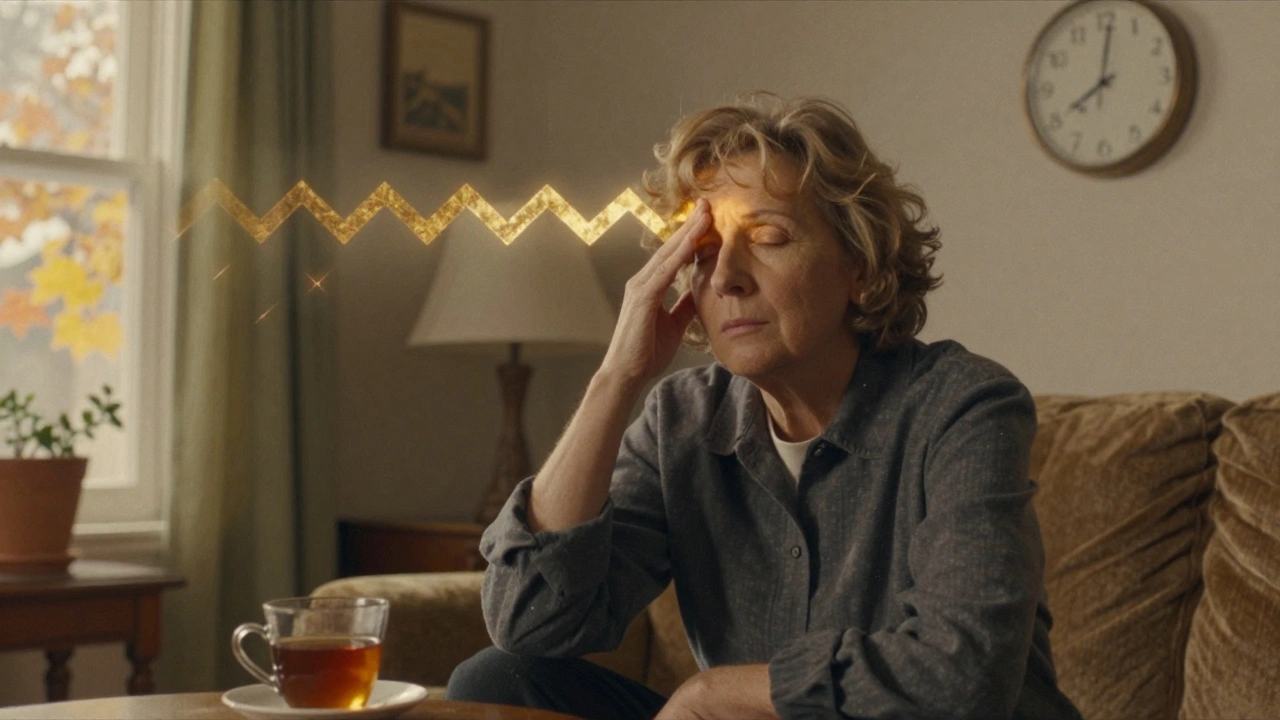
The aura, a reversible neurological symptom that acts as a warning signal before migraine pain begins usually lasts 5 to 60 minutes. Common signs include zigzag lines in your vision, blind spots, numbness on one side of your face or hand, or even trouble speaking. These aren’t random glitches—they’re caused by a wave of electrical activity moving across the brain’s surface, called cortical spreading depression. It’s a real, measurable brain event, not anxiety or stress alone.
While stress, skipped meals, and lack of sleep can trigger an attack, migraine with aura, is strongly linked to genetic factors and changes in brain chemistry, especially serotonin levels. Hormonal shifts, bright lights, strong smells, and even certain foods like aged cheese or processed meats can set it off. But here’s what most people miss: the aura itself isn’t dangerous, but it does raise your risk for stroke slightly—especially if you smoke or take birth control pills. That’s why knowing your triggers and tracking patterns matters more than just popping painkillers.
Unlike regular headaches, migraine with aura doesn’t respond well to standard OTC meds for most people. Triptans like sumatriptan can help if taken early, but they’re not safe if you have heart issues or uncontrolled high blood pressure. Newer options like ditans and gepants offer alternatives with fewer side effects. And prevention? It’s not just about avoiding triggers—it’s about consistent routines: sleep, hydration, and sometimes daily medication prescribed by a neurologist.
You’ll find real stories below from people who’ve lived with this for years—how they identified their personal triggers, what treatments worked (and what didn’t), and how they learned to manage life around the unpredictable waves of pain and visual disturbances. No fluff. No guesses. Just what people actually tried and what stuck.
- 3/Dec/2025
- by William Womack
-
 ocular migraines
visual aura
retinal migraine
migraine with aura
when to see a doctor
ocular migraines
visual aura
retinal migraine
migraine with aura
when to see a doctor
Ocular Migraines: Visual Aura and When to Worry
Ocular migraines aren't one condition-they're two. Learn the difference between migraine with aura and retinal migraine, what triggers them, and the critical warning signs that mean you need urgent care.
Read