INN: What It Is and Why It Matters for Your Medications
When you see INN, the official global name given to a pharmaceutical substance to ensure consistent identification across countries. Also known as International Nonproprietary Name, it’s the plain, unbranded name for the active ingredient in your pill—like acetaminophen instead of Tylenol, or finasteride instead of Propecia. This isn’t just paperwork—it’s your safety net.
Every time you pick up a prescription or buy an over-the-counter drug, the INN tells you what’s actually inside. That’s why two different brands of headache relief can have the same effect: they both contain the same INN. But here’s the catch: if you don’t know the INN, you might accidentally take two pills with the same active ingredient—say, two different cold medicines both containing acetaminophen. That’s how liver damage happens. Knowing the INN helps you spot duplicates before they hurt you.
INN isn’t just about avoiding mistakes. It’s also how you save money. Generic drugs use the INN because they’re not branded—they’re the same medicine, just cheaper. When your doctor writes a prescription, asking for the INN means you’re more likely to get the generic version. And when you shop online for meds, checking the INN lets you compare prices across pharmacies without getting tricked by fancy packaging. It’s the same drug, same effect, same safety standards—just lower cost.
INN connects directly to how drugs are regulated. The World Health Organization assigns these names, and agencies like the FDA use them to track side effects, approve generics, and update safety guidelines. If you report a bad reaction to a medication, the system uses the INN to find every version of that drug, no matter the brand. That’s how we learn that azelastine works for cosmetic allergies, or that fusidic acid is losing effectiveness in skin infections. Your reports, tied to the INN, help make all medications safer.
And it’s not just for humans. Veterinarians use INN too—like albendazole for dogs—so the same safety rules apply whether you’re treating a person or a pet. INN makes sure that when a drug is used in one country, doctors and pharmacists everywhere can understand it. No translation needed. No guesswork.
What you’ll find below are real stories about how INN affects your daily health: how it stops dangerous drug overlaps in seniors, how it lets mail-order pharmacies ship safe generics, how it helps you choose between cetirizine and levocetirizine, and why knowing the INN could save you from a bad interaction with yohimbe or desogestrel. These aren’t theory pieces—they’re practical guides from people who’ve been there. Whether you’re managing blood pressure, fighting hair loss, or just trying not to overdose on OTC painkillers, INN is the hidden key. Start here, and you’ll never look at a pill bottle the same way again.
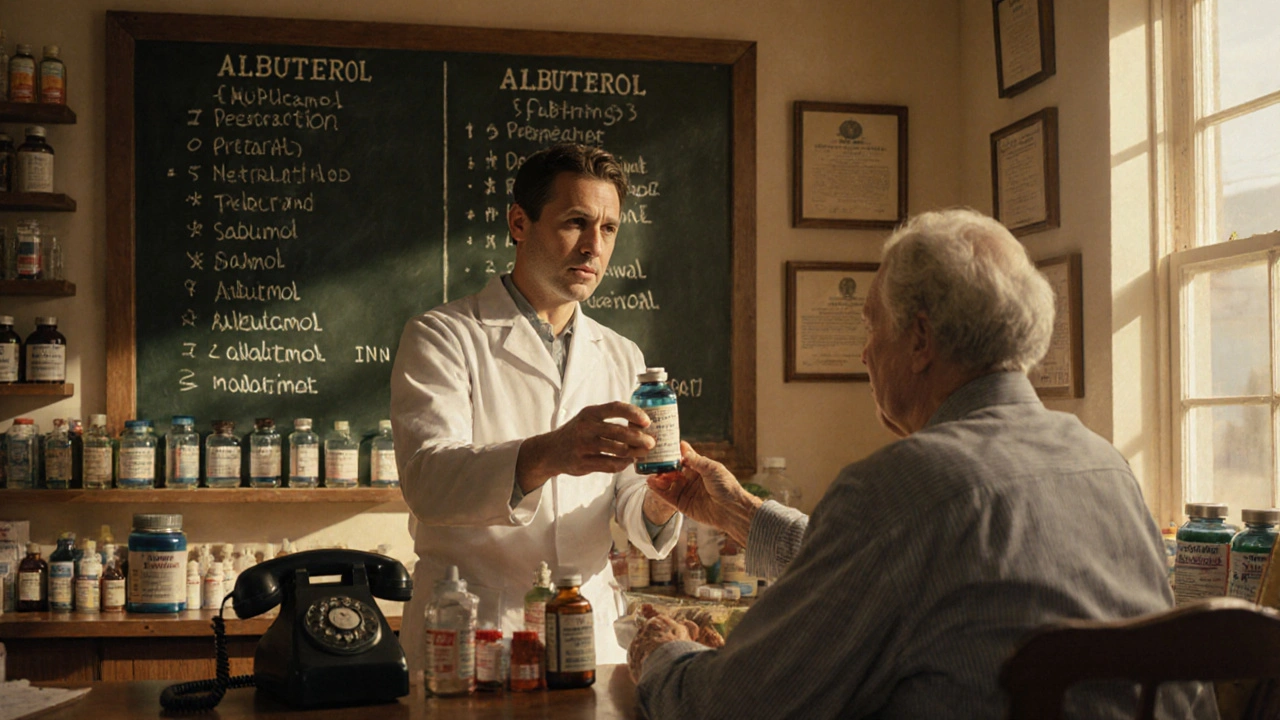

Generic Drug Naming: USAN, INN, and Brand Name Basics Explained
Learn how generic drug names like USAN and INN are created, why they differ between countries, and how stems help doctors identify drug classes safely. Understand the system behind your prescriptions.
Read