

You might feel perfectly healthy. You exercise, you eat reasonably well, and your blood pressure seems normal. Yet, somewhere inside your chest, a silent process could be underway. Atherosclerosis-the buildup of fatty deposits in your arteries-doesn't always announce itself with pain or warning signs until it's too late. This is where the coronary calcium score changes the game. It’s not just another medical test; it’s a direct look at the history of damage in your heart's arteries.
This article breaks down what this specific CT scan actually shows, why your doctor might recommend it, and how to interpret the numbers that come back. We’ll move past the jargon and focus on what these results mean for your daily life and long-term health.
What Is a Coronary Calcium Scan?
A coronary artery calcium (CAC) scan is a non-invasive computed tomography (CT) imaging test. Unlike a standard X-ray, which gives a flat image, a CT scanner rotates around you to create detailed cross-sectional pictures. These images are then combined by a computer into a 3D model of your heart.
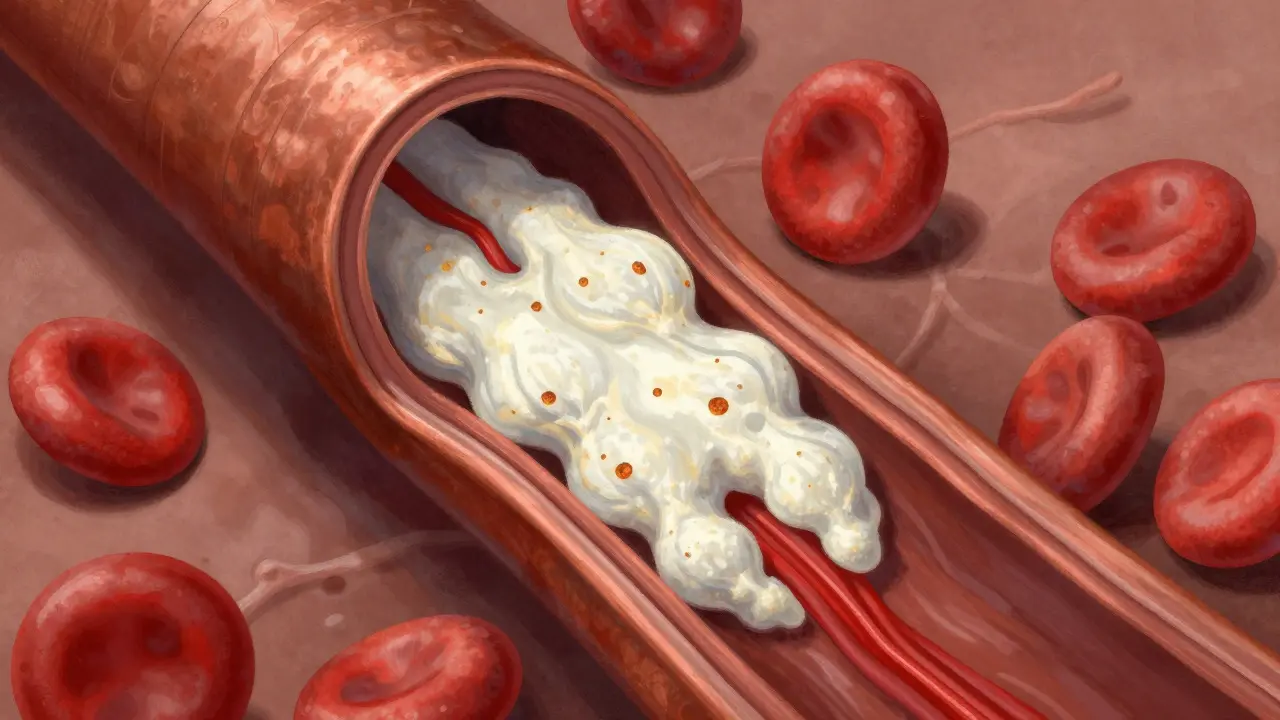
The goal isn’t to see the flow of blood-that’s what an angiogram does. Instead, the CAC scan looks specifically for calcified plaque in the coronary arteries. When cholesterol builds up in your artery walls, your body tries to heal the injury by depositing calcium. Over time, this calcification hardens. The more calcium present, the more advanced the atherosclerotic disease.
Think of it like rust in a pipe. You can’t see the rust from the outside, but if you could slice the pipe open, you’d see the buildup narrowing the flow. The CAC scan acts as that virtual slice, quantifying the 'rust' without ever cutting you open.
How the Agatston Score Works
When you get the results, you won’t just see a picture. You’ll see a number. This number is called the Agatston Score, named after Dr. Arthur Agatston who developed the methodology in 1990. Here is how the calculation works:
- Detection: The software scans the heart images pixel by pixel.
- Identification: It identifies areas with density levels consistent with calcium (measured in Hounsfield units).
- Calculation: It multiplies the area of each calcified lesion by a density factor ranging from 1 to 4.
- Total: All these values are added together to produce your final score.
This score is then compared to a reference population using the MESA (Multi-Ethnic Study of Atherosclerosis) percentile. This comparison tells you how your score stacks up against other people of your same age, sex, and ethnicity. A high score for a 45-year-old is much more concerning than the same score for a 75-year-old.
Interpreting Your Results: The Number Game
Understanding your score is crucial because it directly influences treatment decisions. According to guidelines from the Cleveland Clinic and the American College of Cardiology, here is how the scores break down:
| Score Range | Plaque Burden | Risk Level & Implication |
|---|---|---|
| 0 | No detectable calcium | Very low risk of near-future cardiac events. Lifestyle maintenance is usually sufficient. |
| 1-10 | Minimal plaque | Evidence of early atherosclerosis. Monitor closely and optimize lifestyle factors. |
| 11-100 | Mild plaque | Moderate risk. Often triggers discussions about statin therapy depending on other risk factors. |
| 101-400 | Moderate plaque | Significant risk. Associated with a 75% increased risk of cardiac events. Aggressive management typically required. |
| 401+ | Extensive plaque | High risk of coronary events. Requires intensive medical intervention and possibly further testing. |
If your score is above the 75th percentile for your demographic, guidelines suggest more aggressive risk factor management. This doesn't necessarily mean you need surgery, but it does mean your doctor will likely push harder for medication adherence and strict lifestyle changes.
Why Not Just Use Traditional Risk Calculators?
You’ve probably seen those online calculators that ask for your age, smoking status, and cholesterol to predict your 10-year heart attack risk. These tools, known as Pooled Cohort Equations, have a major flaw: they misclassify 20-30% of patients.
Many people fall into the "intermediate risk" category (7.5-20% risk). For these individuals, the calculator says, "Maybe take meds, maybe don't." It’s a gray area. This is where the CAC scan shines. Research published in Circulation (2020) shows that adding a calcium score reclassifies risk in 40-50% of these cases. It identifies "false low-risk" patients who actually have significant plaque hiding behind normal-looking blood work.
Conversely, it can reassure someone with high cholesterol but zero calcium that their immediate risk is lower than predicted, potentially sparing them from unnecessary medication side effects.
Limitations: What the Scan Misses
Despite its power, the CAC scan is not perfect. The most significant limitation is that it only detects calcified plaque. It cannot see "soft" or non-calcified plaque.
Soft plaque is dangerous because it is unstable and more likely to rupture, causing a sudden heart attack. Studies indicate that soft plaque comprises 20-30% of total plaque volume. If you have a score of zero, you still might have soft plaque, though the overall risk remains statistically low. For patients where soft plaque is suspected, doctors may order a Coronary CT Angiography (CCTA). However, CCTA requires iodinated contrast dye and involves higher radiation exposure (5-15 mSv vs. 1-3 mSv for CAC), making it less ideal as a first-line screening tool for asymptomatic people.
Another caveat applies to patients with chronic kidney disease. These patients often have vascular calcifications unrelated to atherosclerosis, which can lead to an overestimation of heart disease risk.
Preparation and Procedure Experience
One reason for the growing popularity of CAC scoring is how easy it is. The procedure takes under five minutes. Here is what to expect:
- Preparation: Avoid caffeine and smoking for 4 hours before the scan. These substances raise your heart rate, which can blur the images.
- Setup: You lie on a table while EKG leads are attached to your chest to monitor your heart rhythm.
- The Scan: The technologist asks you to hold your breath for 10-15 seconds. The machine makes whirring noises, but there is no physical contact with your body.
- No Contrast: Unlike many other CT scans, no IV dye is needed.
Patient feedback consistently highlights the speed and lack of discomfort. On patient forums, over 78% of users rated the experience positively, citing the quick turnaround time as a major benefit. However, anxiety is common when waiting for results, especially if you have a family history of heart disease.

Cost and Insurance Coverage
This is often the biggest hurdle. As of 2026, Medicare does not routinely cover CAC scoring for average-risk beneficiaries, though proposals are pending. Private insurance coverage varies wildly. Some plans cover it if you have specific risk factors (like diabetes or family history), while others consider it elective.
If you pay out-of-pocket, costs typically range from $100 to $300 at independent imaging centers, though hospital-based facilities may charge more. Despite the cost barrier, market data shows a 17% year-over-year increase in scans performed, driven by greater awareness among cardiologists and patients alike.
Who Should Get Tested?
Not everyone needs a CAC scan. Current guidelines from the Society of Cardiovascular Computed Tomography (SCCT) and the American Heart Association recommend it primarily for:
- Adults aged 40-75.
- Individuals with intermediate risk (7.5-20% 10-year risk) based on traditional calculators.
- Patients with borderline risk but strong family history of premature coronary artery disease.
- Those with LDL cholesterol ≥160 mg/dL regardless of other factors.
If you are already diagnosed with heart disease or have had a stent placed, a CAC scan adds little value-you already know you have plaque. The test is designed for prevention, not diagnosis of existing symptoms.
Next Steps After Your Scan
Your result is a starting point, not a verdict. If your score is elevated, the conversation shifts to action. This usually involves:
- Statin Therapy: Scores above 100 often trigger moderate-intensity statins; scores above 300 may require high-intensity statins.
- Lifestyle Audit: Reviewing diet, exercise, and sleep habits.
- Blood Pressure Control: Ensuring BP is strictly managed.
- Follow-up: Repeat scanning is generally recommended every 3-5 years, or sooner if risk factors change significantly, to monitor progression.
Don't let fear drive your reaction. Many patients report that seeing a non-zero score was the "motivational kick" they needed to quit smoking or start exercising. Knowledge is power, and in cardiology, knowing the state of your arteries is one of the most powerful tools you have.
Is a coronary calcium scan safe regarding radiation?
Yes, it is considered very safe. The effective radiation dose ranges from 1-3 mSv, which is comparable to a mammogram or about six months of natural background radiation. Newer AI-driven protocols are reducing this exposure by up to 40% while maintaining image quality.
Can my calcium score decrease over time?
Generally, no. Once calcium is deposited in the arterial wall, it rarely disappears. However, the *rate* of increase can slow down or stabilize with aggressive treatment like statins and lifestyle changes. A stable score is a positive sign that the disease process is being controlled.
Does a score of zero mean I can never have a heart attack?
It means your risk is extremely low for the next 5-10 years, but not zero. A score of zero indicates no *calcified* plaque, but it doesn't rule out soft plaque entirely. However, statistically, your chance of a cardiac event is significantly lower than someone with any detectable calcium.
How often should I repeat the test?
For most people, repeating the scan every 3 to 5 years is sufficient unless your clinical situation changes drastically. Annual scanning is rarely useful because calcium scores tend to change slowly. Frequent scanning exposes you to unnecessary radiation without providing actionable new information.
Will insurance cover the cost?
Coverage varies. Medicare currently limits coverage, but some private insurers cover it for patients with specific risk factors like diabetes, high cholesterol, or a strong family history. Always check with your provider beforehand. Out-of-pocket costs typically range from $100-$300 at independent centers.
Latest Posts