

Antibiotic & Dairy Interaction Checker
Select your antibiotic type and a dairy product to see potential absorption risks and recommended separation times.
You take your morning coffee with milk, swallow that antibiotic pill, and head to work. It seems harmless enough. But inside your stomach, a chemical reaction is happening that could render your medicine useless. Calcium in dairy binds to certain antibiotics, forming clumps your body simply cannot absorb. The result? You’re fighting an infection with half the dose-or less.
This isn’t just a minor inconvenience; it’s a major cause of treatment failure. When antibiotics don’t reach effective levels in your blood, bacteria survive. They multiply. And worse, they can develop resistance, making future infections harder to treat. Understanding why timing matters between antibiotics and dairy is one of the most practical steps you can take to protect your health.
The Chemistry Behind the Interaction
To understand why this happens, we need to look at what occurs in your gut. Many antibiotics contain specific molecular structures that act like magnets for minerals. Dairy products are rich in calcium (Ca²⁺), along with magnesium and iron. When these minerals meet certain drugs in your gastrointestinal tract, they undergo a process called chelation.
Think of chelation as a handshake that never lets go. The calcium ion grabs onto the antibiotic molecule, creating a large, insoluble complex. Your intestinal wall is designed to absorb small, soluble particles into your bloodstream. These bulky, mineral-drug complexes are too big and too stable to pass through. Instead of entering your system to fight infection, they pass right through you, unchanged and unused.
Chelation is a chemical binding process where metal ions like calcium attach to organic molecules, often reducing their solubility and bioavailability. In pharmacology, this interaction significantly lowers the amount of active drug available to treat infections.
This phenomenon was first documented in the 1950s with tetracyclines, but it remains highly relevant today. The severity depends on the specific antibiotic and the type of dairy consumed. Yogurt, for instance, often causes greater absorption reductions than milk because its lower pH and higher calcium bioavailability make the binding reaction more efficient.
Which Antibiotics Are Affected?
Not all antibiotics react to dairy. If you’re taking amoxicillin or azithromycin, you can likely enjoy your yogurt without worry. However, two major classes of antibiotics are highly sensitive to calcium and other minerals:
- Tetracyclines: This includes doxycycline, minocycline, and generic tetracycline. These are commonly prescribed for acne, Lyme disease, and respiratory infections.
- Fluoroquinolones: This includes ciprofloxacin and levofloxacin. These are powerful drugs used for urinary tract infections, pneumonia, and bone infections.
Beta-lactam antibiotics, such as penicillins and cephalosporins, show variable responses. Some, like cefalexin, see significant absorption drops (>40%) with milk, while others, like amoxicillin, remain largely unaffected. Always check your specific prescription label or ask your pharmacist.
| Antibiotic Class | Examples | Absorption Reduction | Required Separation Time |
|---|---|---|---|
| Tetracyclines | Doxycycline, Tetracycline | 20% - 75% | 2 hours before or 4 hours after |
| Fluoroquinolones | Ciprofloxacin, Levofloxacin | 30% - 92% | 2 hours before or 4 hours after |
| Beta-Lactams (Variable) | Cefalexin, Penicillin V | >40% (some) | Check specific drug label |
| Macrolides | Azithromycin, Clarithromycin | Minimal to None | No separation needed |

Why Timing Is Critical
The difference between taking an antibiotic with dairy versus separating them is stark. Studies show that co-ingesting ciprofloxacin with milk can reduce plasma concentrations by up to 70%. With yogurt, that reduction can hit 92%. For tetracyclines, bioavailability can drop by half or more.
When your blood concentration of the drug falls below the therapeutic threshold, the bacteria causing your infection aren’t killed-they’re merely suppressed. Once you stop the medication, those surviving bacteria bounce back stronger. This partial treatment is a primary driver of antimicrobial resistance, a global crisis linked to over a million deaths annually according to WHO reports.
Dr. Neal Patel from the Royal Pharmaceutical Society puts it plainly: “Even if the milk affects just half of the drug, you're only getting half the dose, which could mean the infection isn't killed off by the end of the course.” For serious conditions like Rocky Mountain spotted fever or severe pneumonia, this margin of error can be life-threatening.
Practical Guidelines for Safe Administration
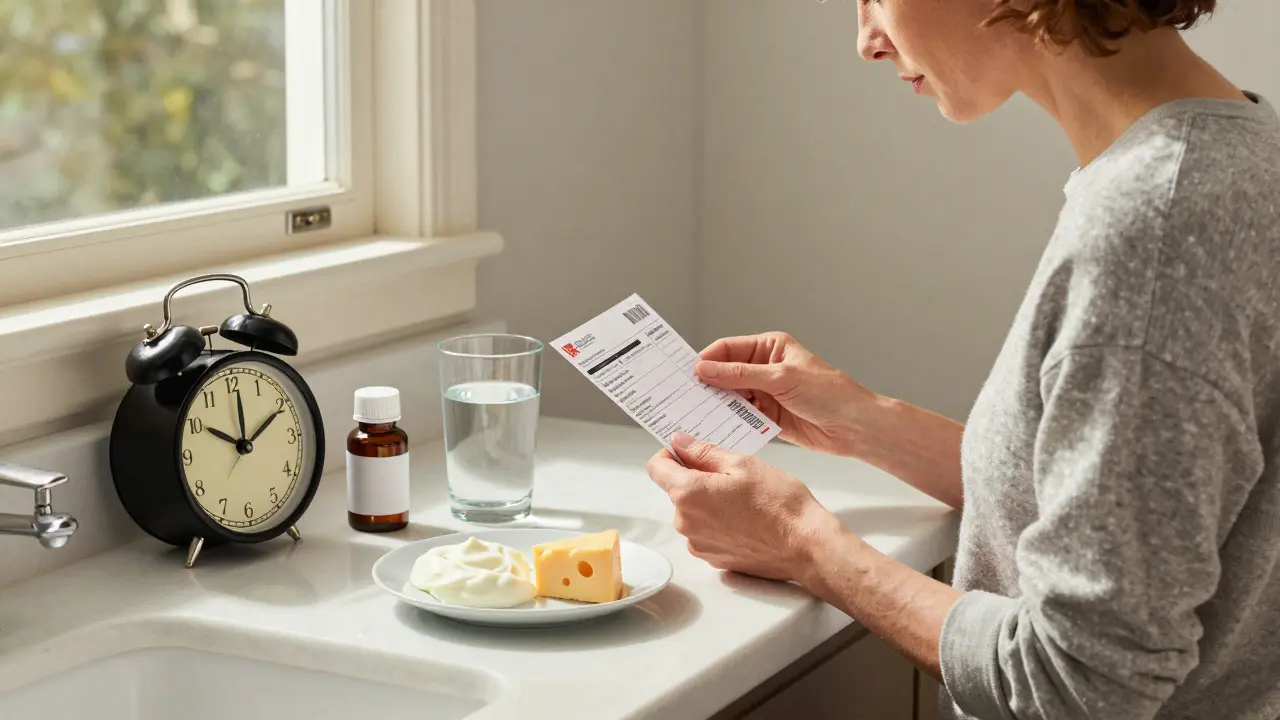
So, how do you navigate this in daily life? The golden rule is separation. Most clinical guidelines recommend taking affected antibiotics at least 2 hours before or 4 hours after consuming dairy products.
Here’s what counts as dairy during this window:
- Milk (including in coffee, tea, or cereal)
- Cheese (hard, soft, cottage, cream cheese)
- Yogurt and kefir
- Ice cream and frozen desserts
- Butter and cream
- Whey protein supplements
It’s not just about obvious dairy foods. Calcium-fortified plant milks (like almond or oat milk), antacids containing calcium carbonate, and multivitamins with calcium can trigger the same interaction. If you’re taking a calcium supplement, treat it with the same respect as a glass of milk.
For twice-daily regimens, this can feel disruptive. A common strategy is to take the morning dose immediately upon waking, before breakfast, and wait until lunchtime for any dairy-containing meals. Alternatively, take the evening dose late at night, ensuring no dairy is consumed within the four-hour window afterward.
Exceptions and Nuances
There are exceptions to the strict rules. Doxycycline monohydrate formulations, such as Oracea, have modified-release properties that reduce their sensitivity to food interactions. FDA labeling allows these specific versions to be taken with food, including dairy, though checking with your pharmacist is always wise.
Also, consider your individual physiology. Recent research indicates that genetic variations in intestinal transporters (like SLCO2B1) can influence how severely you’re affected. Obese patients may require extended separation times due to slower gastric emptying rates. If you have lactose intolerance and naturally avoid dairy, you might inadvertently achieve better absorption rates, as noted in some clinical observations.
Managing Side Effects Without Compromising Efficacy
Many patients take antibiotics with dairy because these drugs upset their stomachs. Tetracyclines, in particular, can cause nausea when taken on an empty stomach. This creates a dilemma: eat dairy to soothe your gut, or risk vomiting the drug entirely?
If nausea is a concern, try non-dairy alternatives. Plain crackers, dry toast, or rice can help buffer the stomach acid without introducing calcium. Hydration is also key-drink plenty of water with your pill. If side effects persist, talk to your doctor. They may switch you to a different antibiotic class that doesn’t interact with food, or adjust the dosage timing.
Never intentionally consume dairy to counteract nausea if your drug is known to interact. The risk of treatment failure outweighs the temporary discomfort. If you vomit shortly after taking the dose, consult your healthcare provider before re-dosing, as doubling up can lead to toxicity.
Can I take my antibiotic with a splash of milk in my coffee?
Even small amounts of dairy can interfere with absorption. While a tiny splash might not cause a 90% reduction, it still introduces calcium that can bind to the drug. For maximum efficacy, it’s best to stick to black coffee or tea during the critical window around your dose.
Does almond milk interact with antibiotics?
Plain almond milk does not contain significant calcium and generally does not interact. However, many commercial almond milks are fortified with calcium carbonate. Check the nutrition label. If it’s fortified, treat it like cow’s milk and maintain the 2-4 hour separation.
What if I accidentally took my antibiotic with yogurt?
Don’t panic. Don’t take another dose immediately. Wait until your next scheduled dose time. Taking extra medication can lead to overdose and increased side effects. Monitor your symptoms closely. If your infection worsens or doesn’t improve, contact your doctor.
Are probiotics safe to take with antibiotics?
Probiotics are beneficial for gut health during antibiotic therapy, but timing matters. Take probiotics at least 2-3 hours apart from your antibiotic dose to ensure the good bacteria aren’t killed by the drug. Also, choose probiotic strains that don’t rely on high-calcium delivery systems.
Do antacids affect antibiotic absorption?
Yes, especially those containing calcium, magnesium, or aluminum. These minerals chelate with tetracyclines and fluoroquinolones just like dairy does. Use the same 2-4 hour separation rule for antacids and mineral supplements.