

When your body can’t make enough cortisol and aldosterone, even simple stress like a cold or a dental visit can turn life-threatening. This is the reality for people living with Addison’s disease - a rare but serious condition where the adrenal glands stop producing vital hormones. Unlike diabetes or thyroid disorders, Addison’s doesn’t show up on routine blood tests. It sneaks in with fatigue, weight loss, and darkened skin - symptoms often mistaken for burnout, depression, or stomach bugs. By the time it’s diagnosed, up to 90% of adrenal tissue may already be destroyed. But with the right treatment, people with Addison’s can live full, active lives. The key? Understanding exactly what’s broken, how to replace it, and how to avoid the crisis that can kill.
What Exactly Is Addison’s Disease?
Addison’s disease, also called primary adrenal insufficiency, happens when the adrenal glands - small organs on top of your kidneys - get damaged and can’t make enough cortisol or aldosterone. Cortisol helps your body handle stress, control blood sugar, and reduce inflammation. Aldosterone keeps your salt and water balance in check. Without them, your body starts to shut down.
Most cases - about 80 to 90% in the U.S. and Europe - are autoimmune. That means your immune system mistakenly attacks your own adrenal glands. This is often linked to antibodies against an enzyme called 21-hydroxylase. In the past, tuberculosis was the main cause. Today, it’s rare in developed countries but still common in parts of Africa and Asia. Other causes include infections, cancer spreading to the adrenals, or rare genetic disorders.
The scary part? Symptoms don’t show up until most of the gland is gone. You might feel tired all the time, lose your appetite, or have nausea. Your skin may darken - especially on scars, knuckles, or inside your mouth. That’s because high ACTH (the hormone that tells your adrenals to work) also triggers melanin production. Low sodium and high potassium levels can cause muscle cramps, dizziness, or even heart rhythm problems. Many people go years being told they’re just “stressed” or “anemic.” The average time to diagnosis? Over three years.
How Is It Diagnosed?
Diagnosing Addison’s isn’t about one test. It’s a chain of clues. First, doctors check your blood for low cortisol and high ACTH. If your cortisol is below 5 mcg/dL and ACTH is over 50 pg/mL, that’s a red flag. But they don’t stop there. They need to confirm it’s not a problem with your pituitary gland (secondary insufficiency), which doesn’t affect aldosterone.
The gold standard is the ACTH stimulation test. You get a shot of synthetic ACTH (cosyntropin), and your cortisol is measured 30 and 60 minutes later. If your cortisol doesn’t rise above 18 mcg/dL, your adrenals aren’t responding - meaning they’re damaged. In secondary cases, the test may be normal, so a longer 24-hour test is needed.
Doctors also check electrolytes. Hyponatremia (sodium under 135 mmol/L) happens in 90% of cases. Hyperkalemia (potassium over 5.0 mmol/L) is seen in 60%. Renin levels are sky-high because your body is desperately trying to signal the adrenals to make more aldosterone. In secondary insufficiency, renin stays normal. That’s how you tell them apart.
Autoimmune testing for 21-hydroxylase antibodies is now recommended for all new cases. It’s over 95% accurate at confirming the cause. And because Addison’s often comes with other autoimmune diseases, doctors screen for thyroid issues, type 1 diabetes, and vitiligo. About half of patients develop at least one more.
Why Steroid Replacement Isn’t Just a Pill - It’s a Lifeline
There’s no cure. You can’t regrow adrenal tissue. So treatment is lifelong: replacing what your body can’t make. But it’s not as simple as taking a daily pill and forgetting about it.
People with primary adrenal insufficiency need two types of steroids:
- Glucocorticoid replacement: Usually hydrocortisone (Cortef), taken in divided doses - 15 to 25 mg total per day. Most take 10 mg in the morning, 5 mg at lunch, and 5 mg in the afternoon. This mimics your body’s natural rhythm, which peaks in the morning and drops at night.
- Mineralocorticoid replacement: Fludrocortisone (Florinef), 50 to 300 mcg daily. This replaces aldosterone, helps keep sodium up, potassium down, and blood pressure stable.
Secondary adrenal insufficiency is different. Since the adrenals still make aldosterone (because the problem is in the pituitary), you only need glucocorticoids. Taking fludrocortisone when you don’t need it can cause high blood pressure or fluid retention.
But here’s the catch: your body doesn’t know you’re on replacement therapy. If you get sick, stressed, or injured, your cortisol needs spike - sometimes 3 to 5 times higher. If you don’t adjust your dose, you risk adrenal crisis.

The Silent Killer: Adrenal Crisis
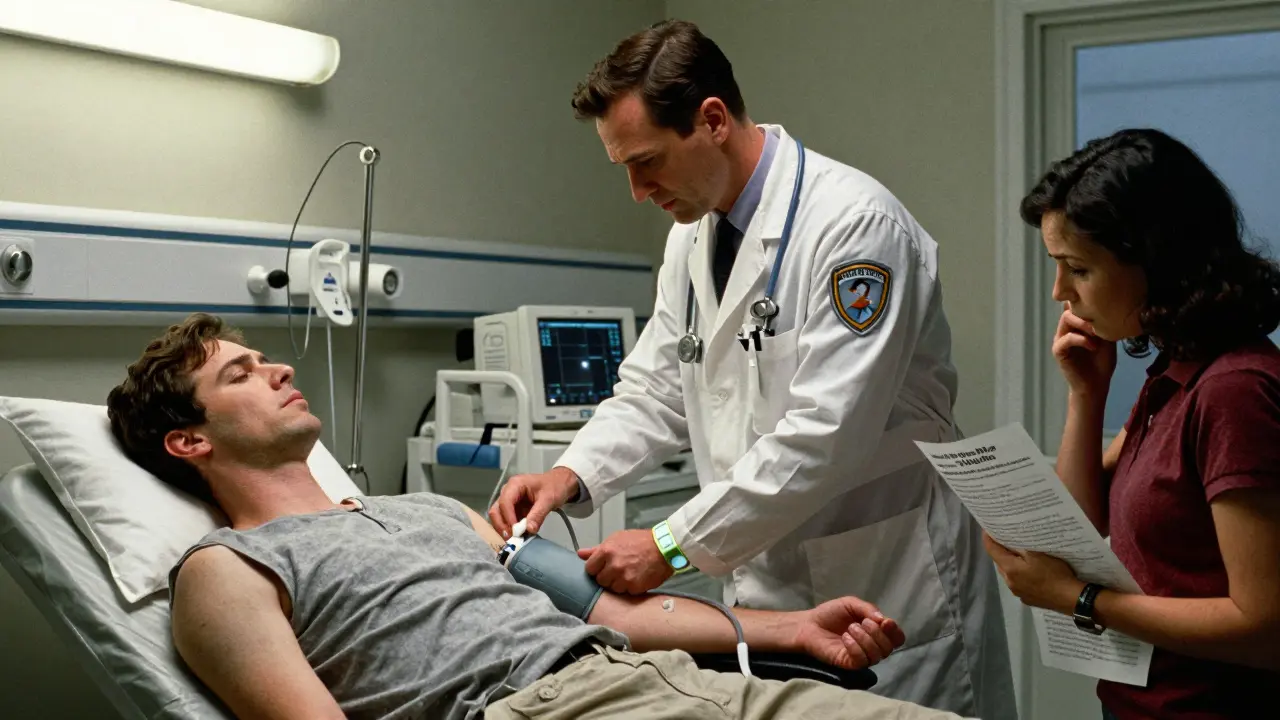
An adrenal crisis is a medical emergency. It’s not just feeling bad - it’s shock. You might have severe vomiting, confusion, low blood pressure, or loss of consciousness. Without immediate treatment, death can happen within hours.
Studies show people with primary adrenal insufficiency have 8 to 10 crises per 100 patient-years. That’s one crisis every 10 to 12 years - but for some, it’s much more frequent. The biggest triggers? Infections (39%), stomach bugs (25%), and forgetting to take your meds (18%).
Here’s what you must do:
- Sick day rules: Double or triple your hydrocortisone dose at the first sign of illness - fever, flu, vomiting, or even a bad cold.
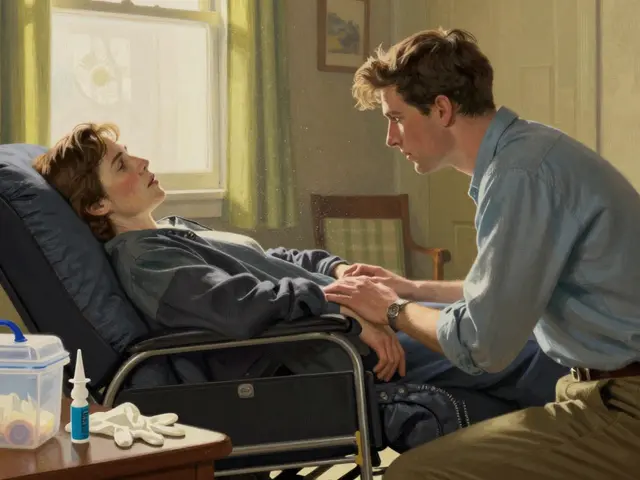
- Inject if you can’t keep pills down: If you’re vomiting or too sick to swallow, give yourself a 100 mg intramuscular (IM) or IV injection of hydrocortisone immediately. Don’t wait. Don’t call the doctor first. Inject.
- Always carry an emergency kit: This includes a syringe with injectable hydrocortisone and clear instructions. Wearing a medical alert bracelet is non-negotiable. Data from the UK registry shows 92% compliance cuts crisis deaths in half.
Emergency rooms often don’t know what to do. Patients report being sent home with “just take some ibuprofen” - until they collapse again. That’s why education is everything. Patients who complete the Addison’s Disease Self Help Group’s “Sick Day Rules” training cut their crisis frequency by 85%.
The Hidden Struggle: Life on Replacement Therapy
Even when you’re doing everything right, life with Addison’s is exhausting. The fear of crisis is constant. Reddit threads from r/AddisonsDisease are full of stories: “I had to triple my dose before a dentist appointment and felt like a zombie for two days.” “I missed my 3 a.m. pill during a fever and ended up in the ER.”
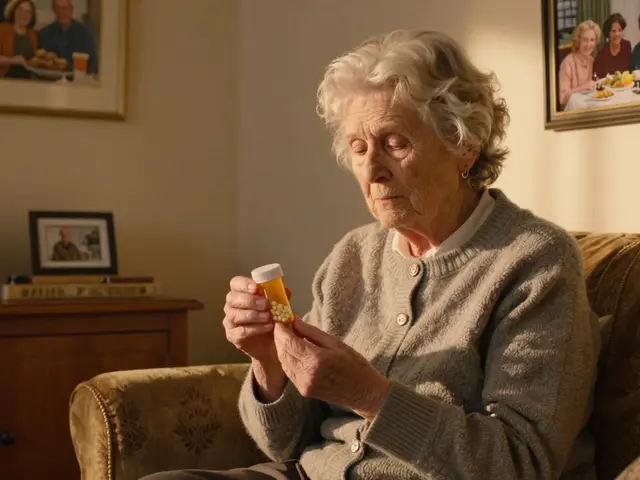
And then there’s the cost. In the U.S., without insurance, hydrocortisone runs $350 to $500 a month. A 2022 survey found 40% of patients skip doses because of price. One in four ration their meds. That’s not just inconvenient - it’s deadly.
There’s also the long-term toll. Taking too much glucocorticoid increases heart disease risk by 44%. Taking too little raises crisis risk by 200%. The window is razor-thin. Studies show people with Addison’s live 3.2 to 11.2 years less than average - mostly because of heart problems or sudden crises.
New Hope: Better Treatments on the Horizon
There’s progress. In 2023, the FDA approved Chronocort - a modified-release hydrocortisone tablet that releases slowly over 24 hours. It mimics natural cortisol patterns better than multiple daily doses. In trials, it cut cortisol swings by 37%. That means fewer side effects and less risk of under- or over-replacement.
And the future? Continuous cortisol monitors are in phase 2 trials. These wearable devices could track your cortisol levels in real time, like a glucose monitor for diabetics. Experts predict they’ll cut crisis rates by 60% within five years.
Right now, the best tools are still simple: knowing your numbers, listening to your body, carrying your injection, and finding a doctor who gets it. Most endocrinologists specialize in pituitary or thyroid issues - not adrenal. Seek out a center that treats adrenal disorders regularly. If you’re unsure, ask: “Do you see more than 20 Addison’s patients a year?”
What You Need to Do Today
- If you’ve been diagnosed: Get your emergency injection kit. Learn how to use it. Wear your medical ID. Memorize your dose adjustments.
- If you suspect you might have it: Demand an ACTH stimulation test if you have unexplained fatigue, dark skin, low sodium, or salt cravings. Don’t accept “it’s just stress.”
- If you’re a caregiver: Learn the sick day rules. Know when to inject. Don’t wait for a doctor’s approval - act fast.
Addison’s disease doesn’t define you - but ignoring it can kill you. The science is clear. The treatment works. What’s left is the discipline to manage it, day after day, without letting fear win.
Can you outgrow Addison’s disease?
No. Addison’s disease is a permanent condition caused by irreversible damage to the adrenal glands. Once the glands are destroyed - whether by autoimmune attack, infection, or other causes - they don’t regenerate. Lifelong steroid replacement is required. There are no known cases of spontaneous recovery. Even with careful treatment, the body cannot restore its own hormone production.
Is Addison’s disease the same as adrenal fatigue?
No. Adrenal fatigue is not a real medical diagnosis. It’s a term used in alternative medicine to describe general tiredness, often linked to stress. But in true adrenal insufficiency, hormone levels are objectively low and measurable. Blood tests show cortisol below 5 mcg/dL and ACTH above 50 pg/mL. Adrenal fatigue lacks diagnostic criteria, lab evidence, or scientific validation. Confusing the two can delay life-saving treatment.
Why do people with Addison’s get darker skin?
The darkening - called hyperpigmentation - happens because the pituitary gland keeps pumping out ACTH, trying to tell the adrenals to make more cortisol. When the adrenals don’t respond, ACTH levels keep rising. High ACTH also stimulates melanocytes - the skin cells that produce pigment. This causes dark patches on sun-exposed areas, knuckles, scars, gums, and inside the mouth. It’s a key sign that distinguishes primary adrenal insufficiency from secondary forms.
Can you die from Addison’s disease?
Yes - but only if it’s untreated or poorly managed. An adrenal crisis can cause shock, coma, and death within hours. Studies show that 8-10% of patients experience at least one crisis per year. Mortality is highest when treatment is delayed. But with proper steroid replacement and emergency preparedness, life expectancy can approach normal. The biggest risk isn’t the disease itself - it’s not knowing how to respond to illness.
Do you need to take steroids forever?
Yes. Unlike some hormone deficiencies that can be reversed (like low thyroid hormone from temporary inflammation), Addison’s involves permanent loss of adrenal tissue. Without replacement, cortisol and aldosterone levels drop to zero. This leads to fatal electrolyte imbalances and shock. Replacement therapy isn’t optional - it’s as essential as oxygen. Skipping doses, even for a day, can be life-threatening.
What’s the difference between primary and secondary adrenal insufficiency?
Primary (Addison’s) is caused by damage to the adrenal glands themselves. This leads to low cortisol AND low aldosterone, high ACTH, high renin, and dark skin. Secondary is caused by a pituitary problem - the gland doesn’t signal the adrenals to make cortisol. Aldosterone stays normal, so electrolytes are usually fine, and there’s no darkening. Treatment differs: primary needs both hydrocortisone and fludrocortisone; secondary only needs hydrocortisone.
Can stress trigger an adrenal crisis?
Yes - any physical stress can. That includes infection, surgery, injury, extreme heat, or even emotional trauma. Your body normally makes 3 to 5 times more cortisol under stress. If you’re not adjusting your replacement dose, your body has zero reserve. That’s why sick day rules exist: double or triple your hydrocortisone at the first sign of illness. Ignoring this increases crisis risk by 200%.
Are there natural alternatives to steroid replacement?
No. There are no herbs, supplements, or diets that can replace cortisol or aldosterone. Some products claim to “support adrenal health,” but they don’t raise hormone levels in people with Addison’s. Taking them instead of prescribed steroids is dangerous and can lead to death. Steroid replacement is not optional - it’s medical necessity. Relying on natural remedies delays diagnosis and increases crisis risk.



Comments
kirti juneja
22/Feb/2026I’m an endo nurse in Mumbai, and I’ve seen so many patients dismissed as 'just stressed' for YEARS. Then they collapse. Please, if you’re tired all the time + salt cravings + dark knuckles - demand that ACTH test. No excuses. Your life depends on it. 🙏
Gabrielle Conroy
22/Feb/2026I have Addison’s and I can’t believe how accurate this is. 😭 My emergency kit is in my purse, glovebox, and work desk. I triple my dose before coffee if I feel a sniffle coming. And YES - I cry every time I see the $480 receipt for hydrocortisone. It’s not a lifestyle choice. It’s survival. 💪
Natanya Green
22/Feb/2026I went into crisis last year because I thought ‘it’s just a cold’… I woke up in the ER with a 68 bpm pulse and my mom screaming at the nurse to give me the shot. They didn’t even know what it was. I now have a laminated card in my wallet. If you’re reading this - DO THIS. NOW. 🚨
Steven Pam
22/Feb/2026This post should be mandatory reading for every med student. I’m a paramedic and we get called for ‘syncope’ or ‘dehydration’ - but 90% of the time, they’re just not on their meds. We carry dextrose and saline, but we don’t carry hydrocortisone. We need to change that. 🙌
Timothy Haroutunian
22/Feb/2026Look, I get it. You’re scared. But let’s be real - this whole ‘lifelong steroid replacement’ thing is just Big Pharma keeping you dependent. I’ve been off my meds for 18 months. I drink bone broth, do cold plunges, and take ashwagandha. My energy is better than ever. The doctors are lying to you. They don’t want you to know there are natural ways. I’m not saying this to be edgy - I’m saying this because I’ve been there.
Erin Pinheiro
22/Feb/2026I read this and thought: why are people so lazy? I mean, if you just took your pills like a normal person, you wouldn’t be in the hospital. I have 3 autoimmune conditions and I never miss a dose. Why can’t you? It’s not that hard. You just have to care. Stop making excuses. You’re not special.
Nick Hamby
22/Feb/2026The science here is impeccable. What’s not discussed enough is the psychological toll. It’s not just about electrolytes and cortisol curves - it’s the constant calculation: ‘Is this headache a migraine or a precursor?’ ‘Do I cancel the trip?’ ‘Will my kid’s soccer game trigger a crisis?’ You don’t just live with a disease - you live with a shadow. And that shadow never leaves.
Nandini Wagh
22/Feb/2026lol at the ‘natural alternatives’ section. Yeah, because nothing says ‘life-saving’ like a turmeric latte. I’m from India - we’ve been using ashwagandha for 5000 years. Guess what? It doesn’t raise cortisol in Addison’s. It just makes you feel like you’re doing something. That’s not medicine. That’s hope porn.
Holley T
22/Feb/2026Actually, this article is misleading. It implies that adrenal insufficiency is always primary. But what about secondary? What about the people who had pituitary tumors or radiation? Their treatment is different. They don’t need fludrocortisone. And yet, this entire post assumes you’re on both. That’s dangerous. Not everyone needs the same regimen. You’re doing a disservice by oversimplifying.
Ashley Johnson
22/Feb/2026I know someone who died from this. She didn’t have insurance. She rationed her pills. She took one every other day. Then she got the flu. She didn’t inject. She called 911. They said ‘it’s just the flu.’ She died in the ambulance. I’m not saying this to be dramatic. I’m saying this because this is real. And if you’re not carrying that shot - you’re playing Russian roulette.
tia novialiswati
22/Feb/2026I just got diagnosed last month. I cried for 3 days. Then I read this. Then I made my emergency kit. I got my bracelet. I told my boss. I told my mom. I’m scared - but I’m not alone. Thank you for writing this. 🤍
Kenzie Goode
22/Feb/2026I’m a mom of a 12-year-old with Addison’s. I carry 3 emergency kits. I’ve taught her how to inject. I’ve memorized her numbers. I’ve missed work. I’ve lost sleep. I’ve screamed into pillows. I’ve Googled ‘can you die from Addison’s’ at 3 a.m. Every. Single. Night. This isn’t a disease. It’s a full-time job. And we do it because we have to. And we do it with love. 💕
Brooke Exley
22/Feb/2026I want to shout this from rooftops: if you have Addison’s, you are not broken. You are not weak. You are not lazy. You are a warrior who wakes up every day and chooses to fight - not because you’re brave, but because you have no other choice. And that? That’s the definition of strength. I see you. I honor you. I’m rooting for you. 🙌
Gabrielle Conroy
22/Feb/2026I just read the comment about ashwagandha… I’m so tired of this. I had a cousin who tried ‘natural healing’ and went into crisis. She’s in a wheelchair now. Please. Stop. Just. Take. Your. Pills. 💔
Nick Hamby
22/Feb/2026To the person who said ‘it’s just Big Pharma’ - I wish I could hug you. I’ve been on hydrocortisone for 17 years. I’ve seen friends die. I’ve had to inject my own child. You think I’m being manipulated? No. I’m being kept alive. And if you think there’s a pill, a tea, or a yoga pose that can replace cortisol - you’re not just wrong. You’re dangerous. And I’m sorry you’ve been misled.