
Naloxone Safety Kit Builder
Customize Your Plan
Select options that apply to your situation to generate a tailored safety kit list.
Your Recommended Kit
Est. Cost: $0Select your risk factors and preferences to build your personalized safety protocol.
Imagine you are sitting in your living room. Your partner, who takes prescription opioids for chronic pain, suddenly stops breathing. Their skin is pale, their lips are turning blue, and they won't wake up when you shake them. In that terrifying moment, seconds count. Without a Naloxone Readiness Plan is a structured protocol ensuring rapid access to and correct administration of naloxone to reverse opioid overdoses, those seconds can turn into minutes, leading to permanent brain damage or death. But with the right preparation, you can save a life.
Opioid overdose is not just a statistic; it is a medical emergency that happens in homes, workplaces, and public spaces every day. The good news? You don’t need to be a doctor to reverse an overdose. You just need a plan, the right tool, and the confidence to act. This guide breaks down exactly how to build that safety net, from choosing the right naloxone formulation to mastering the rescue techniques that keep people alive while help arrives.
Understanding Naloxone: How It Saves Lives
To create an effective readiness plan, you first need to understand the tool at your disposal. Naloxone is an opioid antagonist medication that rapidly reverses the effects of opioid overdose by blocking opioid receptors in the brain. Developed in 1961 by chemist Mozes J. Lewenstein and approved by the FDA in 1971, this drug has evolved from a hospital-only intervention to a community staple. As of March 2023, the FDA approved the first over-the-counter naloxone nasal spray, making it accessible without a prescription.
Here is how it works biologically: Opioids bind to mu-opioid receptors in the brain, slowing down breathing until it stops. Naloxone has a 50 to 100 times greater affinity for these receptors than morphine. When administered, it kicks the opioids off the receptors, restoring normal breathing within 2 to 5 minutes. Crucially, if you give naloxone to someone who isn't overdosing on opioids, nothing happens. It cannot cause harm. This safety profile makes it ideal for layperson use.
However, naloxone is not a cure-all. It only addresses respiratory depression. It does not fix other complications like aspiration pneumonia or rhabdomyolysis, which contributed to 17.3% of post-naloxone fatalities in Massachusetts between 2021 and 2022. This is why calling 911 remains a non-negotiable step in any readiness plan.
Choosing the Right Naloxone Formulation
Your readiness plan starts with selecting the right device. Not all naloxone products are created equal, and cost, ease of use, and shelf life vary significantly.
| Formulation | Dosage | Approximate Cost (No Insurance) | Ease of Use | Shelf Life |
|---|---|---|---|---|
| NARCAN® Nasal Spray | 4 mg | $130 - $150 | High (Pre-filled, no assembly) | 36 months |
| Intramuscular Injection (Vial/Syringe) | 0.4 mg per vial | $25 - $40 per dose | Moderate (Requires drawing up dose) | Varies by manufacturer |
| Evzio® Auto-Injector | 4 mg | ~$3,200 (Historical high, now reduced) | High (Automatic injection) | 18 - 24 months |
For most households and workplaces, the NARCAN® Nasal Spray is the preferred choice. Why? Because during an overdose, adrenaline spikes, fine motor skills drop, and confusion sets in. Trying to draw up a liquid dose from a vial under pressure is difficult. The nasal spray requires no assembly. You insert, press, and done. While the upfront cost is higher, the reliability in a crisis is worth the investment. If budget is a major constraint, intramuscular injections are cheaper but require more training to administer correctly.
Building Your Physical Safety Kit
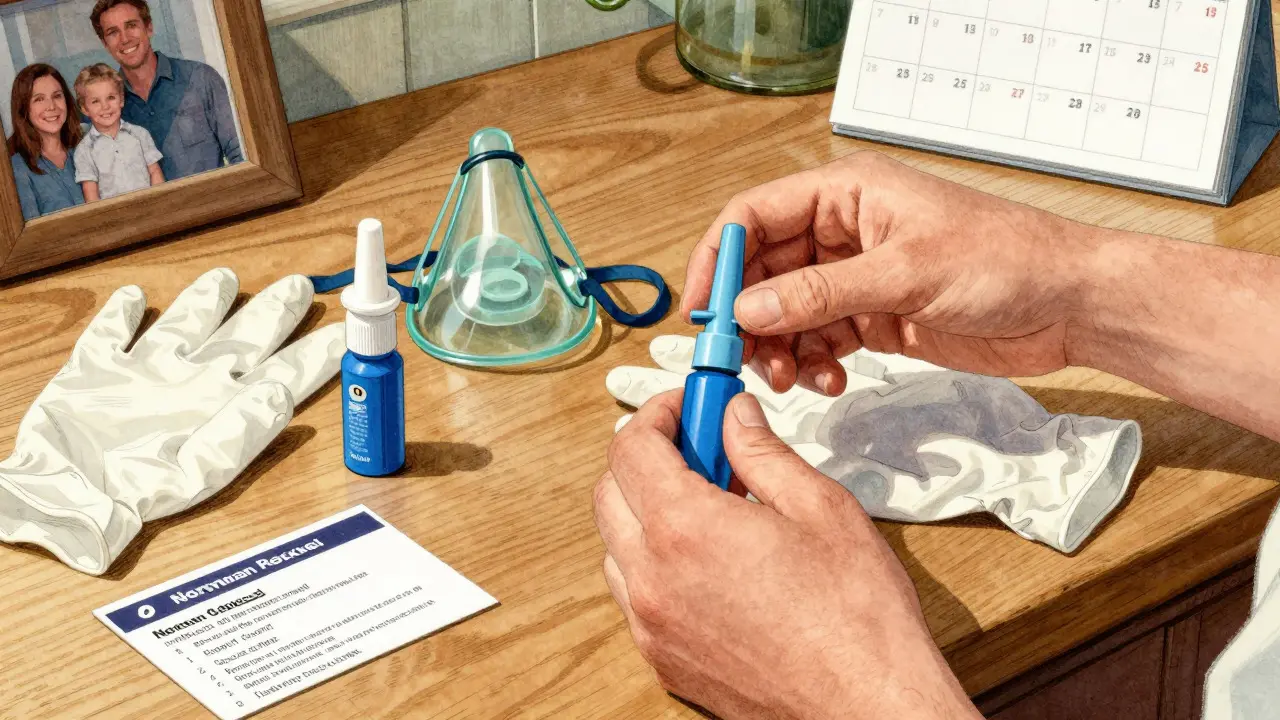
A readiness plan is useless if the naloxone is locked in a safe or buried in a drawer. Accessibility is key. According to the Wisconsin Department of Health Services' "Dose of Reality" program, naloxone must be within 30 seconds of recognition of an overdose. Here is what your kit should contain:
- At least two doses of naloxone: One 4mg nasal spray kit or two 0.4mg vials. Why two? Because potent synthetic opioids like fentanyl may require multiple doses. The CDC notes that 87.2% of overdose deaths in 2022 involved fentanyl or its analogs, which often resist standard naloxone doses.
- Rescue breathing barrier: A pocket mask or CPR shield. If the person isn't breathing after naloxone, you need to provide oxygen. Direct mouth-to-mouth contact is risky; a barrier protects you.
- Gloves: Nitrile gloves to protect against bodily fluids during rescue breathing or cleanup.
- Emergency contact list: A laminated card with 911, local poison control, and the patient's primary care provider numbers. Keep this taped to the outside of the kit.
- Expiry date tracker: Naloxone degrades over time. Mark the expiration date clearly on the kit. Replace kits every 18 to 24 months as recommended by the National Safety Council.
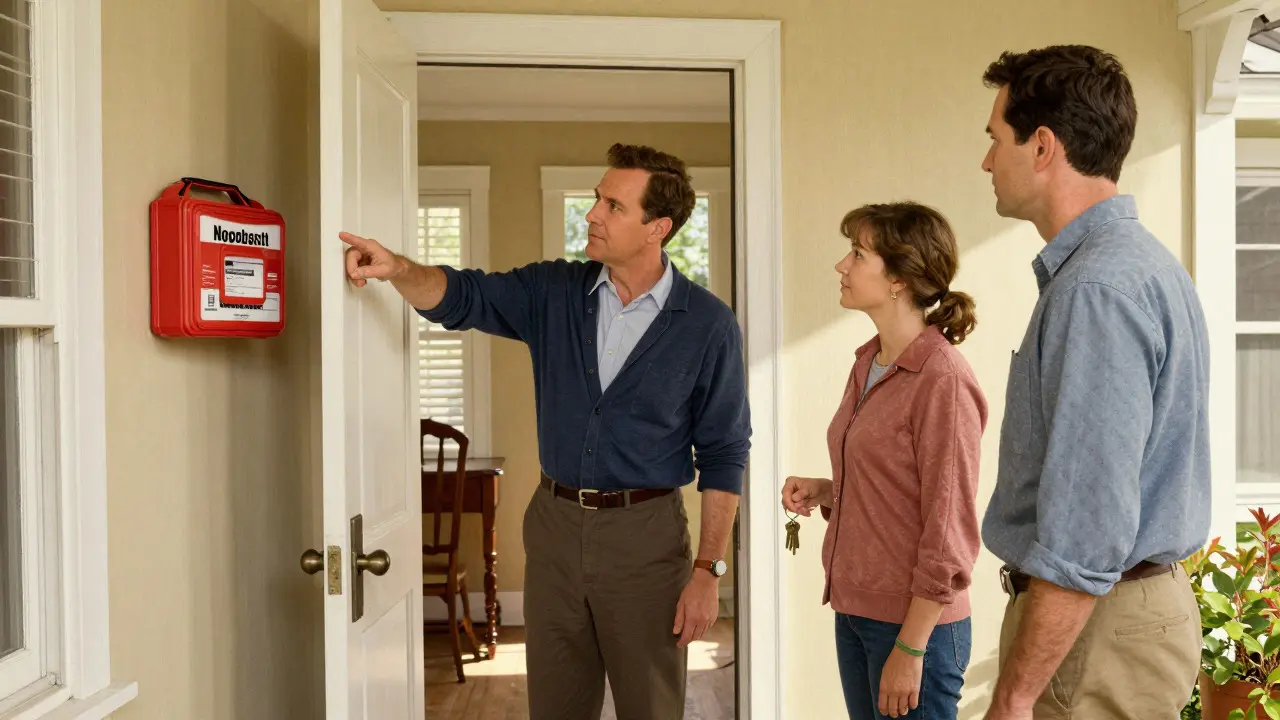
Place this kit in a central, easy-to-reach location. For patients living alone, consider keeping one kit in the bedroom and another in the bathroom or living area. For families, ensure everyone knows where it is.
The Step-by-Step Response Protocol
Knowing what to do is half the battle. Panic causes paralysis. Memorize this sequence, derived from the American Heart Association’s 2020 scientific statement and the Wisconsin Dose of Reality guidelines:
- Recognize the signs (within 30 seconds): Look for unresponsiveness, slow or irregular breathing, pinpoint pupils, and gurgling sounds. Try to stimulate the person by rubbing the sternum. If they don't respond, assume overdose.
- Call 911 immediately: Do not wait to see if naloxone works. Tell the dispatcher: "I suspect an opioid overdose." Stay on the line.
- Administer naloxone:
- Nasal Spray: Tilt the head back slightly. Insert the nozzle fully into one nostril. Press the plunger firmly. Remove and wipe the nose.
- Injection: Inject into the outer thigh muscle at a 90-degree angle using a 22-25 gauge needle.
- Start Rescue Breathing (if needed): If the person isn't breathing after 2-3 minutes, begin rescue breaths. Give 1 breath every 5 seconds. Use the head-tilt/chin-lift maneuver to open the airway. Oxygen saturation drops below 90% in under 3 minutes during an overdose; quick action prevents brain damage.
- Monitor and Repeat: Naloxone lasts 30 to 90 minutes. Opioids can last longer. If breathing slows again, give a second dose. Keep monitoring for at least 2-3 hours post-reversal due to the risk of renarcotization (the return of overdose symptoms).
Training matters. The National Safety Council found that 20 minutes of hands-on training achieves 92.4% correct administration technique. Consider taking a free online course or attending a local harm reduction workshop. Practice with dummy devices if available.
Overcoming Barriers to Access and Stigma
Even with the best intentions, barriers exist. Cost is a major hurdle. Despite 47 states having naloxone access laws, 41.7% of uninsured respondents in the 2023 National Survey on Drug Use and Health reported inability to afford it. Check if your state offers free naloxone programs. For example, South Carolina distributed over 12,000 free kits in Q1 2023 alone. Local health departments and pharmacies often have standing orders allowing dispensing without a prescription.
Stigma is another silent killer. Dr. Anna Lembke of Stanford University noted that only 32.4% of primary care physicians routinely discuss naloxone with high-risk patients. Don't let shame stop you. Carrying naloxone doesn't mean you expect failure; it means you respect the power of the medication you're taking. Talk to your doctor about co-prescribing. The AMA now recommends naloxone for all new opioid prescriptions exceeding a 3-day supply.
If you work in a high-risk environment, push for workplace readiness. Workplace overdose deaths increased by 619% since 2011. OSHA recommends naloxone availability in all workplaces with more than 15 employees. Ask HR if a "Respond Ready" kit is part of your safety protocol.
Special Considerations for High-Risk Scenarios
Not all opioid users face the same risks. Tailor your plan based on specific factors:
- Fentanyl Exposure: If you know fentanyl is present in your supply or community, carry at least two 4mg nasal sprays. Fentanyl is so potent that single-dose naloxone often fails. Be prepared to administer up to 10mg in extreme cases involving carfentanil.
- Rural Living: Emergency response times average 23.4 minutes in rural counties versus 8.7 minutes in urban areas. Your self-rescue capability is even more critical. Ensure your kit is robust and your phone has signal coverage.
- Pregnancy: Naloxone is safe for pregnant women experiencing overdose. Saving the mother saves the fetus. Call 911 immediately after administration, as fetal distress can occur.
- Children: Accidental pediatric overdose is rare but possible if children find pills. Keep medications locked away. If a child overdoses, use adult naloxone doses; there is no pediatric-specific formulation widely available, and saving life takes precedence over dosing precision.
Maintaining Your Readiness Over Time
A readiness plan is not a one-time setup. It requires maintenance. Set a calendar reminder every six months to check your kit. Is the naloxone expired? Are the batteries in your phone charged? Do you still remember the steps? Refresh your knowledge annually. Proficiency drops to 85.7% after 12 months without practice, according to National Safety Council data.
Share your plan with family and friends. They are your backup. If you live alone, designate a neighbor or friend who can come over in an emergency. Leave them a spare key and show them where the kit is. Community support is a vital layer of protection.
Finally, remember that naloxone is a bridge, not a destination. It buys time for medical help to arrive. Follow up with healthcare providers after any reversal event. Address the root causes of overdose, whether it's adjusting pain management strategies or seeking treatment for substance use disorder. Only 18.5% of Americans with opioid use disorder receive medication-assisted treatment. Expanding access to care is the long-term solution, but until then, your readiness plan is the immediate lifeline.
How long does naloxone stay in the system?
Naloxone typically stays in the body for 30 to 90 minutes. This is shorter than many opioids, especially long-acting ones like methadone or potent synthetics like fentanyl. This means the overdose symptoms can return once the naloxone wears off, a phenomenon called renarcotization. Always monitor the person for at least 2-3 hours after administration and be ready to give additional doses if breathing slows again.
Can I get naloxone without a prescription?
Yes. Since March 2023, the FDA has approved over-the-counter naloxone nasal spray (NARCAN®). Additionally, 33 states have standing orders that allow pharmacies to dispense naloxone without an individual prescription. Check your local pharmacy or health department for free or low-cost options.
What if I give naloxone to someone who didn't take opioids?
Nothing bad will happen. Naloxone only works on opioid receptors. If the person is unconscious due to alcohol, benzodiazepines, or another cause, naloxone will have no effect. It is safe to administer if you are unsure of the cause of unconsciousness, as long as you also call 911.
How many doses of naloxone might I need?
You may need more than one dose. Standard guidance suggests starting with one 4mg nasal spray. If there is no response after 2-3 minutes, administer a second dose. With potent fentanyl analogs, some patients require up to three doses (12mg total) or even higher amounts. Always have at least two doses available in your kit.
Does insurance cover naloxone?
Most private insurance plans and Medicaid cover naloxone, often with little to no copay, especially if prescribed by a doctor. However, costs can vary. Without insurance, a single NARCAN® nasal spray can cost $130-$150. Check with your insurer or look for state-funded distribution programs to reduce out-of-pocket expenses.
What are the signs of an opioid overdose?
Key signs include unresponsiveness (can't be woken up), slow or stopped breathing, pinpoint pupils, pale or bluish skin/lips, and gurgling or choking sounds. If you observe these signs in someone known to use opioids, act immediately.
Is rescue breathing necessary if I administer naloxone?
Yes, if the person is not breathing adequately after naloxone administration. Naloxone can take up to 5 minutes to work. During that time, oxygen deprivation can cause brain damage. Start rescue breathing (1 breath every 5 seconds) immediately if breathing is absent or very slow, continuing until the person wakes up or EMS arrives.