

GLP-1 Dose Adjustment Calculator
How to Use This Tool
Based on clinical evidence, this calculator helps determine safe dose increases based on your GI symptoms. Follow the guidelines from the article to avoid discontinuation.
When you start a GLP-1 receptor agonist like Ozempic, Wegovy, or Trulicity, the goal is clear: better blood sugar control, weight loss, and reduced heart risk. But for many, the first few weeks bring something unexpected-nausea, vomiting, bloating, or constipation. These aren’t rare side effects. In fact, up to 70% of people experience them. The good news? Most of these symptoms aren’t permanent. With the right meal plan and a smart dosing strategy, you can get through the rough patch and stick with the treatment long-term.
Why GLP-1 Medications Cause GI Problems
GLP-1 drugs work by slowing down how fast your stomach empties. That’s why you feel full longer and eat less. But that same mechanism can cause food to sit in your stomach too long, leading to nausea, bloating, and even vomiting. These drugs also affect the brain’s vomiting center, making you more sensitive to stomach discomfort. It’s not your imagination-it’s biology.The most common side effects are nausea (affects 15-50% of users), vomiting (5-20%), diarrhea (10-25%), and constipation (5-15%). These usually peak around week 4 and start improving by week 8. By week 56, most people report nausea at just 5.5%. But if you don’t manage it right, you might quit before the benefits kick in. Real-world data shows 15-25% of patients stop GLP-1 therapy because of GI issues. That’s a lot of people missing out on life-changing results.
Meal Planning That Works
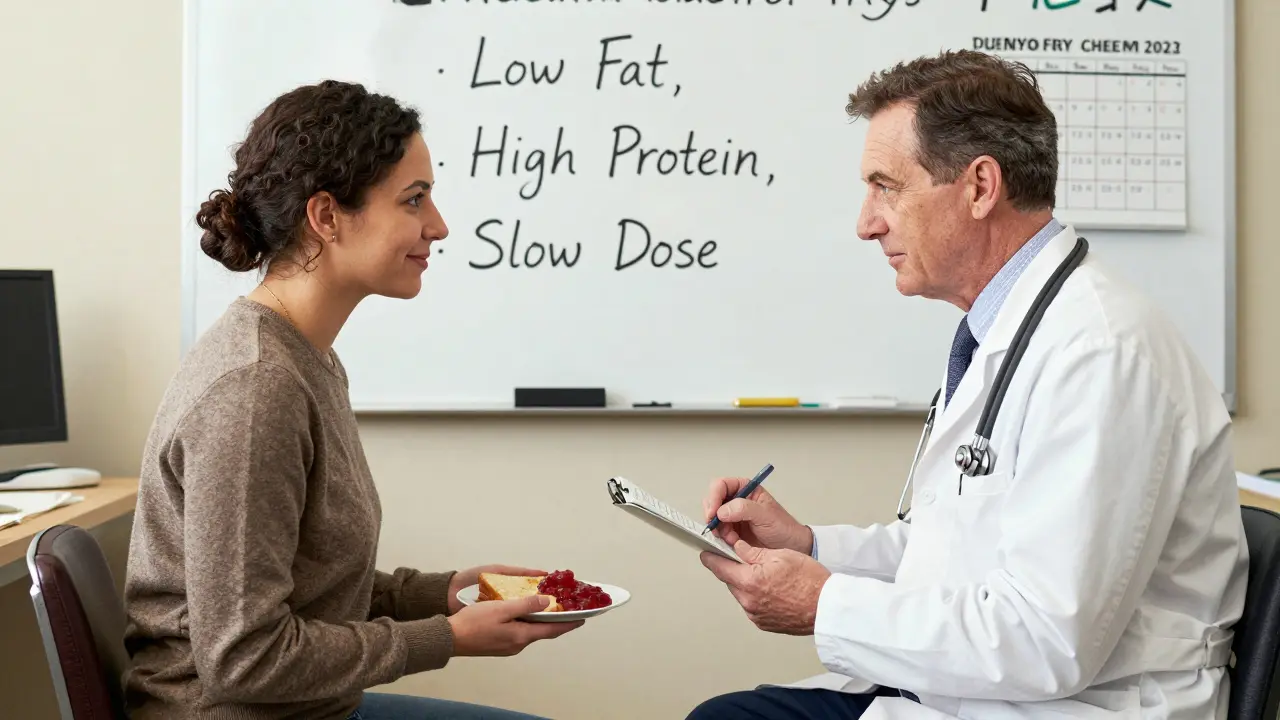
What you eat matters more than you think. Eating the same meals you did before starting the drug will likely make symptoms worse. The key is to reduce volume, increase protein, and avoid triggers.Successful users follow these rules:
- Keep meals between 300-400 calories during the first 8 weeks.
- Aim for 25-30 grams of protein per meal-chicken, eggs, tofu, Greek yogurt, or lean fish.
- Limit fat to under 15 grams per meal. High-fat meals slow digestion even more.
- Avoid more than 20 grams of simple carbs at once-no sugary snacks, white bread, or juice.
- Drink no more than 120-180 ml (4-6 oz) of fluid with meals. Water is fine. Skip soda, coffee, and alcohol.
- Eat slowly. Take at least 20 minutes per meal.
One patient on Reddit shared: “I started eating 20-25g protein within 30 minutes of waking. Then I had three small meals a day-no snacks. Nausea dropped from daily to once a week.” That’s not luck-it’s strategy.
Start with clear liquids for 24-48 hours if nausea hits hard. Then move to bland foods: toast, rice, bananas, applesauce (the BRAT diet). Don’t rush back to burgers or pizza. Give your stomach time to adjust.
Dose Titration: Go Slow, Not Fast
The standard dose escalation schedule on the package is not the only way. In fact, following it exactly can make side effects worse. Experts now recommend a symptom-guided approach.Here’s what works:
- Don’t increase your dose until nausea has been gone for at least 7 straight days.
- If you vomit more than twice in a week, hold the dose for 7-10 days and restart at the previous level.
- For persistent moderate nausea, wait 2-4 weeks before trying to increase again.
- Severe symptoms? Hold for 4-6 weeks. You’re not falling behind-you’re building tolerance.
Studies show that extending titration from 16-20 weeks to 20-24 weeks cuts discontinuation rates by 37%. That’s a huge difference. One patient on Wegovy took 26 weeks to reach the full dose. She felt better every week. She’s now been on it for 18 months.
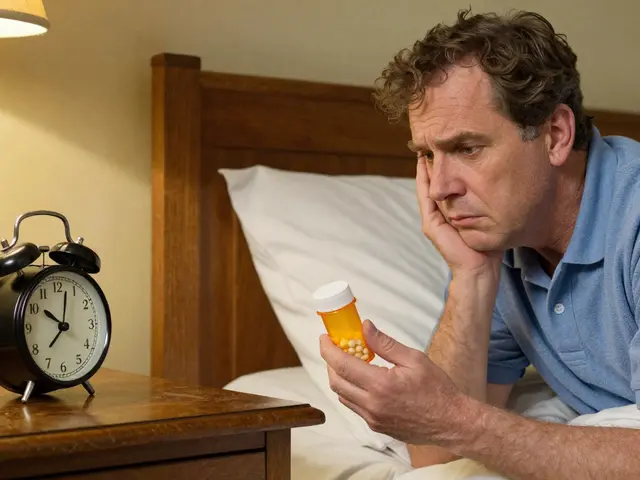
Some people benefit from taking their weekly shot in the morning instead of at night. A 2023 study found morning dosing reduced nausea by 25-30%. Why? Your body’s natural rhythms help process the drug better during the day.
What to Do When Symptoms Strike
If you feel nauseous after your injection:- Wait 30-60 minutes before eating. Don’t eat right after the shot.
- Stay upright for at least 2 hours after meals. Lying down slows digestion.
- Avoid late-night eating. Finish dinner at least 3 hours before bed.
- Keep a symptom log. Note what you ate, when you took your dose, and how you felt. This helps you spot patterns.
One patient on YouTube said: “I started eating my first meal 2 hours after my injection. Nausea went from severe to mild in 3 days.” Simple. Effective. No magic pill-just timing.
When to Call Your Doctor
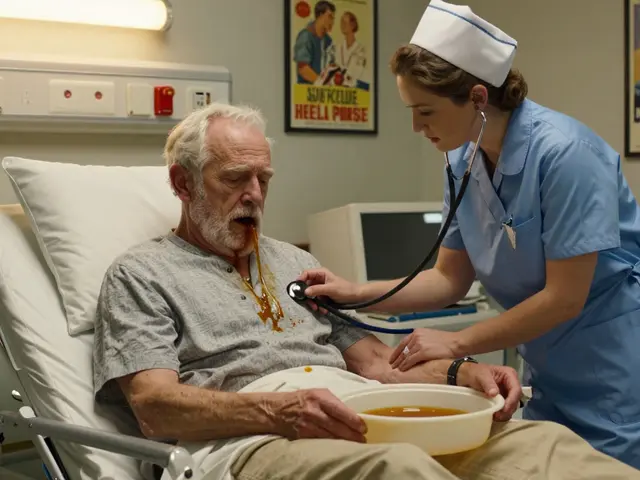
Most GI side effects are mild and temporary. But watch for these red flags:- Vomiting more than twice a week for 2+ weeks
- Inability to keep fluids down (risk of dehydration)
- Severe abdominal pain that doesn’t go away
- Dark urine, dizziness, or rapid heartbeat
These could signal gastroparesis, bowel obstruction, or pancreatitis-rare but serious. Call your doctor if any of these happen. Don’t wait. Most cases are manageable if caught early.

Why This Matters Now
More than 10 million Americans are using GLP-1 drugs for diabetes or weight loss. Prescriptions jumped 137% between 2021 and 2023. Companies like Novo Nordisk and Eli Lilly now offer free dietitian support with their medications because they know side effects are the #1 reason people quit.It’s not about choosing the “best” drug. It’s about using the drug you’re on the right way. Whether it’s Ozempic, Wegovy, or Mounjaro, your success depends on how you manage your meals and your dose-not the brand name.
Doctors are starting to use tools like the GLP-1 GI Tolerance Score (0-10) to guide dosing. If your score is above 4, you hold the dose. No guesswork. Just clear rules.
There’s hope for the future, too. Apps are being tested that adjust your dose based on your daily symptoms. In early trials, they reduced discontinuation by 28%. But for now, the best tool you have is your own awareness-what you eat, when you eat it, and how you respond.
Real Results, Real People
A Kaiser Permanente survey found that 78% of patients who followed small, frequent meals saw big improvements in nausea within two weeks. The Obesity Action Coalition found that 65% of people who stuck with GLP-1 drugs for over a year followed strict meal rules: low volume, high protein, low fat, no sugar spikes.Meanwhile, 82% of people who quit in the first 8 weeks admitted they ate meals over 600 calories during titration. They thought they were being “normal.” But normal doesn’t work anymore-not with GLP-1 drugs.
You don’t need to be perfect. You just need to be consistent. One small meal at a time. One slow dose increase at a time. The body adjusts. The nausea fades. The weight drops. The health improves.
Stick with it. Your future self will thank you.
How long do GLP-1 GI side effects last?
Most side effects like nausea and vomiting peak around week 4 and start improving by week 8. By week 56, only about 5.5% of users still report nausea. For most people, symptoms fade within 2-3 months if they follow proper meal and dosing strategies.
Can I still eat carbs on GLP-1 medications?
Yes, but limit simple carbs like sugar, white bread, and juice. Stick to complex carbs like oats, quinoa, sweet potatoes, and legumes. Keep total carbs under 40g per meal during titration. High-carb meals can spike blood sugar and worsen nausea.
Should I skip doses if I feel sick?
Don’t skip doses unless advised by your doctor. Instead, hold off on increasing the dose until symptoms improve. If you vomit more than twice a week, pause the dose for 7-10 days and restart at the previous level. Skipping doses entirely can disrupt your progress and make side effects worse when you restart.
Is it better to take GLP-1 in the morning or at night?
Morning dosing reduces nausea by 25-30% compared to evening dosing, according to pharmacokinetic studies. Your body processes the medication better during the day, and you’re more active, which helps digestion. Try taking your shot right after waking up with just water.
What if my nausea doesn’t go away after 3 months?
If nausea persists beyond 3 months despite following meal and titration guidelines, talk to your doctor. You may need to switch to a different GLP-1 medication-liraglutide tends to be better tolerated initially than semaglutide. Or your doctor may suggest a temporary dose reduction to help your body adjust. Don’t assume it’s hopeless-many people find relief with adjustments.
Do I need to avoid alcohol completely?
You don’t have to quit alcohol forever, but avoid it during the first 8-12 weeks of treatment. Alcohol can worsen nausea, slow digestion, and dehydrate you. After your body adjusts, small amounts (like one glass of wine) may be okay if you eat protein first. But listen to your body-if it triggers symptoms, skip it.
Can I use anti-nausea meds like Zofran?
Yes, but only under your doctor’s guidance. Ondansetron (Zofran) can help with severe nausea during titration, but it doesn’t fix the root cause. It’s a short-term tool, not a long-term solution. Don’t rely on it to keep taking large meals or rushing your dose increases. Use it to get through the worst days, then focus on diet and timing.



Comments
Jake Kelly
9/Jan/2026Just started Ozempic last week and this post is a lifesaver. Followed the 300-calorie rule and ate chicken and eggs for breakfast-nausea went from brutal to barely there in 48 hours.
Lisa Cozad
9/Jan/2026Same. I was about to quit until I tried eating protein first thing in the morning. No snacks, just three tiny meals. It’s not glamorous but it works. My stomach finally stopped rebelling.
Mario Bros
9/Jan/2026Yessss this is the real talk. No magic pills, just discipline. I took 22 weeks to hit my full dose and I’m so glad I didn’t rush. Your body isn’t your enemy-it’s just adjusting.
Jake Nunez
9/Jan/2026For those from India: I’ve seen this work with dal, tofu, and steamed rice in small portions. No ghee, no fried snacks. The principles are universal. Adapt, don’t abandon.
Jay Amparo
9/Jan/2026As someone who’s been on Wegovy for 14 months, I can say this: the first 6 weeks felt like surviving a hurricane. But once you nail the timing-morning dose, no fluids with meals, 20-minute eats-it becomes second nature. You’ll thank yourself later.
Saumya Roy Chaudhuri
9/Jan/2026Everyone’s acting like this is revolutionary. I’ve been doing low-carb, high-protein meals since 2018. This isn’t science-it’s common sense wrapped in a pharmaceutical marketing campaign.
anthony martinez
9/Jan/2026So let me get this straight-you’re telling me I can’t have a cheeseburger for 8 weeks… because science? Wow. I’m shocked. Shocked, I tell you.
Christine Milne
9/Jan/2026While the recommendations are technically sound, they reflect a deeply American obsession with micro-managing biology through rigid dietary protocols. In Europe, we treat these medications with more nuance-allowing for cultural food patterns and adjusting dosages based on individual metabolic profiles, not arbitrary calorie caps.
Faith Edwards
9/Jan/2026How quaint. You all treat this like a dietary hack when it’s a pharmacological paradigm shift. The notion that one can ‘manage’ GLP-1 side effects through meal timing is charmingly naive-this is not a matter of willpower, but of neurogastroenterological recalibration. One must approach this with the solemnity of a Zen master, not a meal-prepper.
neeraj maor
9/Jan/2026Who funds these studies? Novo Nordisk? Of course they want you to believe this is all about ‘timing’ and ‘meals.’ Meanwhile, the real reason people quit? The drug’s destroying gut flora, and they’re hiding it behind ‘nausea’ and ‘bloating.’ You think this is science? It’s corporate control disguised as health.
McCarthy Halverson
9/Jan/2026Protein first. Small portions. No liquids with food. Wait 30 min after shot before eating. Hold dose if vomiting. That’s it.
lisa Bajram
9/Jan/2026OMG YES!! I literally cried when I realized I didn’t have to eat a whole pizza to feel ‘normal’ anymore. Three bites of grilled salmon + broccoli + 1/4 cup quinoa = I didn’t want to die. I started morning dosing and now I’m 42 lbs down and actually excited to wake up. This isn’t a diet-it’s a reboot.
Ted Conerly
9/Jan/2026You’re not failing if it takes time. You’re adapting. Every single person who says ‘I gave up after 3 weeks’ didn’t follow the rules-they just wanted quick results. This isn’t a sprint. It’s a slow, steady climb. You’ve got this.
Ritwik Bose
9/Jan/2026Thank you for this thoughtful, evidence-based guide 🙏 I’m from India and found the protein-rich, low-fat approach to be compatible with our traditional meals-think moong dal, grilled paneer, and steamed rice. Small changes, big results. Keep sharing wisdom like this.
Michael Marchio
9/Jan/2026Let’s be honest-most people who follow these guidelines are already privileged enough to have time to meal prep, access to lean proteins, and the luxury of not working two jobs. Meanwhile, the working poor are trying to feed their kids on rice and beans and are being told they’re ‘failing’ because they can’t afford chicken breast. This isn’t medicine-it’s classism with a side of Ozempic.