
Imagine taking your daily medication, only to find out later it contained an unintended chemical impurity. For most people, this sounds like a rare nightmare. But in the world of generic drugs, contamination is a tangible risk that regulators, manufacturers, and patients must manage every day. With generics making up 90% of all prescriptions in the U.S., understanding how these risks arise-and how they are prevented-is not just academic; it’s a matter of public health.
The core issue isn’t that generic drugs are inherently worse than brand-name versions. They must meet the same quality standards. The problem lies in complexity. Global supply chains, tighter profit margins, and older manufacturing facilities create unique vulnerabilities. This guide breaks down where the risks come from, how the industry prevents them, and what happens when things go wrong.
Where Do Contamination Risks Come From?
Contamination can happen at almost any stage of drug production. The U.S. Food and Drug Administration (FDA) defines it as the undesired introduction of impurities, microorganisms, or foreign matter into a drug product. These impurities can be chemical, like residual solvents or nitrosamines, or biological, like bacteria or mold.
Several factors make generic drugs particularly susceptible:
- Global Supply Chains: About 80% of active pharmaceutical ingredients (APIs) for U.S. drugs are manufactured overseas, primarily in India and China. This distance makes real-time oversight difficult. In fact, the FDA inspects only about 1% of imported drug products for impurities at the border.
- Cross-Contamination: This occurs when residue from one drug remains on equipment and transfers to another product being manufactured next. For highly potent drugs, even tiny amounts of leftover substance can cause adverse reactions.
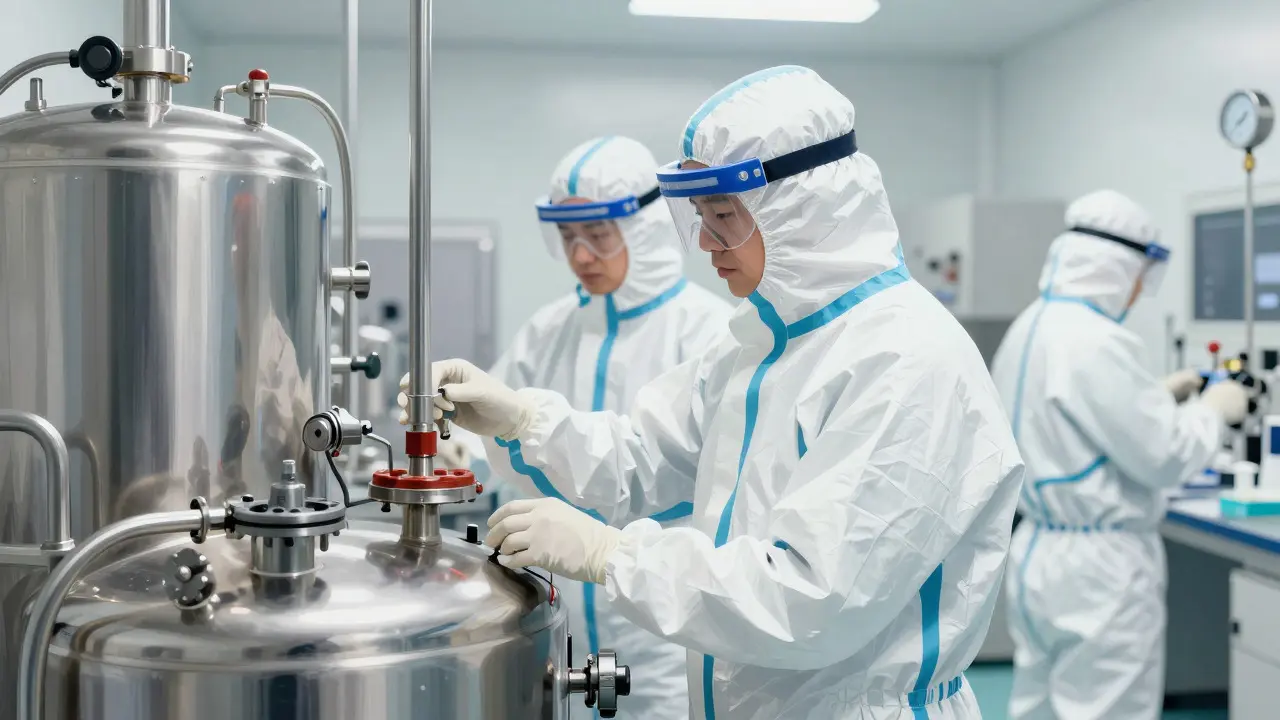
- Personnel Factors: Humans are the biggest source of particles in cleanrooms. A single person can shed 40,000 skin cells per minute. If gowning procedures aren’t strict, these particles can carry microbes into sterile environments.
- Economic Pressure: Generic manufacturers often operate on narrower profit margins (20-25%) compared to brand-name firms (60-70%). This can sometimes lead to underinvestment in state-of-the-art quality control systems, though many top players have closed this gap.
The Scale of the Problem: Data and Recalls
You might wonder if this is a widespread issue or just isolated incidents. The data suggests it’s significant but manageable. In 2022, contamination-related issues accounted for 22% of all drug recalls in the U.S., with 37% of those specifically affecting generic drugs.
A stark example is the 2018-2019 valsartan crisis. Nitrosamine impurities were found in tablets made by 22 generic manufacturers across 8 countries. The result? 2,317 product recalls and $1.2 billion in economic losses. It highlighted how a single API supplier failure could ripple through the entire global market.
| Factor | Generic Drugs | Brand-Name Drugs |
|---|---|---|
| Average Profit Margin | 20-25% | 60-70% |
| FDA Inspection Observation Rate (2022) | 8.3% for contamination issues | 5.1% for contamination issues |
| Supply Chain Complexity | High (multiple third-party API suppliers) | Moderate (often vertically integrated) |
| Facility Age Impact | Older facilities show 34% higher risk | Newer facilities generally standard |
| Recall Cost Average | $18.7 million per incident | Varies, but often higher due to brand value |
Prevention Strategies: Building Safety Into the Process
Preventing contamination requires a multi-layered approach known as Good Manufacturing Practices (GMP). It’s not just about cleaning machines; it’s about designing systems that make mistakes hard to make.
Facility Design and Environment Control
Modern facilities use specific cleanroom classes to limit airborne particles. Non-sterile manufacturing requires at least ISO Class 8 environments, while sterile products need ISO Class 5. Companies like Teva Pharmaceuticals reduced cross-contamination incidents by 78% between 2018 and 2022 by implementing closed manufacturing systems in their Bologna, Italy facility. Closed systems prevent the drug product from ever touching the air, drastically reducing microbial and particulate risks.
Cleaning Validation and Residue Limits
How do we know a machine is clean enough? The FDA sets a general limit of 10 parts per million (ppm) for previous product residue. However, for highly potent drugs, this limit may be too high. Experts argue for product-specific acceptance criteria based on toxicological evaluation. Cleaning validation protocols typically require six to twelve months of development, involving three consecutive successful cleaning cycles verified by swab testing with 95% confidence intervals.
Personnel Training and Gowning
Since humans are the primary source of contamination, training is critical. GMP Standard Operating Procedures (SOPs) mandate 8-12 hours of initial contamination prevention training per employee, with annual refreshers. Mylan’s Morgantown facility reduced contamination incidents by 82% between 2019 and 2022 partly by enhancing gowning procedures and using real-time particle monitoring systems. When staff know exactly how to move, dress, and handle materials, the risk drops significantly.
Response Mechanisms: What Happens When Things Go Wrong?
Despite best efforts, contamination can still occur. When it does, speed and transparency are key.
The Role of FDA MedWatch
Patients, pharmacists, and doctors can report suspected contamination through the FDA’s MedWatch system. Between 2020 and 2022, 1,247 reports of potential generic drug contamination were filed, with 387 mentioning adverse events. One documented case involved a patient developing severe dermatitis from a contaminated generic hydrocortisone cream. These reports trigger investigations and can lead to voluntary or mandatory recalls.
Recall Procedures and Economic Impact
Under 21 CFR Part 7, companies must conduct recalls if a defect poses a health risk. The average cost of a contamination-related recall is $18.7 million. This includes not just shipping costs, but also legal fees, customer compensation, and loss of consumer trust. For smaller generic manufacturers, a single major recall can threaten financial stability, which is why prevention is always cheaper than response.
Regulatory Tightening: New Rules for High-Risk Drugs
In response to past crises, the FDA has tightened the net. As of January 1, 2023, mandatory nitrosamine testing is required for all sartan-class drugs. The FDA’s PREDICT system now flags 37% more potentially contaminated imports than its predecessor, ensuring that high-risk shipments get extra scrutiny before entering the U.S. market.
Technological Innovations Changing the Game
Technology is shifting contamination control from reactive to predictive.
- Rapid Microbiological Methods: Traditional culture tests take seven days. New rapid methods reduce detection time to four hours. By 2022, 63% of top generic manufacturers had implemented some form of rapid testing, allowing them to catch issues before products ship.
- AI-Powered Environmental Monitoring: The FDA plans to implement AI systems that analyze over 15,000 data points per facility to predict contamination risks with 89% accuracy. This moves beyond counting particles to predicting *when* a breach is likely to happen.
- Real-Time Particle Monitoring: Sensors installed in cleanrooms provide live data on particle counts. If levels spike, production can pause immediately, preventing a batch from being compromised.
What You Can Do as a Patient or Pharmacist
You don’t need to be a regulator to play a role in safety. Here are practical steps:
- Check for Recalls: Regularly check the FDA’s recall database, especially if you take medications from smaller, less-known manufacturers.
- Report Anomalies: If a pill looks different (color, shape, specks) or tastes unusual, don’t ignore it. File a MedWatch report. Pharmacists, in particular, should document suspicious batches and contact the distributor.
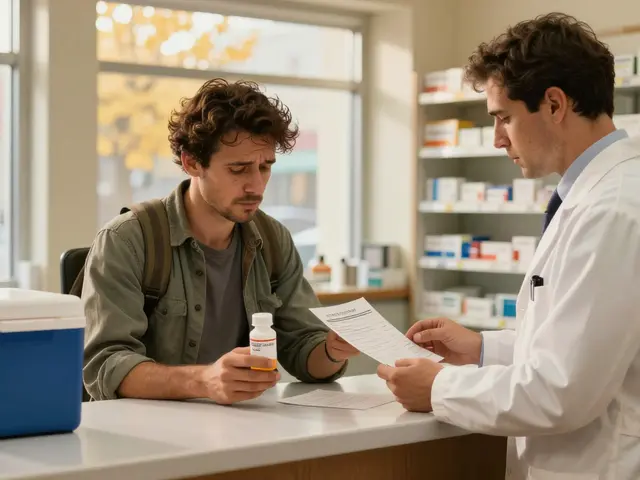
- Ask Your Pharmacist: Ask where your generic drugs come from. While you won’t always get a detailed answer, pharmacies that track lot numbers and supplier origins are generally more vigilant.
- Store Medications Properly: Heat and humidity can degrade drugs and increase microbial growth. Keep meds in cool, dry places away from bathrooms.
Frequently Asked Questions
Are generic drugs less safe than brand-name drugs?
Not necessarily. Both must meet identical FDA quality standards. However, generics face unique challenges due to complex global supply chains and tighter margins, which can sometimes lead to higher inspection observation rates. The therapeutic equivalence is maintained, but the path to achieving it involves managing more variables.
What is cross-contamination in pharmaceuticals?
Cross-contamination is the transfer of residual drug substances or impurities from one product to another during manufacturing. It often happens if equipment isn’t cleaned thoroughly between batches. For potent drugs, even microscopic residues can cause side effects.
How does the FDA monitor generic drug quality?
The FDA uses a combination of pre-market approval (ANDA reviews), post-market inspections, import screening via the PREDICT system, and adverse event reporting through MedWatch. They also conduct routine audits of manufacturing facilities both in the U.S. and abroad.
What should I do if I suspect my medication is contaminated?
Stop taking the medication if possible, save a sample if safe, and contact your pharmacist or doctor. Then, file a report with the FDA’s MedWatch program. Include details like the drug name, lot number, and any symptoms you experienced. This helps regulators trace the issue back to the manufacturer.
How much does it cost to prevent contamination in a drug factory?
For medium-sized manufacturers, facility modifications to enhance contamination control can cost $2-5 million. Adding closed isolator systems can add $500,000 to $2 million per production line. Regulatory compliance generally accounts for 12-15% of total manufacturing costs for generic companies.